
SUMMARY HIGHLIGHTS
- Kyoto and Tokyo are the most popular destinations to experience a tea ceremony in Japan.
- A Japanese tea ceremony is not like British high tea.
- Chanoyu is one of the most culturally enriching experiences you can have in Japan, but it may not be for everyone.
I was nervous making my way to the address in Tokyo. Experiencing a formal tea ceremony in Japan had been on my travel wish list for years, and now that the moment had finally arrived, I almost didn’t want to go through with it.
I understood the Japanese tea ceremony in principle, but having never experienced it before, I really didn’t know what to expect. I knew it was highly structured and guided by precise rules, which was why I was overcome with anxiety.
In Japan, there’s an unspoken expectation to follow social etiquette. I try to be mindful, but even a small misstep can draw frowns and disapproval. Being someone who tends to overthink, I was worried about making a mistake and offending my hosts.
By the time I reached the house, I couldn’t help but notice the irony. I was so anxious about what was to come that I had already missed the point of chanoyu – to cultivate presence, let go of worry, and be fully present in the moment.
Taking a deep breath, I pushed the doorbell and waited to be welcomed inside.
TEA CEREMONIES IN JAPAN
KYOTO
- Tea Ceremony with Seasonal Light Meal in an Authentic Tearoom in Kyoto
- Uji Authentic Tea Ceremony Experience with Hands-on Green Tea Milling at Nakamura Tokichi
- Ikebana and Tea Ceremony at a Traditional Machiya Residence in Kyoto
TOKYO
- Authentic Japanese Tea Ceremony in a Private Tea Room
- Authentic Tea Ceremony and Chakaiseki in Ebisu, Tokyo
- Bonsai Creation and Tea Ceremony at Master Kunio Kobayashi’s Shunkaen Bonsai Museum
OSAKA
- Japanese Tea Culture Experience and Tea-Based Lunch in Sakai, Osaka
- Experience Bunjin Sencha for a Deeper Appreciation of Tea, Ink Painting, and Conversation
OTHER CITIES
What Is a Japanese Tea Ceremony?
Known as chanoyu, sado, or chado, the Japanese tea ceremony is a traditional practice centered around the preparation and serving of matcha (powdered green tea). However, it’s quite different from Western tea experiences, like British high tea.
At its core, the Japanese tea ceremony is about cultivating presence. Influenced by Zen Buddhism1, it’s about slowing down and being fully present in the moment.
Every step of the tea ceremony – from cleaning the utensils to whisking the tea and serving it – is done with care and intention. Even the smallest movements have meaning, creating an atmosphere that feels quite different from the rushed way people usually drink coffee or tea.
Unlike British high tea, which is mostly a social affair, guests are invited to become quiet observers. You’ll sit in a calm, minimalist space, observe the host’s precise and deliberate movements, and be invited to receive and drink the tea in a specific way. There’s often very little conversation, which might feel unusual at first, but it’s part of what makes the experience so calming and immersive.
A Quick History
Tea first made its way to Japan from China in the 8th century, brought back by Buddhist monks who had traveled abroad to study2. At the time, tea wasn’t a casual drink. It was used mainly in religious settings, helping monks stay awake and focused during long periods of meditation.
Over the centuries, tea gradually spread beyond temples and into the lives of the Japanese elite. By the 13th century, drinking matcha had become more common among the upper classes, often enjoyed in social gatherings that were quite different from the quiet, reflective ceremonies we see today. These early tea gatherings could be elaborate and even a bit flashy, with an emphasis on expensive Chinese tea utensils and displays of wealth2.
Everything began to change in the 15th and 16th centuries, largely thanks to tea master Sen no Rikyu. He is widely considered the most important figure in shaping the tea ceremony into what it is today. Instead of focusing on luxury and status, he emphasized simplicity, humility, and a deeper appreciation for everyday objects.
Under his influence, the tea ceremony evolved into a more intimate and meditative practice3. Tea rooms became smaller and more minimal, often designed to create a sense of quiet and separation from the outside world. The focus shifted away from impressing guests and toward creating a meaningful, shared experience – something calm, intentional, and grounded in the present moment.
These ideas became the foundation of the tea ceremony as it’s practiced today. While modern experiences – especially those designed for tourists – are often shorter and more accessible, they still reflect many of the principles established centuries ago.
Where to Experience a Tea Ceremony in Japan
Tea ceremonies are widely available throughout Japan, but Kyoto is the most popular place to experience one. With its historic districts and traditional tea houses, Kyoto has long been considered the home of Japanese culture and offers the most atmospheric setting.
Being the capital of Japan, Tokyo is also popular and offers many options. You’ll find a few offered in other major cities like Osaka and Nagoya as well.
If you’re visiting the Chubu region, Kanazawa is another great place to experience a tea ceremony. It’s similar in feel to Kyoto, but without the crowds.
Things to Know Before Your Tea Ceremony
Proper chanoyu venues will guide you on the correct etiquette during your experience, so you don’t need to overthink and stress about getting anything wrong like I did. They’ll teach you how to sit, when to bow, and even how to sip your tea.
Having said that, there are a few things you should know about before attending your tea ceremony.
Punctuality
As you can probably tell from Japan’s highly efficient rail system, punctuality is highly valued in Japan. You must arrive on time, preferably at least 15 minutes before your tea ceremony is scheduled to begin.
Dress Code
It’s important to arrive at the venue dressed modestly and respectfully. It’s ok to wear something comfortable, especially for sitting on the floor, but you must cover your legs and avoid overly casual outfits like beachwear.
This may sound odd to some people, but bringing a pair of clean white socks is appreciated. Like punctuality, cleanliness is highly valued in Japan. Changing into clean socks at the venue is a sign of respect and conveys your appreciation to the host.
Length of the Tea Ceremony
Tea ceremonies have different levels of formality. Traditional ceremonies can be highly structured and last several hours, but most experiences available to tourists are shorter and less formal, often lasting between 90 and 120 minutes.
Types of Matcha Served
Depending on the level of formality, there are two main types of matcha served at chanoyu – usucha (thin) and koicha (thick).
Usucha is a lighter and frothier tea that’s less bitter and easier to drink. It’s the more common type served at tea ceremonies.
Koicha is a much thicker and more concentrated form of matcha. Richer and more intense in flavor, it’s usually reserved for more formal ceremonies.
My Tea Ceremony Experience in Tokyo
I took part in this tea ceremony at To-Ri-An, an Urasenke school tucked away in a quiet residential neighborhood in Tokyo’s Meguro Ward. Urasenke is the largest of the three major tea ceremony schools in Japan, all of which were founded by the descendants of Sen no Rikyu4.
A husband-and-wife team operates the tea house – Souei Funakoshi and Souai Kawada – both of whom are associate professors at the Urasenke school. I initially assumed there would be a translator present, but it turned out they both spoke fluent English, which made the experience feel much more personal.
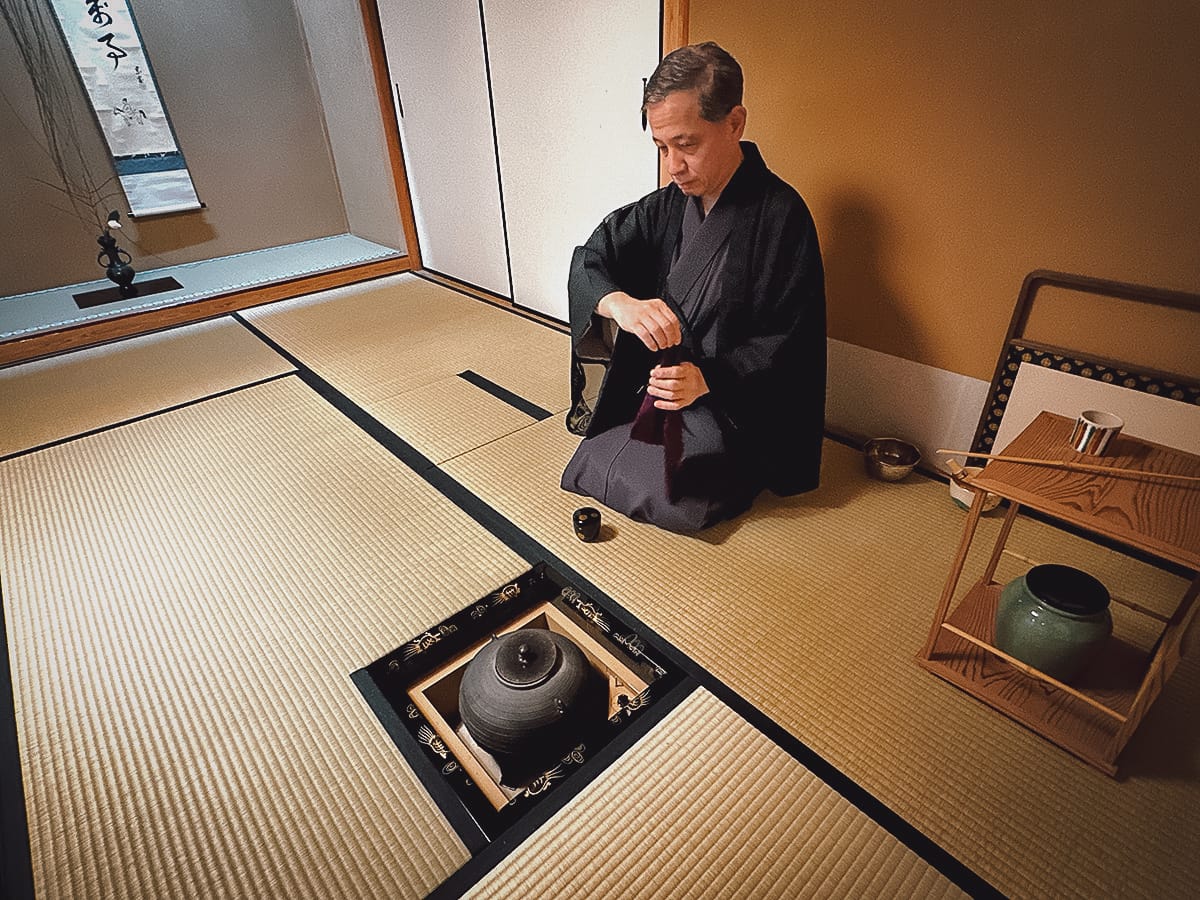
After being welcomed at the entrance by Souei-san, I removed my shoes and was guided inside. Souai-san then sat me in front of the tea room’s tokonoma (alcove).
She explained that this space holds special significance – it’s considered the spiritual focal point of the room. The tokonoma is where the kakemono (hanging scroll) and chabana (simple flower arrangement) are displayed, and it’s the first feature guests are meant to take in as they enter, quietly setting the tone for the ceremony.
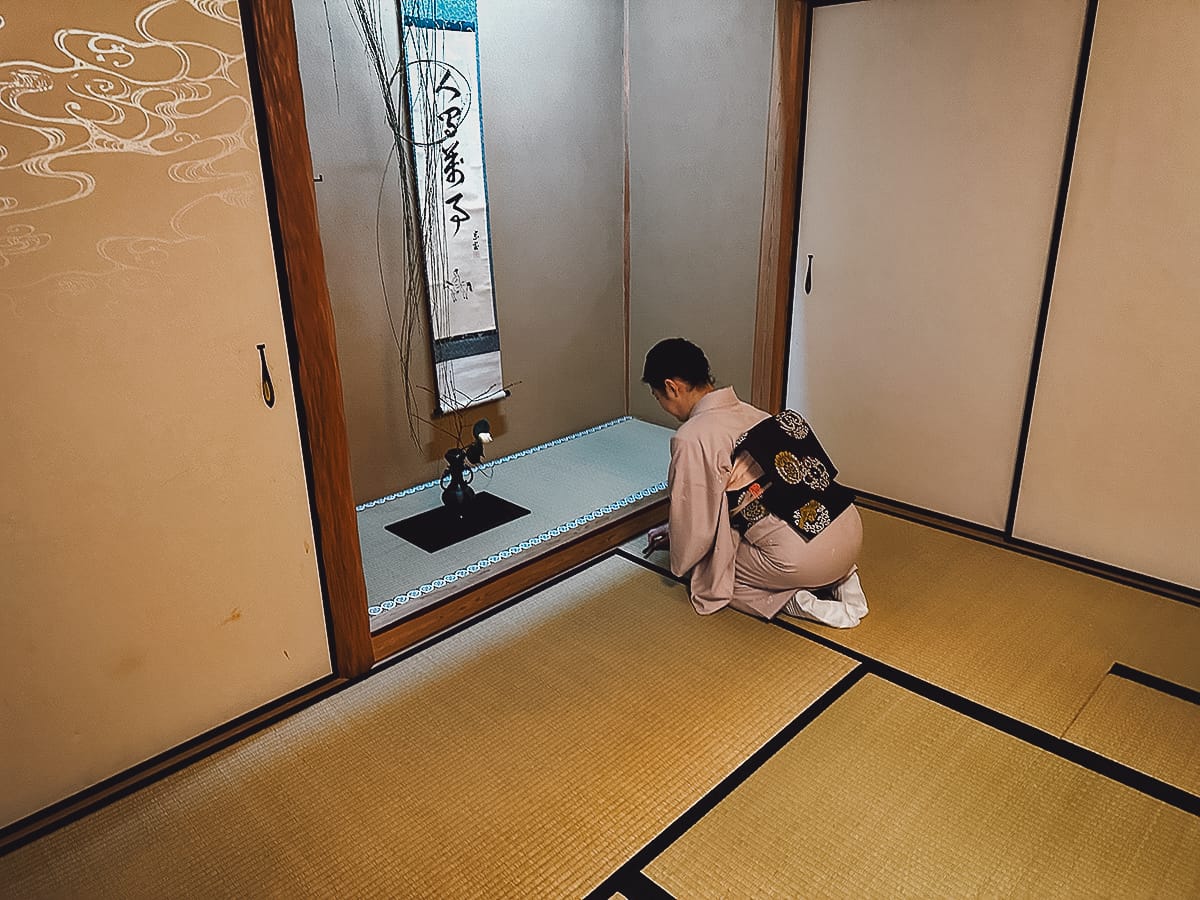
Seasonality is deeply woven into chanoyu, much like it is in other parts of Japanese culture. One example is the hanging scroll, which isn’t chosen at random. On the contrary, it’s selected to suit the specific occasion. The calligraphy often reflects the time of year while also expressing the theme or message the host wishes to share with guests.
At my tea ceremony, the scroll referenced the well-known Daoist tale, the “Story of the Lost Horse”. It’s a simple yet powerful story that encourages acceptance and reminds us to see things as they are, rather than how we wish them to be.
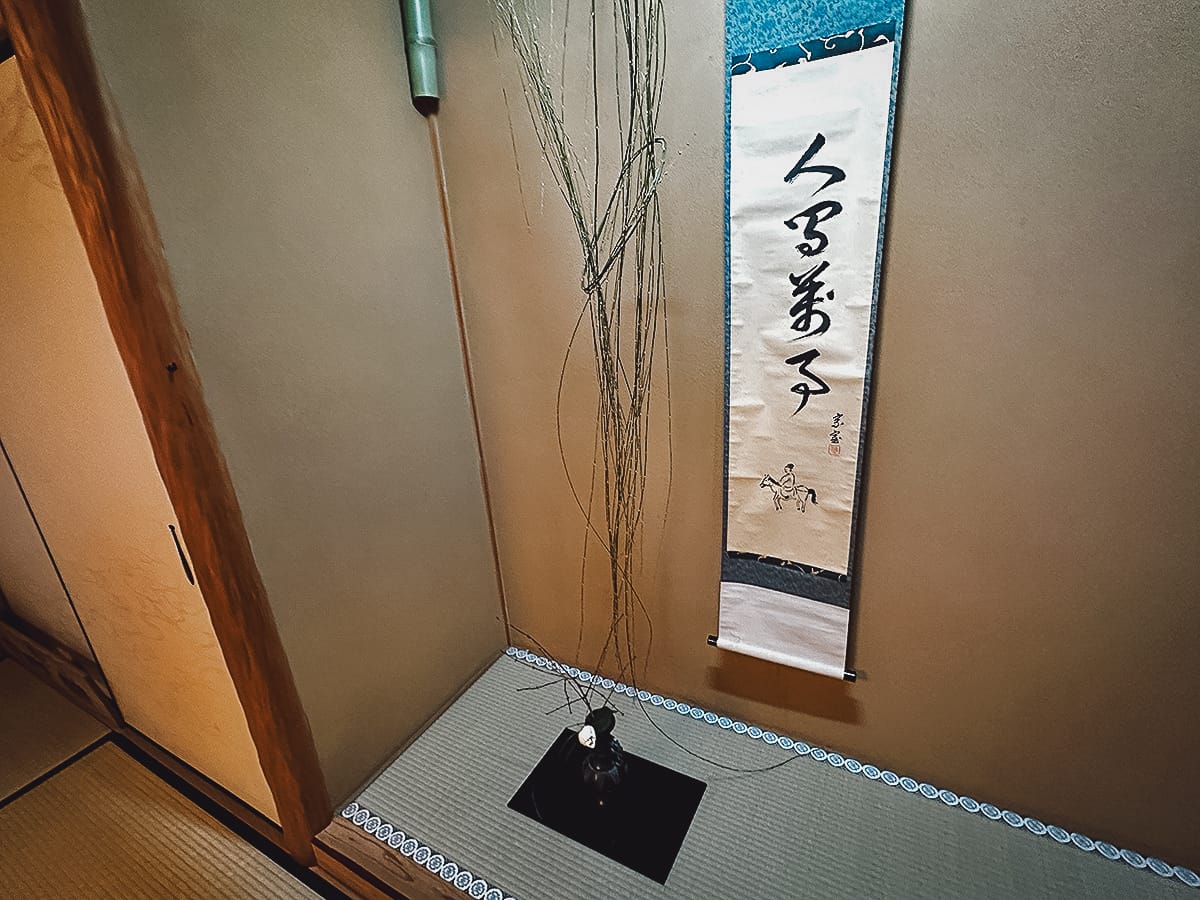
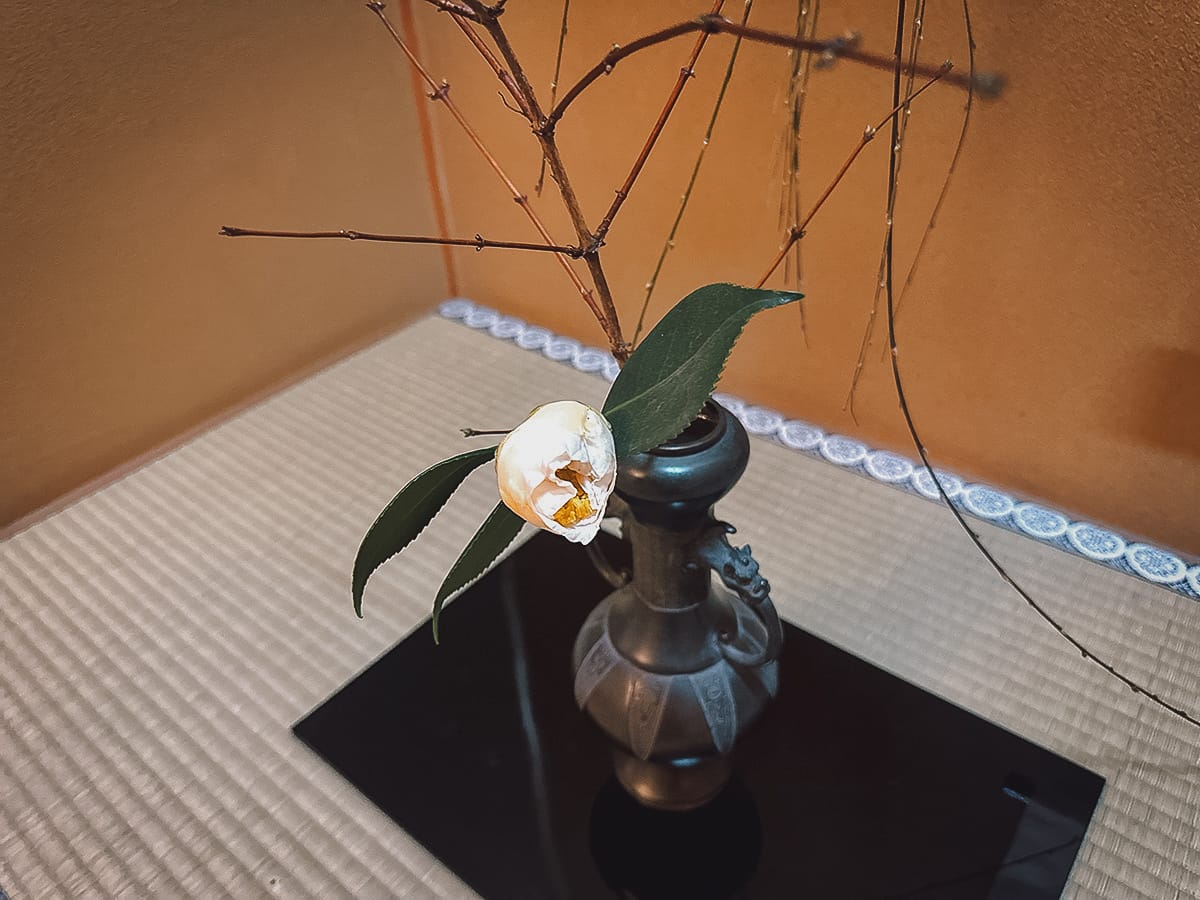
Because my tea ceremony took place toward the end of winter, the flower arrangement featured tsubaki (camellia). This type of flower appears from late winter into early spring, which is why it’s commonly used in tea ceremonies during the colder months of the year5.
Souai-san then pointed out the tana, a small stand used to hold tea utensils. Resting on the upper shelf was a tea container, while the lower level held the mizusashi – a larger vessel filled with fresh, cold water used to refill the kama (kettle) and to clean and purify utensils used in the ceremony.
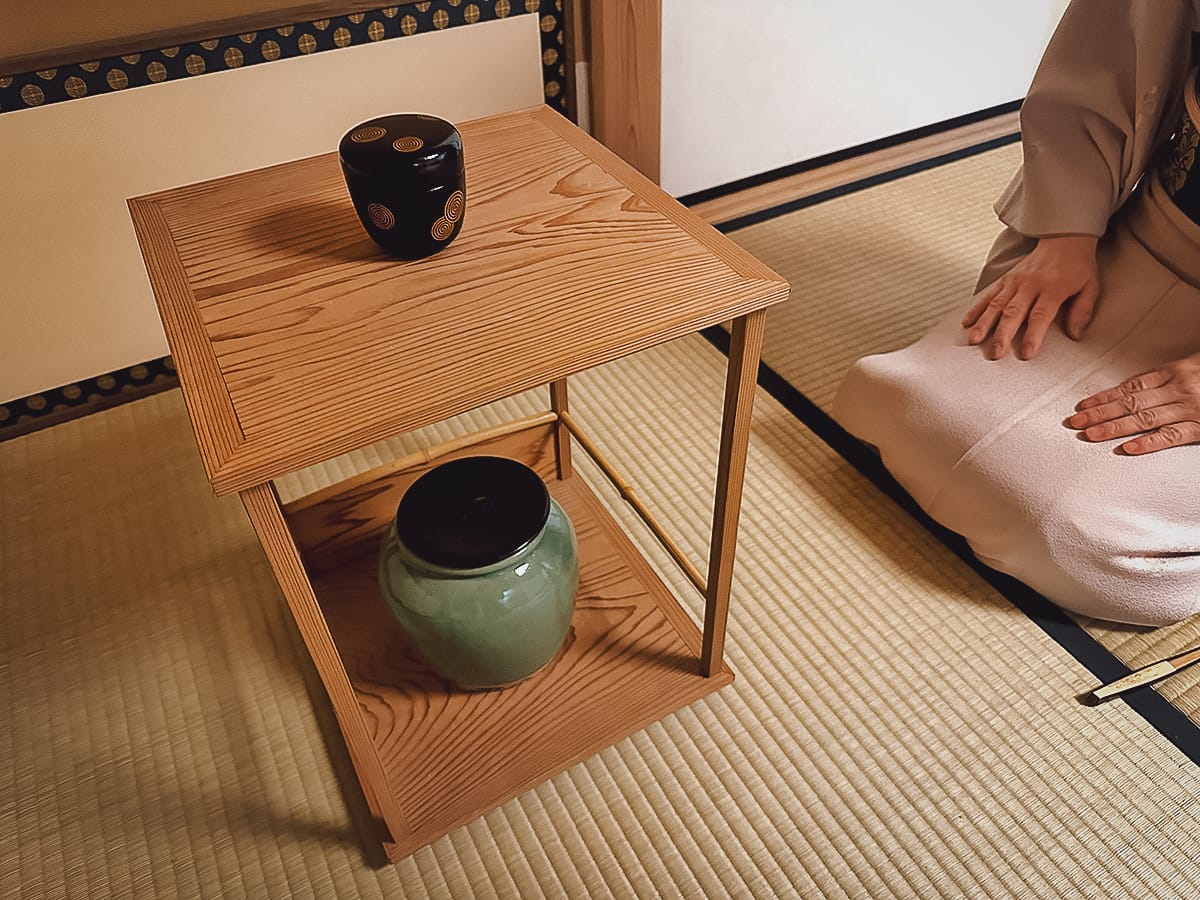
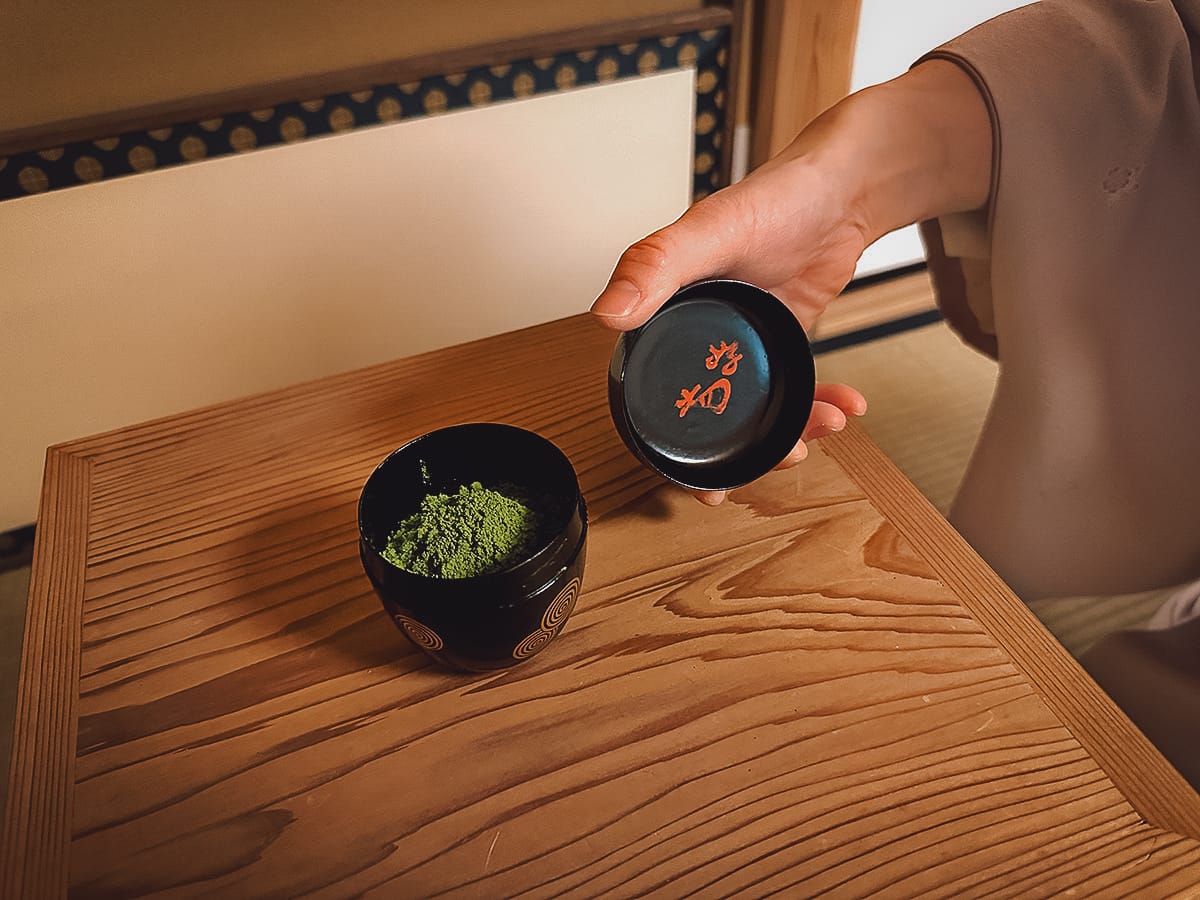
Souai-san lifted the lid of the container to reveal a calligraphic inscription inside. She explained that it displays the name of the tea master, serving as a mark of approval for the quality of the matcha.
Beside the tana was a sunken hearth with a kettle for heating water. This built-in hearth is commonly used during the colder months. In warmer seasons, a portable brazier is preferred6.
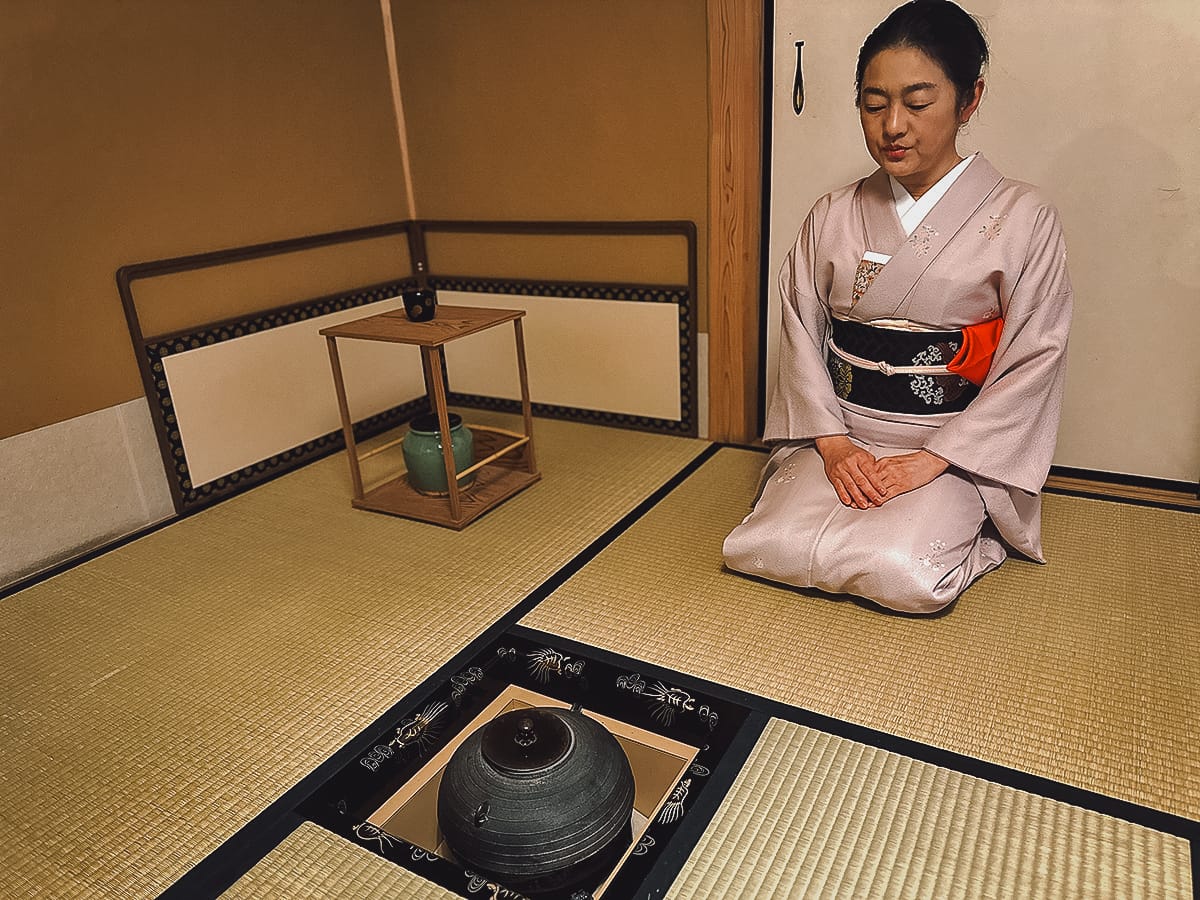
After showing me to my place, Souai-san went over a few basics of chanoyu etiquette, starting with how to properly sit. The traditional posture is called seiza, where you kneel with your legs tucked under you, and you sit back on your heels.
It’s not the most comfortable position if you aren’t used to it. I maintained the seating position to make a good impression, but I’ve read that the Urasenke school allows guests to sit on stools. It’s one of the subtle differences that differentiates Urasenke from other tea ceremony schools like Omotesanke and Mushanokoujisenke4.
Once I had settled in, the sliding door quietly opened, and Souei-san entered with a plate of wagashi – a traditional sweet served with matcha. We exchanged bows, and the ceremony was officially underway.
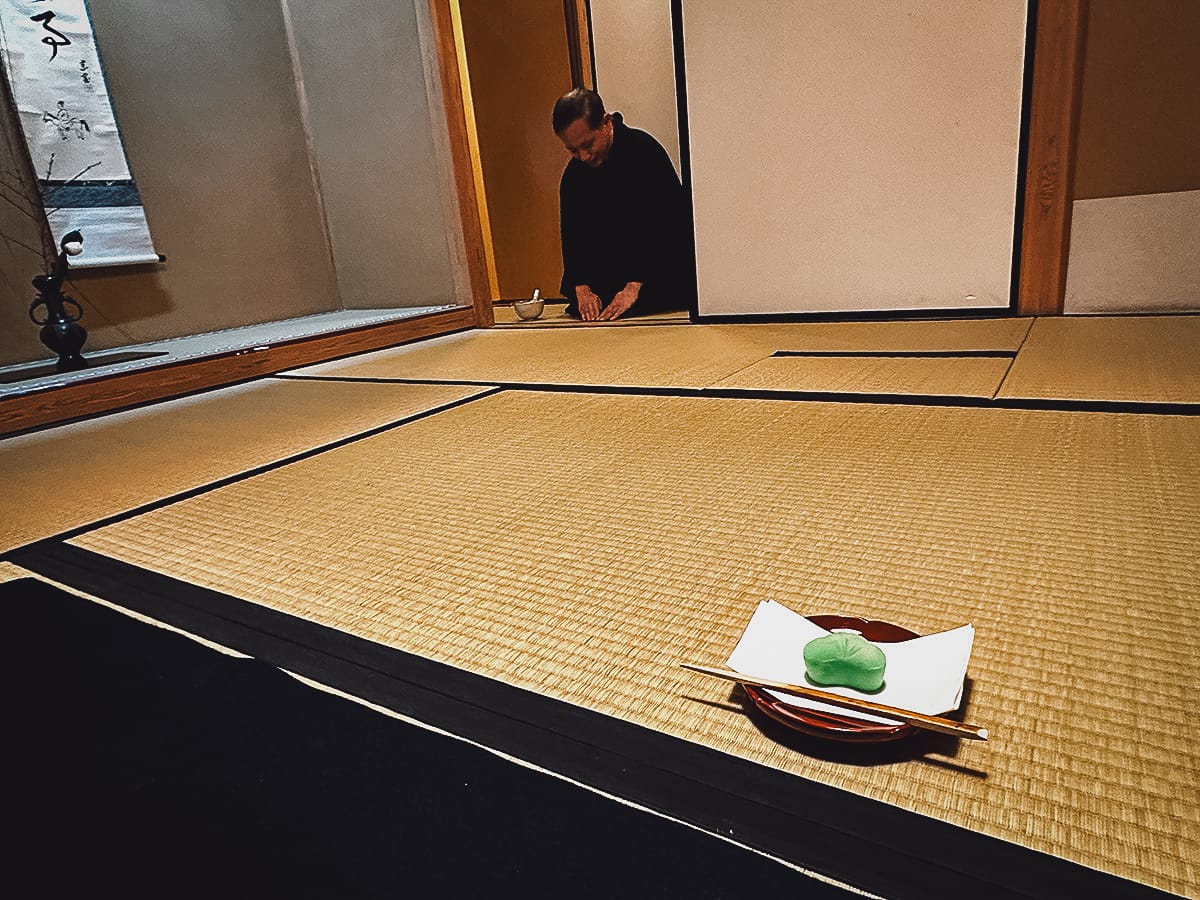
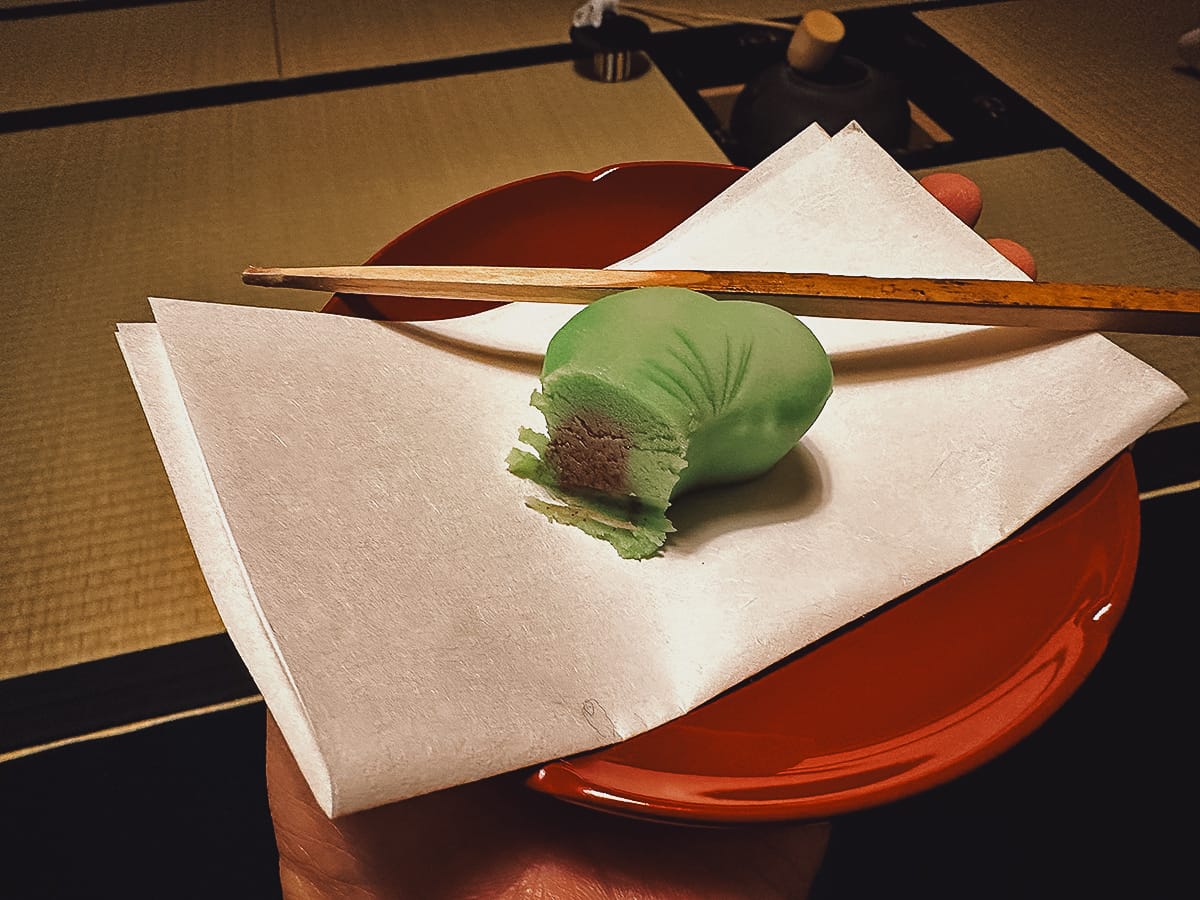
I’ve had matcha and wagashi many times at Japanese gardens before, but I never knew that the sweets are traditionally eaten before sipping the tea. Because matcha has a strong, grassy flavor, starting with the sweet wagashi helps prepare your palate and softens the tea’s natural bitterness.
Wagashi comes in many forms, but some of the most beautiful are nerikiri – seasonal handmade confections made from white bean paste. The one I was served was filled with sweet bean paste and shaped like a leaf, likely symbolizing the nearing of spring.
From the moment Souei-san enters the room, it’s clear how different chanoyu is from a Western tea experience like British high tea. Conversation is minimal. There are long stretches of silence, and any words spoken are deliberate and part of the ritual. This is intentional.
With distractions removed, your focus naturally shifts to the ceremony itself – the careful way Souei-san cleans each utensil, the gentle sound of water simmering in the kettle, the subtle movements that might otherwise go unnoticed. Every gesture is deliberate, and nothing is improvised.
It’s this combination of precision, mindfulness, and mastery of ritual that explains why it can take years, even decades, to become a master of chanoyu.
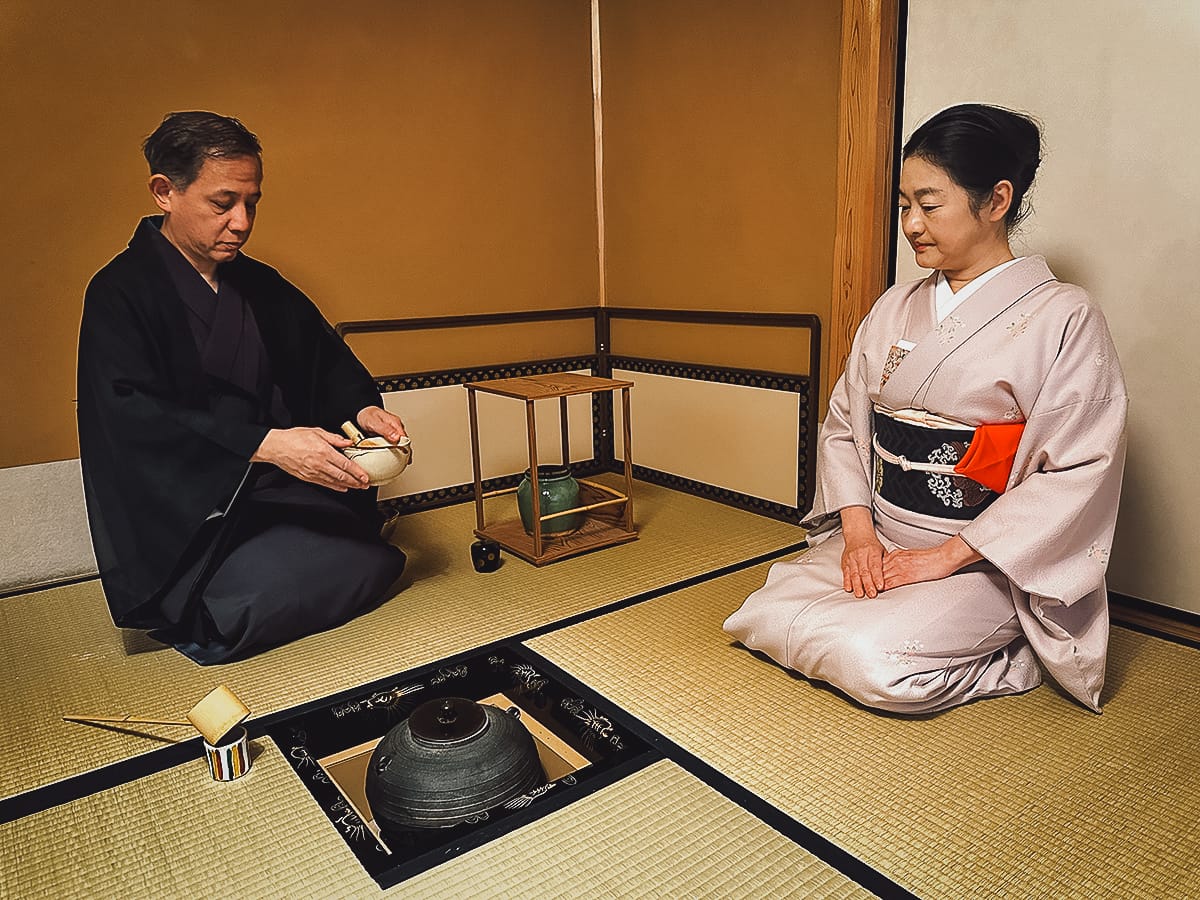
While the Japanese tea ceremony is undeniably beautiful, some visitors might find it excessively formal and restrictive, and that’s understandable. But it’s important to understand that the formality of chanoyu has its purpose.
The strict rituals are designed to eliminate distractions, guiding your attention toward the precise choreography of each movement. Rooted in Zen Buddhist principles, the formality encourages mindfulness, drawing you fully into the present moment. It’s not about achieving perfection. Instead, it’s about being fully aware of the now.
During my visit, aside from Souai-san’s advice on etiquette, conversation was minimal. Every gesture –from cleaning the utensils to whisking the matcha – demanded attention, keeping our focus squarely fixed on Souei-san’s careful preparation of the tea.
As a first-time participant, I found myself naturally absorbed in the ceremony’s quiet rhythm.
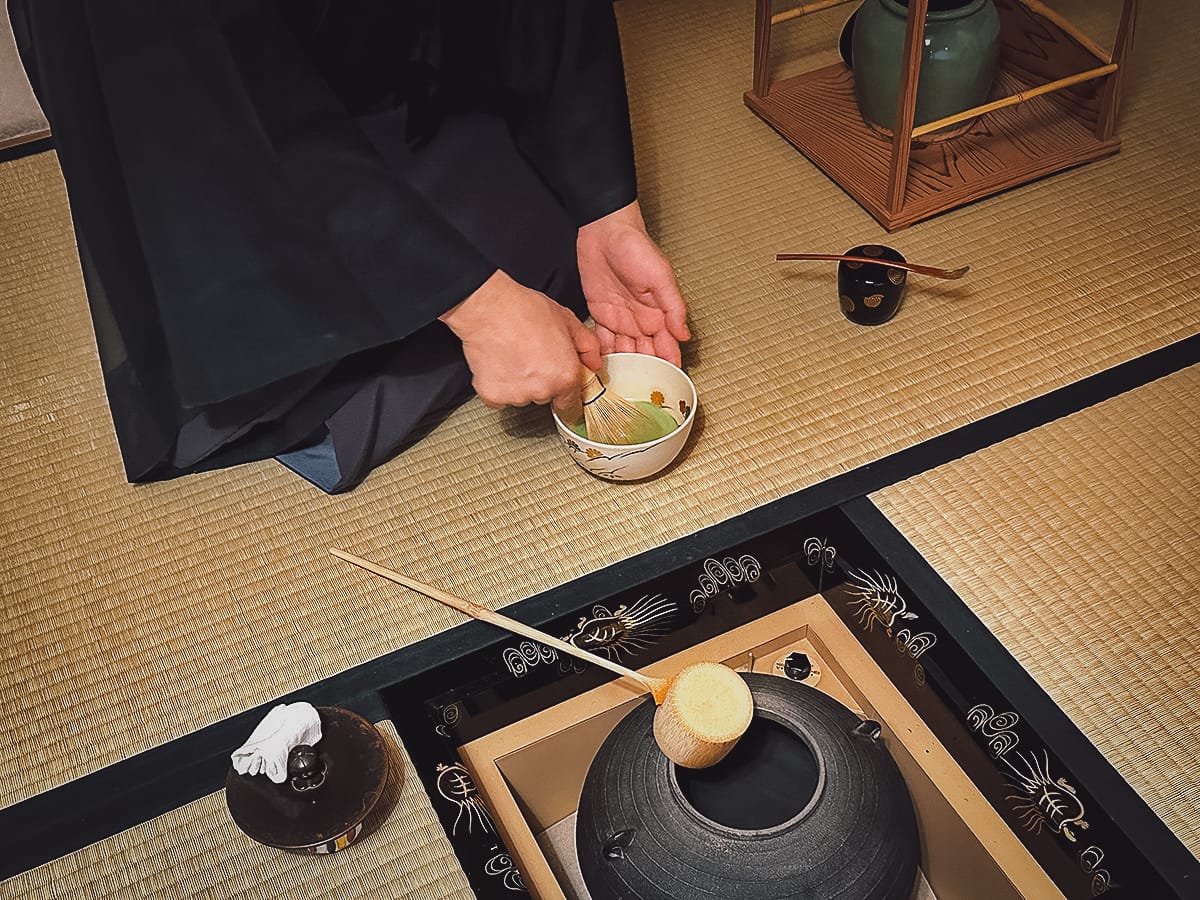
From beginning to end, a tea ceremony follows a precise sequence. The formality doesn’t disappear once the matcha reaches your hands. There’s a proper way to bow, a specific way to accept the tea, and even a deliberate manner in which to drink it.
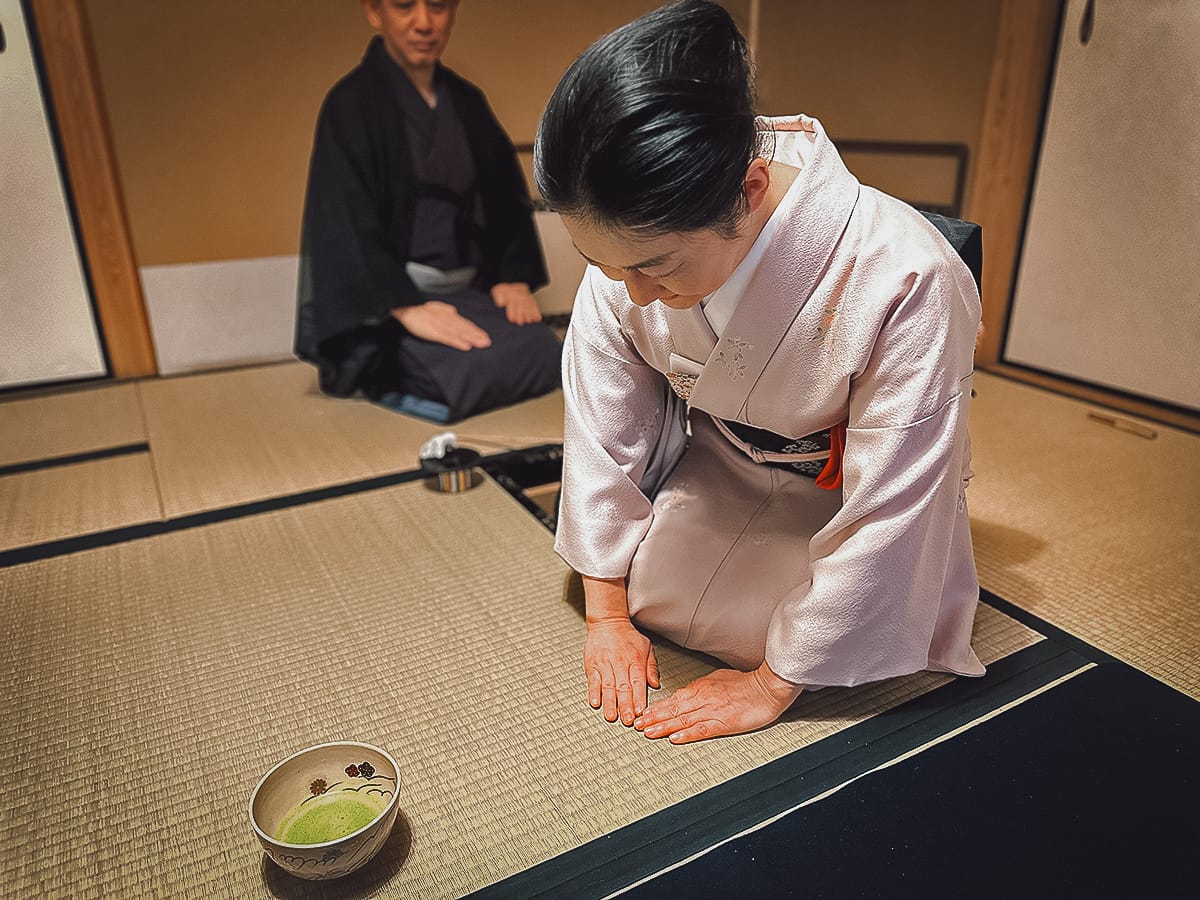
Served with another sweet – a type of higashi (dry wagashi) – Souai-san guided me on the proper way to accept and drink the tea. She asked me to bow before lifting the bowl, place it carefully in my left palm, and then turn it twice with my right hand before taking a sip.
Like eating ramen, you’re expected to slurp when sipping matcha. Rather than sipping it slowly like a latte, the tea is meant to be enjoyed in four or five steady, rhythmic sips. From start to finish, the ceremony’s formality is maintained, with every movement following a deliberate, rehearsed pattern.
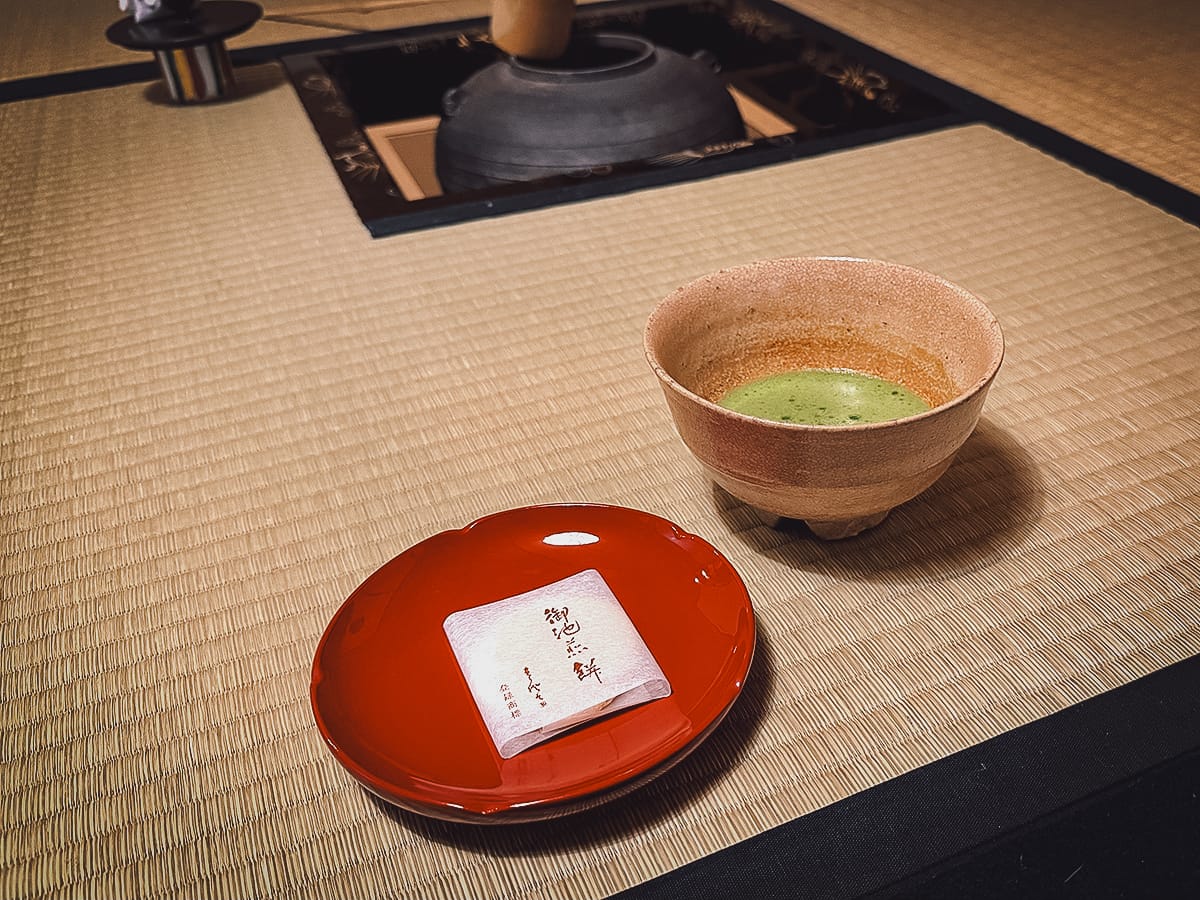
After taking my last sip and expressing my thanks, Souei-san carefully began cleaning and wiping down the utensils. As in its preparation, the same measured care is shown. Even at the end, the ritual’s formality remains intact.
Quietly watching him clean up, I couldn’t help but think there’s a certain symmetry to it all. The same mindful attention that guided the whisking of the powdered tea now extended to the cleaning of the bowl. Conversation remained minimal as I continued to hold the seiza position, my legs and ankles screaming for relief.
It became clear in these final moments that the ceremony was never about the tea. Inviting presence, it was about being part of a sequence of moments where every gesture – no matter how small – carried intention.
Chanoyu FAQs
Is a tea ceremony expensive?
Yes, it can be. Depending on the venue, inclusions, and size of your group, a proper tea ceremony will cost you at least USD 150-200 per person.
How long does a tea ceremony last?
Most tea ceremonies designed for tourists usually last between 90 and 120 minutes.
Is food served during a tea ceremony?
Yes, one or more types of wagashi are typically served at tea ceremonies.
Some tea ceremonies are paired with cha-kaiseki – a light, seasonal meal that’s served before the matcha. To enjoy this, be sure to select an experience that includes cha-kaiseki.
Is a Japanese tea ceremony worth it?
It depends. A Japanese tea ceremony isn’t cheap, so it takes the right kind of person – or at least the proper mindset – to appreciate it.
If you want to go beyond the surface and experience something deeply cultural in Japan – something meditative, immersive, and ritualistic – then chanoyu is one of the most enriching things you can do. It isn’t like casually sipping a latte at Starbucks, so patience and an open mind are key.
THE FINAL SAY
In hindsight, I realize that much of my anxiety came from trying to document the experience for this website. Taking pictures, absorbing the information, and remembering the proper etiquette all added unnecessary pressure, making it harder to fully immerse myself in the moment.
If you decide to experience a tea ceremony in Japan, then I highly recommend putting the phone down and allowing yourself to be present. Without distractions, it’s much easier to settle into the rhythm of the ceremony and truly appreciate what’s unfolding before you.
Being present, after all, is the point of chanoyu.
Disclosure
This article on the Japanese tea ceremony contains affiliate links, meaning we’ll earn a small commission if you make a booking at no additional cost to you. We only recommend products and services that we use ourselves and firmly believe in. We really appreciate your support, as it helps us make more of these free travel guides. Arigato gozaimasu!
References
1. Sensei, Adam. What is the Relationship between Zen and Tea Ceremony? Kimono Tea Ceremony MAIKOYA.
2. History of Tea in Japan. Marukyu Koyamaen.
3. The History of Japanese Tea Ceremony. Deeper Japan.
4. Sensei, Adam. What are the differences between Ura Senke and Omote Senke Tea Ceremony Schools? Kimono Tea Ceremony MAIKOYA.
5. Nobumichi, Izumi. Tea, Faith, and Gardening: “Camellias and Japanese Culture”. nippon.com. (2026, March 22).
6. Introductory Guide to Tea Ceremony Utensils. Tezumi. (2021, July 26).
