
SUMMARY HIGHLIGHTS
- Ogijima is a tiny island in the Seto Inland Sea. It’s home to just one village, Ogicho, and has a population of roughly 150-180 people.
- Ogijima is one of the islands that hosts the Setouchi Triennale art festival.
I have such a fascination for Japan. I’m so enamored by the country and its culture that you could probably plop me down in any village, no matter how uneventful, and I’d be happy. Ogijima is the perfect example.
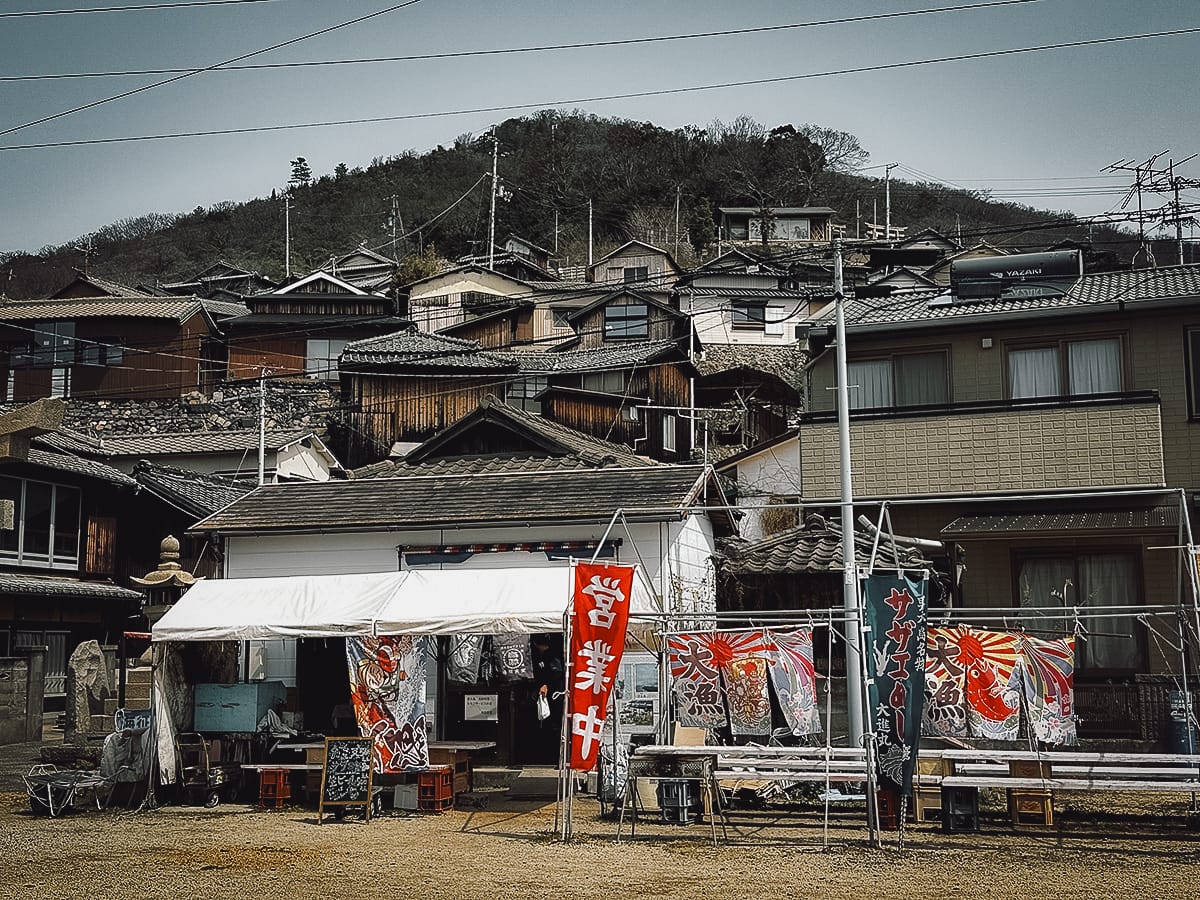
A tiny island off Takamatsu in the Seto Inland Sea, Ogijima is home to just one village and roughly 150-180 residents. There are a couple of shrines, a lighthouse, and lots of cats. Beyond that, there really isn’t much else to do on the island, but that’s the beauty of it. It takes you away from the glitz of the big cities to show you a slower, more contemplative side of Japan.
Popular destinations like Tokyo, Osaka, and Kyoto still excite me, but the more deeply I explore Japan, the more I learn to appreciate and yearn for places like Ogijima.
VISIT TAKAMATSU QUICK LINKS
To help you plan your trip to Takamatsu, we’ve compiled links to recommended hotels, tours, and other travel-related services here.
HOTELS
Top-rated hotels near Takamatsu Station, the most convenient area to stay for first-time visitors to the city.
- Luxury: JR Hotel Clement Takamatsu
- Midrange: Daiwa Roynet Hotel Takamatsu
- Budget: Hostel JAQ takamatsu
EXPERIENCES
- Sightseeing Tour: Private Customizable Takamatsu Tour with Local Guide
- Ritsurin Koen Tour: Ritsurin Garden Guided Walking Tour
- Food Tour: Gourmet Journey with a Private Car
OTHER SERVICES
- Travel Insurance (non-US residents get 5% off)
- JR West Kansai Wide Area Pass
- Japan Rail Pass
- Japan eSIM
What is Ogijima?
Ogijima (Ogi Island) is a small island in the Seto Inland Sea, next to Megijima and about 5 km (3.1 miles) north of the Takamatsu mainland1. Measuring about two kilometers long (1.2 miles) and less than a kilometer wide, it’s home to just one village – Ogicho – and hosts a population hovering between 150-180 residents2.
Ogijima is one of around a dozen islands in the Seto Inland Sea that host the Setouchi Triennale. In recent years, it’s also become known for its sizable population of feral cats.
What is the Setouchi Triennale?
The Setouchi Triennale is an international contemporary art festival held every three years on the islands of the Seto Inland Sea, including Ogijima. It unfolds over roughly 100 days and is divided between the spring, summer, and autumn seasons.
Like many rural islands in Japan, Ogijima has seen a sharp population decline in recent years, with many young residents leaving for the mainland. The Triennale was launched in 2010 in the hopes of revitalizing these depopulating islands through site-specific art, tourism, and community engagement.
Unfortunately, I visited Ogijima in late March, a couple of weeks before the start of the 2025 spring festival, so I’ve yet to experience it first-hand. The next Triennale will be held in 2028.
How to Get to Ogi Island
An infrequent ferry operates between Takamatsu Port and Ogijima via Megijima. Departing every two hours, the journey takes around forty minutes, with a brief stop at Megijima before continuing on to Ogijima.
As of January 2026, the last ferry back to Takamatsu departs from Ogi Island at 5PM. If you miss this ferry, then the next one won’t be until 7AM the following day.
I relied on Google Maps to plan my trip, but you can check the Shikoku Guide website for a timetable and fare information. Timetables may change, so it’s important to confirm the latest schedule before going.
Things to Know Before Visiting
A few things to remember before visiting Ogi Island:
- Ferries between Takamatsu and Ogijima are limited, so plan your visit carefully.
- Ogicho is a real village, not a tourist attraction. Please be respectful of residents.
- Restaurant options can be limited, especially outside of the Setouchi Triennale.
- Many establishments are cash-only.
- At the time of this writing, there are no convenience stores, supermarkets, or ATMs on the island. According to the Shimarebi website, there’s only one store on Ogijima, but opening hours and selection are limited.
- There are a few vending machines on the island, but according to the Shimarebi website, they’re often sold out during the summer season.
- Bringing enough snacks and water is a good idea.
- The island is home to a sizable population of feral cats.
Exploring Ogijima
Ogicho
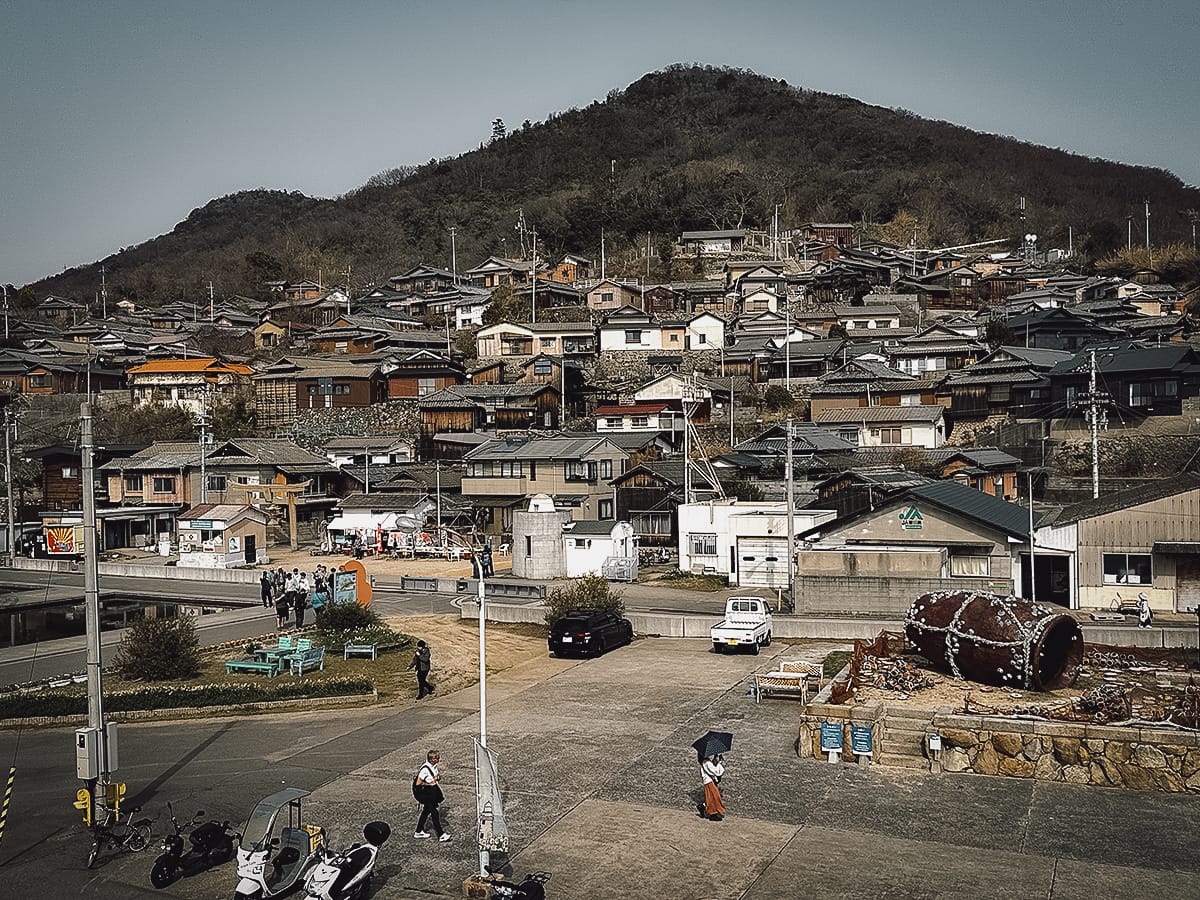
Ogi Island is small and mostly mountainous, so the houses of Ogicho village are built on the side of a slope. It makes for an interesting photograph from the upper deck of the ferry.
Before art tourism, the main industry on Ogijima revolved around fishing, particularly octopus fishing.
Ogi Exchange Center
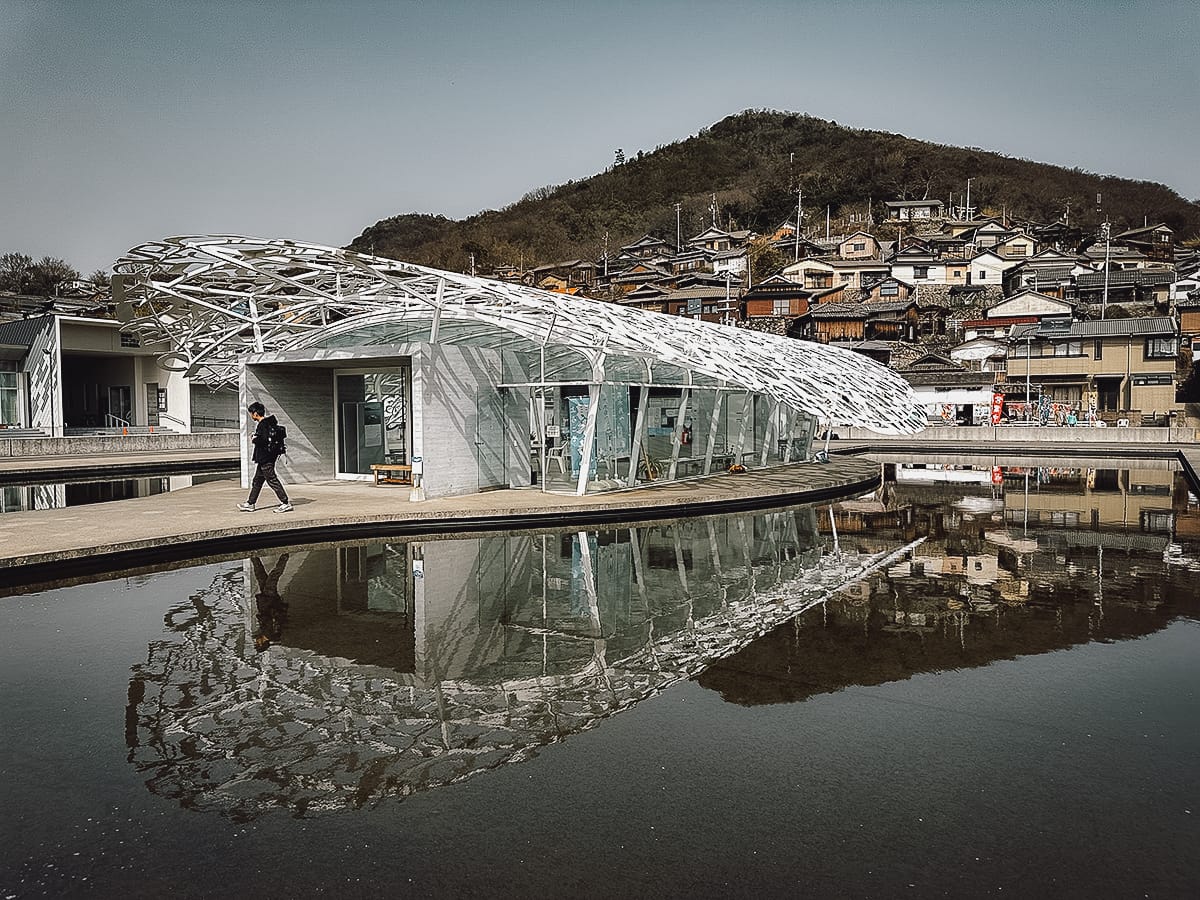
Ogicho is a traditional Japanese fishing village, so you can’t help but notice this modern-looking structure when you get off the ferry. Known as the Ogi Exchange Center, it was designed by Spanish contemporary artist Jaume Plensa for the Setouchi Triennale3.
An art installation in itself, the Ogi Exchange Center serves as the island’s information center, ferry terminal, ticket office, and all-around multi-functional hub.
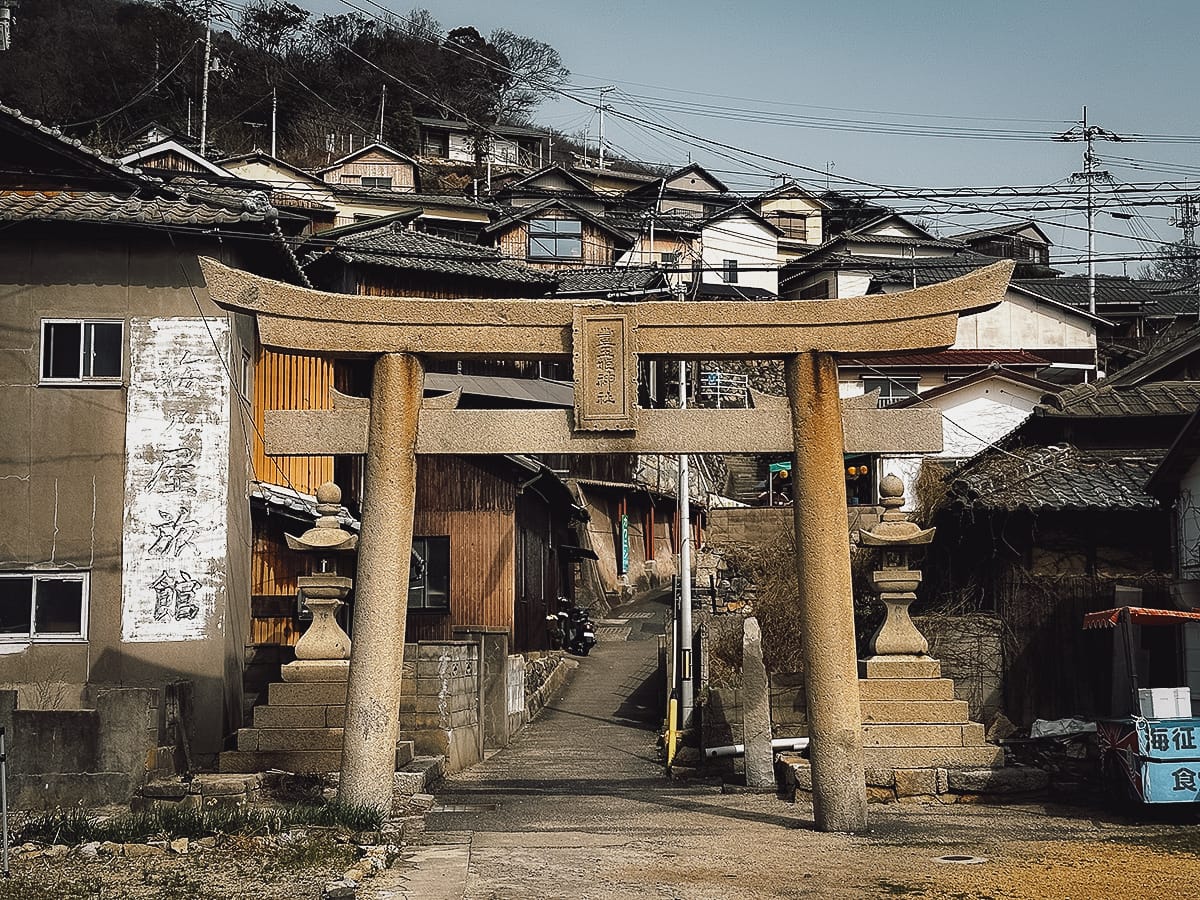
Ogicho consists of a maze-like network of alleyways that weave through the village. You’re welcome to freely explore Ogicho, but do remember that people still live here. You’ll encounter many signs reminding you of that, so it’s important to keep your voice down and not enter any building that isn’t open to the public.
Toyotama-hime Shrine
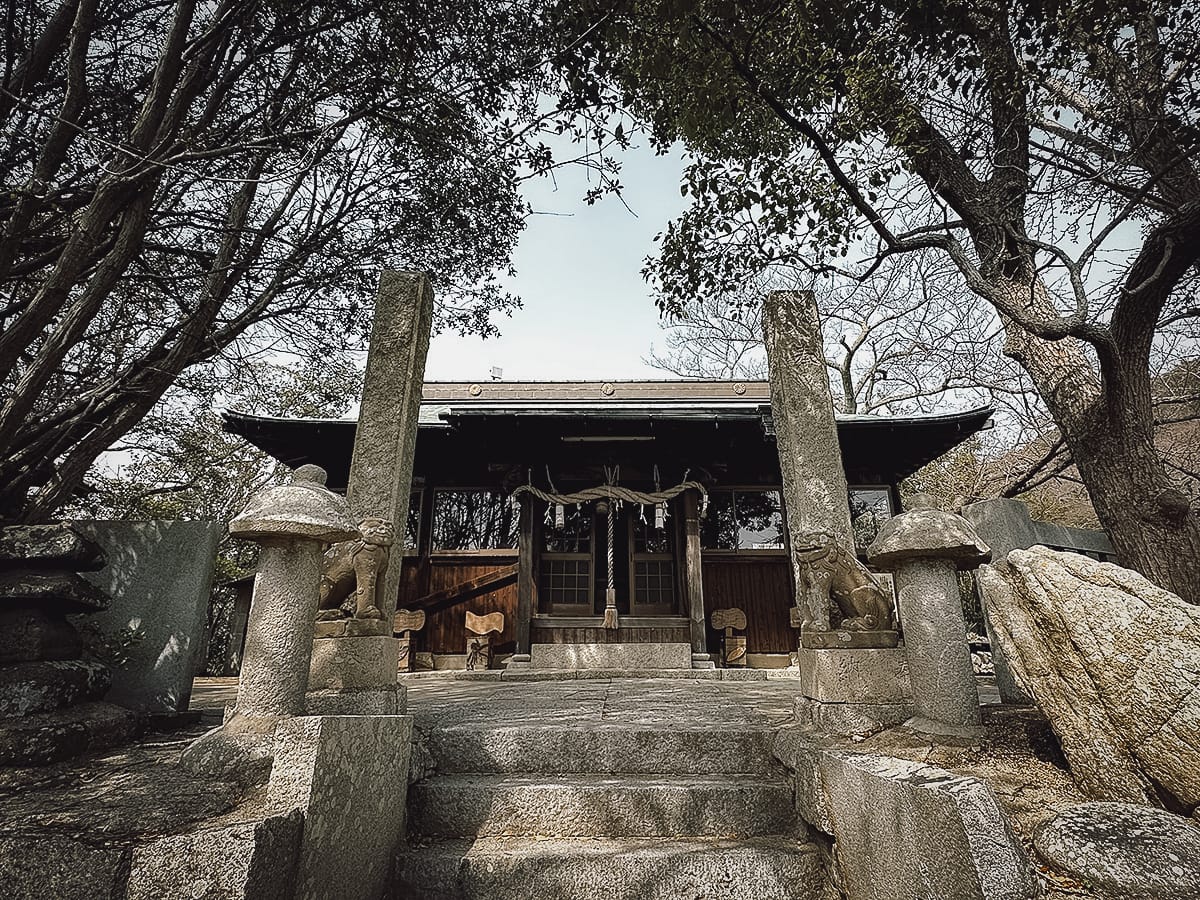
Located towards the top of the village is Toyotama-hime Shrine, one of the highest points of Ogicho, and where you’ll find some of the best views of the island.
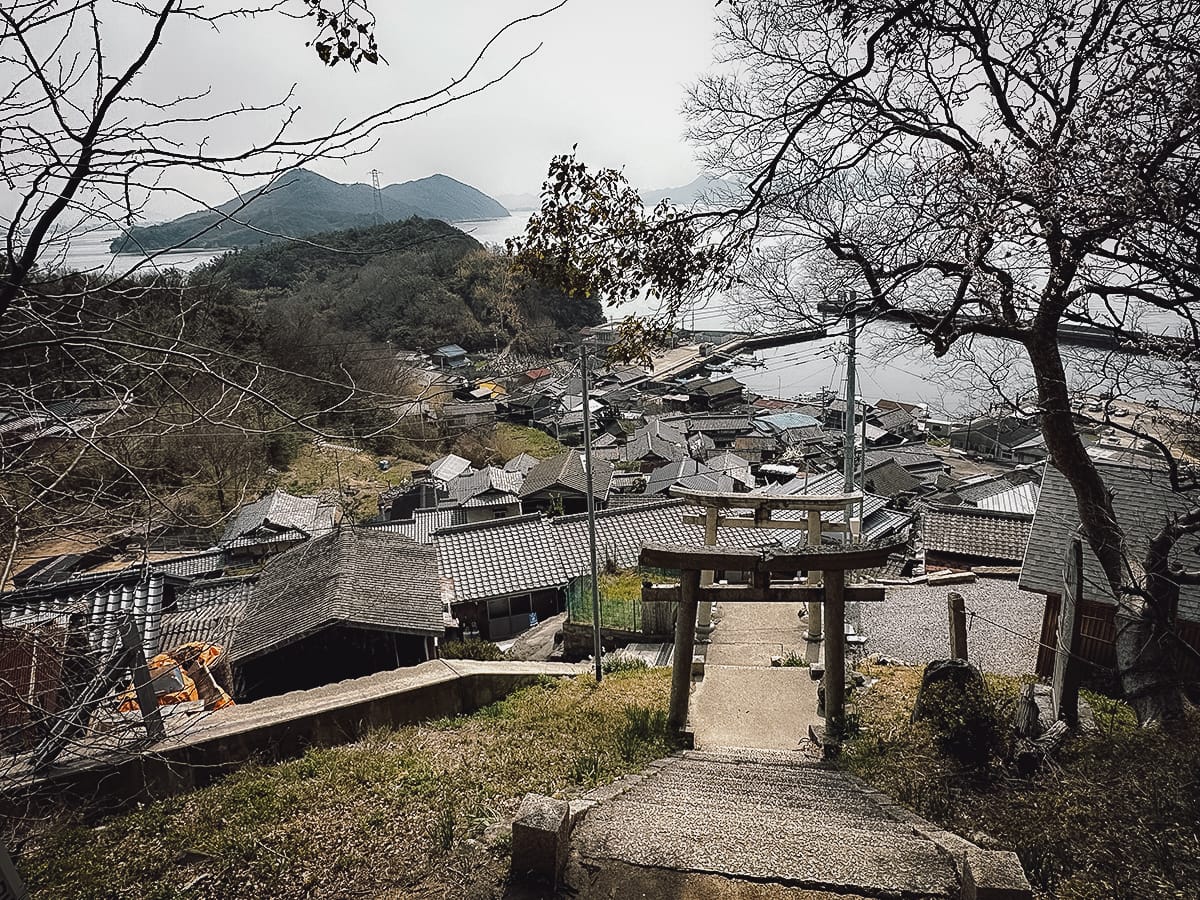
This shrine is dedicated to the sea goddess Toyotama-hime. It’s where the locals go to pray for safe childbirth4.
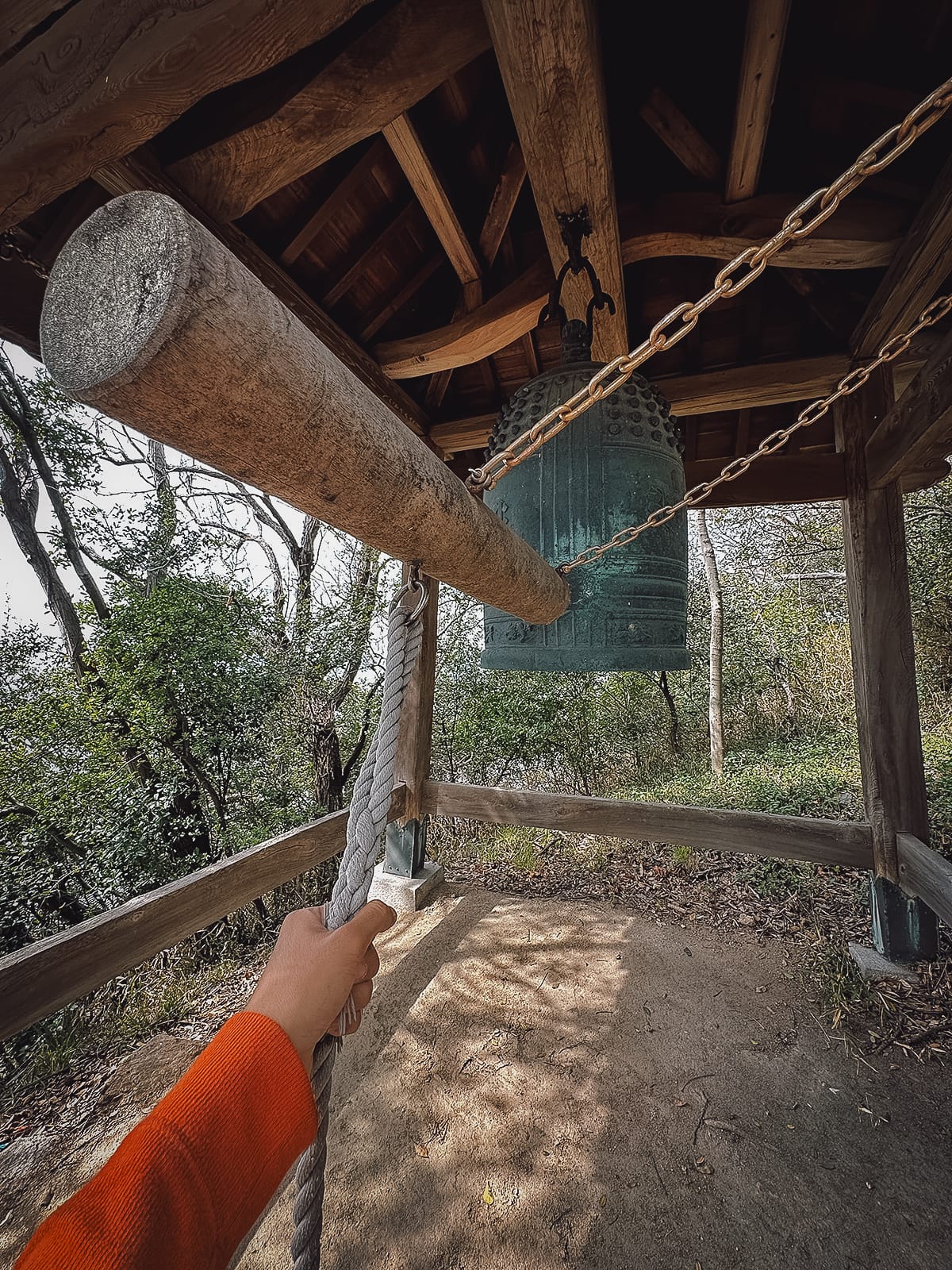
These large bells (bonsho) with accompanying striking logs (shumoku) are typical of Buddhist temples, but you’ll find one here at Toyotama-hime Shrine.
There weren’t any signs asking people not to ring the bell, so I did, just once. When permitted, a single measured swing of the shumoku per person is generally considered appropriate5.
I used to believe that making a wish or saying a prayer preceded the ringing of the bonsho, but that isn’t really the case. In Buddhist contexts, ringing a bonsho is traditionally meant to summon monks to prayer and mark the passage of time6.
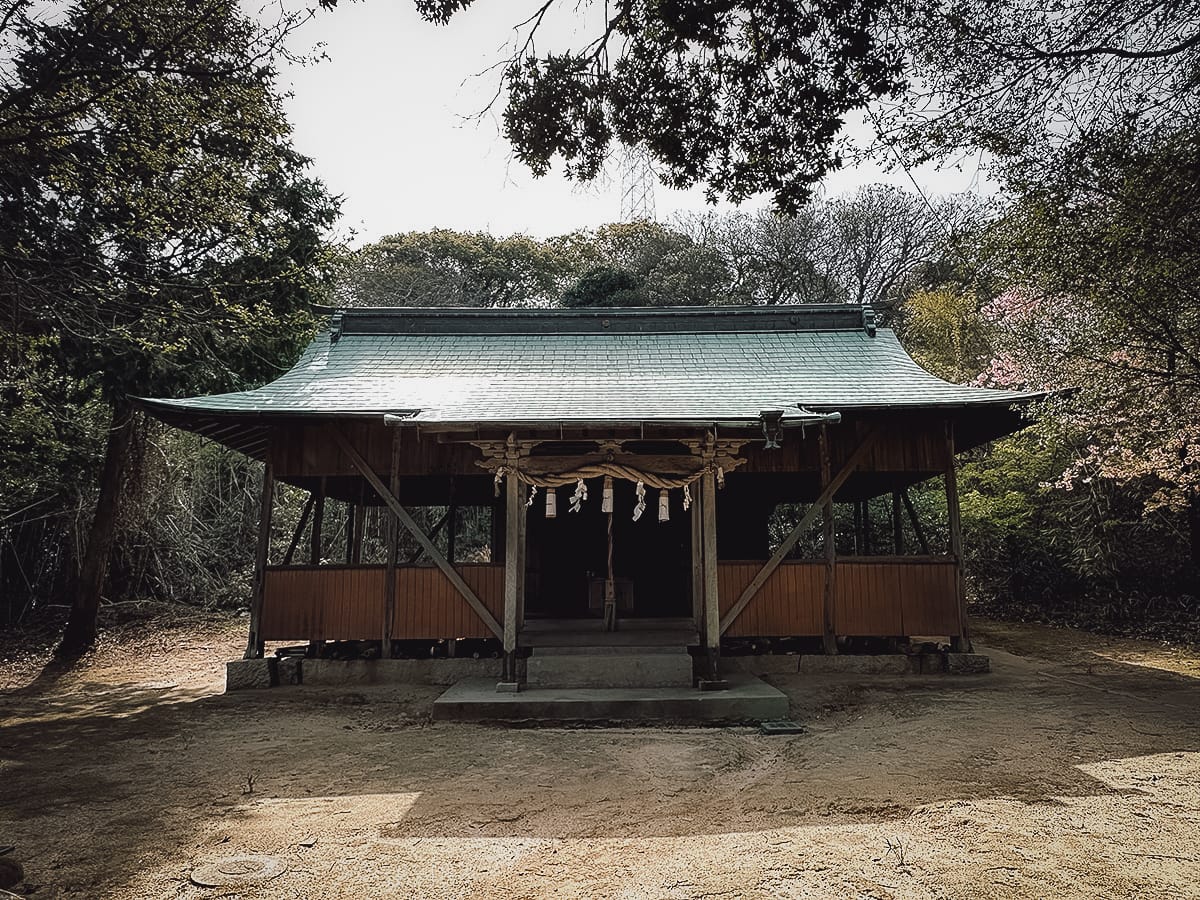
Kamo Shrine
Close to the southern tip of the island is another Shinto shrine, Kamo Shrine. According to Japanese Google Maps reviewers, this shrine is dedicated to Yamasachi-hiko, a legendary figure from Japanese mythology and the husband of the sea goddess Toyotama-hime.
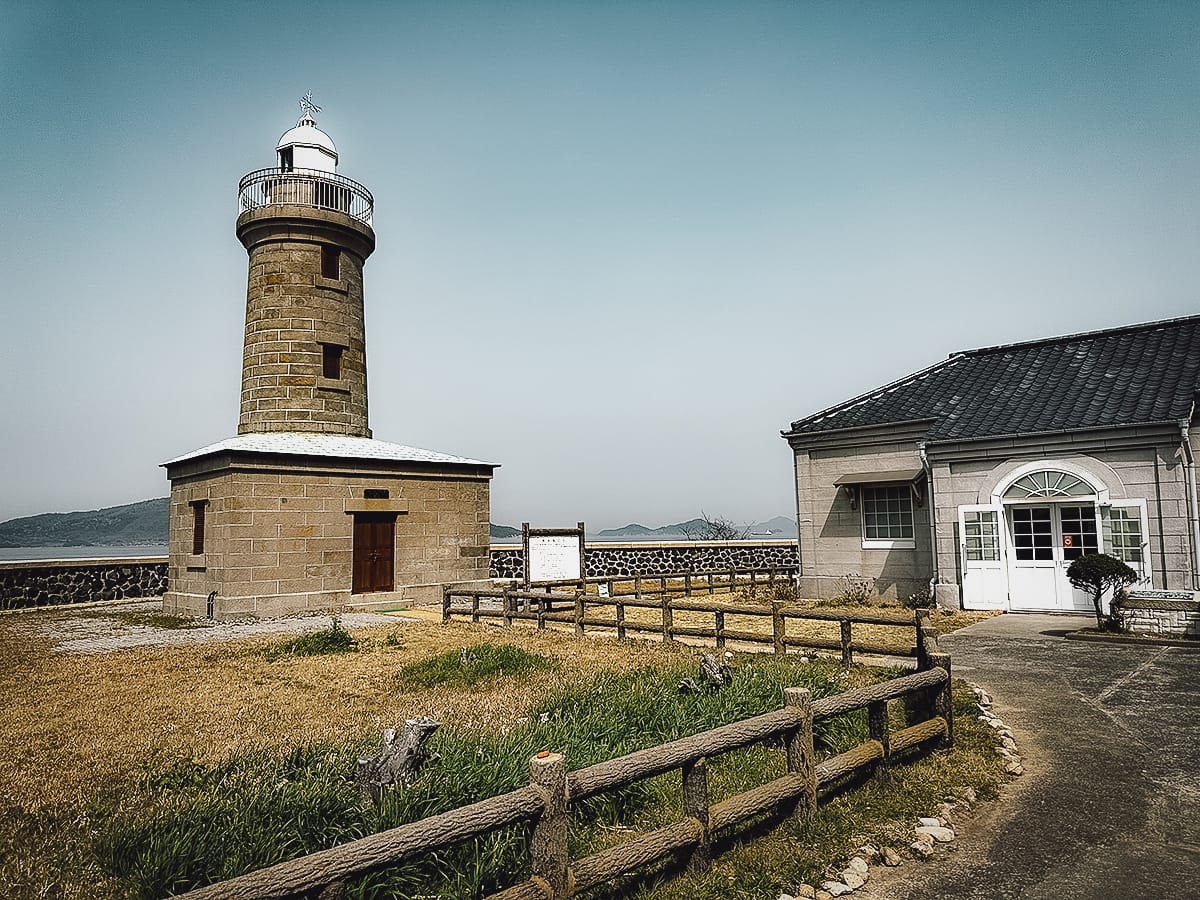
Ogijima Lighthouse
At the northern tip of the island is Ogijima Lighthouse. I followed Google Maps and walked along the coastal road, which stretches for about 1.8 km (1.1 miles) from the ferry port. The road was mostly paved, with just a few gentle ups and downs.
There’s no cover or stores along this road, so I was happy to have a bottle of water and sunscreen in my bag. Just a few of the essentials I’m thankful to have with me.
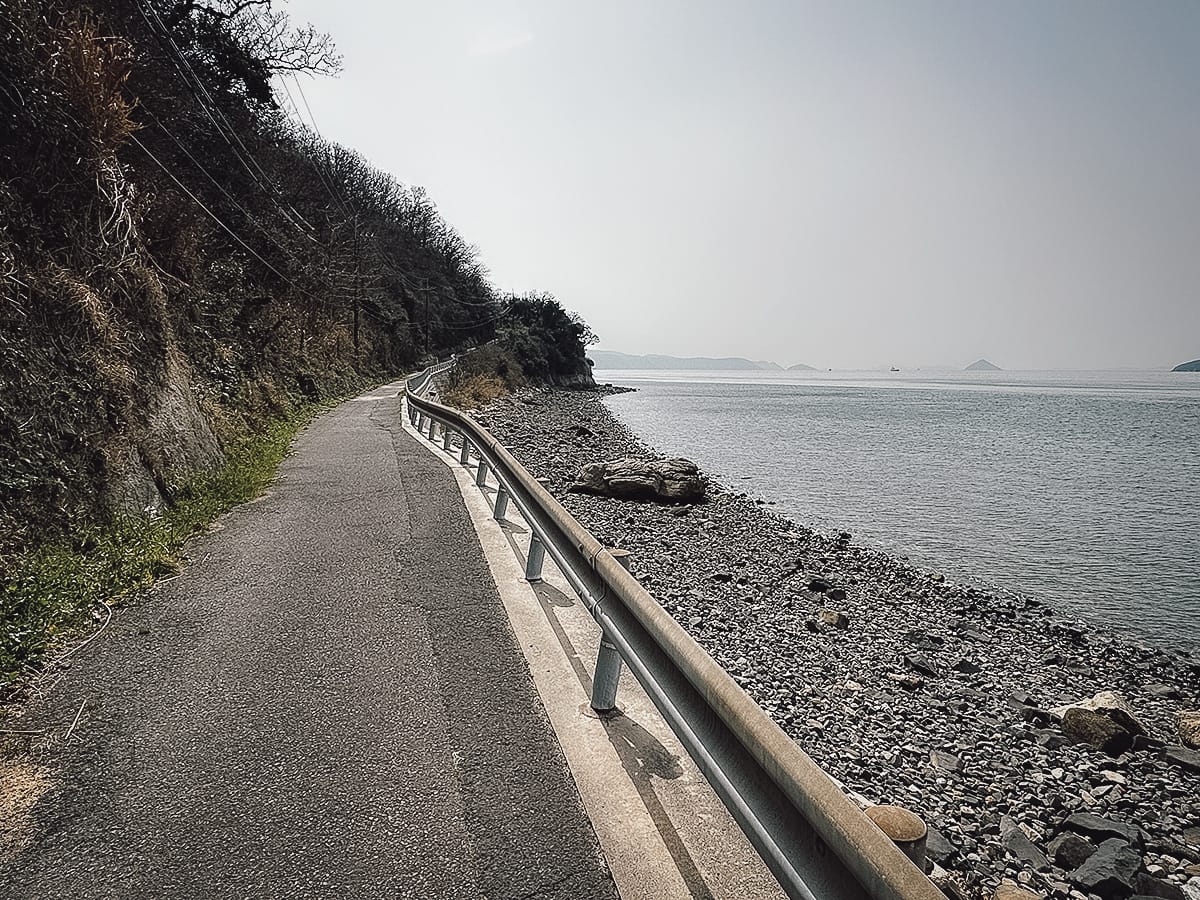
Walking at my usual brisk pace, it took me roughly 15–20 minutes to reach the lighthouse from Ogicho. It’s a small and rather unimpressive lighthouse, but based on what I’ve read, it’s one of the few lighthouses in Japan made entirely of stone4.
Walking Ark
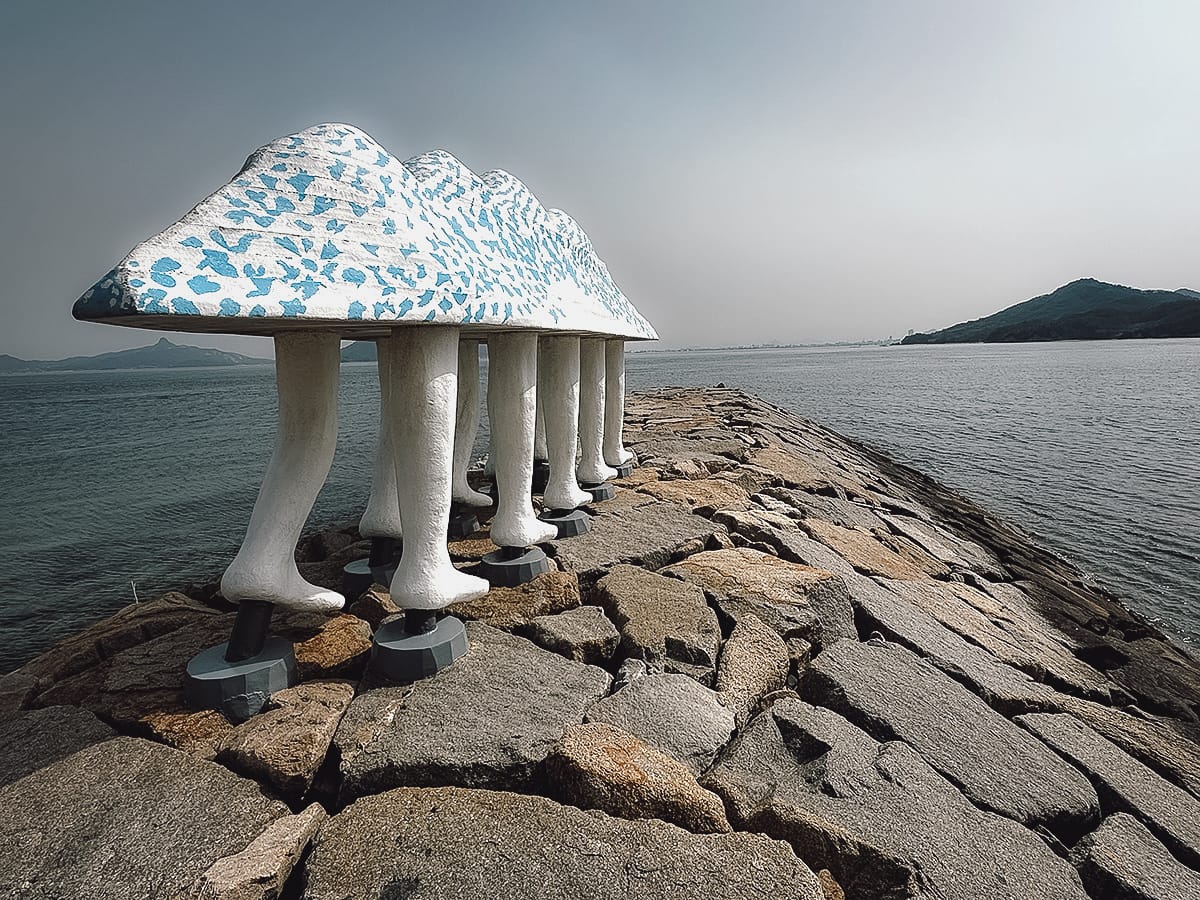
There’s more art to see during the Setouchi Triennale, but you’ll find a quirky installation piece that’s on permanent display at the southern end of the island. Called “Walking Ark”, it depicts what looks like a mountain range (or ark?) with legs marching out to sea.
The piece was created by Japanese artist Keisuke Yamaguchi and has been on display since 2013.
“Cat Island”
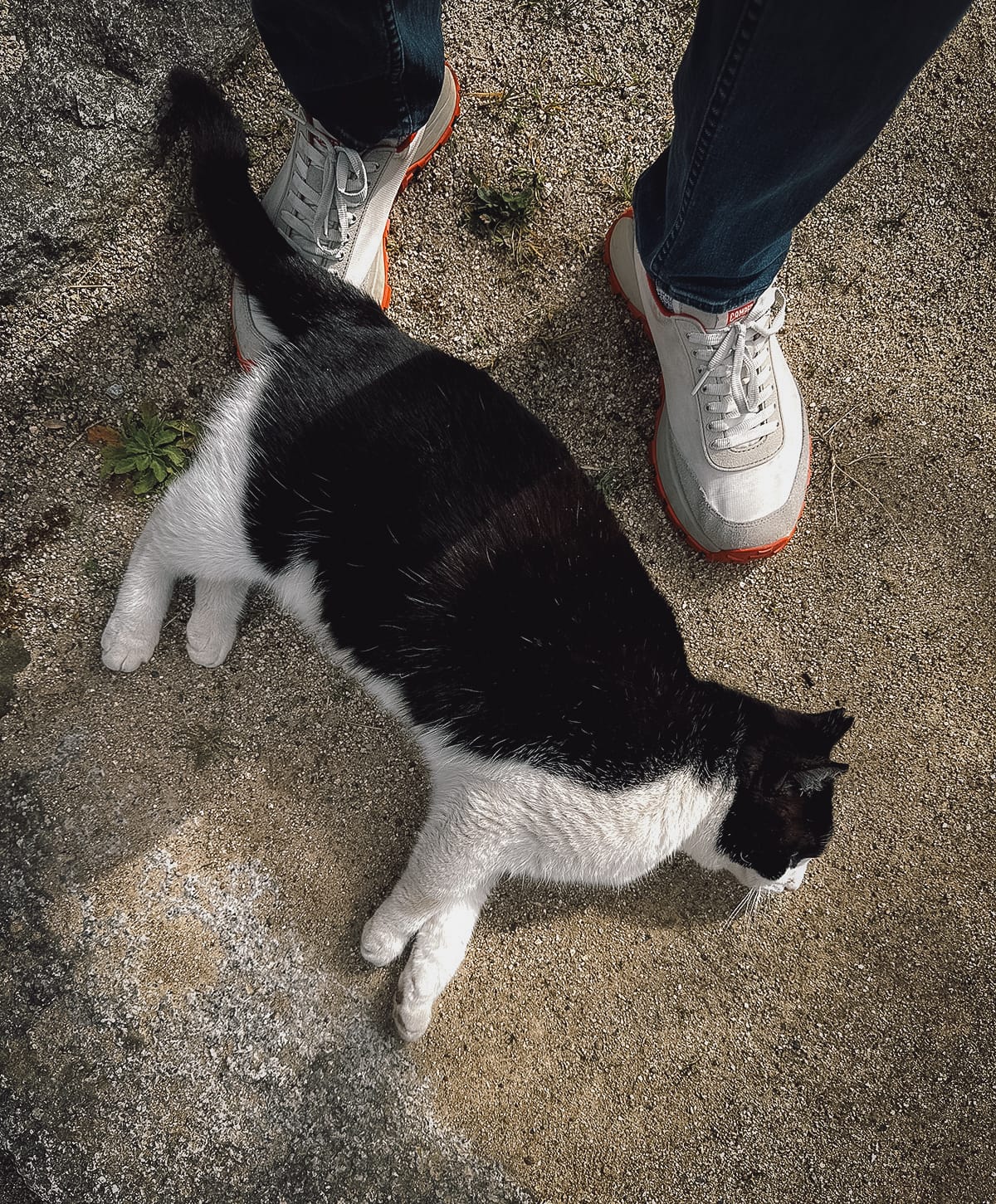
I don’t know when it started, but Ogijima has become one of Japan’s many “cat islands”, similar to Tashirojima in Miyagi or Aoshima in Ehime. I encountered several feral cats throughout the island, many of which were quite friendly.
Here’s one that decided to use my shoe as a buttrest. As much as I love cats and dogs, I was once bitten by a stray dog in Morocco (which forced me to get rabies shots), so I’ve stopped petting them altogether on trips, just to be safe.
Visit Ogijima FAQs
Is Ogijima worth visiting?
Yes, I think so, but only if you have the time. There isn’t much to see and do outside of the Setouchi Triennale, but in my opinion, it’s still worth visiting. I found the island’s slower pace to be quite refreshing.
Are there restaurants on Ogi Island?
Yes, there’s a handful of small eateries in Ogicho. I enjoyed this delicious octopus tempura set meal at this shokudo, which only opens for lunch. Like many places on the island, it only accepts cash.
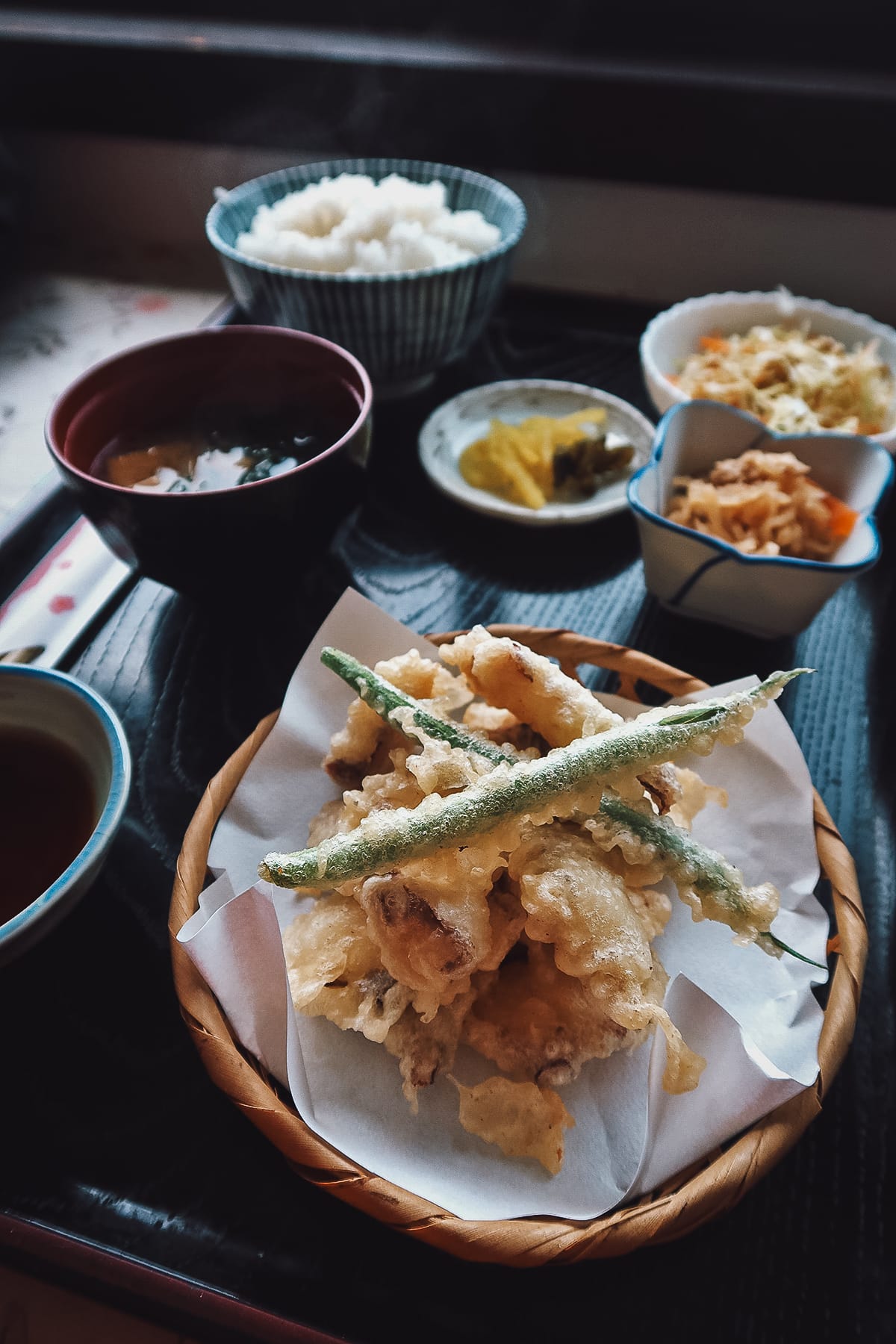
Before getting lucky with that restaurant, I tried going to a different place marked “open” by Google Maps, only to find it closed. This was in late March. I didn’t see any convenience stores, supermarkets, or ATMs on the island.
I wasn’t sure what the food situation would be like outside the Setouchi Triennale, so I brought enough cash, snacks, and water with me before boarding the ferry to Ogijima.
How much time will I need on Ogi Island?
I arrived on Ogijima at 2:40PM and left on the 5PM ferry. This gave me enough time for lunch and a quick DIY tour of the island. I had enough time to do everything I wanted, but it did feel a bit rushed. Arriving earlier, especially during the Setouchi Triennale, would have been better.
Can I stay the night on Ogi Island?
Yes, you can. There are no real hotels on the island, but I did find a few accommodation listings on Airbnb.
THE FINAL SAY
Ogijima isn’t for everyone. It’s a small, isolated island that lacks the excitement and conveniences of larger destinations. But for people like me, that very simplicity is exactly what makes it appealing.
Big cities like Takamatsu certainly have their place on a Shikoku itinerary, but in my opinion, a quiet getaway like Ogijima deserves a spot too.
Disclosure
This article on Ogijima contains affiliate links, meaning we’ll earn a small commission if you make a booking at no additional cost to you. We only recommend products and services that we use ourselves and firmly believe in. We really appreciate your support, as it helps us make more of these free travel guides. Arigato gozaimasu!
References
1. The Grand Festivals of Ogijima and Megijima. Setouchi Triennale.
2. Ogijima Island. Visit Kagawa.
3. Gaining popularity! Ogijima, the Art Island, is a healing spot surrounded by cats!? skyticket by ADVENTURE. (2025, September 1).
4. King, Kerry. Ogijima. GaijinPot Travel. (2025, August 12).
5. Etiquette When Visiting Temples and Shrines. Aichi Now.
6. Bonshō. Wikipedia. (2013, May 15).
