
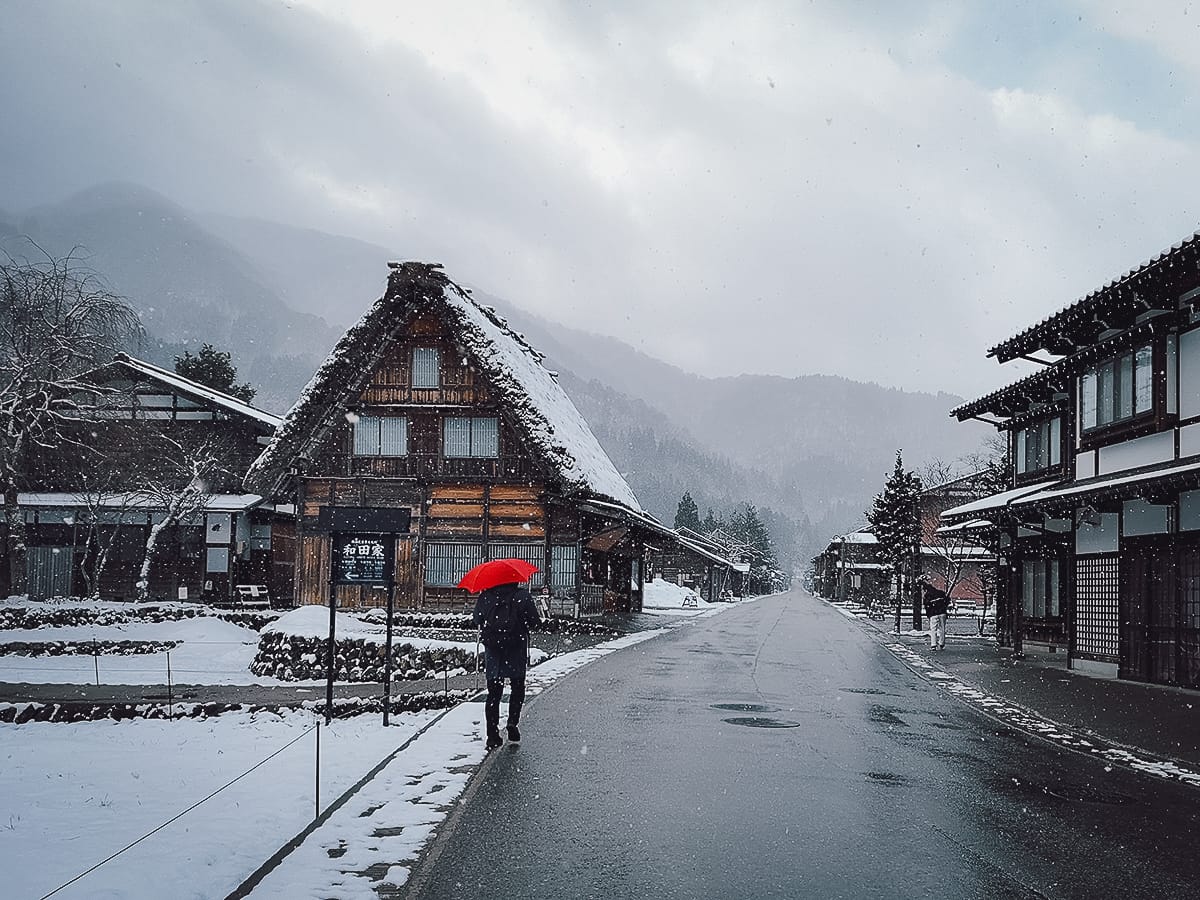
SUMMARY HIGHLIGHTS
- Many tourists refer to this village as “Shirakawa-go”, but it’s actual name is Ogimachi. It’s the largest and most well-known village in the Shirakawa-go region.
- Ogimachi Village is often marketed as the most beautiful village in Asia.
- Most people do day trips to Ogimachi, but for the most immersive experience, you may want to stay the night at a gassho-zukuri farmhouse.
Ogimachi Village in Shirakawa-go is often described as the most beautiful village in Japan, if not all of Asia. Some publications go so far as to call it one of the most beautiful villages in the world.
Many of these superlatives are questionable, often exaggerated to drum up tourism – like “the most beautiful train station” or “the most beautiful Starbucks in the world” {eyeroll} – but in this case, they may be deserved.
I’ve been to Ogimachi Village twice, in different months and weather conditions, and both visits lived up to my expectations. A timeless village that feels frozen in time, Ogimachi really is as beautiful as people say.
VISIT OGIMACHI QUICK LINKS
To help you plan your trip to Shirakawa-go, we’ve compiled links to recommended hotels, tours, and other travel-related services here.
HOTELS
- Luxury: Onyado Yuinosho, Shirakawago
- Midrange: WAY SHIRAKAWAGO
- Budget: GuestHouse Shirakawa-Go INN
DAY TOURS
- From Takayama: Guided Day Trip to Takayama and Shirakawa-go
- From Kanazawa: World Heritage Shirakawa-go Guided Tour
- From Nagoya: Shirakawa-go Gassho Village & Takayama Tour
- From Kyoto/Osaka: Shirakawa go and Takayama Private Tour
OTHER SERVICES
- Travel Insurance (non-US residents get 5% off)
- Japan Rail Pass
- Takayama-Hokuriku Area Tourist Pass
- Japan eSIM
GUIDE TABLE OF CONTENTS
OGIMACHI AT A GLANCE
Shirakawa-go is a mountainous region in the remote Shogawa River Valley in Gifu prefecture. Strictly speaking, Shirakawa-go refers to an area, but it’s often used to describe Ogimachi Village, the largest village in the region and its main attraction.
Like Suganuma and Ainokura villages in neighboring Gokayama, Ogimachi is a UNESCO World Heritage Site famous for its traditional gassho-zukuri farmhouses. These three villages are known collectively as the “Historic Villages of Shirakawa-go and Gokayama”1.
Unique to Japan, gassho-zukuri farmhouses are noted for their slanted thatched gable roofs. The Shirakawa-go region gets a lot of snowfall, so the roofs are constructed at a steep angle to allow heavy snow to easily fall off in winter. Their unique shape resembles hands clasped in prayer, which is how this architectural style got its name. “Gassho” means to hold one’s hands in prayer2.
What makes gassho-zukuri houses even more fascinating is that the roofs are constructed without nails or any metal materials2. They’re made entirely of straw and wood sourced from the forests around the village. In spite of this, this architectural style has endured, with some of the oldest houses being over 250 years old3.
BEST TIME TO VISIT OGIMACHI
In winter, Shirakawa-go is transformed by heavy snowfall, with Ogimachi Village often buried under one to two meters (3.3–6.6 ft) of snow4. The scene looks like something out of a fairy tale, which is why most of the Ogimachi photos you see on social media are taken during winter.

Ogimachi in winter is so idyllic that an evening illumination event is held on a few select Sundays in January and February every year. It’s a hugely popular event, so reservations are a must.
There’s no denying that Ogimachi Village is magical in winter, but the truth is, its gassho-zukuri farmhouses are photogenic in any season. I’ve been to Ogimachi when it wasn’t covered in snow, and I found the village to be just as beautiful. Not as fairy-tale-like, but still gorgeous and well worth a visit.
STAYING IN OGIMACHI
Ogimachi Village can easily be visited on a day trip from nearby cities like Hida Takayama and Kanazawa, which is what most people do, but travelers looking for the most immersive experience may want to stay the night.
Over twenty gassho-zukuri farmhouses in and around Ogimachi Village now welcome guests for overnight stays. As you can imagine, these farmhouse stays have become quite popular, especially in winter, but you can try making a reservation through the Shirakawa-go Tourist Association website.
For other types of accommodations in and around Ogimachi Village, you can check Booking.com. Here are a few top-rated hotels in Shirakawa-go:
- Luxury: Onyado Yuinosho, Shirakawago
- Midrange: WAY SHIRAKAWAGO
- Budget: GuestHouse Shirakawa-Go INN
THINGS TO DO IN OGIMACHI
Explore the Village
Ogimachi is a small village with over a hundred gassho-zukuri houses. Exploring the village on foot and experiencing its unique atmosphere is why people visit Shirakawa-go.
Just remember, around half of these farmhouses are still lived in by families, so it’s important to be respectful when you visit. Keep your voices down and don’t try entering any house or building that hasn’t been opened to tourism.
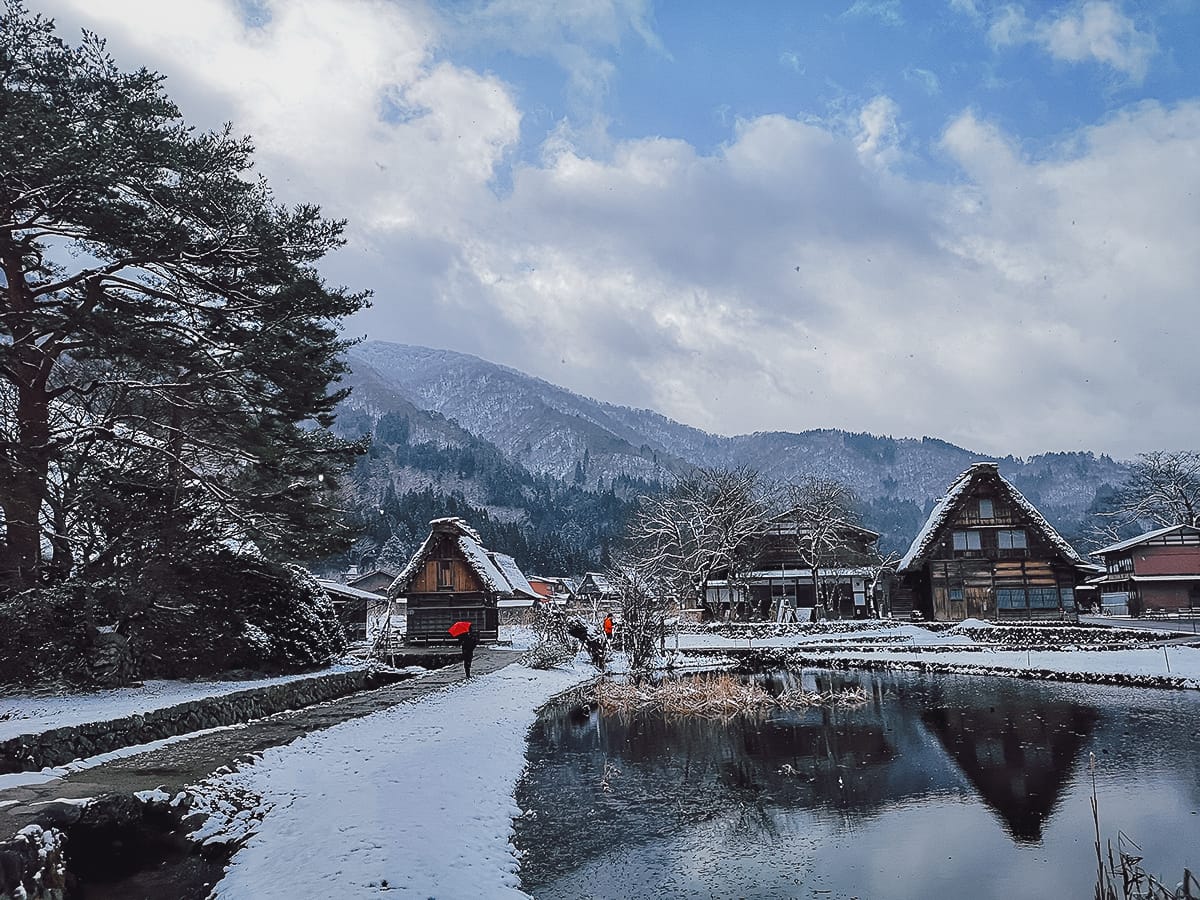
A few of the farmhouses in Ogimachi Village have been converted to museums, which tourists can enter for a fee. The Wada-ke House, pictured below, is the biggest. You can also enter the Kanda-ke and Nagase-ke houses.
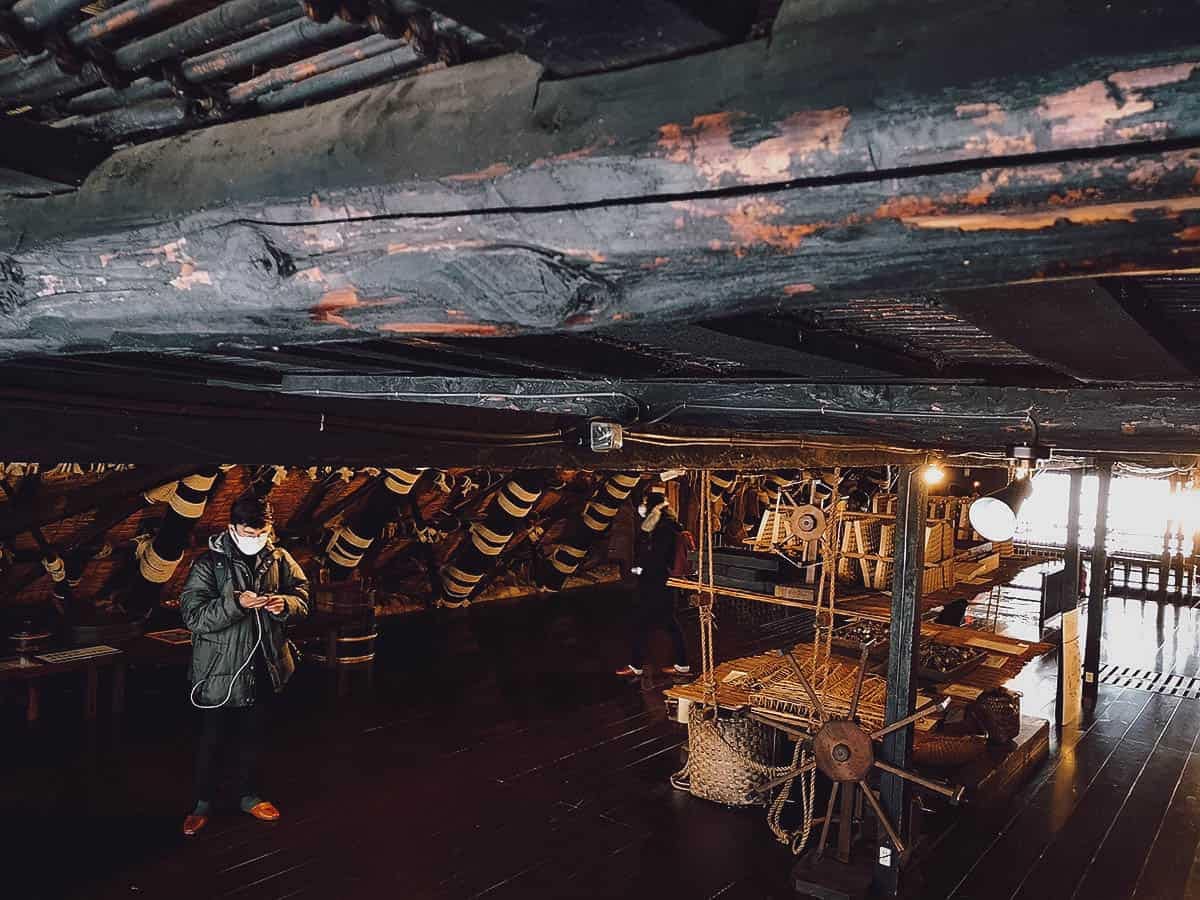
Visit the Open-Air Museum
If you’d rather not pay the entrance fee to each of the house museums mentioned above, you can pay a one-time fee to visit and explore Gassho-zukuri Minkaen, an open-air museum with over two dozen farmhouses, storehouses, and sheds that have been relocated to this area from the Kazura district5.
Located just across the Sho River, Gassho-zukuri Minkaen is typically less crowded than Ogimachi Village and offers visitors the opportunity to enter many of the buildings at their leisure.
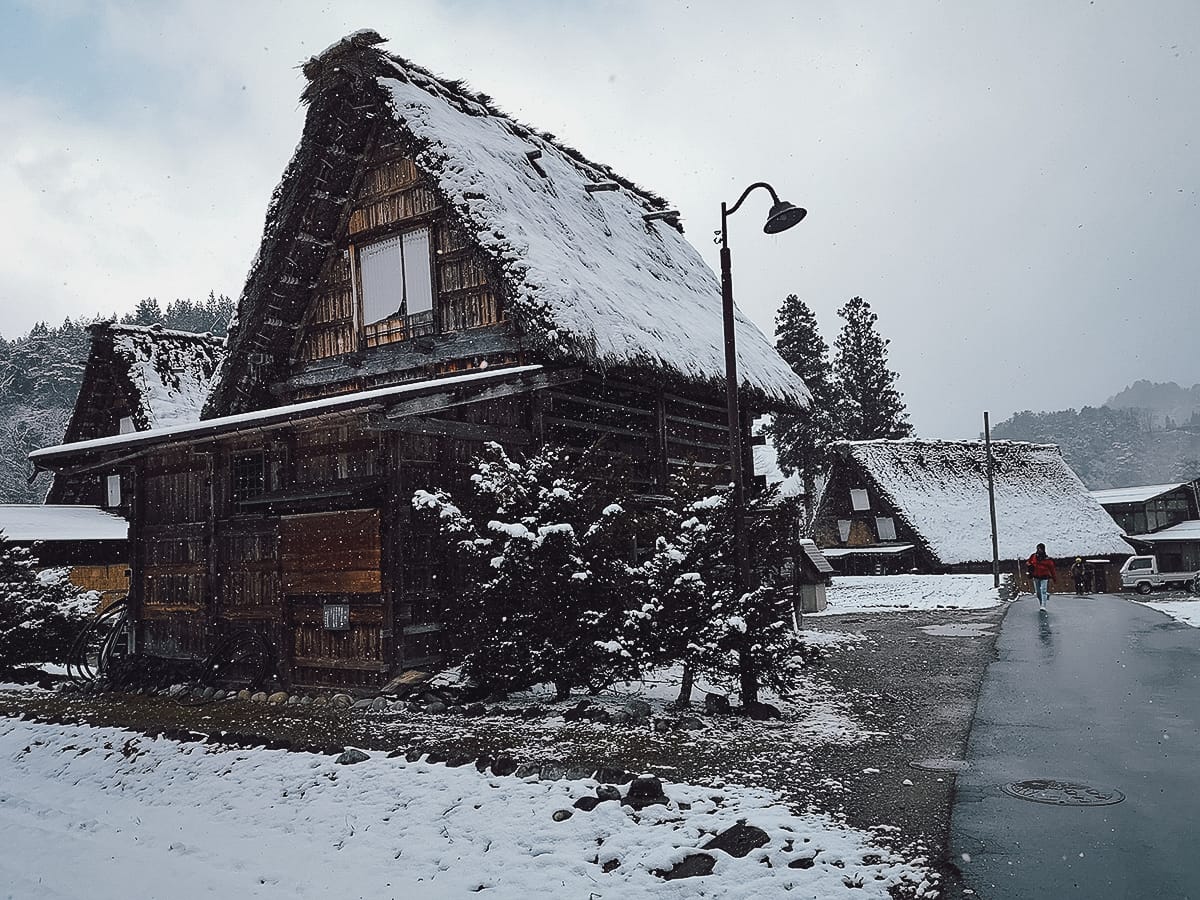
See the Village From Higher Ground
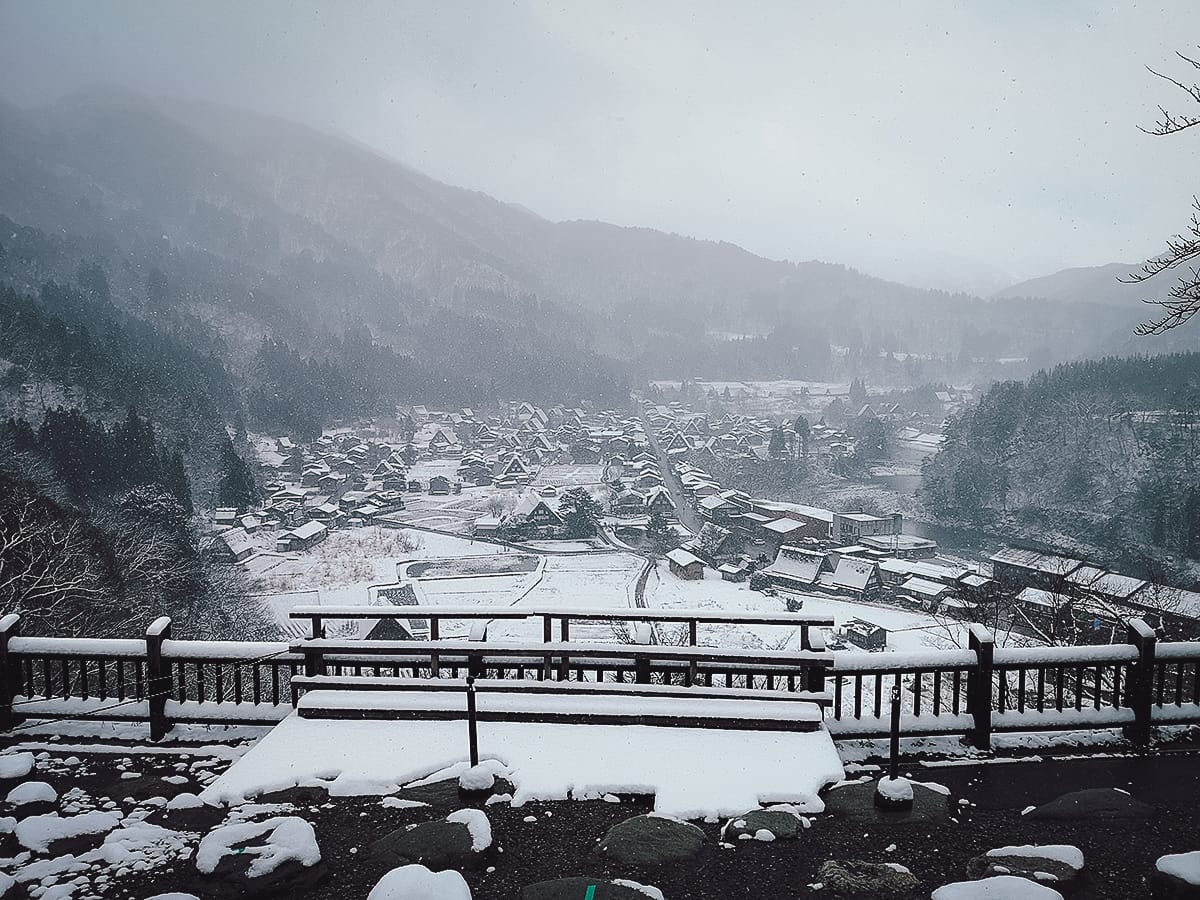
Seeing the farmhouses from up close is nice, but the most dramatic views are from Shiroyama Viewpoint. Accessible by walking trail or shuttle bus, the views from up here are particularly beautiful when the village is covered in a thick blanket of freshly fallen snow.
Enjoy Hida Beef
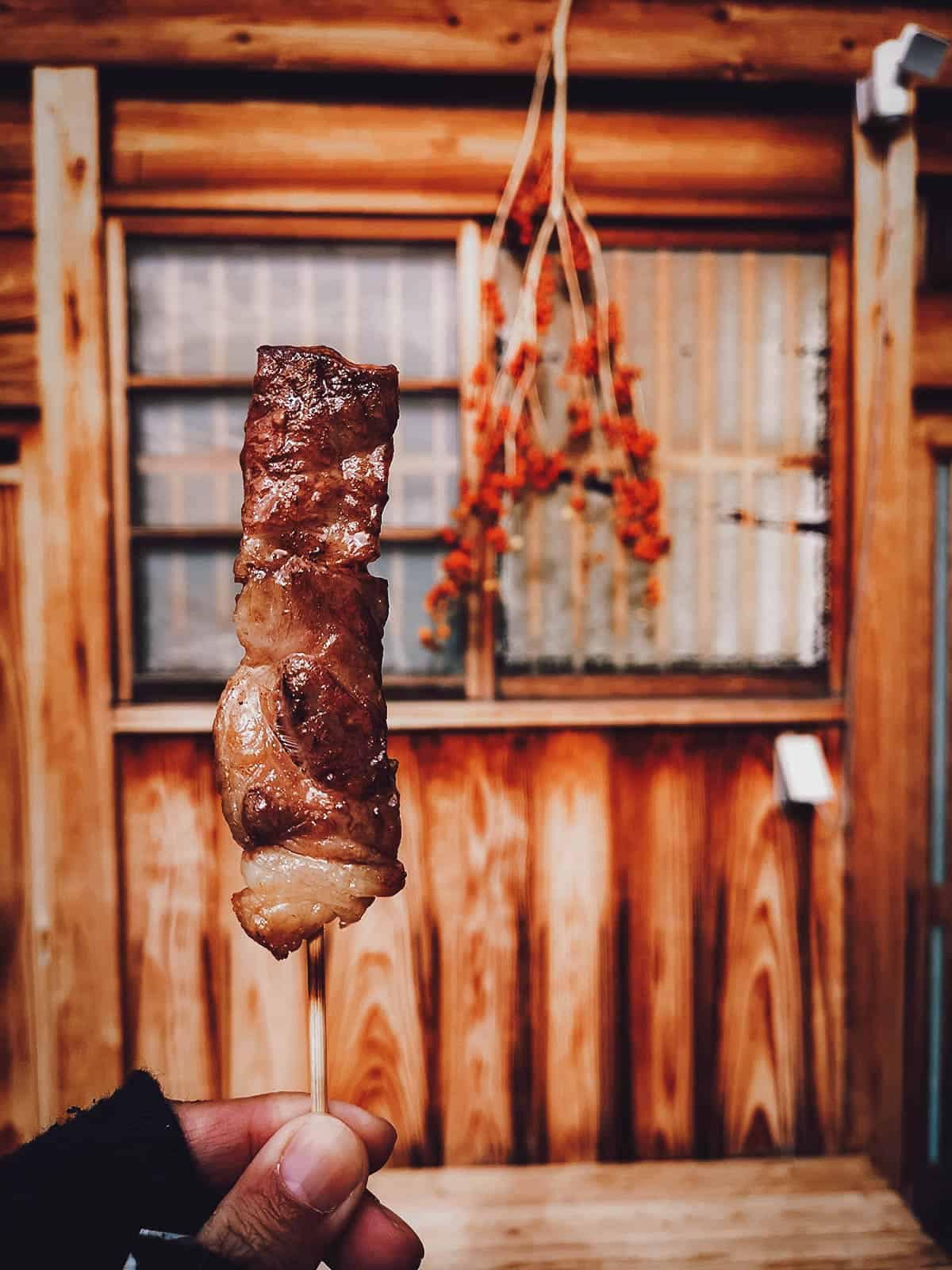
Kobe Beef may be the most famous, but for some Japanese, Hida Beef might be the best. One of Japan’s many prized beef brands, it refers to wagyu produced from black-haired Japanese cattle raised in Gifu Prefecture.
Many street food stalls in the village serve dishes made with Hida Beef, like this fantastic skewer of grilled A5-grade chuck eye roll. For a proper meal, I suggest trying one of the Hida Beef set menus at Irori.
DAY TRIPS FROM OGIMACHI
Suganuma & Ainokura
Ogimachi is widely regarded as the most beautiful village in Japan, but Suganuma and Ainokura may have something to say about that. Located in the Gokayama region of Toyama prefecture, Suganuma and Ainokura are the two other villages that, together with Ogimachi, collectively form the “Historic Villages of Shirakawa-go and Gokayama”.
Compared to its more famous neighbor, Gokayama sees far fewer tourists, which is a good thing. Harder to reach but accessible by local bus from Ogimachi, it’s less changed by tourism and offers a quieter, more traditional feel than Shirakawa-go.
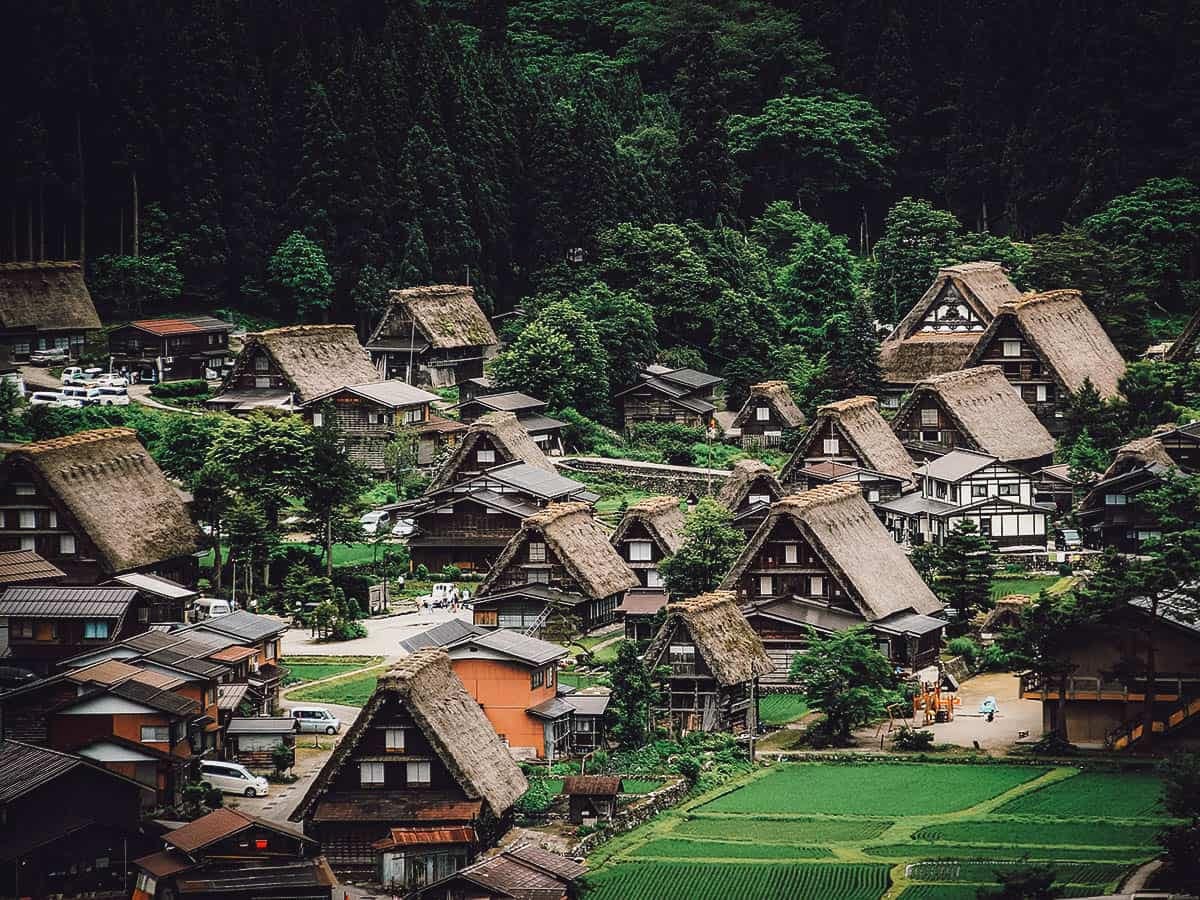
Photo by Aranami via Shutterstock
VISIT OGIMACHI FAQs
Which gassho-zukuri farmhouse should I stay in?
Almost twenty gassho-zukuri farmhouses are offering overnight stays in Ogimachi Village. All have positive Google reviews, but some have a higher average rating than others. As of this writing, Magoemon, Kanjiya, and Kidoya have the highest ratings.
Is Ogimachi worth visiting without snow?
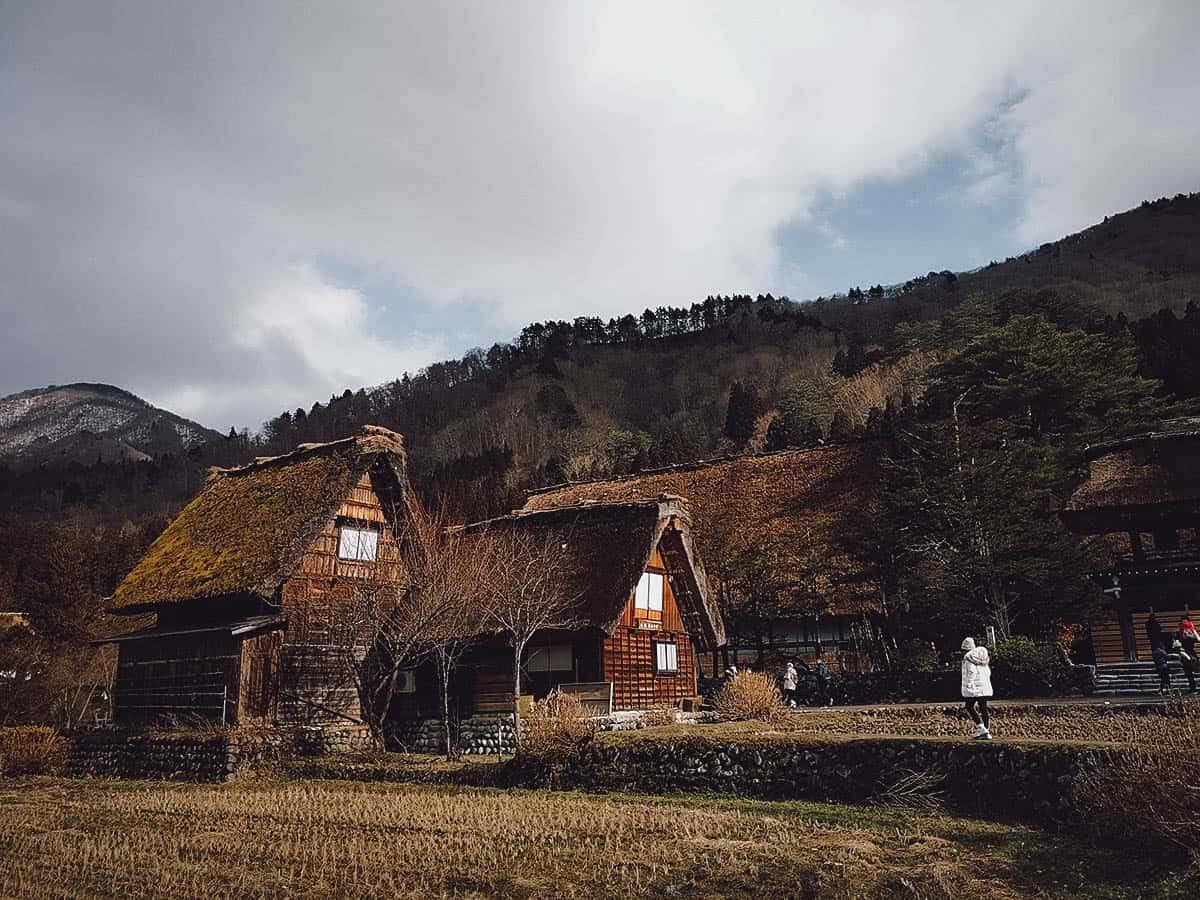
Yes, I think so. Though winter is the most magical, Ogimachi Village is beautiful at any time of the year. Here’s a picture of the village in early December, when it wasn’t covered in snow.
Is Ogimachi the most beautiful village in Japan?
This is subjective and impossible to answer, but Ogimachi definitely has a case. I’ve been to a few picturesque villages in Japan, and Ogimachi is one of the most beautiful I’ve seen thus far.
Having said that, I’ll be visiting Suganuma and Ainokura for the first time in the coming spring, along with a few other villages in the Chubu and Tohoku regions, so we’ll see if I still feel the same way then!
THE FINAL SAY
I’ve traveled to a few places that didn’t live up to the hype, but Ogimachi Village isn’t one of them. It’s just as beautiful as it is in pictures and certainly met my expectations. The gassho-zukuri farmhouses are captivating, and the village’s remote mountain location makes the experience of seeing them even more rewarding.
Like many people who get their first Shirakawa-go experience in winter, I was lucky to visit while it was snowing, but it would be nice to see the village in the fall as well. The surrounding mountains must be stunning at that time of year.
Disclosure
This Ogimachi travel guide contains affiliate links, meaning we’ll earn a small commission if you make a booking at no extra cost to you. We only recommend products and services that we use ourselves and firmly believe in. We really appreciate your support as it helps us make more of these free travel guides. Arigato gozaimasu!
References
1. Historic Villages of Shirakawa-go and Gokayama. UNESCO World Heritage Convention.
2. A Must-Visit World Heritage Site! The Historical Village of Shirakawa-go. Alpico Group. (2024, October 7).
3. Ogimachi Village. japan-guide.com.
4. Shirakawago Winter Light-Up. japan-guide.com.
5. Gasshozukuri Minkaen Outdoor Museum. Shirakawa Village Official Website.
