
SUMMARY HIGHLIGHTS
- Yamanobe-no-michi is the oldest recorded road in Japan.
- The most commonly walked part of the trail stretches for around 11 km (6.8 miles).
- It’s an easy to moderate hike that can be completed in roughly 4-6 hours.
I love to walk. I see it as a form of meditation that helps keep my body healthy and my anxiety at bay.
I usually average over 20 km a day when I’m on the road, but on a recent trip, I was shocked to see that I had logged 41.1 km in a single day. That’s almost the length of a full marathon!
Rural Japan is my favorite place in the world to go for a walk (or run). It’s peaceful, it’s scenic, the infrastructure is great, and Japanese people are always so mindful and respectful. Outside of the most unforgiving days of summer and winter, the weather is almost always ideal too.
Many first-time visitors to Nara spend a lot of their time feeding deer, but if you love to walk like I do and have enough time in Nara, then a leisurely hike through the beautiful Nara countryside – along the country’s oldest recorded road – might just be the side quest you’re looking for.
VISIT NARA QUICK LINKS
To help you with your Nara trip planning, we’ve put together links to top-rated hotels, tours, and other travel-related services here.
HOTELS
Recommended hotels in Naramachi, one of the most convenient areas to stay for first-time visitors to Nara.
- Luxury: NIPPONIA HOTEL NARA NARAMACHI
- Midrange: Hotel Naranohamori
- Budget: APA Hotel Kintetsu-Nara Ekimae
EXPERIENCES
- Sightseeing Tour: Nara Half Day Trip Walking Tour
- Gastronomy: Kaiseki Course Meal at a Historic Ryotei
- Sake Tour: Private Tour and Sake-Tasting at a Century-Old Brewery
- Cultural Experience: Craft a Scarf Steeped in Centuries of Tradition
- Cooking Class: Cooking Classes in Nara
OTHER SERVICES
- Travel Insurance (non-US residents get 5% off)
- Kintetsu Rail Pass
- Kansai Area Pass
- Japan Rail Pass
- Japan eSIM
WHAT IS YAMANOBE-NO-MICHI?
The Yamanobe-no-michi trail is the oldest road mentioned in Japanese records. It was once part of the Shinkaido1, the most ancient road in Japan, that originated in Tokyo. Over a thousand years ago, Nara was known as Heijo-kyo and was the capital of Japan. Many walking routes led to Nara during that time2, including the Shinkaido.
Today, yamanobe-no-michi is a quiet countryside trail that winds through rural Nara, past ancient shrines, farm villages, and forested hillsides. Far removed from the crowds of Nara Park, it offers a glimpse into the slower, more traditional side of Japan.
Running along the eastern edge of the Nara Basin, the trail measures roughly 35 km long (21.7 miles), but the most commonly walked segment – between Omiwa Jinja and Isonokami Shrine – stretches for around 11 km (6.8 miles).

More of a gentle scenic walk than a challenging hike, the trail takes you through open fields and rustic farmhouses. You’ll pass centuries-old burial mounds, and a handful of Buddhist temples and Shinto shrines.
YAMANOBE-NO-MICHI QUICK FACTS
A few things to know before hiking the trail:
- Length: According to Google Maps, the distance between Isonokami Shrine and Omiwa Jinja is approximately 11 km (6.8 miles).
- Duration: This depends on your pace and how often you stop, but it should take most people between 4-6 hours to walk this section of the trail.
- Difficulty: Easy to moderate, but mostly easy (the trail is generally flat with just a few short inclines).
- Direction: You can hike the trail from north to south or vice versa.
I’m relatively fit, so I didn’t find the Yamanobe-no-michi trail to be demanding, but the experience may be different for others, depending on their fitness level.
The trail consists of paved roads and dirt trails, so wearing appropriate footwear is important. I did the hike on an overcast day, but I still wore sunscreen anyway. I also brought enough water and cash to get me through the day, as there are vending machines, cafes, and produce stands along the way. There are a few public toilets as well.
YAMANOBE-NO-MICHI TRAIL MAP
It’s hard to create an accurate map of the exact trail, so I’ve pinned key points of interest on Google Maps. Unless you’re staying somewhere along the trail, then you’ll be arriving at either Tenri Station in Tenri City, or Miwa Station in Sakurai City, to do the hike. I’ve pinned both stations to the map below.
You can click on “More options” in the upper left corner to enlarge.
HIKING THE YAMANOBE-NO-MICHI TRAIL
DISCLAIMER: I’m only sharing my experience and what worked with me personally. Conditions can change, and each traveler’s experience may differ. Please use this information as a guide and take responsibility for your own safety.
Based on what I’ve seen online, most people seem to do the hike from south to north, from Omiwa Jinja to Isonokami Shrine. I did it the opposite way, for no particular reason, but you’re welcome to do it in whichever direction you prefer.
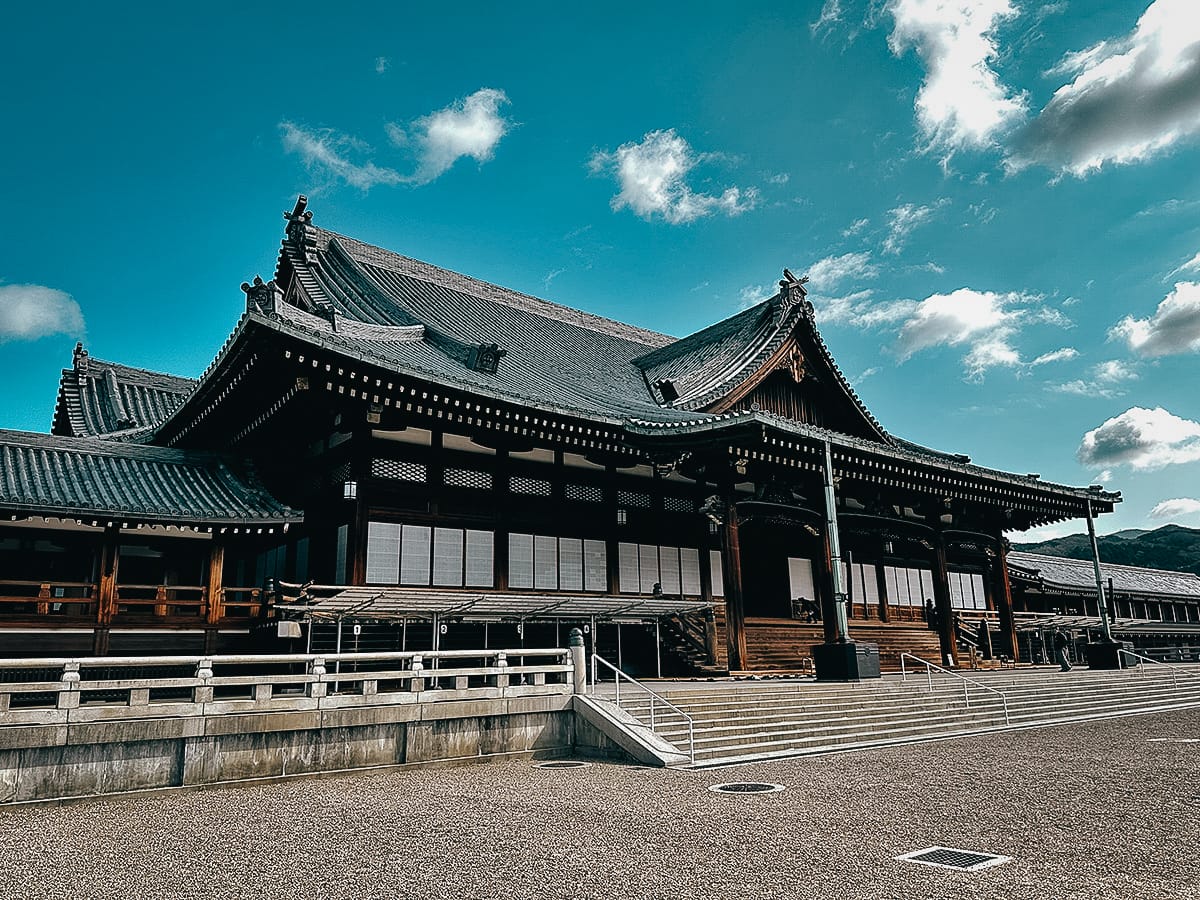
After getting off at Tenri Station, I used Google Maps to navigate to Isonokami Shrine. Along the way, I passed this large and imposing building (pictured below). I was in awe of the sheer size of the building, so I googled it.
As it turns out, it’s the headquarters of Tenrikyo Church, a Japanese new religion founded in the 19th century by a woman named Nakayama Miki. Tenrikyo teaches human beings to live a Joyous Life (yoki-gurashi) through acts of charity, gratitude, and helpfulness to others3.
Tenrikyo Church isn’t part of the Yamanobe-no-michi trail, but if you have the time, then you may want to make a quick stop here. The main building is seriously impressive.
Without stopping, it takes around half an hour or so to walk from Tenri Station to Isonokami Shrine, a Shinto shrine situated at the northern end of the Yamanobe-no-michi trail.
Built in the 2nd or 3rd century, Isonokami Shrine is one of the oldest surviving Shinto shrines in Japan4. Having played a pivotal role in Japan’s early history, several of the shrine’s structures and artifacts have been designated as National Treasures and Important Cultural Properties of Japan.
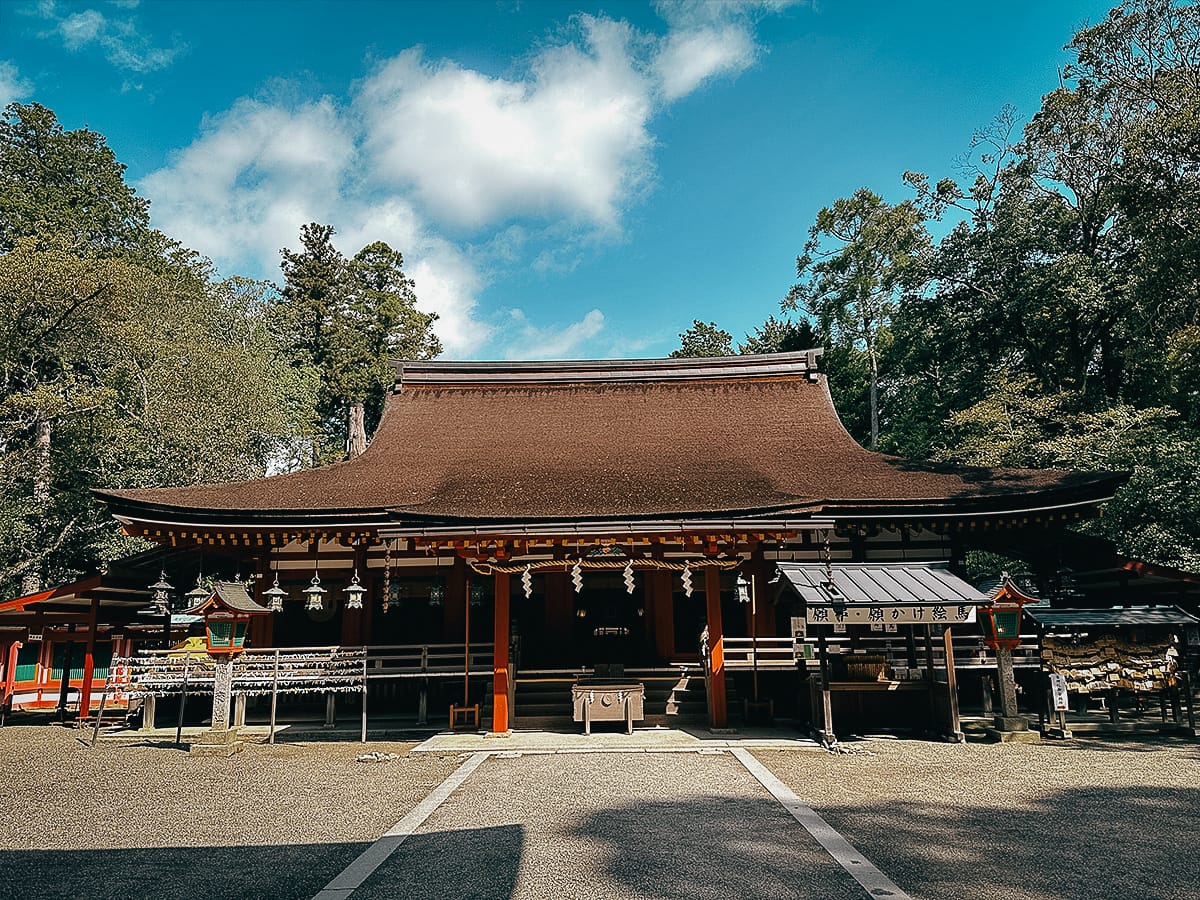
After briefly exploring the shrine, I couldn’t find where the Yamanobe-no-michi trail started. I made the mistake of exiting the shrine grounds and walking south along the main road. It looked like a modern road with traffic, so I knew something wasn’t right.
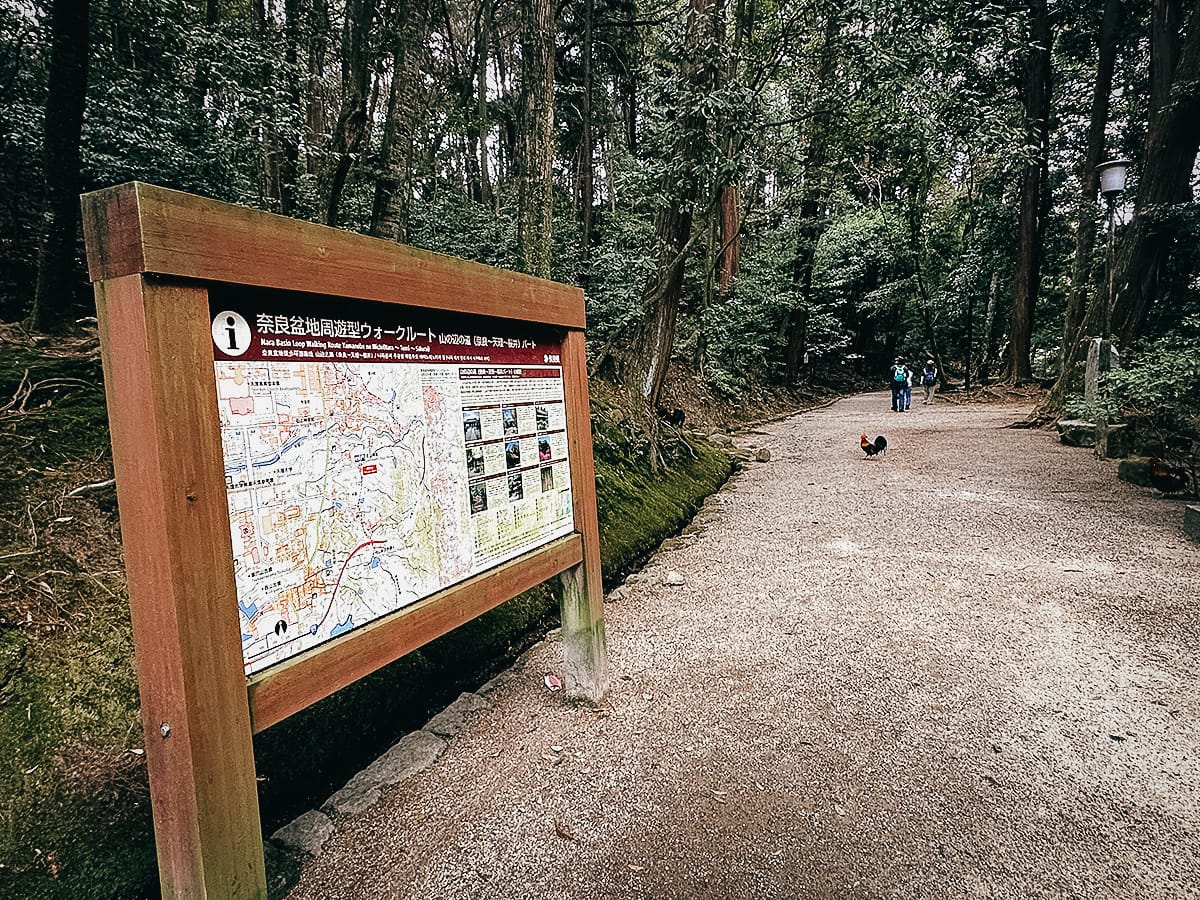
I walked back to the shrine and found this sign by the side of a small dirt road. If you’re starting the hike from Isonokami Shrine, then this is the start of the trail. Start walking down this path, and you’ll soon see Yamanobe-no-michi markers along the way.
The trail is well-marked with these red signposts that give directions in Japanese, English, Korean, and Chinese. They’re placed frequently along the path, so if you don’t see them for a while, then you’ve probably gone off the trail.
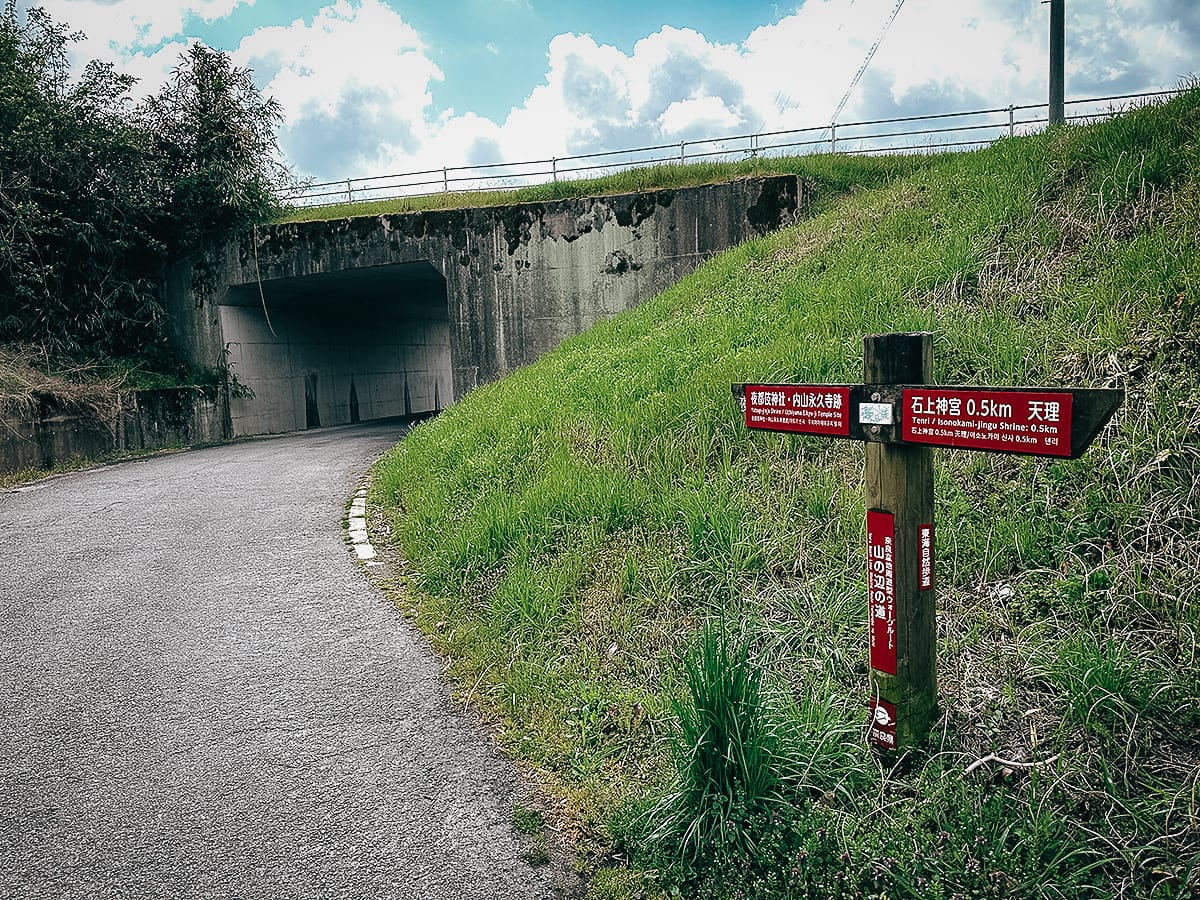
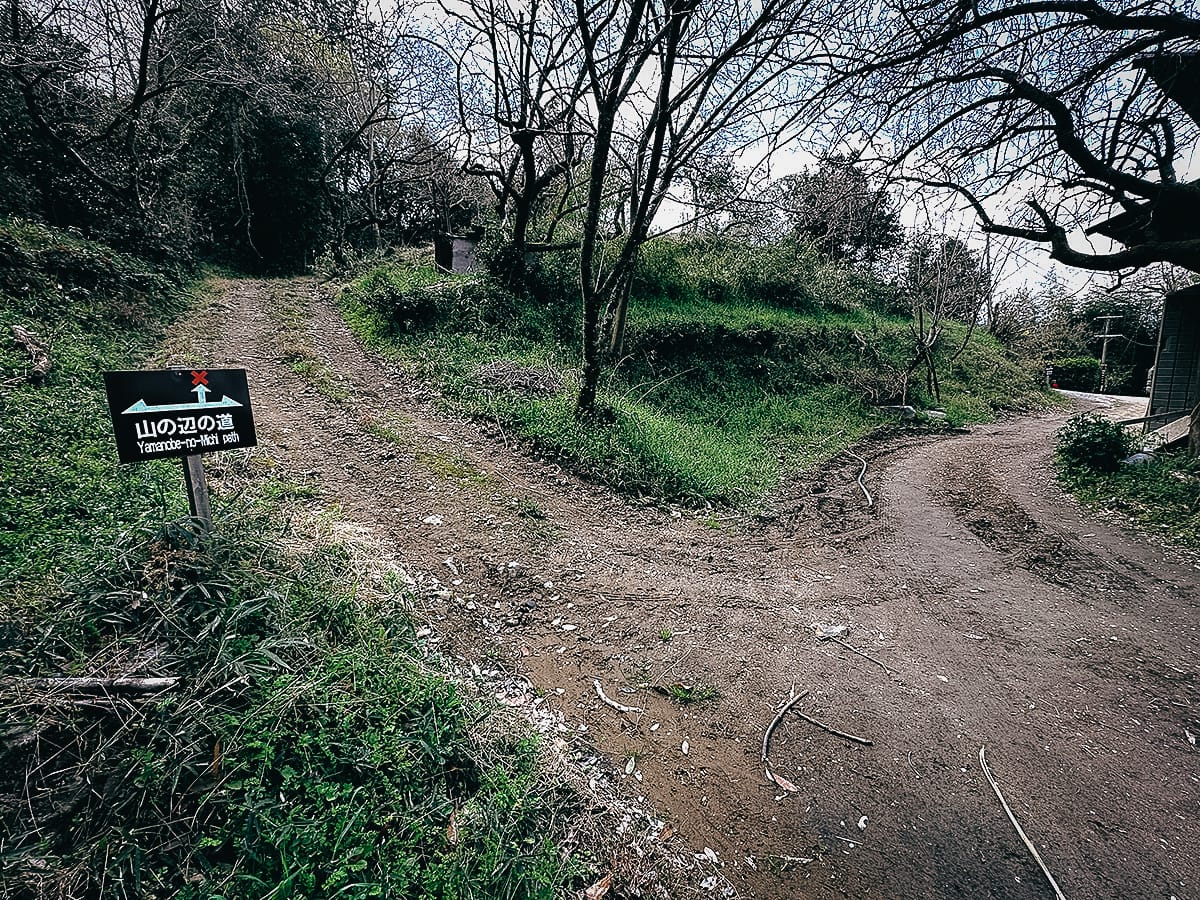
Forks in the road are marked with signs to make it as easy as possible to follow the trail.
I don’t have the best sense of direction, and despite that small hiccup at the start, I didn’t get lost or confused at any other point during my hike.
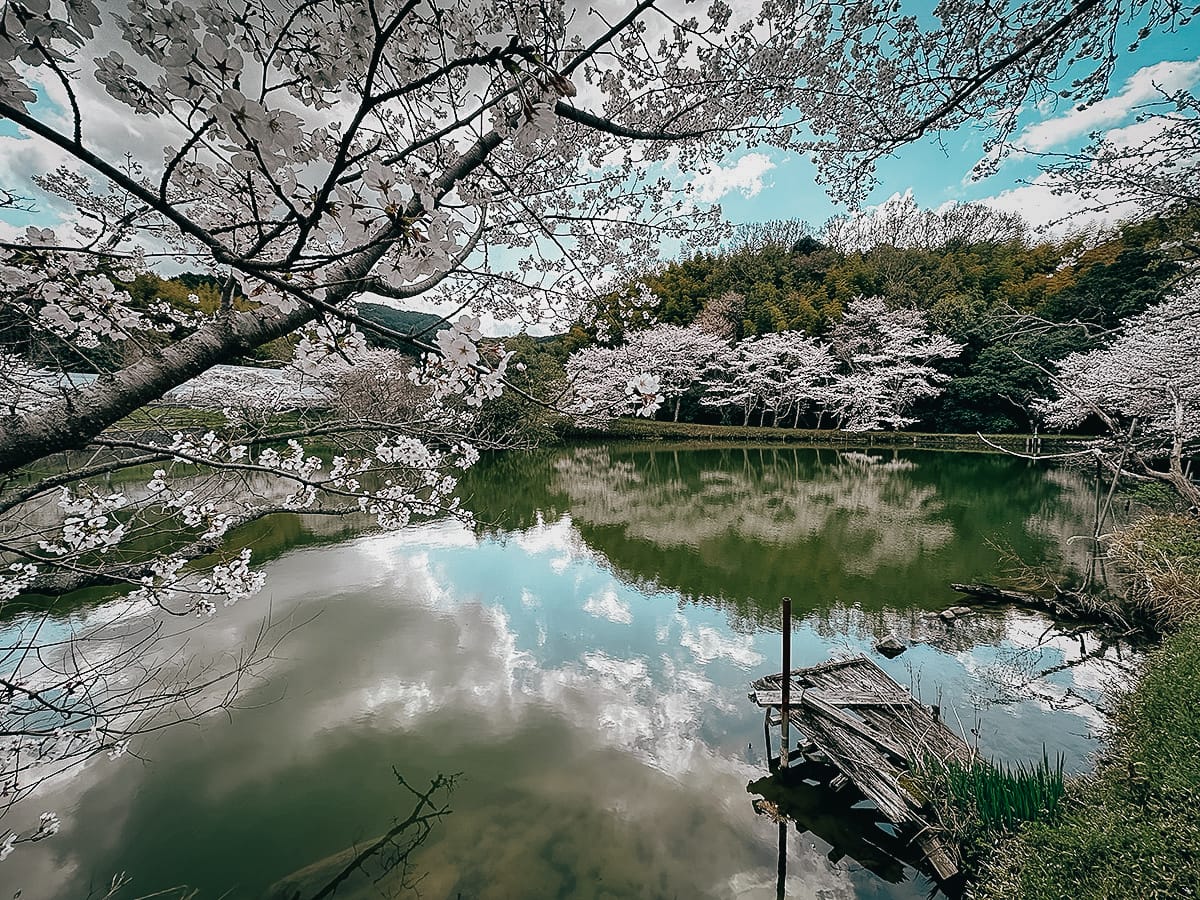
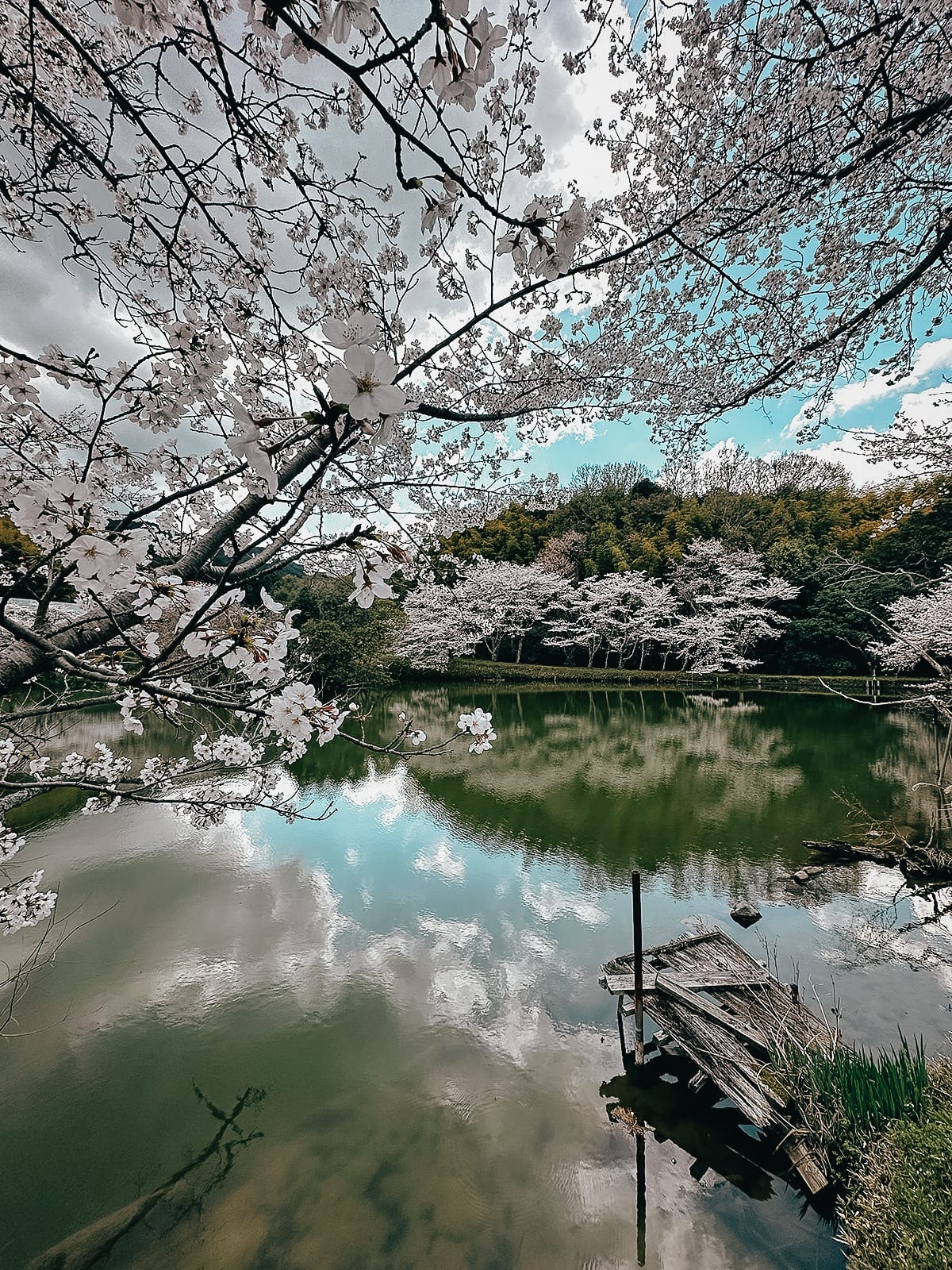
What a surprise this was. I was barely a few kilometers into the trail when I came across this otherwise plain pond with sakura trees blooming all around it. Pretty, isn’t it? According to Google Maps, this was the former site of the Uchiyama Eikyu-ji Temple.
Had I done this hike just a week earlier or later, I would have encountered a completely different scene – one without the fleeting beauty of these pinkish-white blossoms that draw so many visitors to Japan in the spring every year. I guess it was my lucky day!
I did the hike in early April and encountered cherry blossoms throughout the trail. I imagine autumn to be equally dazzling, but for different reasons.
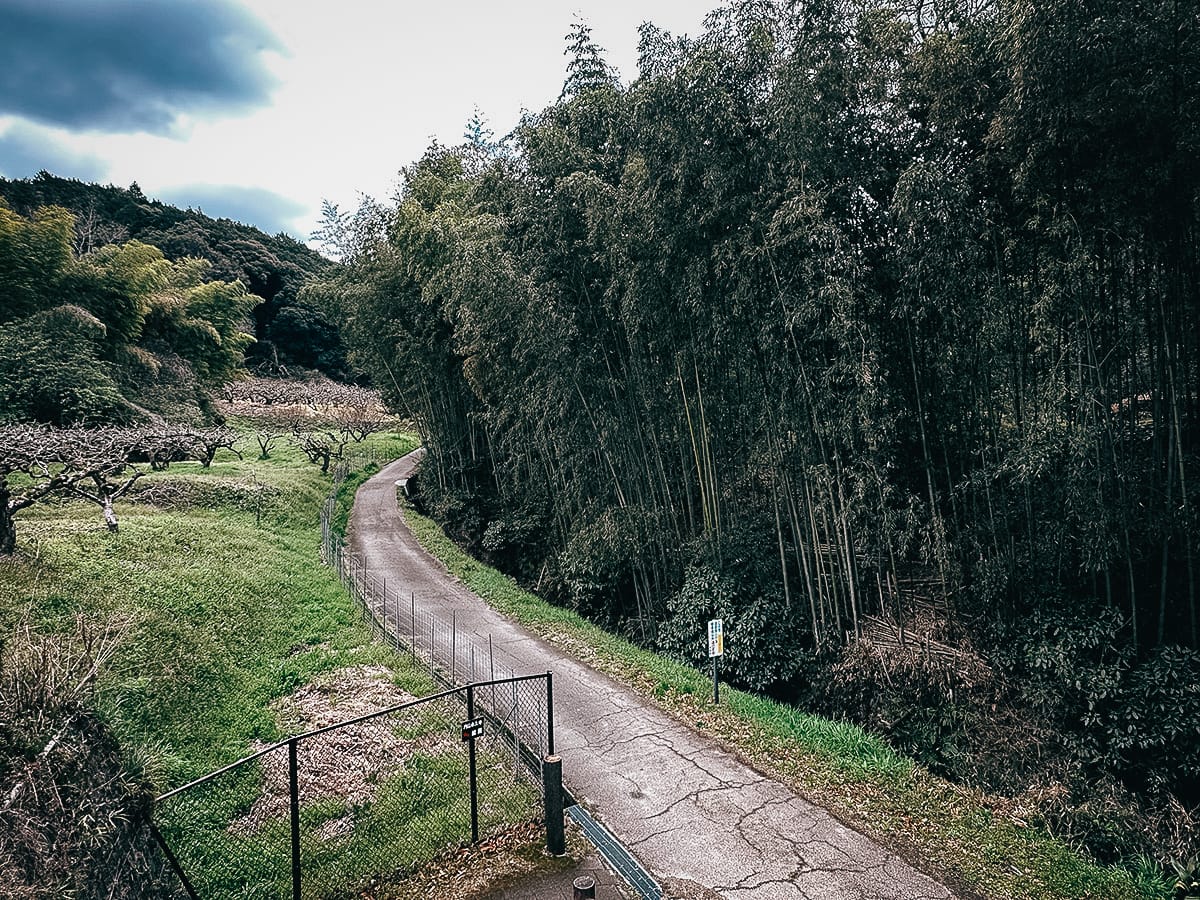
Cherry blossoms, orchards, open plains, bamboo thickets – you’ll encounter a variety of landscapes on this scenic hike through the Nara countryside.
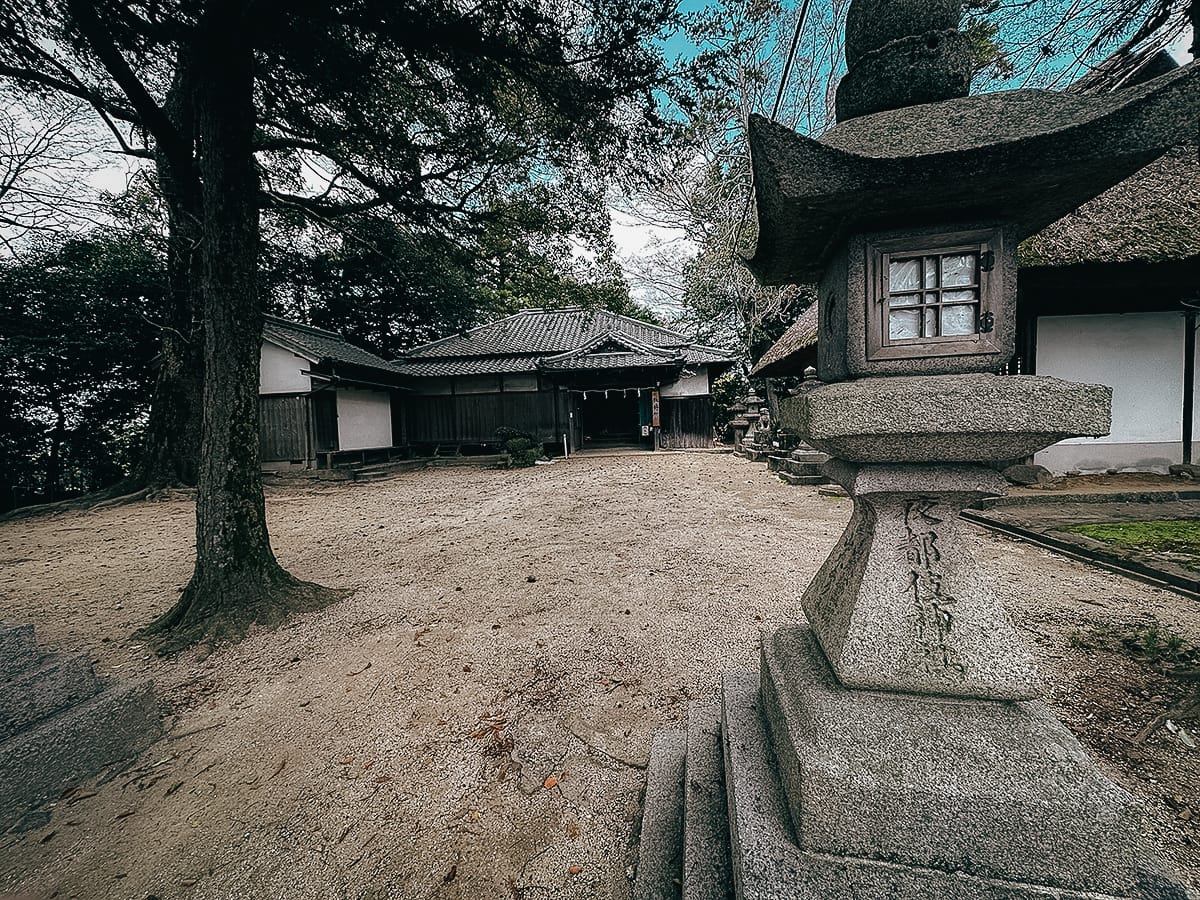
No matter where you are in Japan, you’ll never be too far from a temple or shrine. The relatively plain Yatogi Shrine is one among several small shrines you’ll pass along the trail. It’s known for the thatched roof on its worship hall (building on the right), which, apparently, is a rarity in Nara.
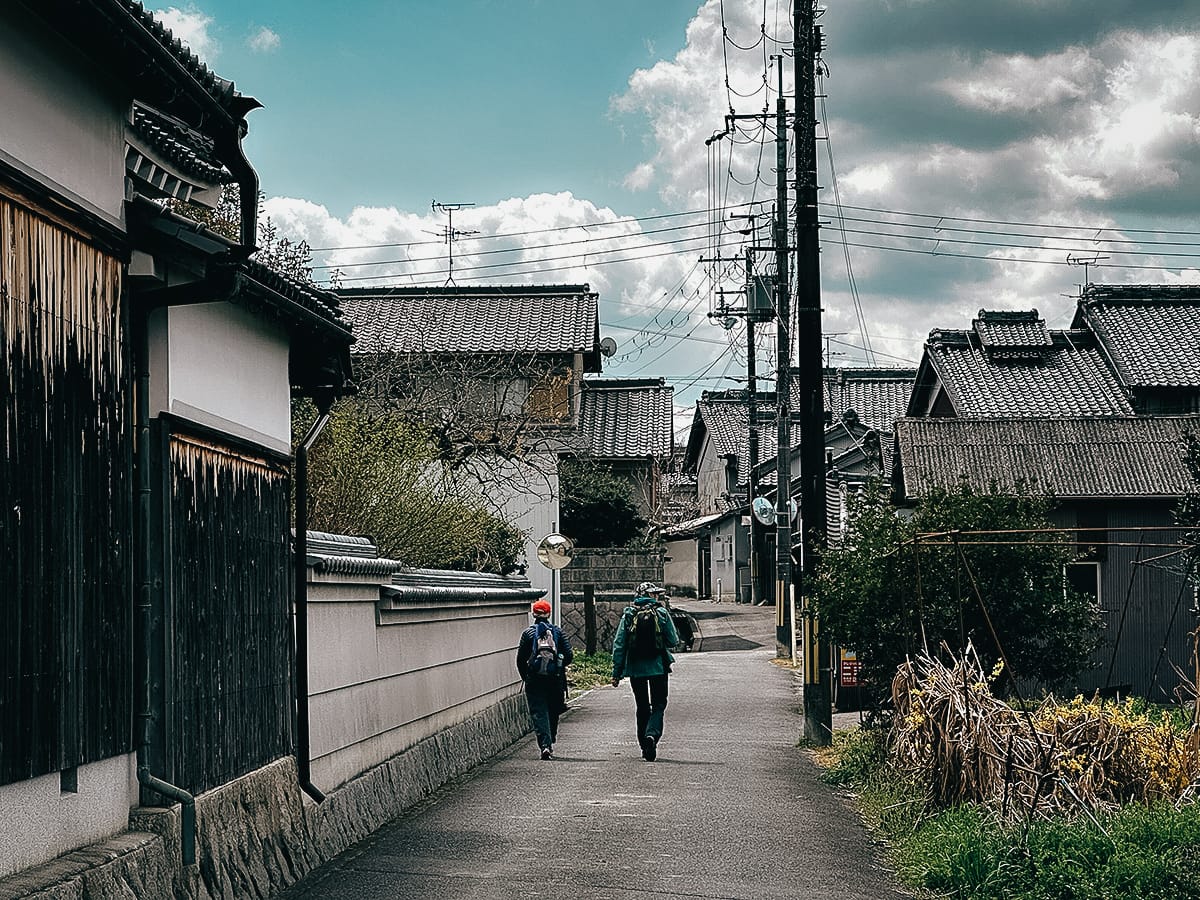
Yamanobe-no-michi consists of a mix of dirt trails and paved roads. Some, like this one, lead you in and out of small villages. According to Google Maps, this tiny village is called Otogicho.
I encountered the occasional hiker along the trail, but never too many to make me feel like I actually had company. If I remember correctly, all but one was Japanese.
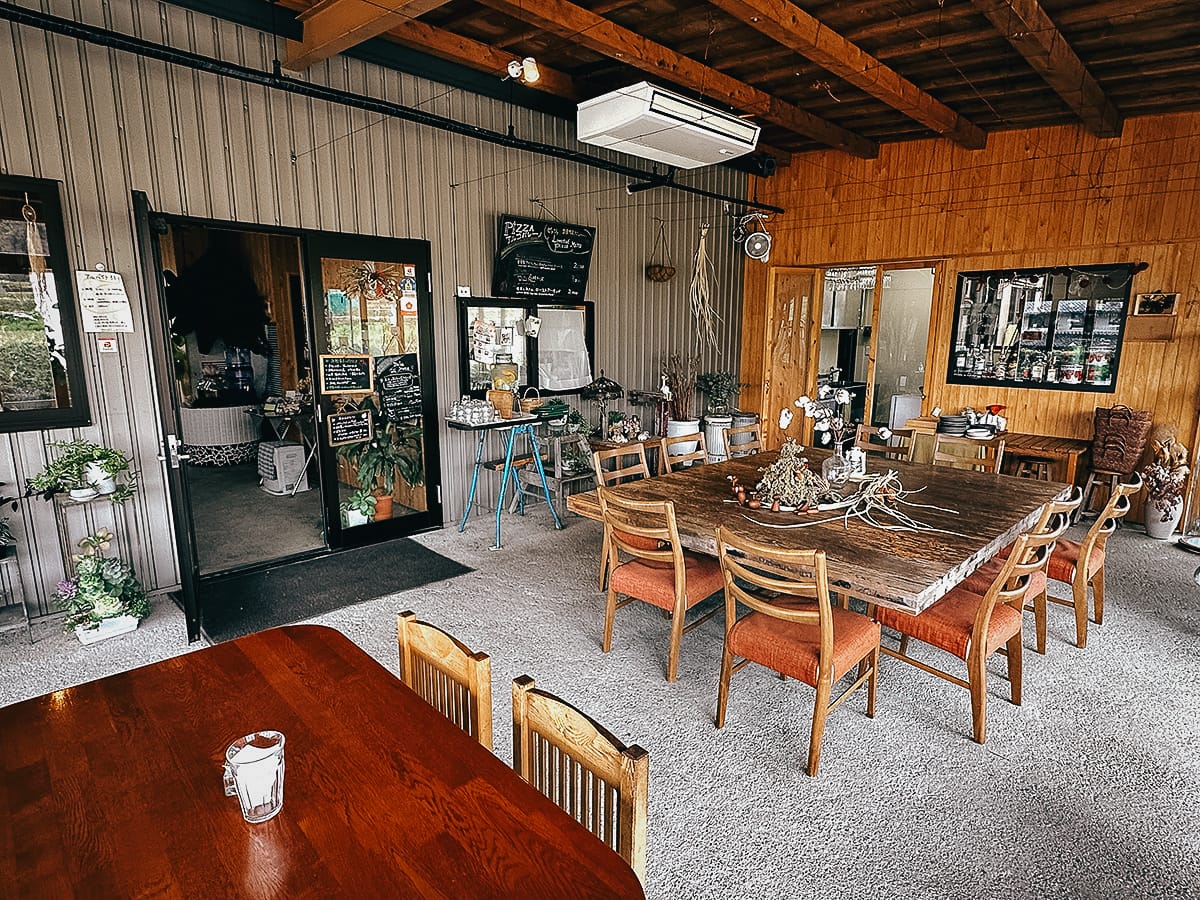
Like many people who do this hike, I was planning on having somen noodles for lunch – they’re originally from Sakurai – but I couldn’t ignore this charming little restaurant near Yatogi Shrine. Called Cafe Samanala Garden, they offer Neapolitan-style pizzas and vegetarian set meals.
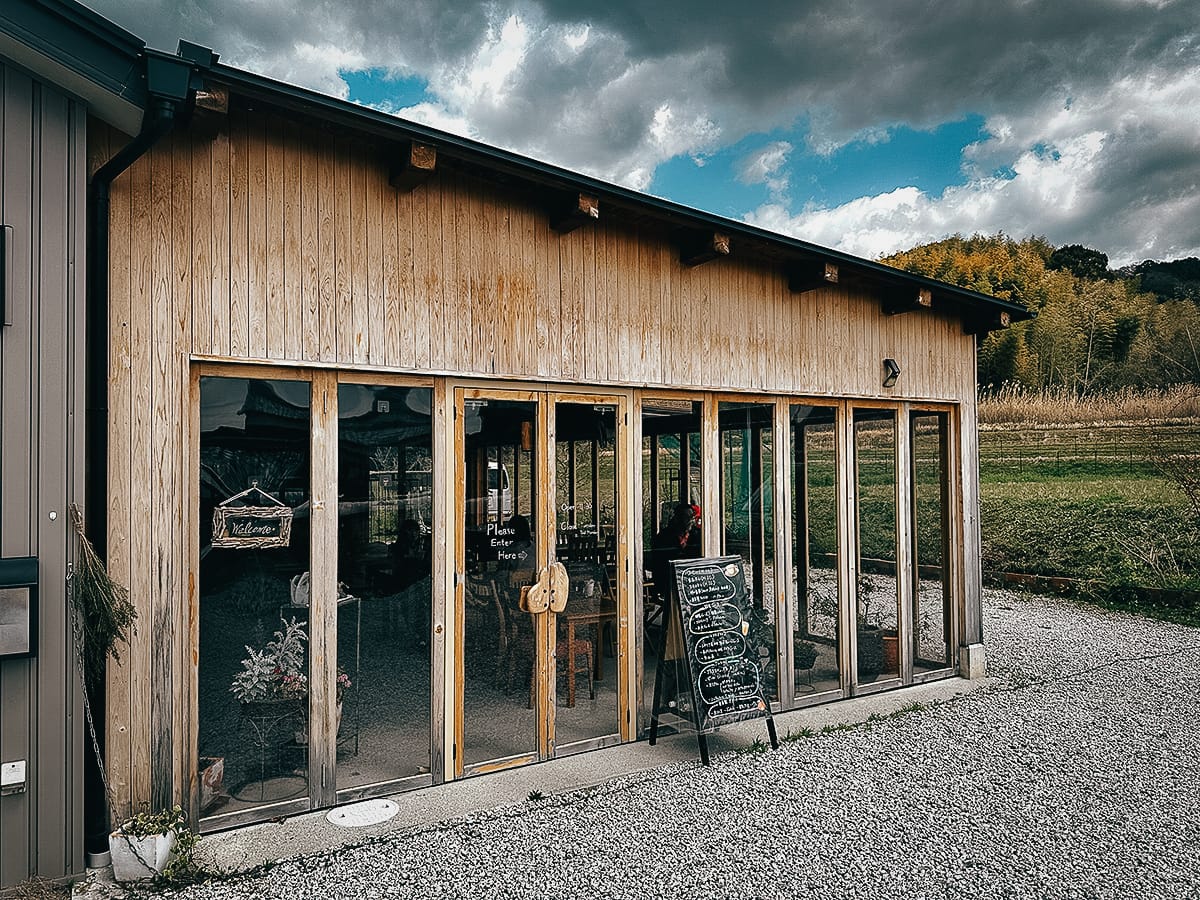
I don’t remember passing too many restaurants along the northern half of the trail, so if you find yourself in this area around lunchtime, then you may want to stop here for a meal. You don’t want to go hungry midway and not find anywhere decent to eat.
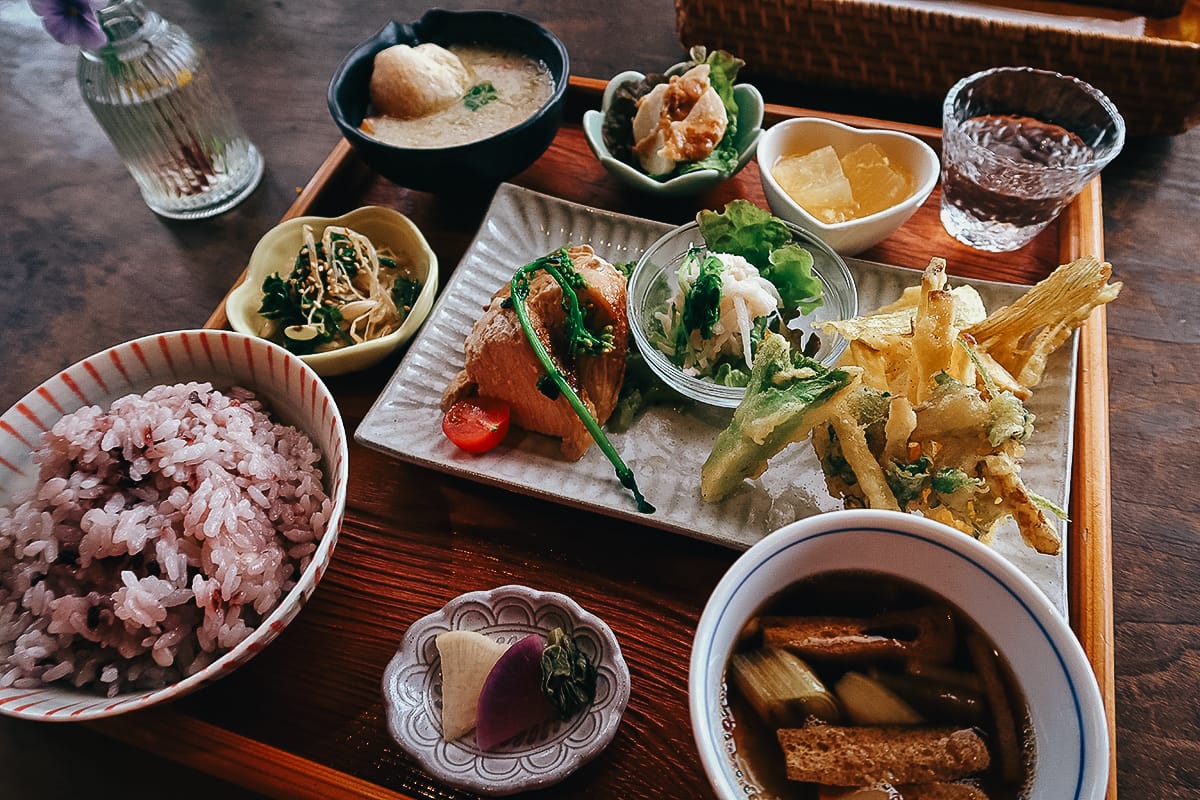
I wanted something healthy and nourishing for my hike, so I ordered one of their vegetarian set meals. Isn’t this spread gorgeous? Japanese meals, when you go to these family-run restaurants, are always so well-balanced and thoughtfully prepared.
I lingered over this beautiful meal before enjoying a pot of herbal tea and resuming my hike.
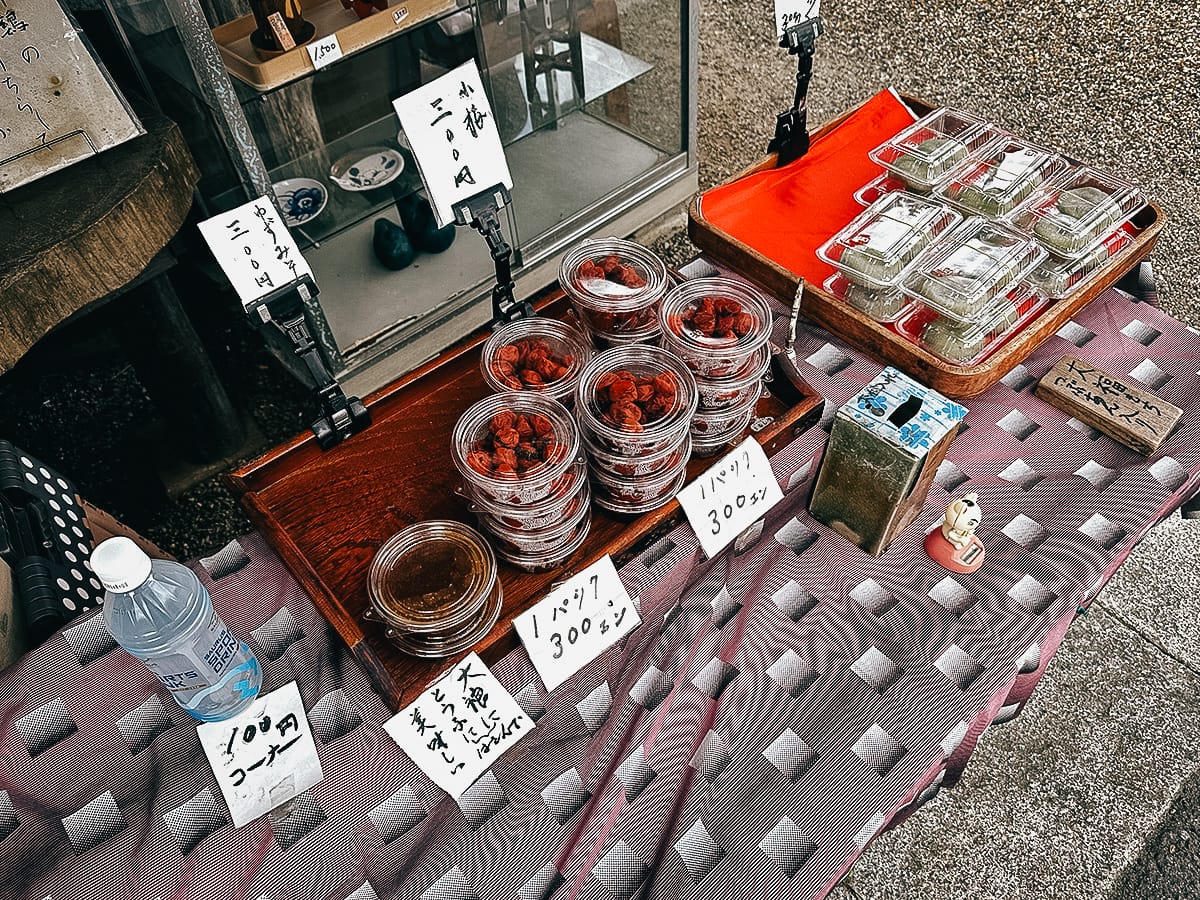
Along the trail are these unmanned stalls selling fresh fruit or vegetables, bottled water, bread, homemade mochi, and other sweets. Everything works on an honor system, so be sure to bring enough small change if you plan on buying something.
These small hills are a characteristic feature of the Nara countryside. If you didn’t know what you were looking at, you’d think these small, uninteresting mounds were just part of the natural landscape. They’re actually kofun, or ancient Japanese burial mounds built for members of the ruling elite during Japan’s Kofun period (around the 3rd to 7th centuries CE)5.
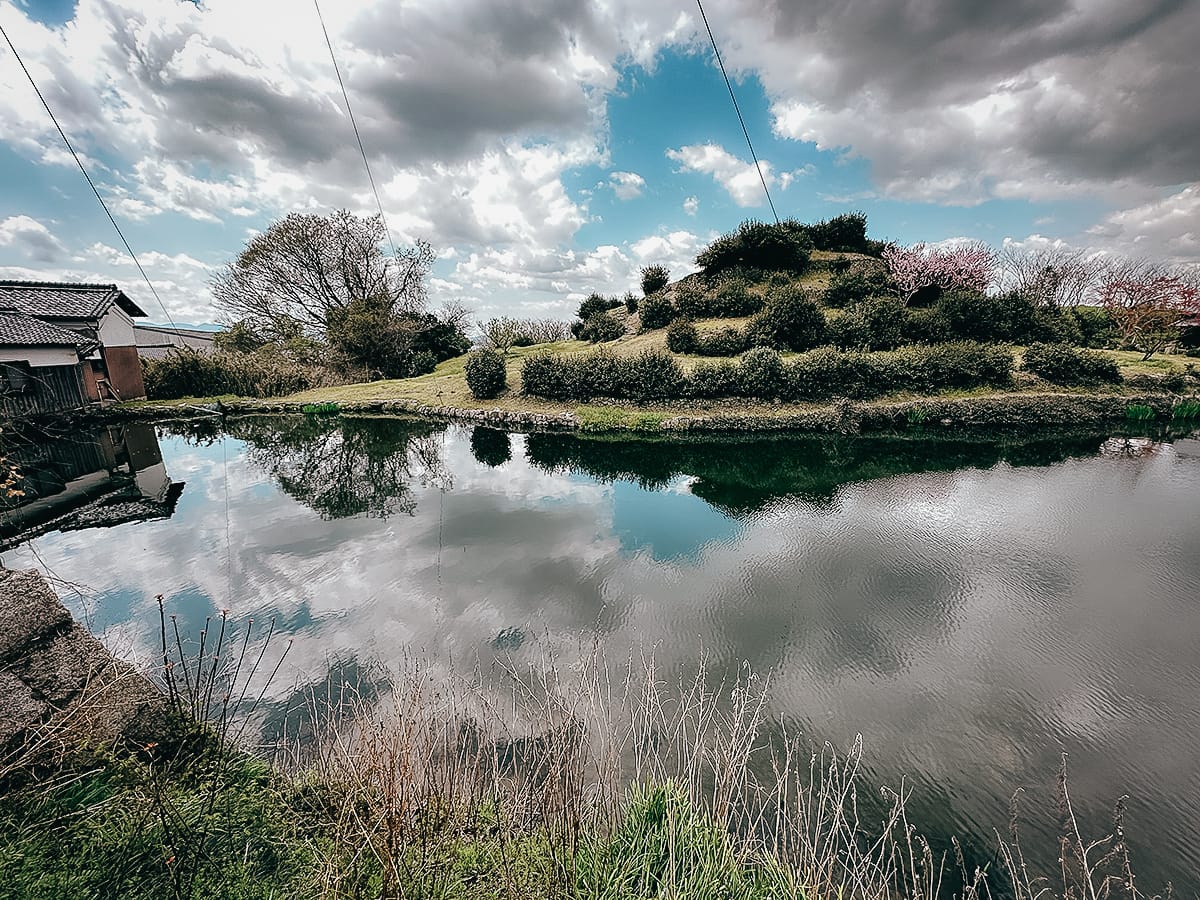
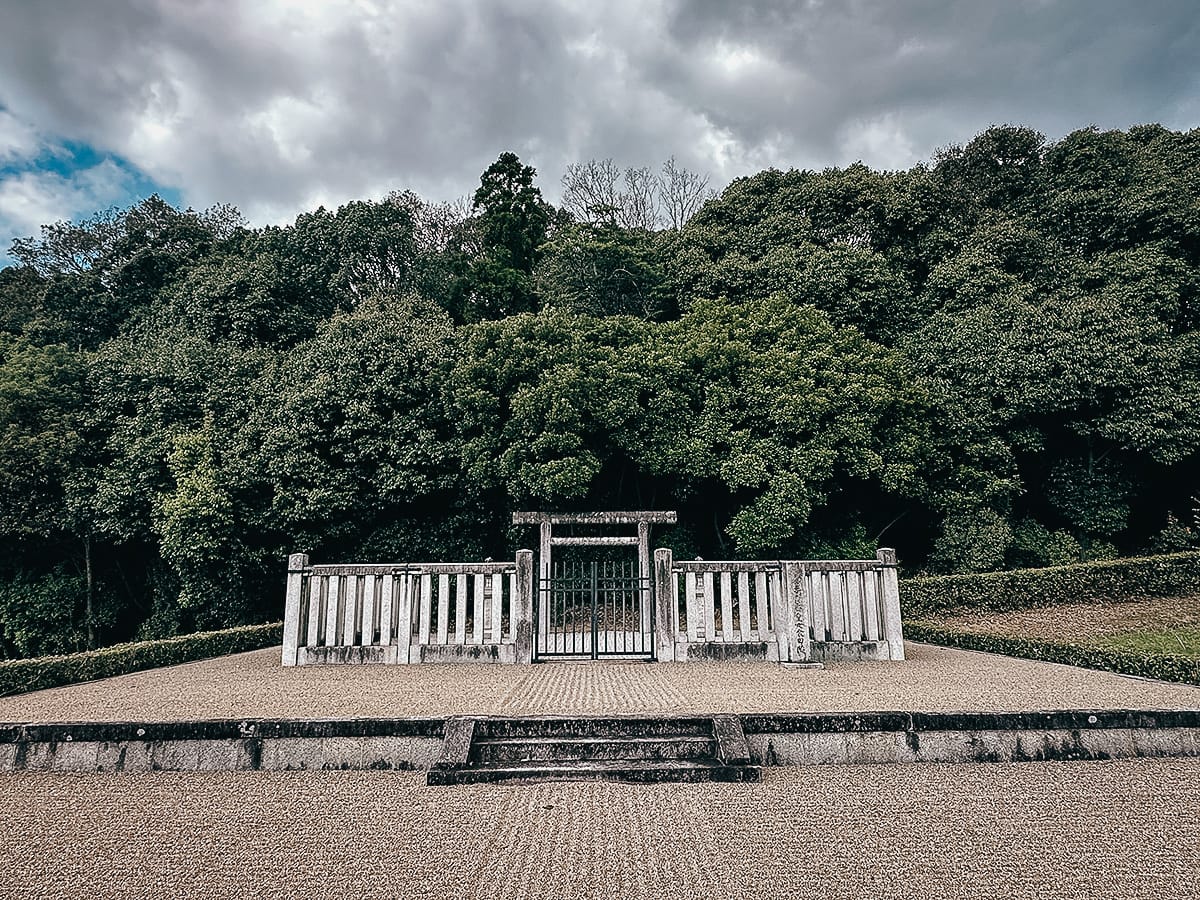
Kofun vary in size and shape. Some are small and circular and barely noticeable, while others, like Nishitonozuka Kofun below, can measure several hundred meters across. Some are even surrounded by a moat.
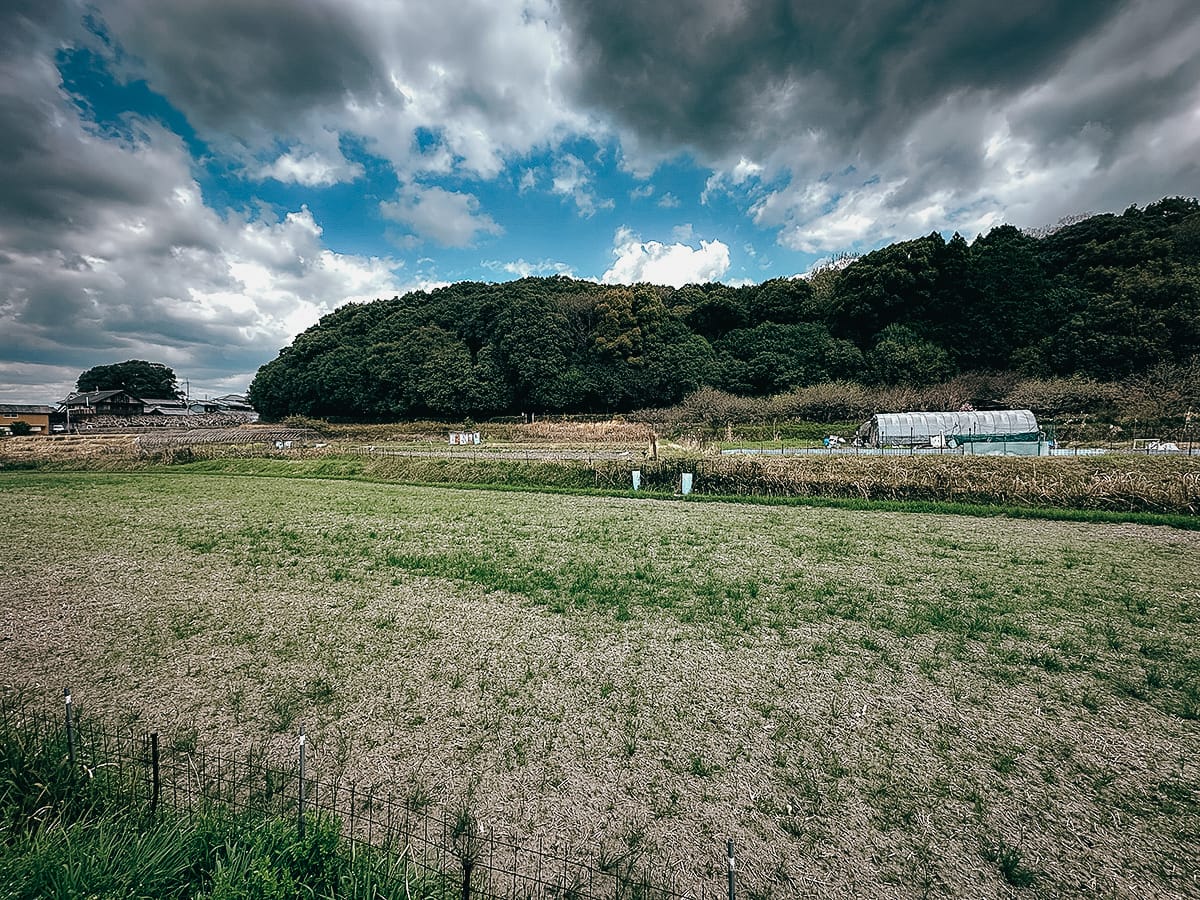
There’s a gate on the southern end of Nishitonozuka Kofun, but I don’t think it’s ever open to visitors.
The biggest and most important kofun often held valuable items like bronze and iron weapons, pottery, ornaments, and jewelry. Some were even protected by terracotta figures called haniwa5.
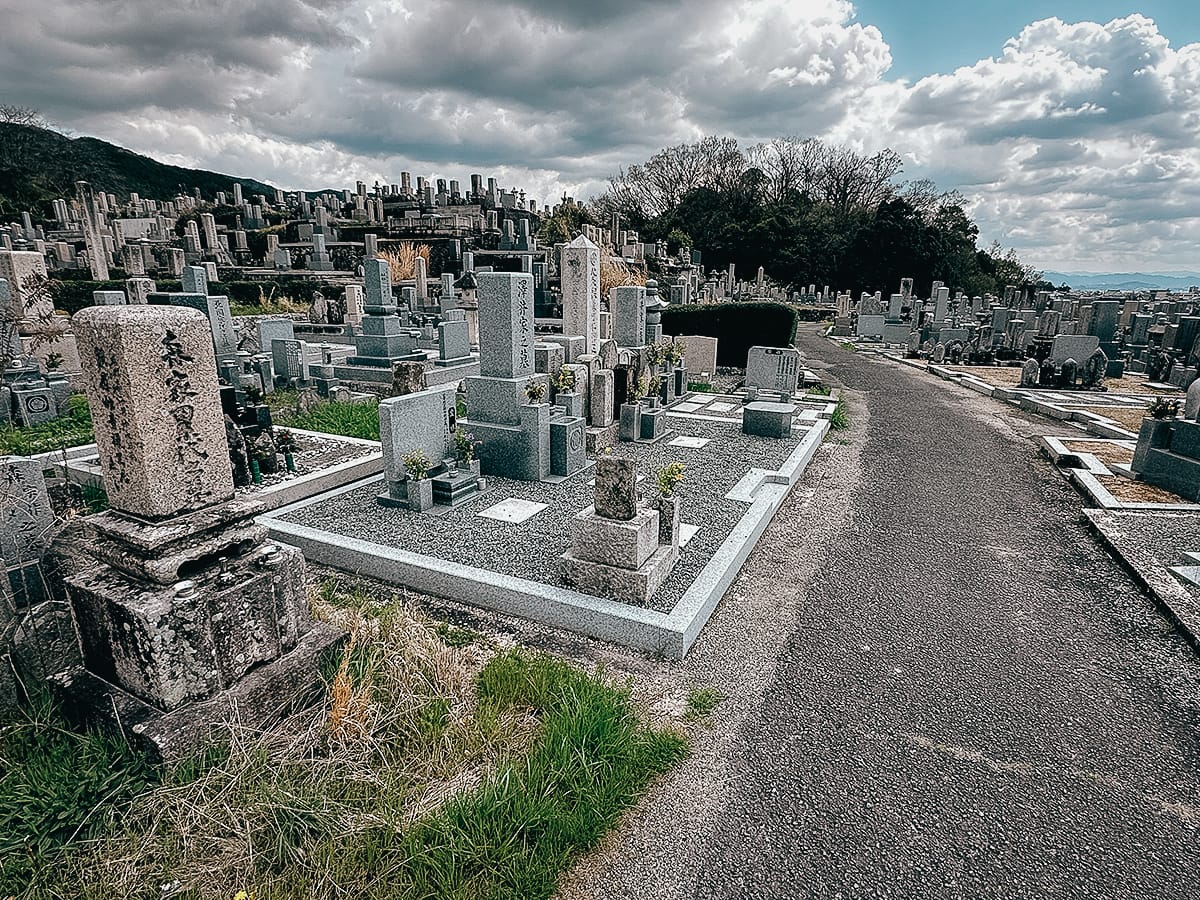
The trail cuts through this cemetery that looks to be part of a nearby Buddhist temple, the Nembutsu-ji Temple.
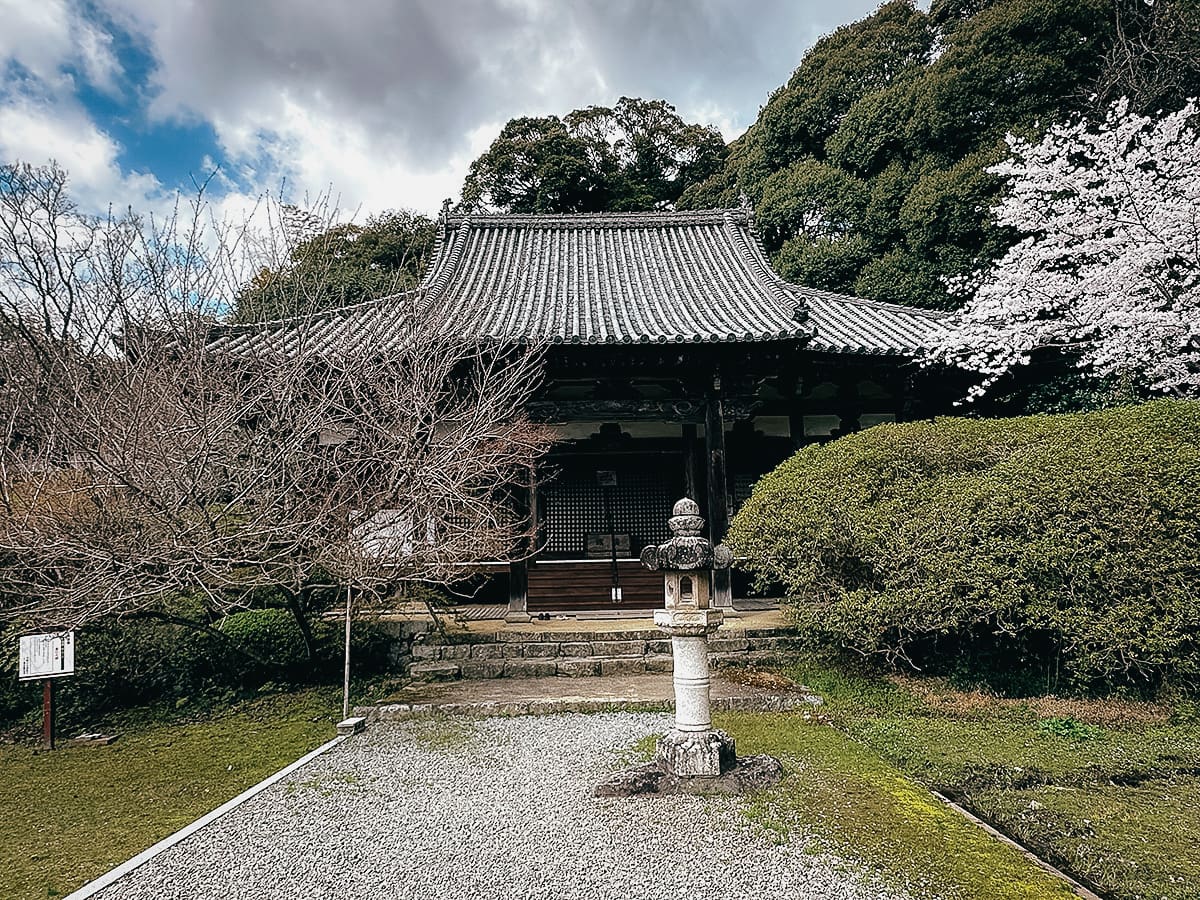
Shortly after passing the cemetery, you’ll find yourself at Chogaku-ji Temple, arguably the most significant temple between Isonokami Shrine and Omiwa Jinja. It was built by Kobo Daishi in 824 and features the oldest bell tower gate in Japan6.
Aside from the gate, Chogaku-ji is home to several other structures and statues that have been designated as national important cultural properties. There’s also a small Japanese garden that, in my opinion, makes the modest entrance fee into the temple grounds worth it.
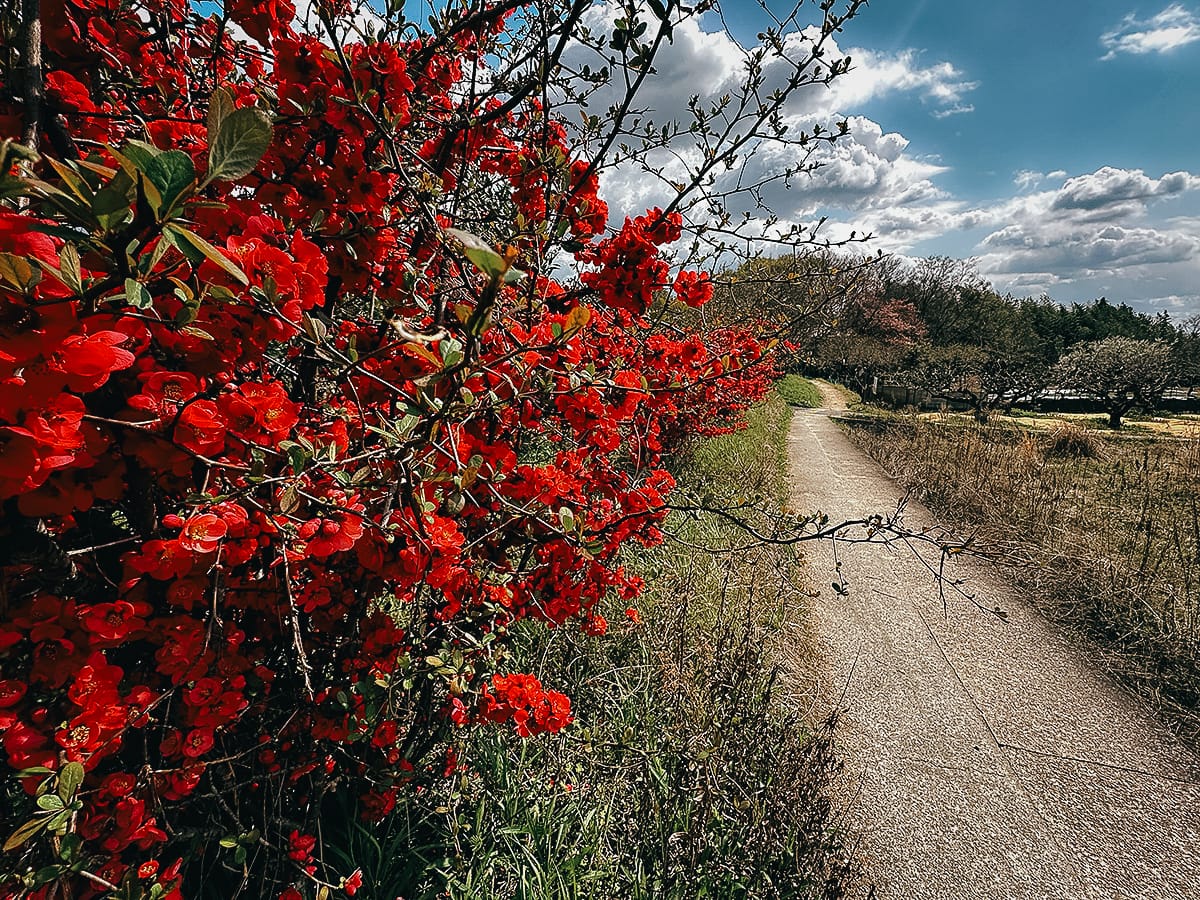
Fiery red flowers along the trail. There are no spectacular, must-see attractions along Yamanobe-no-michi, but the natural scenic beauty of the trail makes it well worth your time, even just to escape the crowds of Nara Park for an afternoon.
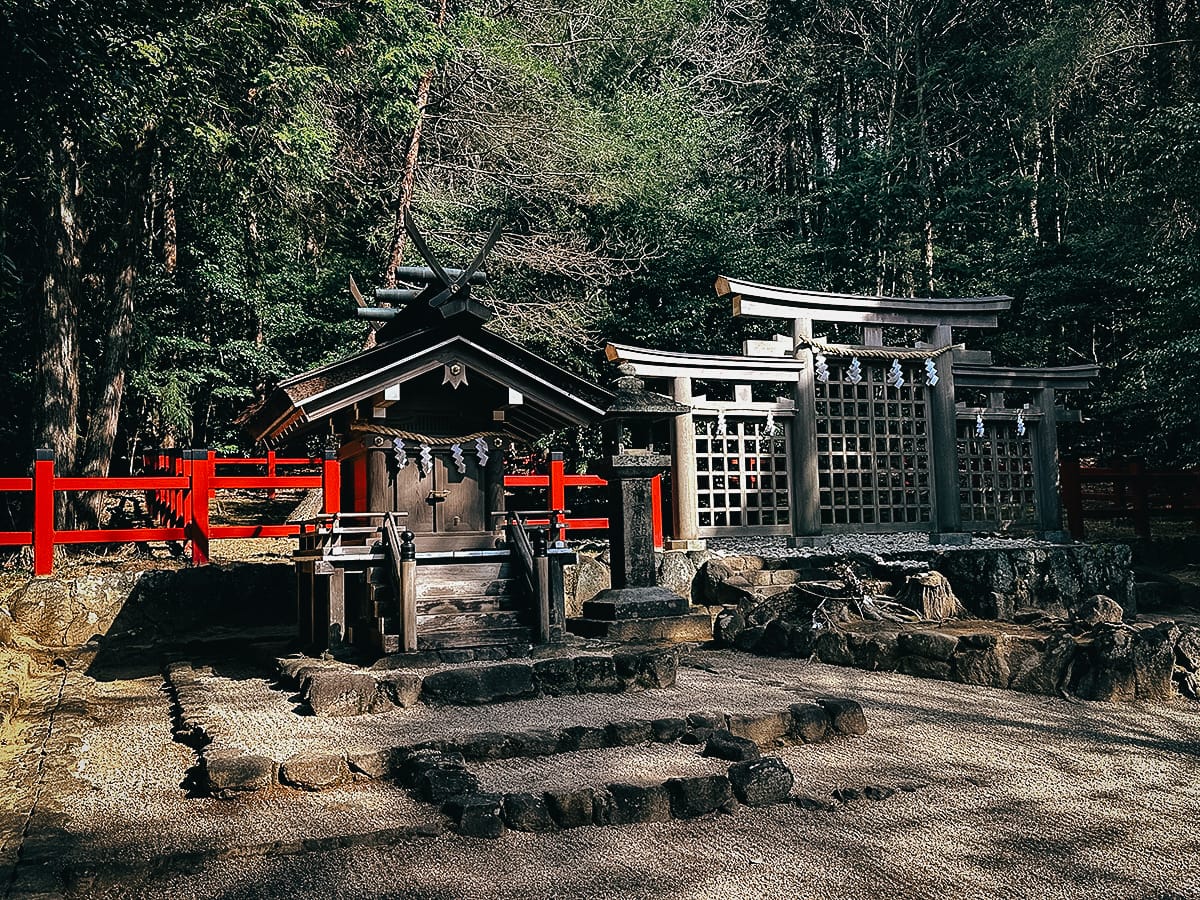
You’ll know you’re nearing the end of the Yamanobe-no-michi trail when you reach Hibara Shrine, an auxiliary shrine of Omiwa Jinja. Known for its triple torii gate, an old style rarely seen anymore, Hibara Shrine is widely considered to be the predecessor of the Ise Grand Shrines7.
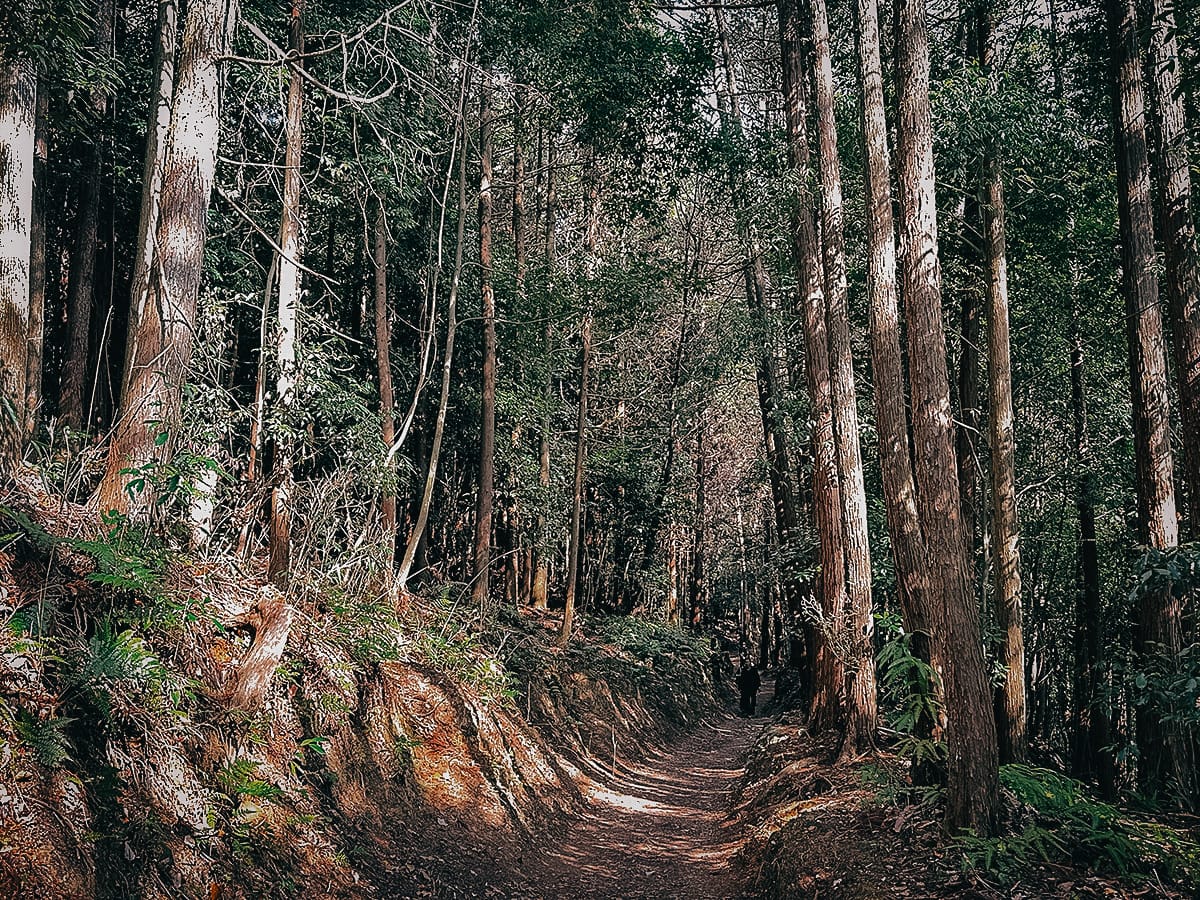
This was one of my favorite stretches of the trail, a rough dirt path cutting through a quiet forest, offering a few peaceful moments of shinrin-yoku, or Japanese forest bathing.
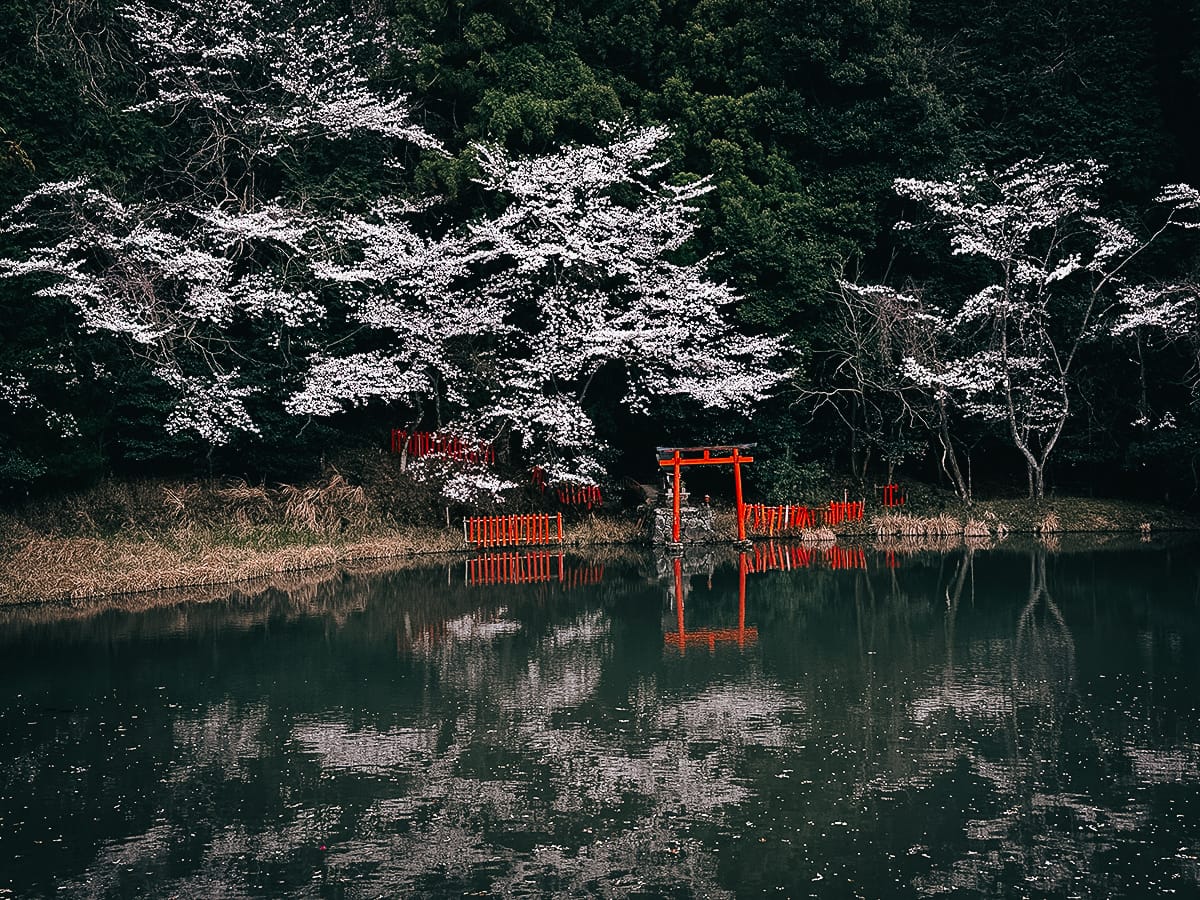
There doesn’t seem to be much information online about this small Shinto shrine (labeled 八大竜王 辯財天 大神 龗神神社 遙拝所 on Google Maps), but this exact spot – with the vermilion torii gate reflecting perfectly against the deep emerald green waters of the pond – has to be one of the most picturesque spots along the trail. Especially in the spring or fall!
You can enter one of the shrine’s buildings, which was being watched over at the time by a Japanese woman. Based on this review, she appears to be there all the time:
“A woman who claims to have been helped by this god in the past volunteers to keep watch. From other people’s posts and the woman’s story, it seems to be the facility of a fallen new religion, but it’s a place with a unique charm.” (translated from Japanese)
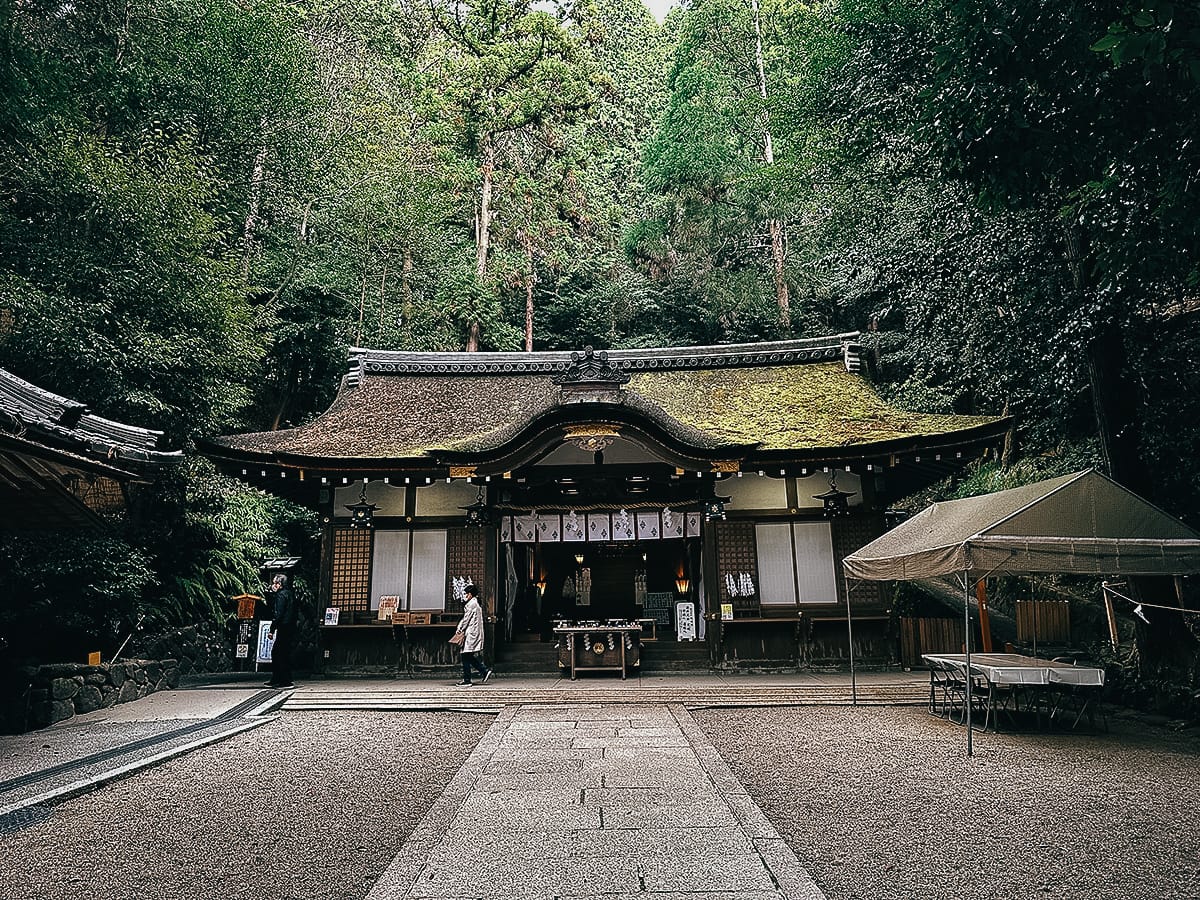
Walk a bit more, and you’ll soon find yourself at Sai Shrine, a smaller Shinto shrine that’s part of Omiwa Jinja. Congratulations! You’ve made it.
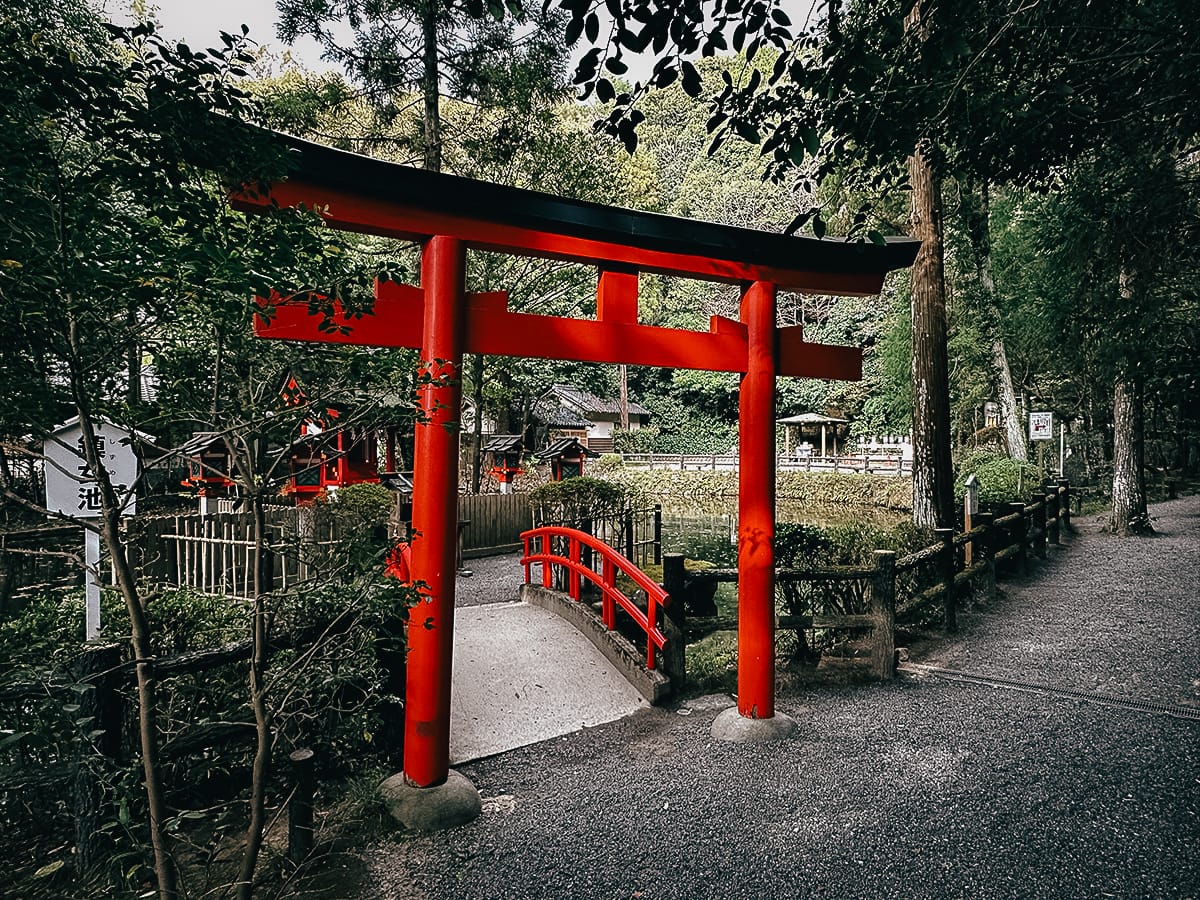
Sai Shrine is dedicated to medicine and healing, and is home to a natural spring whose waters are said to have healing qualities. Bottled spring water is sold at the shrine, but you can also bring your own bottles and fill them here for free8.
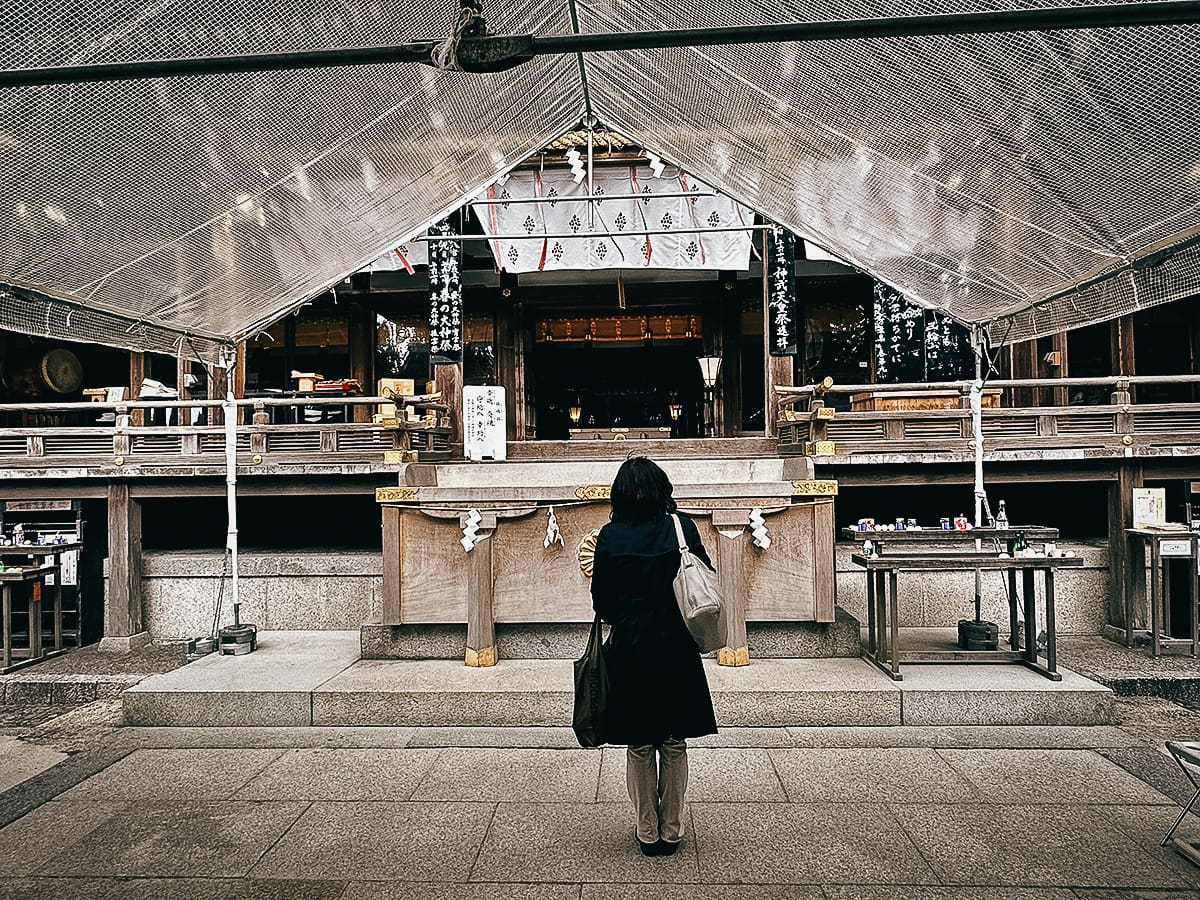
Omiwa Jinja, also known as Miwa Shrine, is a Shinto shrine situated at the base of Mount Miwa, which it serves. It’s recognized as one of the oldest, if not the oldest, shrine in Japan7. For that reason, it’s often referred to as “Japan’s first shrine”.
The entire shrine compound of Omiwa Jinja has been designated as an Important Cultural Asset, as have several of its structures and properties, like its prayer hall and triple torii gate.
After saying a prayer of thanks at Omiwa Jinja, for keeping me safe during my trek, I patted myself on the back and started the train journey back to my hotel via Miwa Station. Arigato gozaimasu Yamanobe-no-michi!
By the way, speaking of Miwa Station and Omiwa Jinja, if you’re hungry, then this is as good an area as any to have somen. Somen refers to thin wheat flour noodles that can be eaten hot or cold. Miwa district is considered the birthplace of somen noodles in Japan, and Omiwa Shrine’s deity is considered the guardian of somen9.
YAMANOBE-NO-MICHI FAQs
Is it worth doing the Yamanobe-no-michi hike?
Yes, absolutely, especially if you enjoy going on long, leisurely walks. There aren’t any must-see attractions along the route, which is actually better because it helps keep the crowds away. The trail itself, and the experience of walking it, is the main draw.
How long will the hike take?
I’m in good shape and walk fairly fast, and it took me a little over 5 hours to get to Omiwa Jinja from Isonokami Shrine. With that said, I did make many stops to explore and take pictures, including a lengthy stop at Cafe Samanala Garden for lunch. Most hikers can probably get through the trail in 4-6 hours.
Is the hike difficult?
In my experience, no. I found there were no treacherous parts, and the trail was mostly flat with just a few short inclines. For me, it felt more like a long countryside walk than a true hike, but the experience may be different for others, depending on their level of fitness.
Will I get lost along the way?
Nothing is impossible, but considering how well-marked it is, I found it easy to stay on the trail. And that’s coming from someone with a terrible sense of direction!
Aside from keeping an eye out for the markers, it’s also extremely important to have a reliable connection to Google Maps (or similar navigation app). No matter how easy the trail might be, I wouldn’t attempt it without it.
Is the Yamanobe-no-michi trail safe?
In my experience, yes. But I do recommend checking weather conditions before heading out, because rain or snow can make parts of the trail more challenging. It’s important to plan accordingly and prioritize safety.
In my case, I wasn’t overly concerned about the trail’s difficulty, but I was mindful about staying hydrated and well-fed. Even though it was overcast, I still protected myself from the sun and followed standard hiking safety guidelines.
I also got travel insurance, not just for this hike, but to cover my entire trip to Japan.
THE FINAL SAY
Japan is a fantastic country to go for a hike, and the Yamanobe-no-michi trail is yet another testament to that. Barring unfavorable weather, the trail should be pleasant for most of the year, but spring and autumn are especially beautiful.
Disclosure
This article on the Yamanobe-no-michi trail contains affiliate links, meaning we’ll earn a small commission if you make a booking at no additional cost to you. We only recommend products and services that we use ourselves and firmly believe in. We really appreciate your support as it helps us make more of these free travel guides. Arigato gozaimasu!
References
1. Yamanobe-no-Michi. Visit Nara.
2. Ong, Raina. Walking back to Ancient Japan. japan-guide.com.
3. Tenrikyo. Wikipedia. (2002, May 25).
4. Isonokami Shrine. Wikipedia. (2004, July 10).
5. Cartwright, Mark. Kofun. World History Encyclopedia. (2017, May 3).
6. Chōgaku-ji. Wikipedia. (2022, October 31).
7. Yamanobe-no-michi Trail. japan-guide.com.
8. Saijinja Shrine. Visit Nara.
9. Lau, James. Somen: The History of These Interesting Noodles! Sakuraco. (2024, July 12).
