
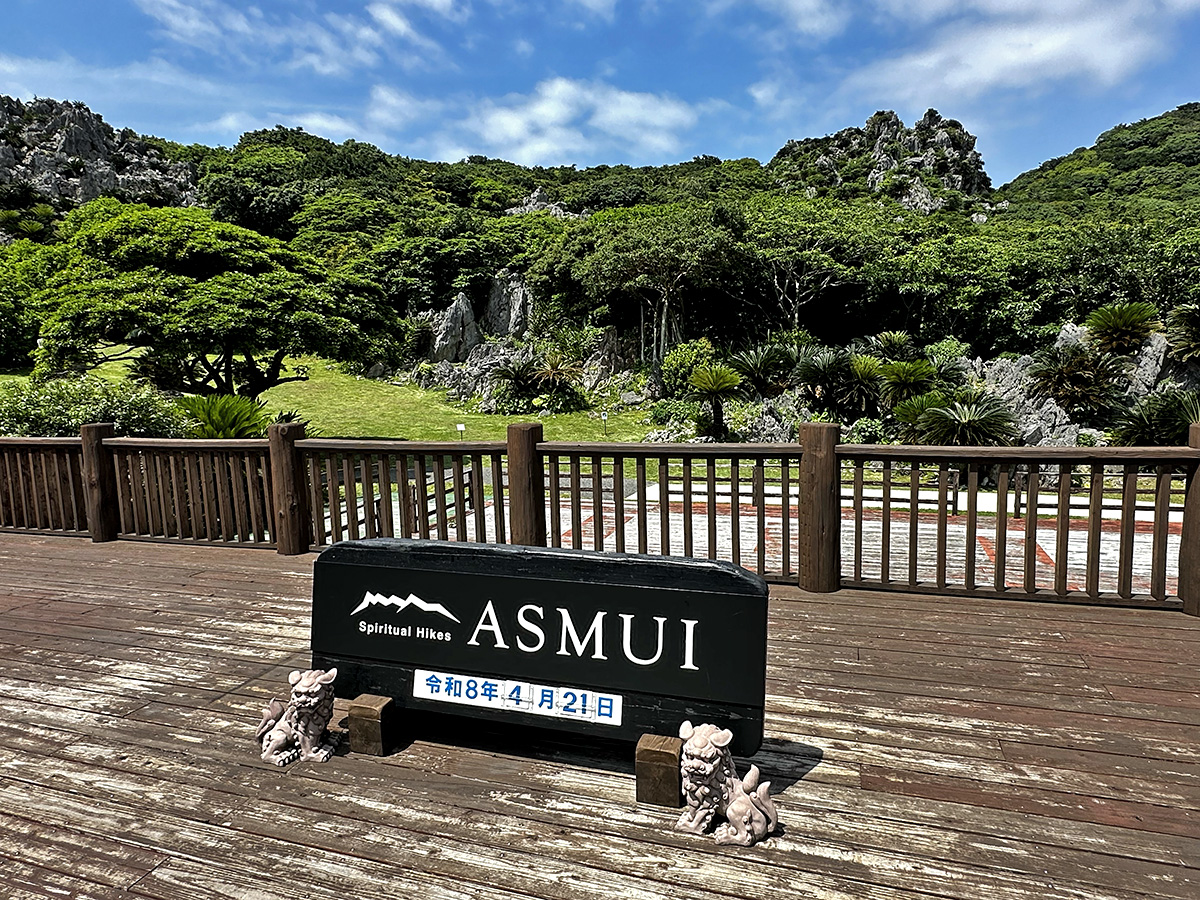
SUMMARY HIGHLIGHTS
- Best visited by rental car, ASMUI Spiritual Hikes is located around a 5-10 minute drive from Cape Hedo.
- More a casual forest walk than a true hike, it’ll take the average person around 1.5-2 hrs to go through the full course.
- Personally, ASMUI Spiritual Hikes was my favorite thing to do in Okinawa.
The plan that day was simple – get lost in the music of Olivia Dean and Laufey on the scenic coastal drive to Cape Hedo, the northernmost point of Okinawa Island.
Before leaving Nago, we picked up vegan bento boxes from a local takeaway shop, planning to eat lunch once we reached the cape. Sitting on a bench at the observatory, overlooking the cliffs and the ocean, we quietly enjoyed our bentos while taking in the dramatic view.
“I’ve never seen the ocean that blue before”, I marveled to my better half. It was a perfect moment.
Little did I know that Cape Hedo wouldn’t even be the best part of that day.
While researching places to visit in northern Okinawa, I had come across a curiously named attraction called ASMUI Spiritual Hikes. It looked interesting enough to warrant a quick stop after Cape Hedo – a scenic nature walk with a spiritual lean set somewhere in the forests of Yambaru. I went in with modest expectations, thinking it would be a pleasant little side trip on the drive back to Nago.
A hike later, it turned out to be my absolute favorite thing to do in all of Okinawa.
VISIT OKINAWA QUICK LINKS
To help you plan your trip to northern Okinawa, we’ve compiled links to top-rated hotels, tours, and other travel-related services here.
HOTELS
Recommended hotels in Nago, one of the most convenient areas to stay for exploring northern Okinawa.
- Luxury: The Busena Terrace
- Midrange: YANBARU STAY ちゅら宿
- Budget: ALL FRIENDS Guest House
EXPERIENCES
- Sightseeing Tour: Okinawa Shuri Castle Peace Walking Tour
- Snorkeling Tour: Snorkeling Tour at a Private Beach in Nago
- Scuba Diving: Intro | Certified
- Bar Hopping Tour: Best Naha Izakayas & Nightlife with Local Guide
- Cooking Class: Cooking Classes in Okinawa
OTHER SERVICES
- Travel Insurance (non-US residents get 5% off)
- Airport Transfer
- Car Rental
- Japan eSIM
WhAT IS ASMUI SPIRITUAL HIKES?
Set deep in the forests of Yambaru, ASMUI Spiritual Hikes is a scenic, hiking-based attraction built around the rugged limestone mountains of northern Okinawa. It’s located near Cape Hedo and was formerly known as Daisekirinzan, before being rebranded as “Asmui Spiritual Hikes” in December 20241.
The landscape itself is ancient. The dramatic limestone formations were formed roughly 250 million years ago beneath the sea, before tectonic activity pushed them above ground, and centuries of wind and rain slowly sculpted the jagged cliffs and oddly shaped rock shapes we see today2.
On top of its unique geography, the area is steeped in folklore. According to Ryukyuan mythology, the site was created by the gods and is believed to be the very first place considered sacred by early Okinawans. Venerated by locals for ages, it’s home to over forty places of worship (utaki) and remains culturally significant to this day1.
Open to the public, visitors can explore the forest through a series of well-developed hiking trails. More a scenic walk than a vigorous hike, the experience is supported by an excellent audio guide that blends nature, history, mythology, and spirituality.
asmui spiritual hikes QUICK FACTS
I’ll describe the experience in more detail in the next section, but here are a few important things to know before visiting ASMUI Spiritual Hikes. The information below is accurate as of May 2026.
HOURS OF OPERATION
ASMUI Spiritual Hikes is open daily from 9:30AM to 5:30PM. Last admission is at 4PM.
JAPAN TRAVEL DEALS
Planning a trip to Japan? Enjoy up to 50% off on selected experiences and activities with Klook and Get Your Guide. Click on the links for a list of discounts, promo codes, and limited-time offers.
HIKING FEES
Admission to ASMUI Spiritual Hikes is JPY 2,500 for adults (ages 15 and over) and JPY 1,000 for children (ages 6-14). This fee includes admission, shuttle bus access, an audio guide, and lounge use.
HIKING TRAILS
There are four hiking trails at ASMUI Spiritual Hikes – the Regular course, Short course, Spirit Forest, and Barrier-free course. The Regular course takes roughly 60 minutes to complete, while the Short course and Spirit Forest take around 30 minutes each.
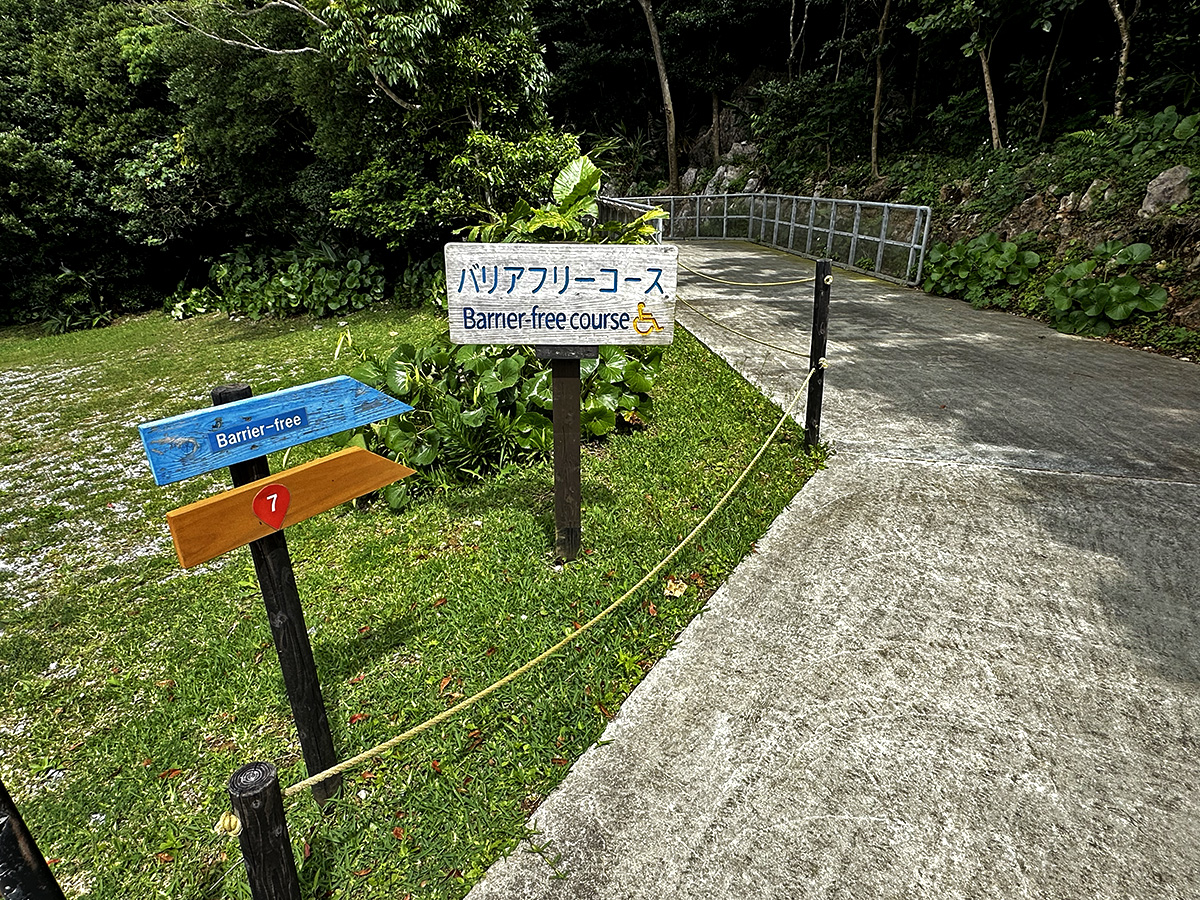
The Barrier-free course is a fully paved or wooden pathway that can accommodate strollers and wheelchairs. Beginning and ending at the Spirit Lounge, it’s a relatively short course that takes guests on a short loop around the middle of the forest.
Pictured below is a copy of the map they give you when you pay for admission. I’ll describe the flow of the experience and what to expect from the hikes in the next section.
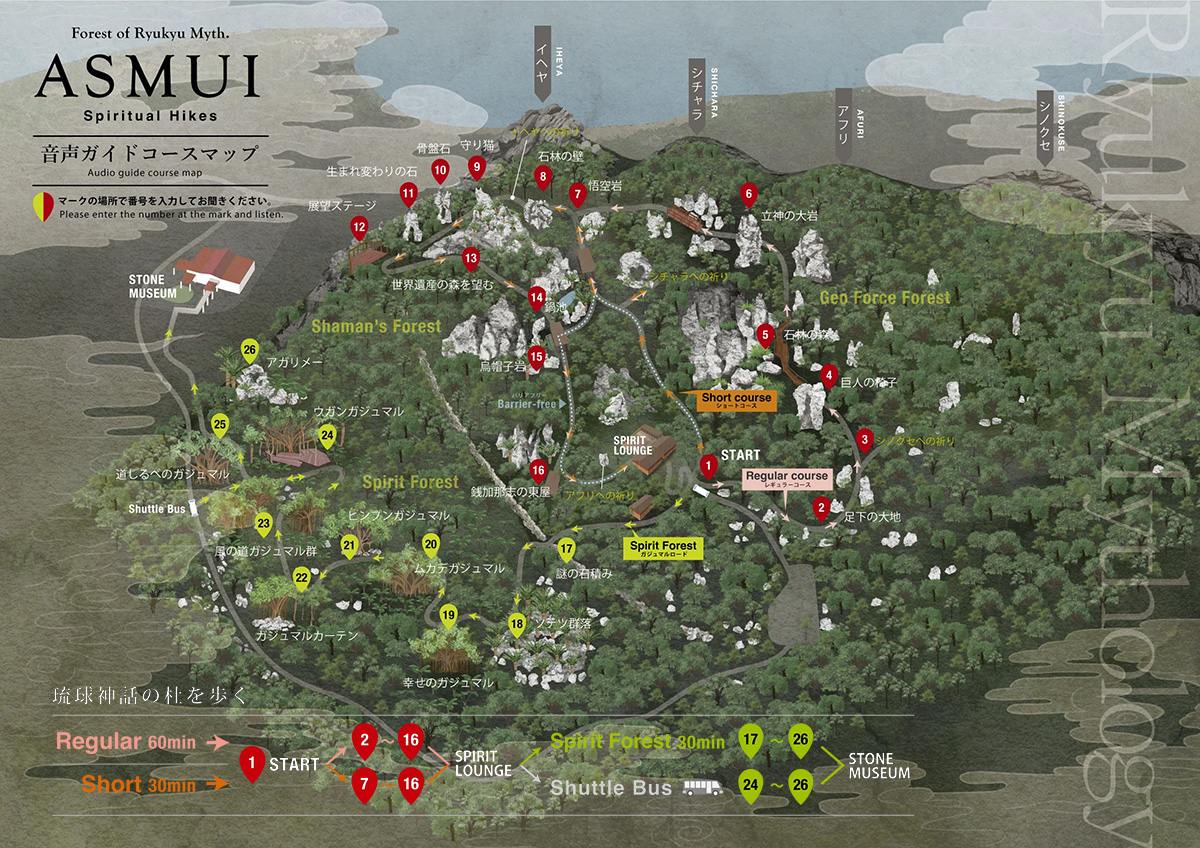
MY ASMUI SPIRITUAL HIKES EXPERIENCE
Your ASMUI Spiritual Hikes experience begins in the facility’s main building, which the map above refers to as the Stone Museum. It’s home to a souvenir store, a gelato shop, and the Okinawa Museum of Stone Culture.
OKINAWA MUSEUM OF STONE CULTURE
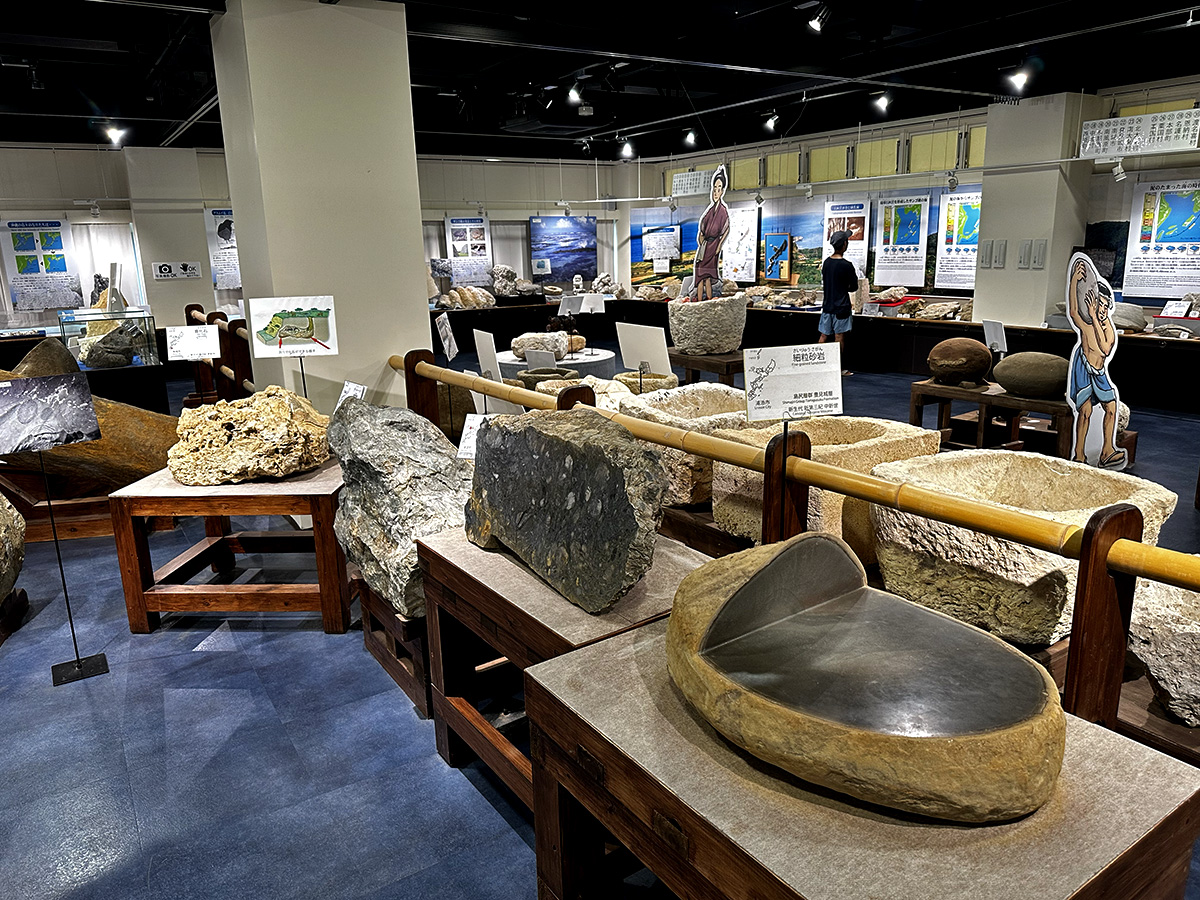
As its name suggests, the Okinawa Museum of Stone Culture is a small geology and folklore museum documenting the role stones have played in Okinawan life. Rock samples collected from every municipality in Okinawa Prefecture are on display here, along with traditional stone tools and folk implements once used in daily life.
You can spend a few minutes here before starting your hike.
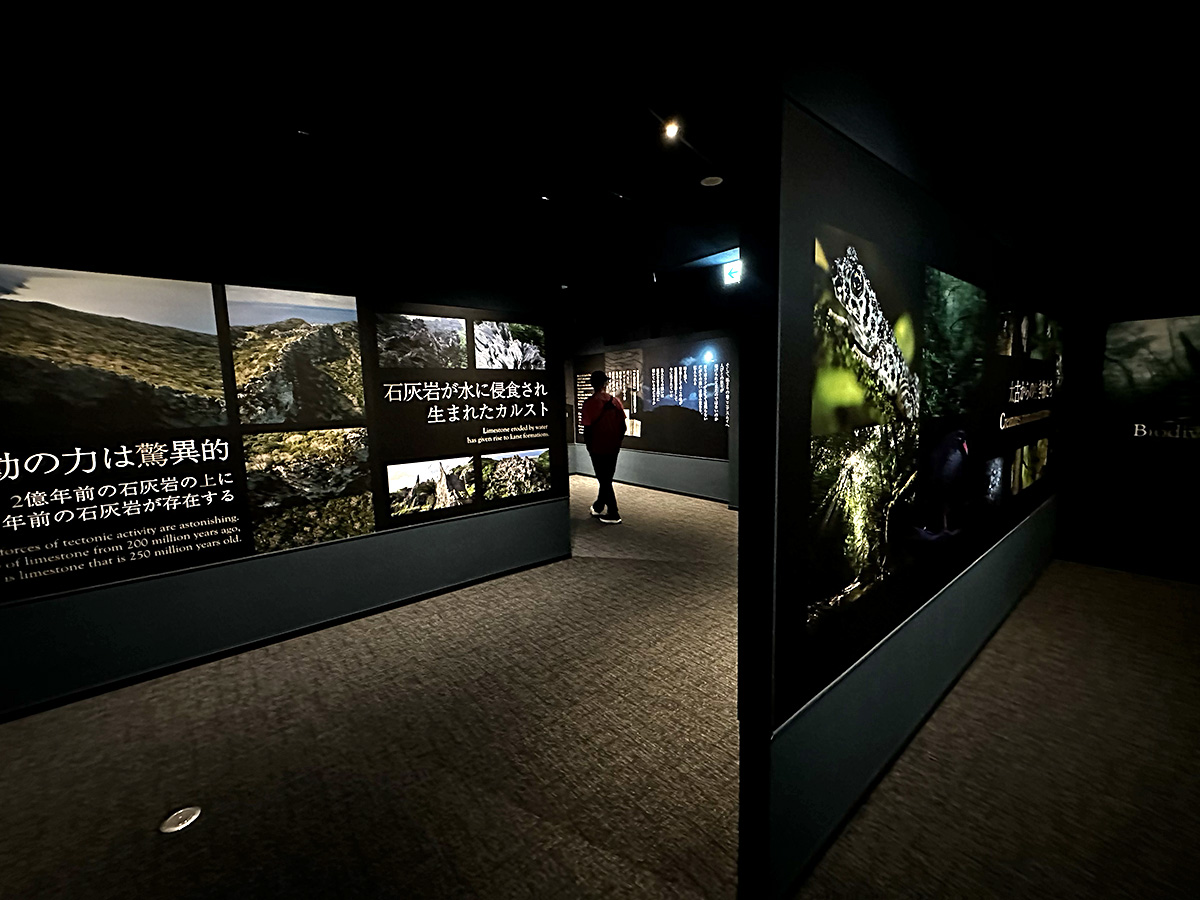
After paying the admission fee, you’ll enter a dimly lit corridor lined with beautiful high-resolution images of the forest. Ambient music plays in the background and sets the tone for the spiritual atmosphere of the experience.
The corridor leads to an equally dark waiting room, where a similarly meditative video showcasing ASMUI plays on loop. Visitors wait there briefly before boarding the shuttle to the Spirit Lounge.
SPIRIT LOUNGE
It takes less than 10 minutes to get from the Stone Museum to the Spirit Lounge, where a staff member is waiting to welcome visitors.
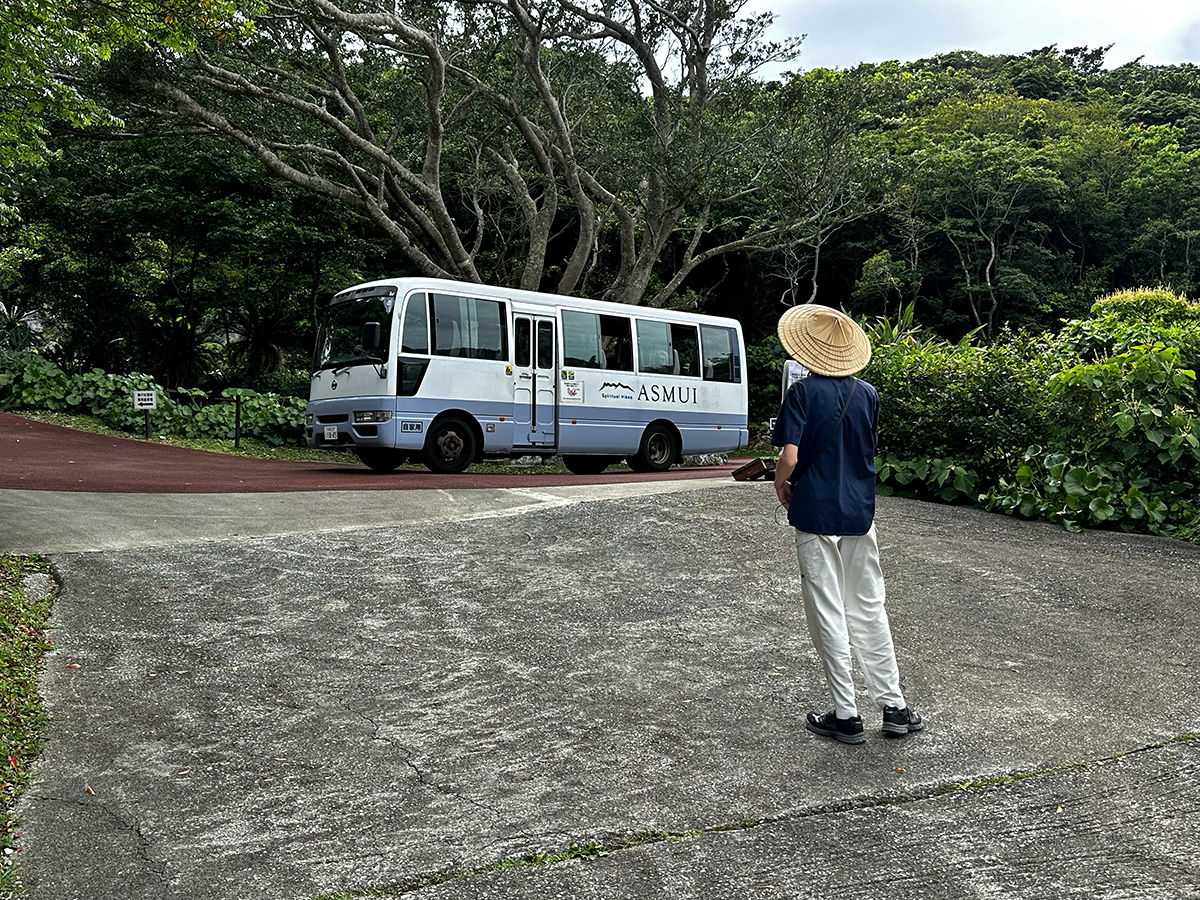
The staff member guides everyone into the Spirit Lounge for a brief orientation, where they describe the different trails, facilities, and overall flow of the experience.
The orientation is conducted entirely in Japanese, though they do show you a few slides with key points in English. It’s all pretty self-explanatory, so I didn’t find the language barrier to be an issue.
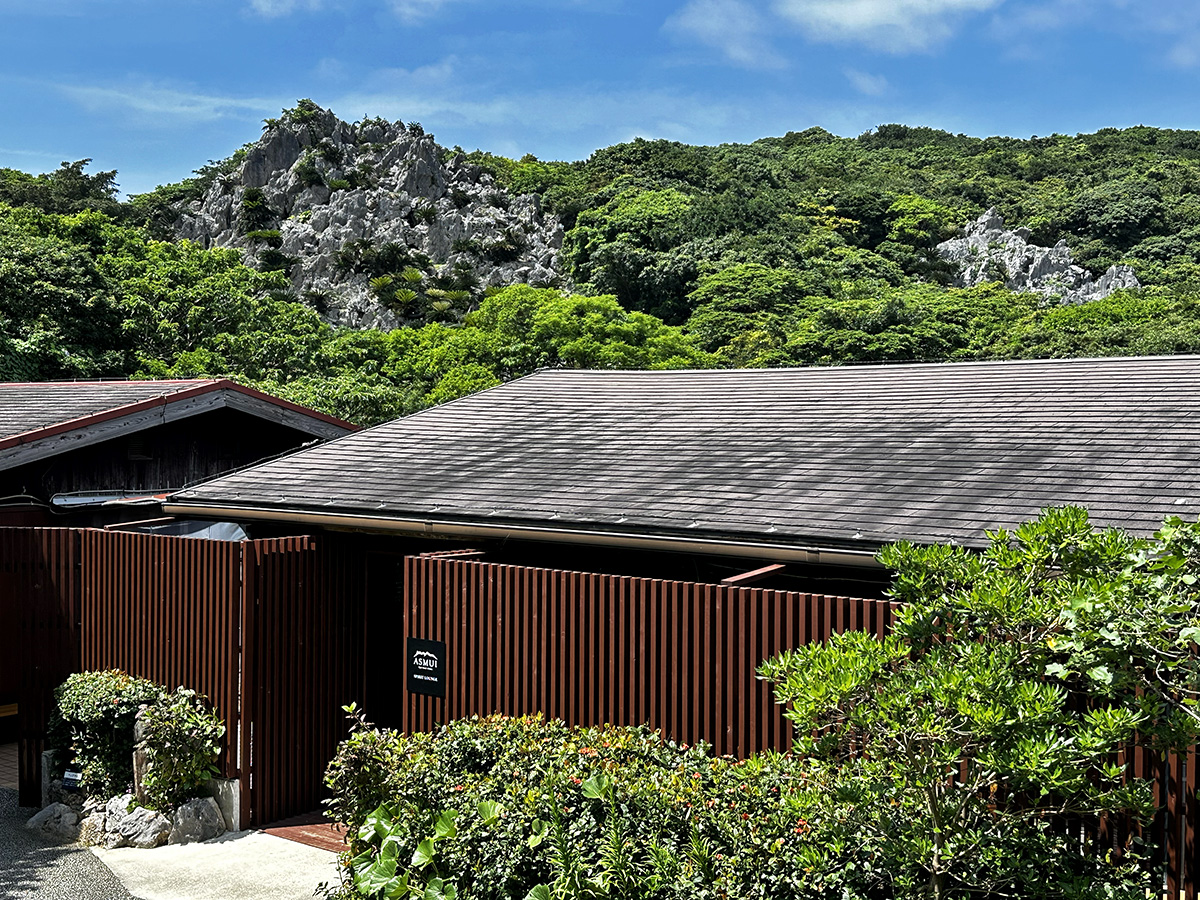
The Spirit Lounge is home to a small restaurant serving Okinawa soba. It’s a regional dish of thick and chewy wheat noodles served in a pork-and-bonito broth, topped with pork belly. You can rest and enjoy a bowl here before or after your hike. They sell bottles of water here too.
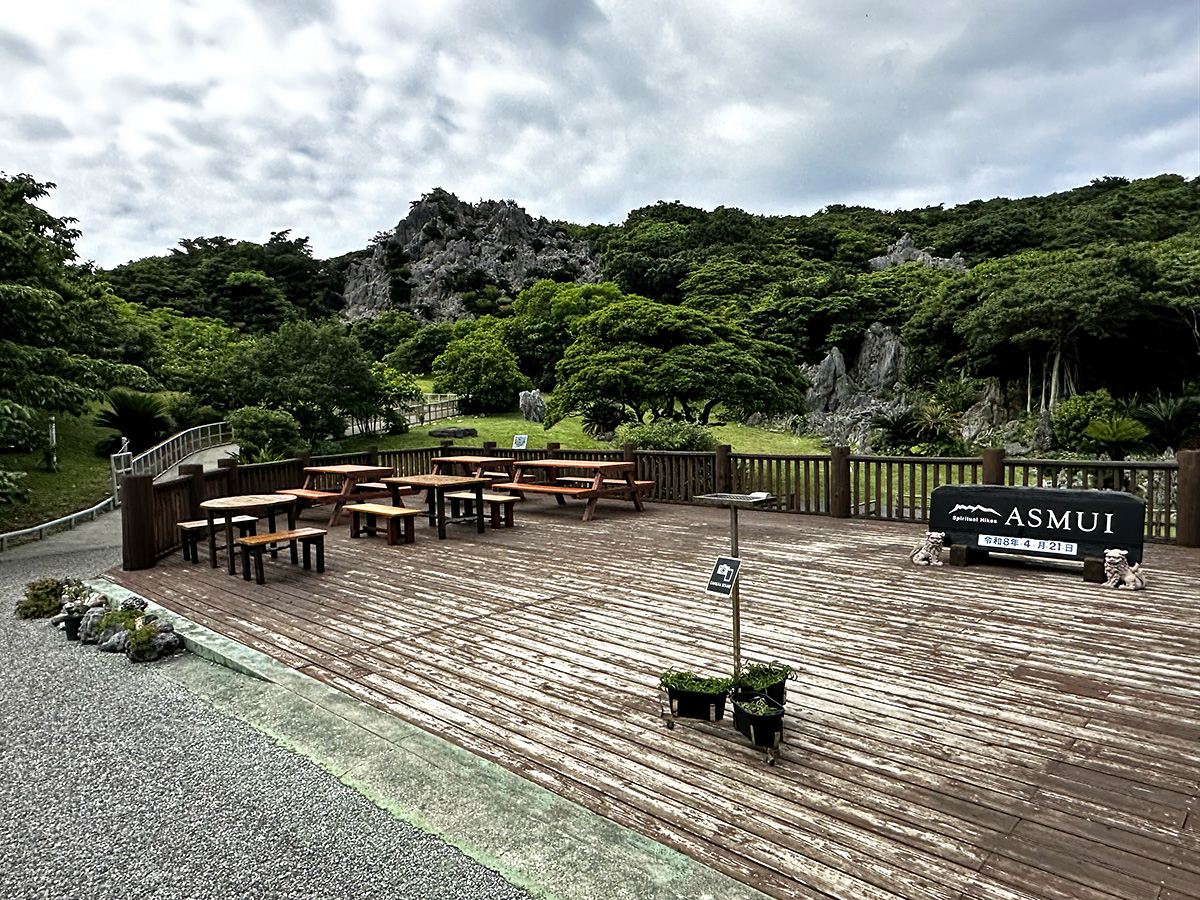
All four hikes start from the Spirit Lounge. You can choose between the Regular Course, which features 16 audio guide markers and takes about an hour, or the Short Course, which starts at marker 7 of the Regular course and takes roughly half that time.
I’ll go into ASMUI’s excellent audio guide in more detail shortly.
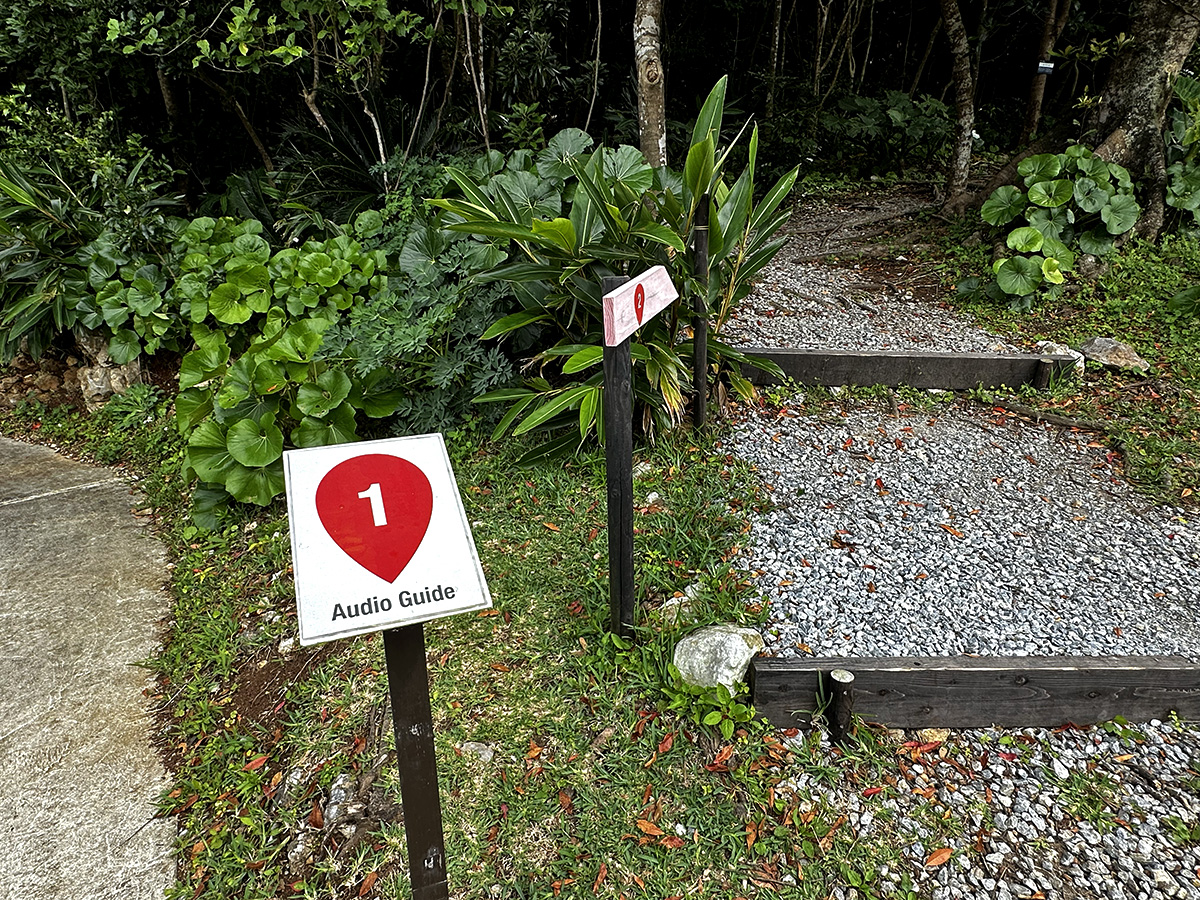
This path leads to the Short and Barrier-free courses. The Barrier-free route is a fully paved loop that takes visitors with strollers or wheelchairs through the middle of the forest and back. Though shorter than the others, it’s a lovely route and well worth doing.
REGULAR COURSE
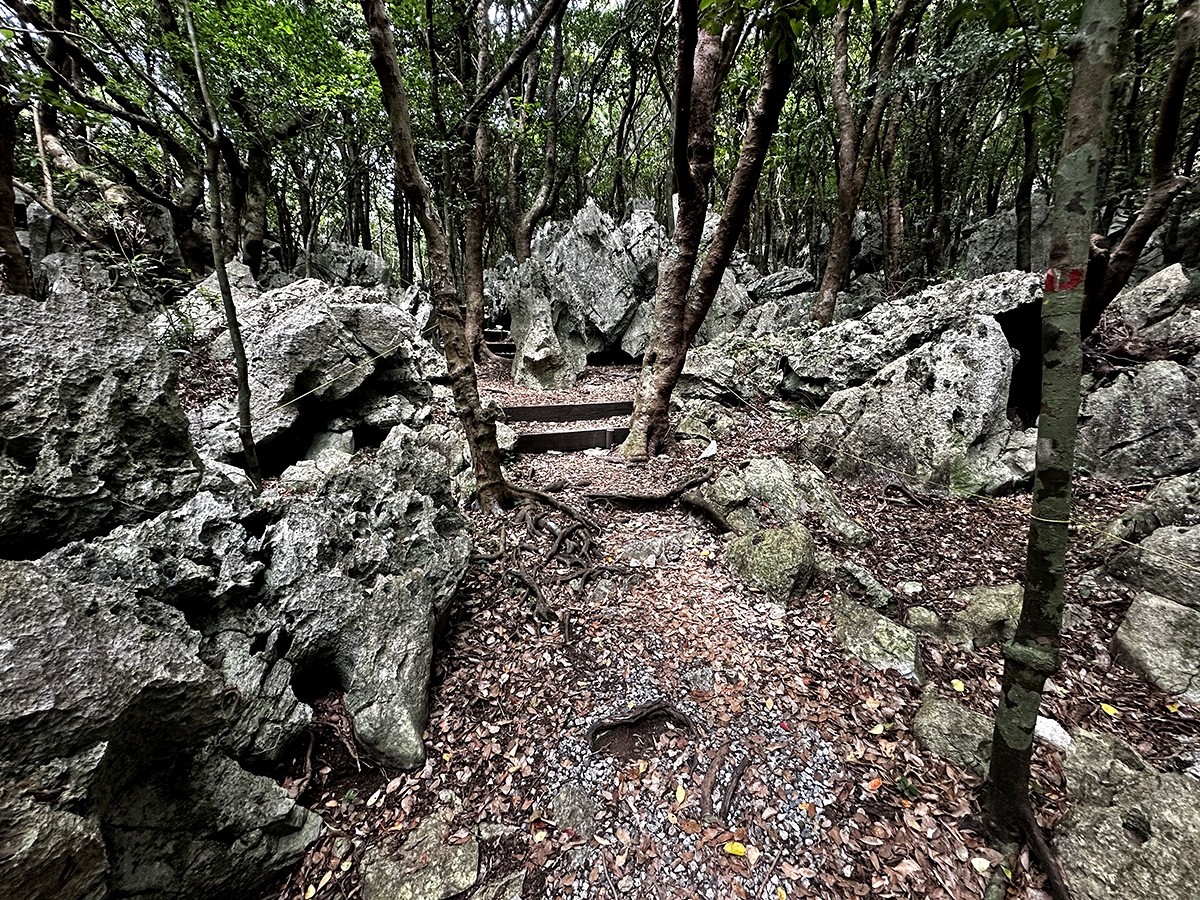
This is pretty much what most of the Regular course looks like. It’s rugged, with exposed roots and jagged limestone, but I never found it to be too challenging or dangerous. Not even the flights of stairs were manageable. Overall, it felt more like a walk through the forest than a true hike.
The trail is also well-marked, with ropes helping to guide the way, so I think it’s almost impossible to get lost. At first, I was concerned about sun exposure, but the forest is dense, with plenty of tree cover providing ample shade throughout.
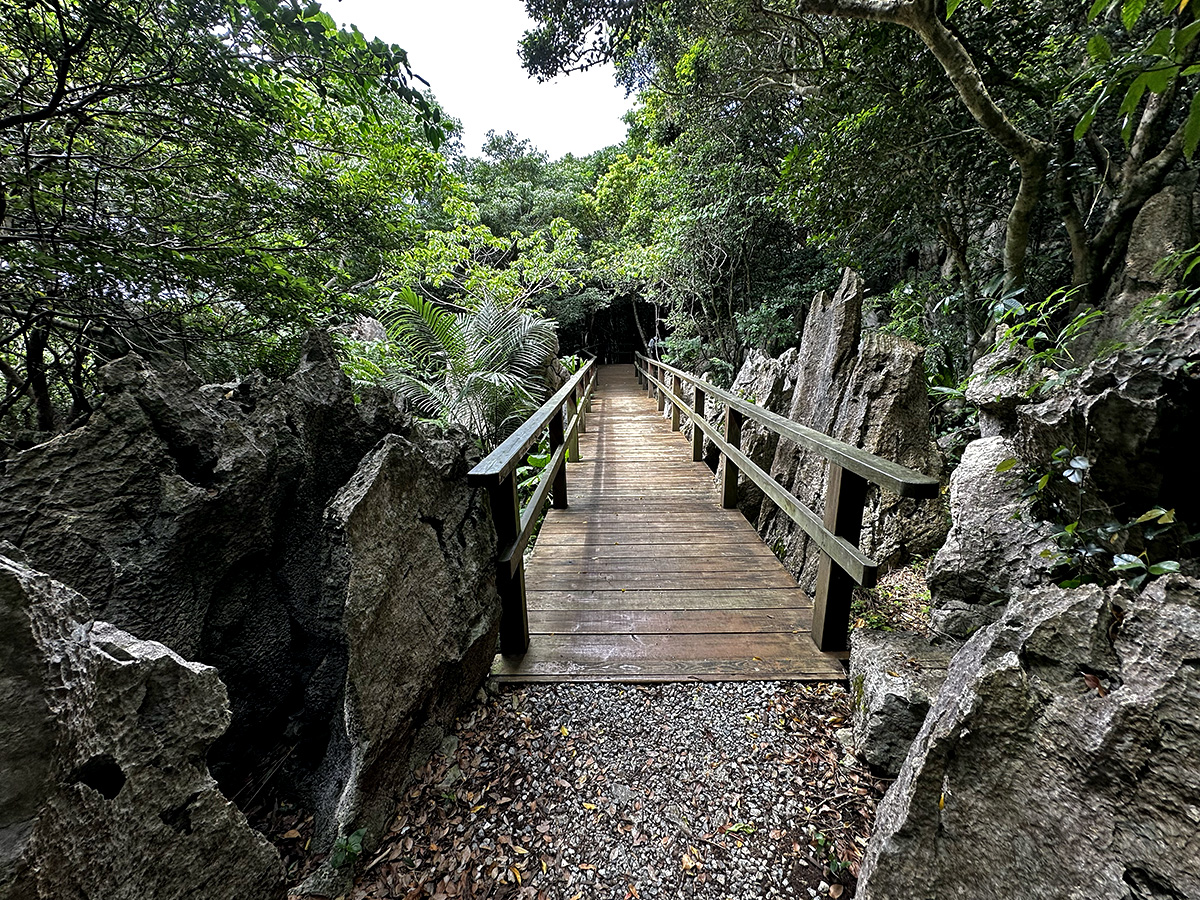
The course moves between rugged natural terrain and constructed sections, like stairways and this wooden bridge.
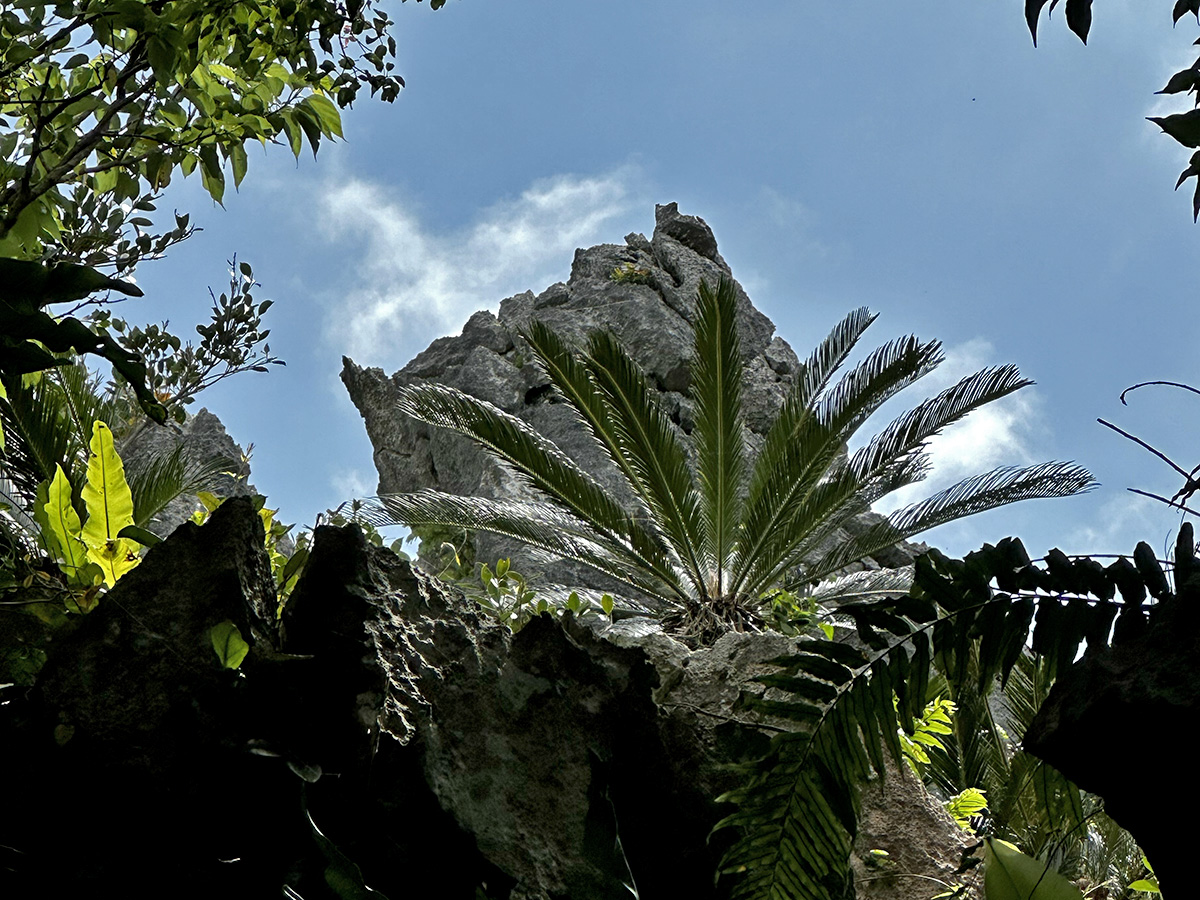
You’ll find curious-looking rock formations throughout the trail. This ine is called Guardian Cat. Can you see why?
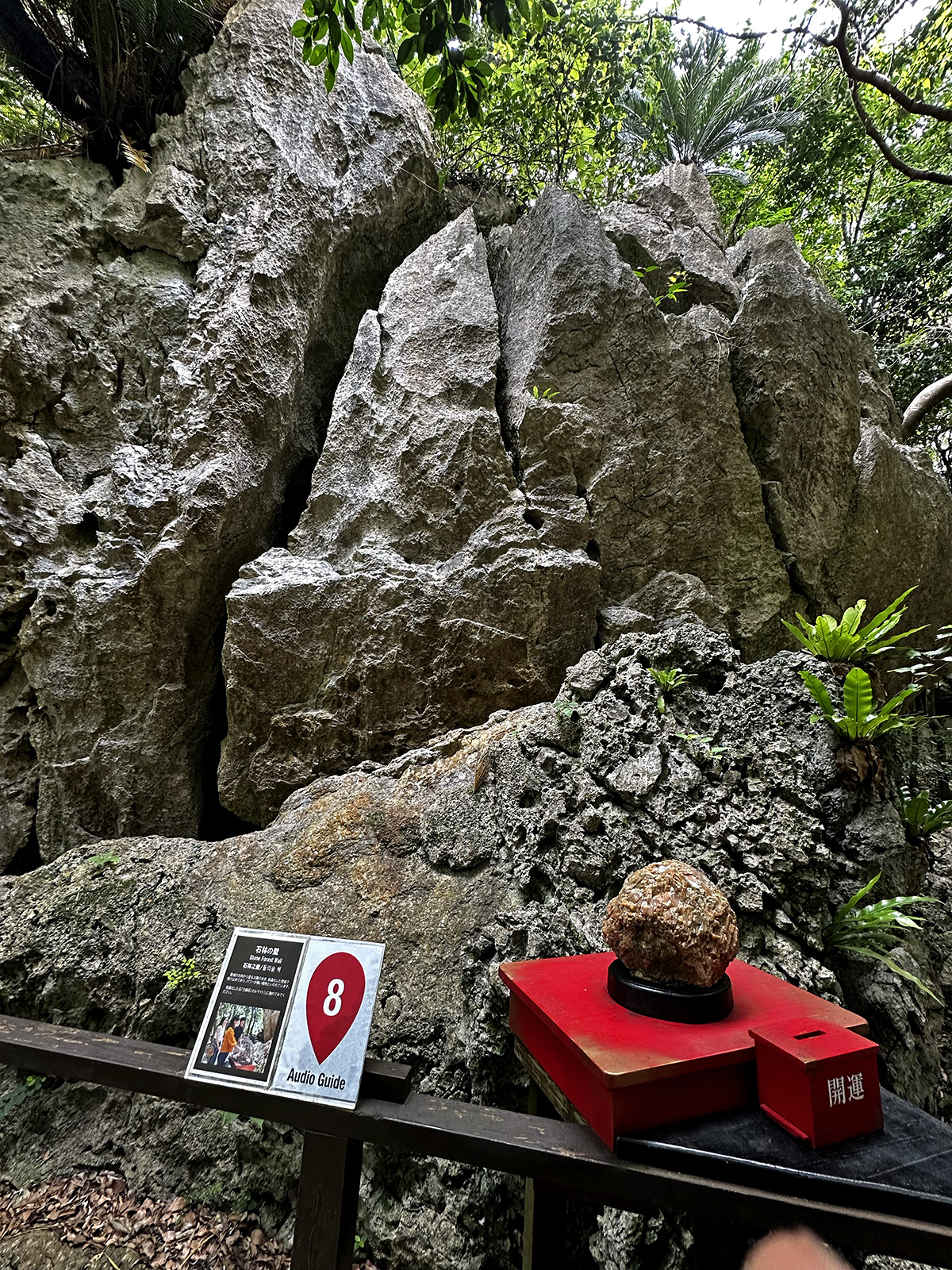
You can’t really tell from this picture, but this shimmering rock is known as the Stone Forest Wall. It’s composed of calcite, a crystalline form of limestone that’s been shaped and altered over millions of years by seawater, pressure, and mineral-rich groundwater seeping through cracks in the rock.
I learned this through ASMUI Spiritual Hike’s app, which you should download as soon as you arrive at the Stone Museum. There’s a QR code for you to scan to download the audio guide app. It’s exceptionally well done and adds a great deal to the experience.
The entire trail – the Regular course plus the Spirit Forest – features a total of 26 audio guide markers.
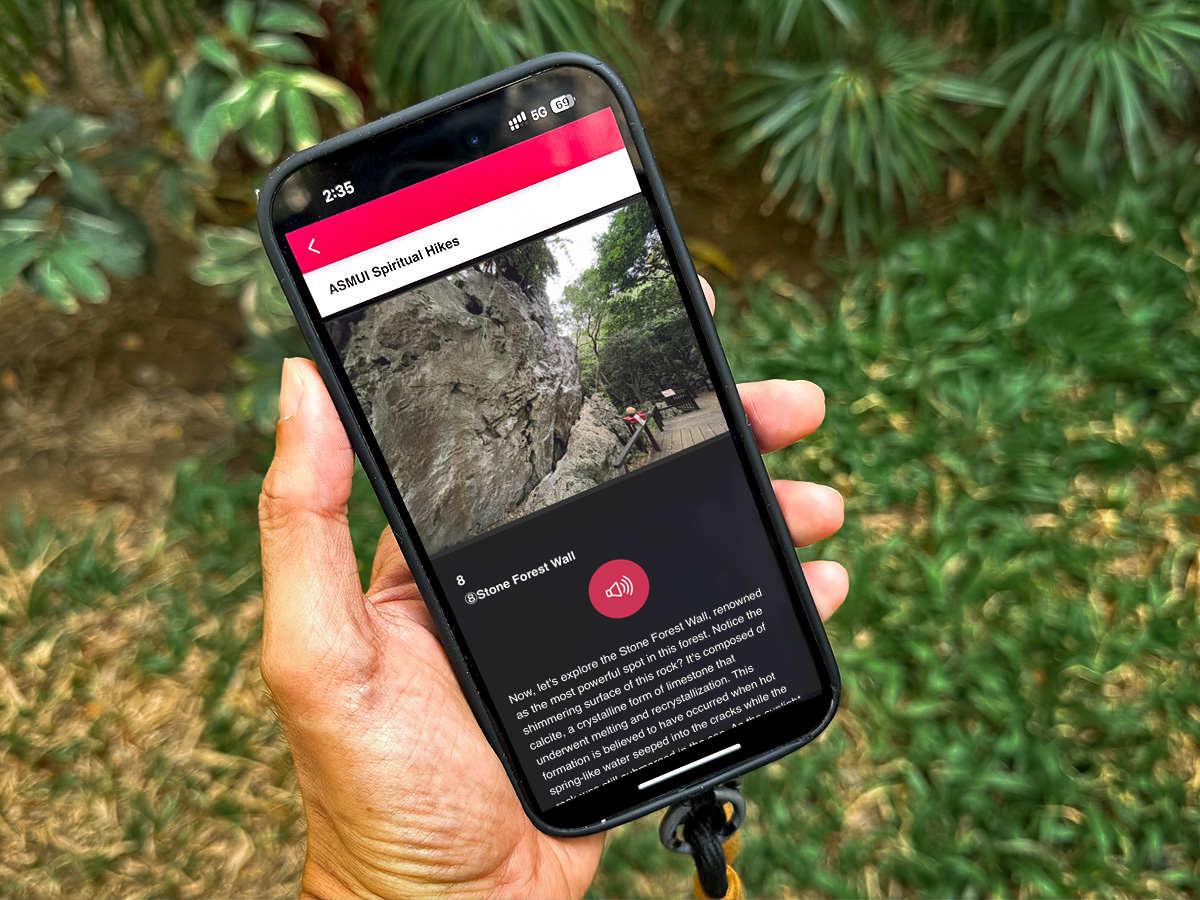
Pro Tip: There’s no wifi connectivity anywhere along the trail, so it’s important to download the guide from the app so you can continue to access it even when offline. This is in addition to downloading the audio guide app from the App Store or Google Play. There’s a download button from within the audio guide app.
Make sure to do this at the Stone Museum or Spirit Lounge, where free wifi is available. If you don’t, then you risk losing access to the app should you lose your wifi connectivity along the trail.
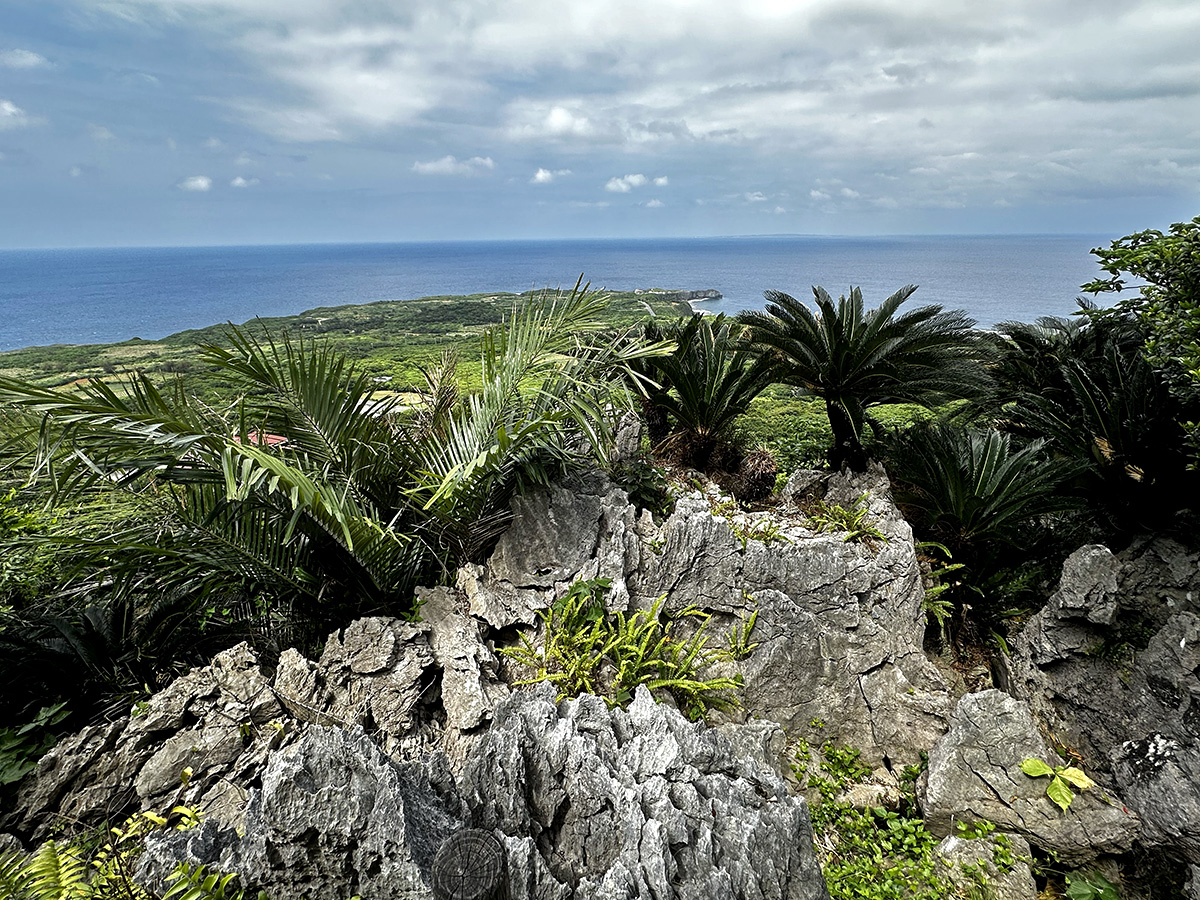
The hiking trail is beautiful throughout, but seeing the ocean from these higher vantage points is absolutely breathtaking.
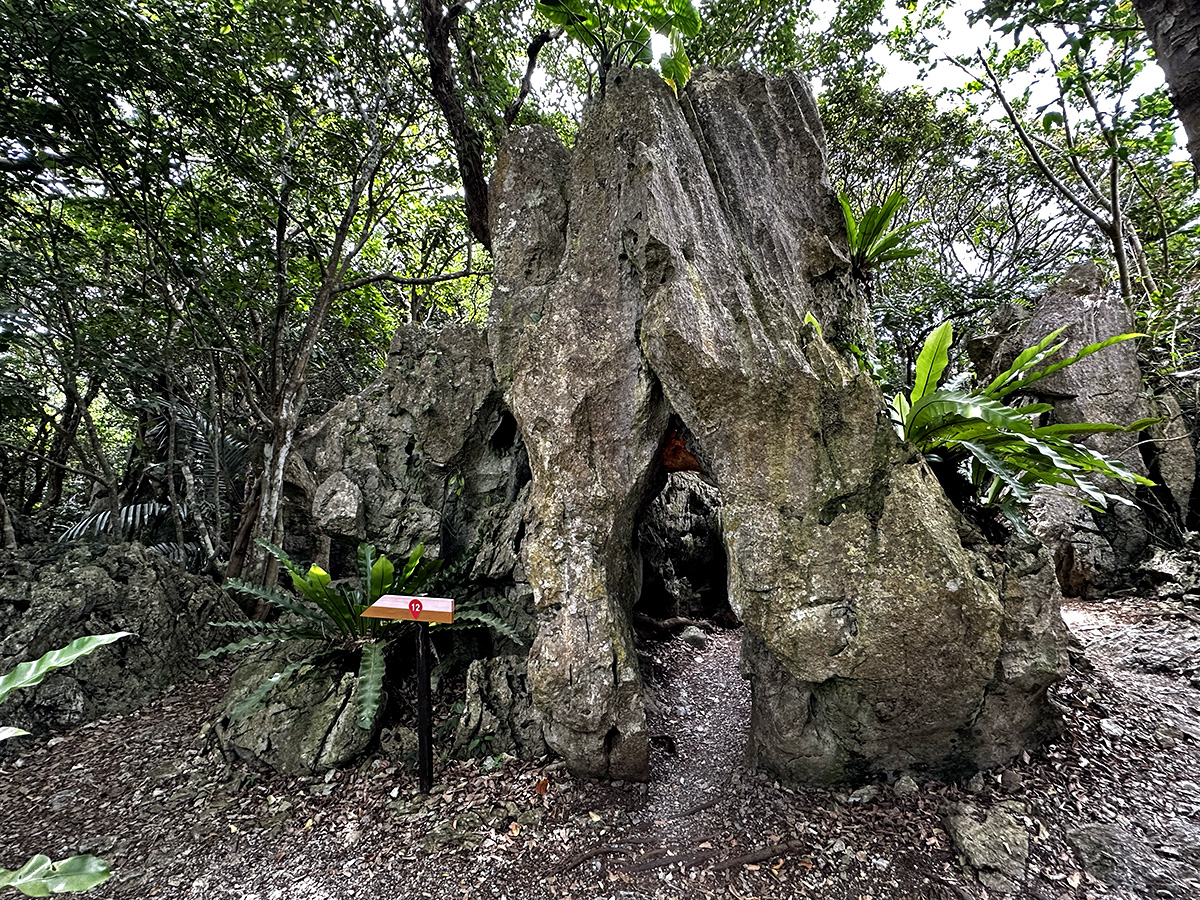
This is one of the more interesting limestone formations along the trail. Known as Reincarnation Rock, it features a hole you can walk through. According to legend, going through this hole three times, in a clockwise direction, offers three benefits.
The first time helps you let go of past negativity. The second resets your circumstances, while the third attracts positive changes in your life.
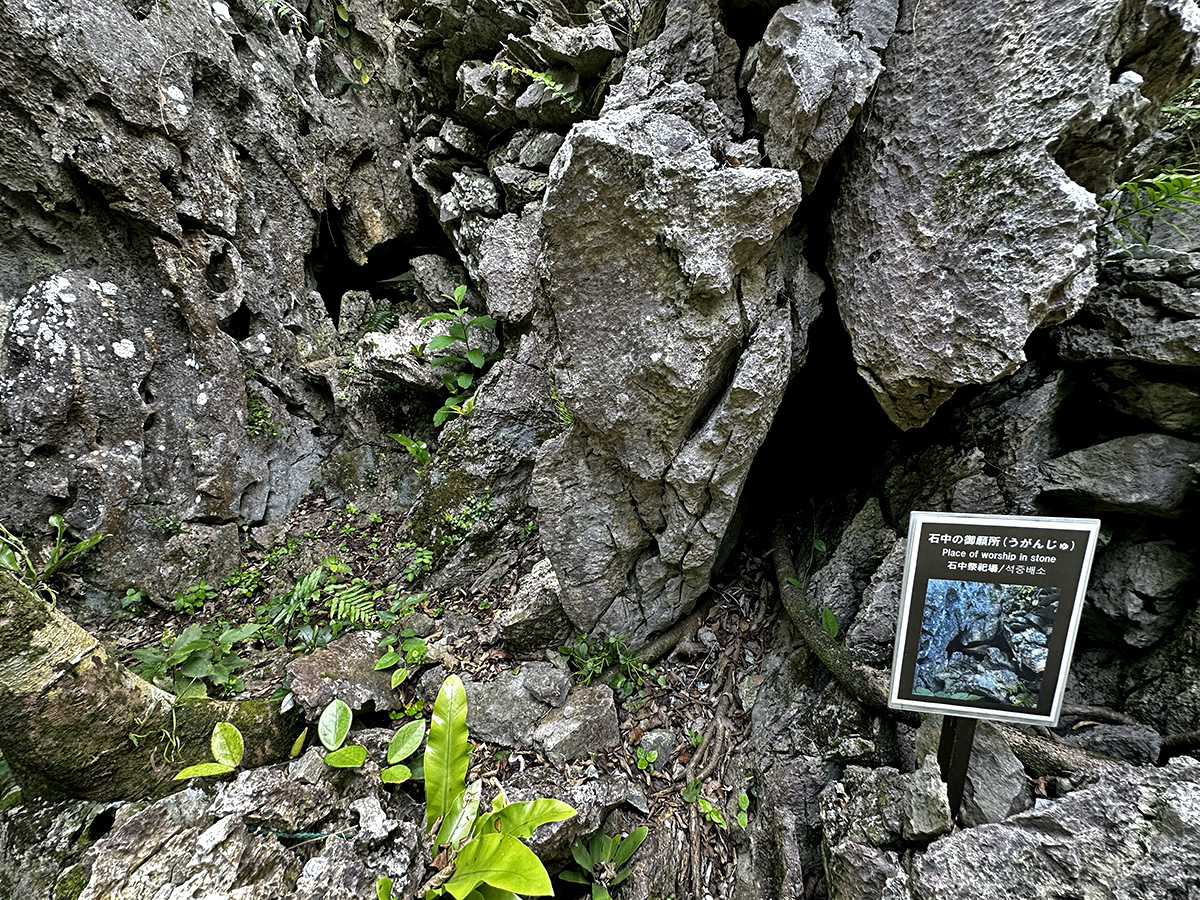
As previously mentioned, there are dozens of sacred places of worship along the trail. Known locally as utaki, they’re natural formations like rocks, caves, groves, or clearings that are believed to be inhabited by spirits or connected to the gods.
Utaki are deeply tied to Okinawan spirituality and ancestor worship, and many are still treated with reverence today. Some remain active religious sites, while others are preserved mainly for their cultural and historical significance.
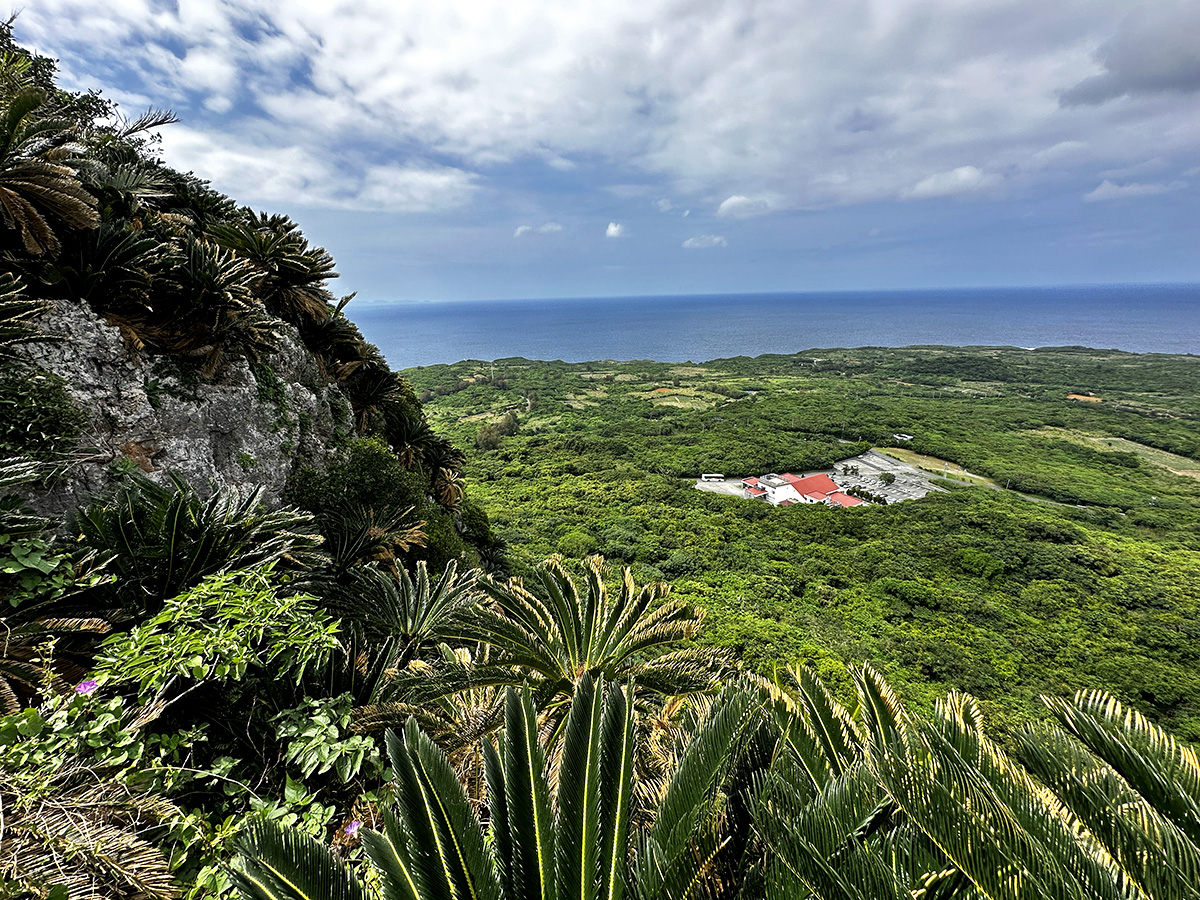
This is my favorite part of the trail. It’s the summit of Iheya Cliff and the highest point of the course. That building with the red roof? It’s the Stone Museum, where you started!
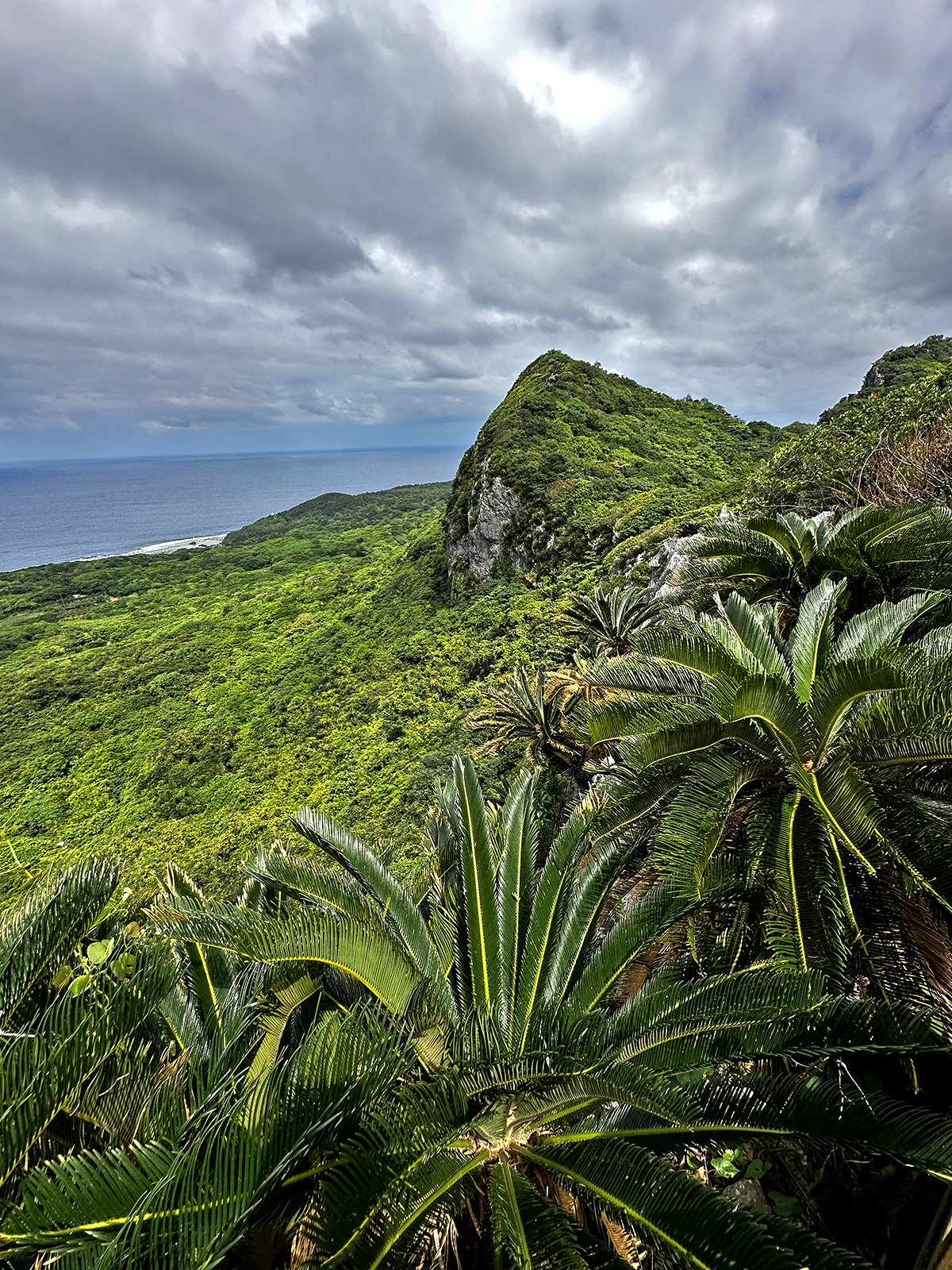
According to the audio guide, there’s a chance to spot passing whales here between January and March. Humpback whales migrate south from the cold feeding grounds of the North Pacific to the warmer waters around Okinawa.
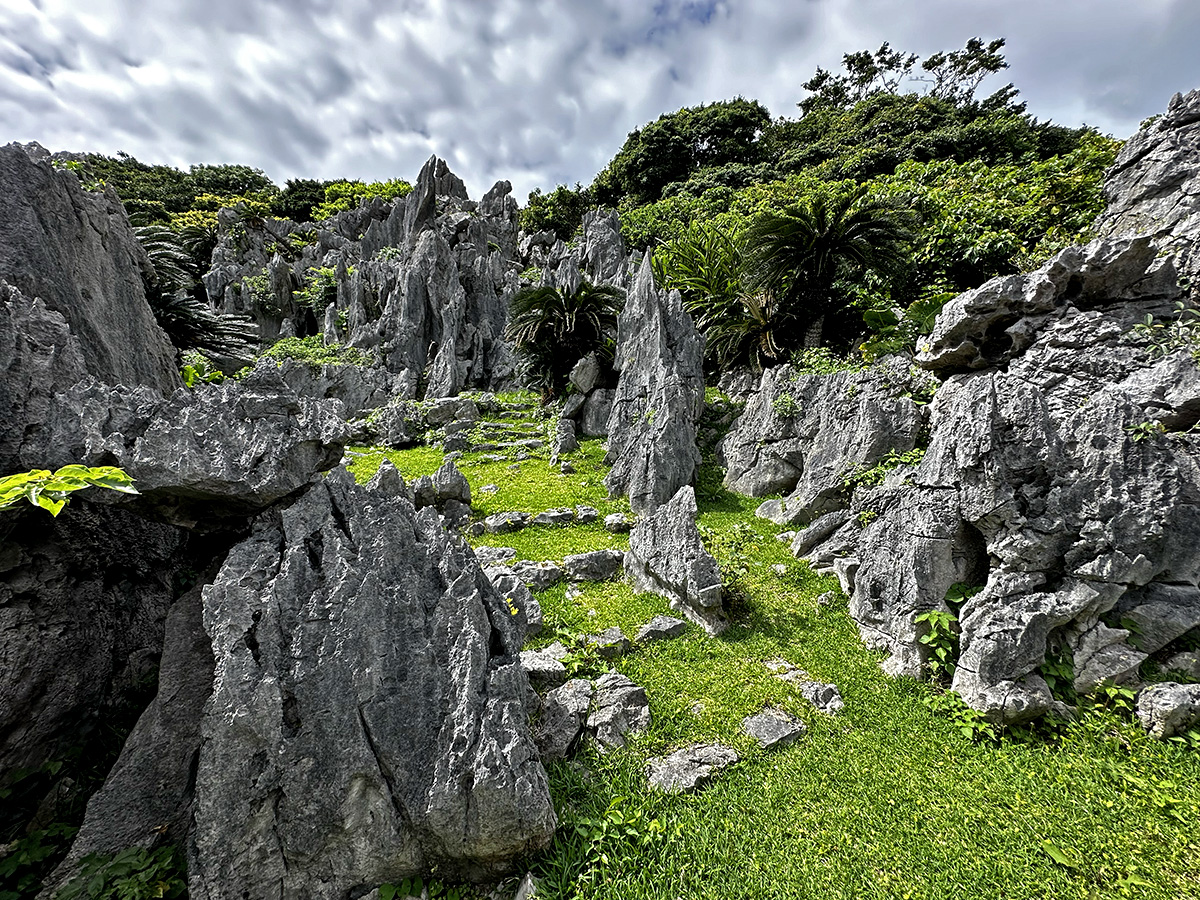
This cluster of jagged rocks is known as Eboshi-Iwa or Court Hat Rocks. Over time, rainwater seeps into natural cracks in the limestone, slowly dissolving and widening them. Known as karst formation, it creates these sharp, dramatic rock formations called pinnacles. Thank you audio guide!
If you refer back to the trail map, you’ll see that the course loops back to the Spirit Lounge after marker 16. Here, visitors can rest, use the bathroom, rehydrate, or enjoy a bowl of Okinawa soba before continuing.
From the Spirit Lounge, you’ll then have the option of continuing through the Spirit Forest, a separate trail that leads you back to the Stone Museum. This section consists of ten additional markers (17–26) and takes roughly 30 minutes to complete.
If you’d rather not walk the entire route, you can take the shuttle bus, which drops you off near marker 24. From there, it’s just a short walk back to the Stone Museum.
SPIRIT FOREST
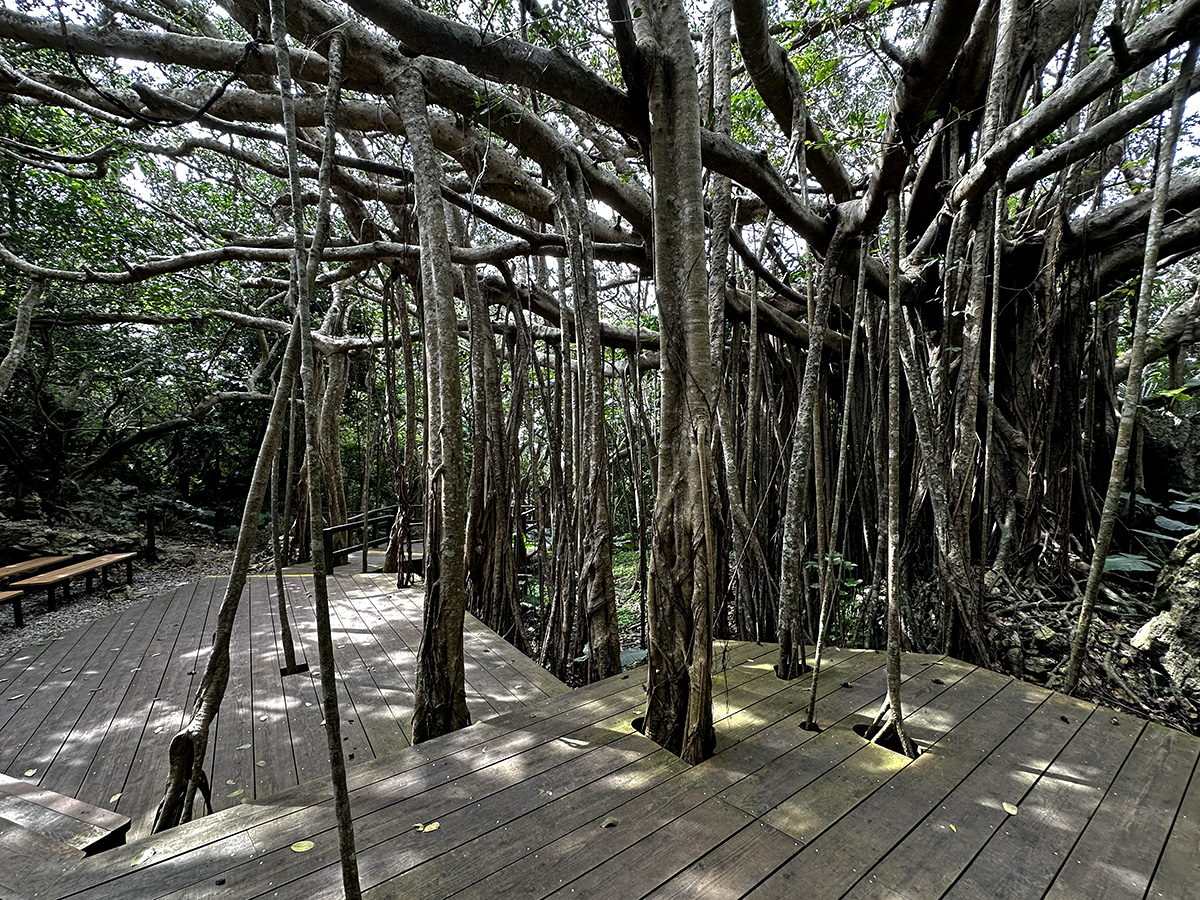
If you still have the energy, I highly recommend walking through Spirit Forest. It offers a different experience from the first half of the hike. While the Regular course features dramatic limestone formations and sweeping clifftop views, the Spirit Forest is all about ancient gajumaru trees. A gajumaru is a type of banyan tree.
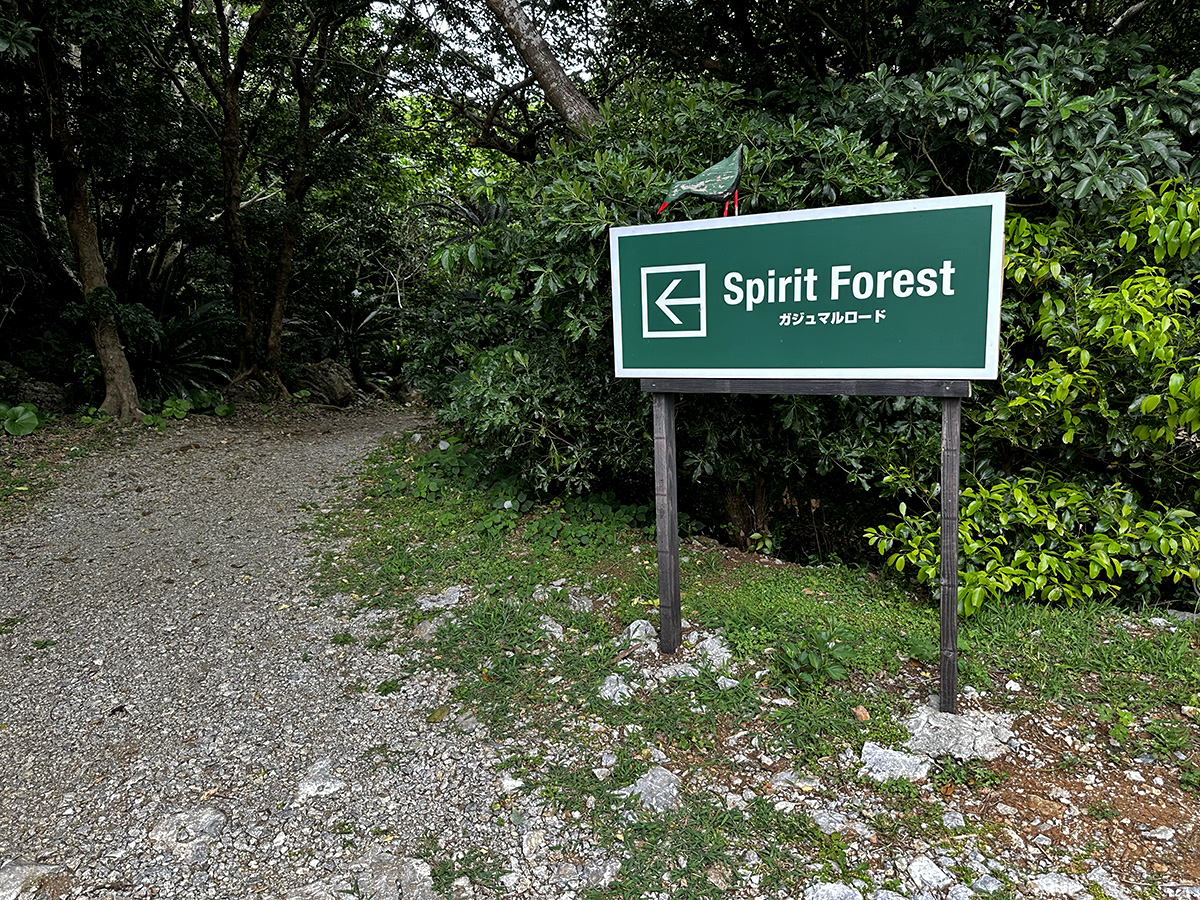
Note the cute kuina bird cutout perched atop the Spirit Forest sign. Kuina is the Japanese name for the Okinawa rail, an endangered flightless bird endemic to Yambaru. I was hoping to see one on the trail today, but I wasn’t so lucky.
If you’d like to see a kuina bird on your trip to Okinawa, your best chance is at the Yanbaru Kuina Ecological Exhibition and Learning Facility. It’s the only place that keeps a kuina in captivity.
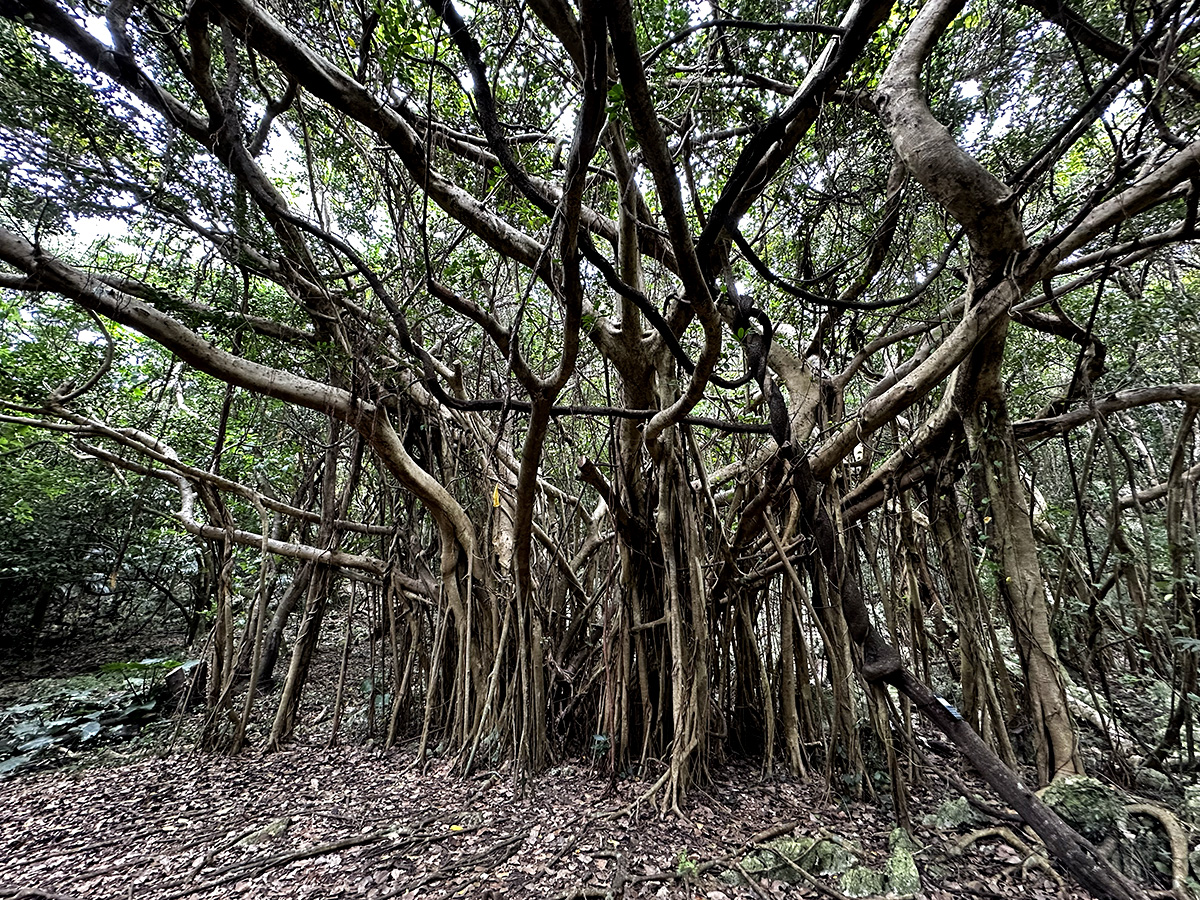
This magnificent tree is known as the Gajumaru Tree of Happiness. According to the audio guide, it’s believed to be inhabited by a spirit called Kijimuna. Local legend claims only children can hear the spirit’s voice in this area, giving the tree its name – “Tree of Happiness”.
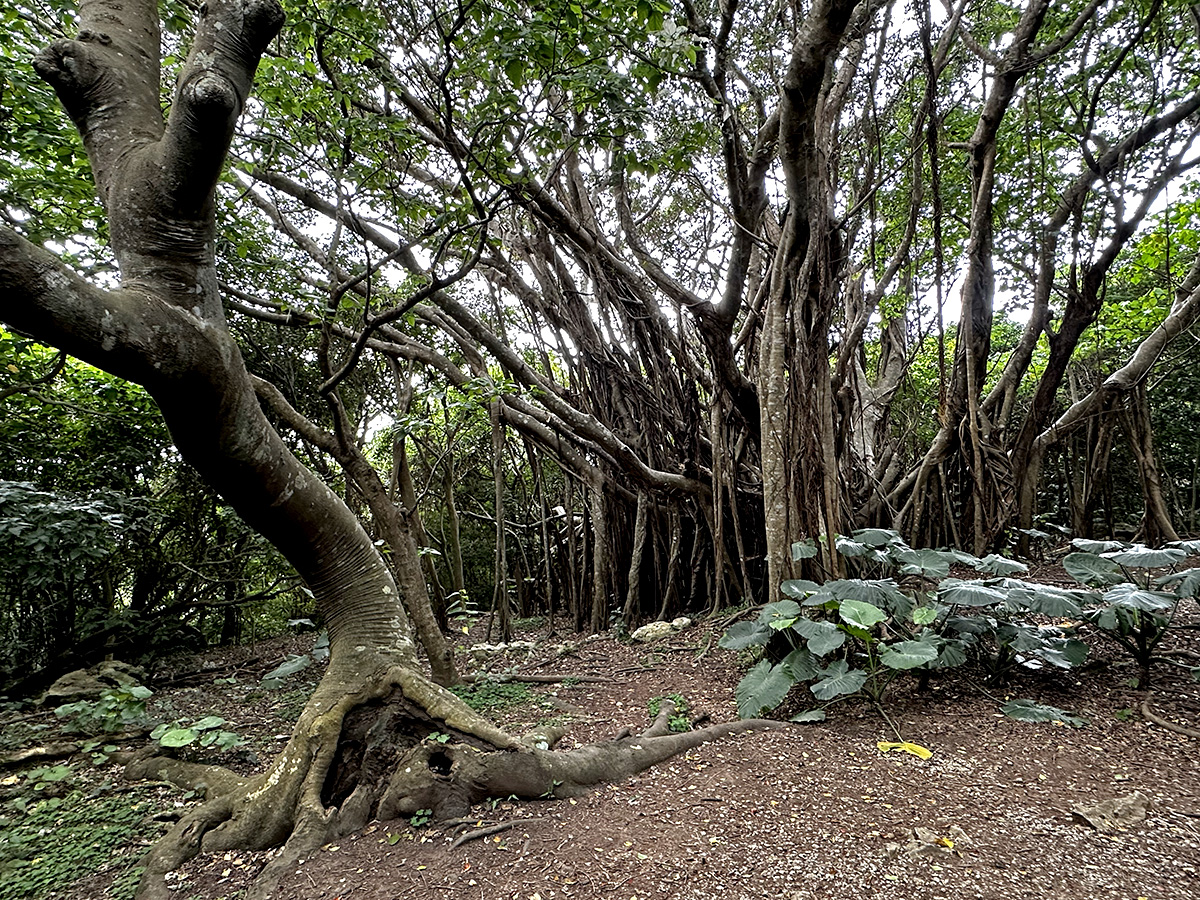
There are seven of these large gajumaru trees along the trail, so I may be getting them confused, but I believe this one is known as the Hinpun Gajumaru Tree.
The word “hinpun” refers to the wall in front of an Okinawan house that serves to protect against evil spirits. This gajumaru tree is called Hinpun Gajumaru because it’s believed to safeguard the plaza (?) behind it. Not exactly sure what the audio guide means by “plaza”.
Every gajumaru tree along the trail is impressive, but none more so than the Ugangajumaru Tree. Estimated to be around 200 years old, it’s the largest banyan tree in ASMUI, with a circumference of 120 meters (393.7 ft) and dozens of massive, limb-like branches stretching outward in every direction.
The tree’s name comes from the Okinawan word ugan, meaning “prayer”, and the audio guide shares an interesting story behind it.
The tree was reportedly discovered by park staff only around thirty years ago. When they first attempted to photograph it, the pictures failed to come out properly for some unexplained reason. They tried again using a different camera, only to encounter the same problem.
The photographer then spoke directly to the tree: “I want to tell as many people as possible about your presence so that they can protect you.”
From that moment onward, the mysterious photographic failures stopped.
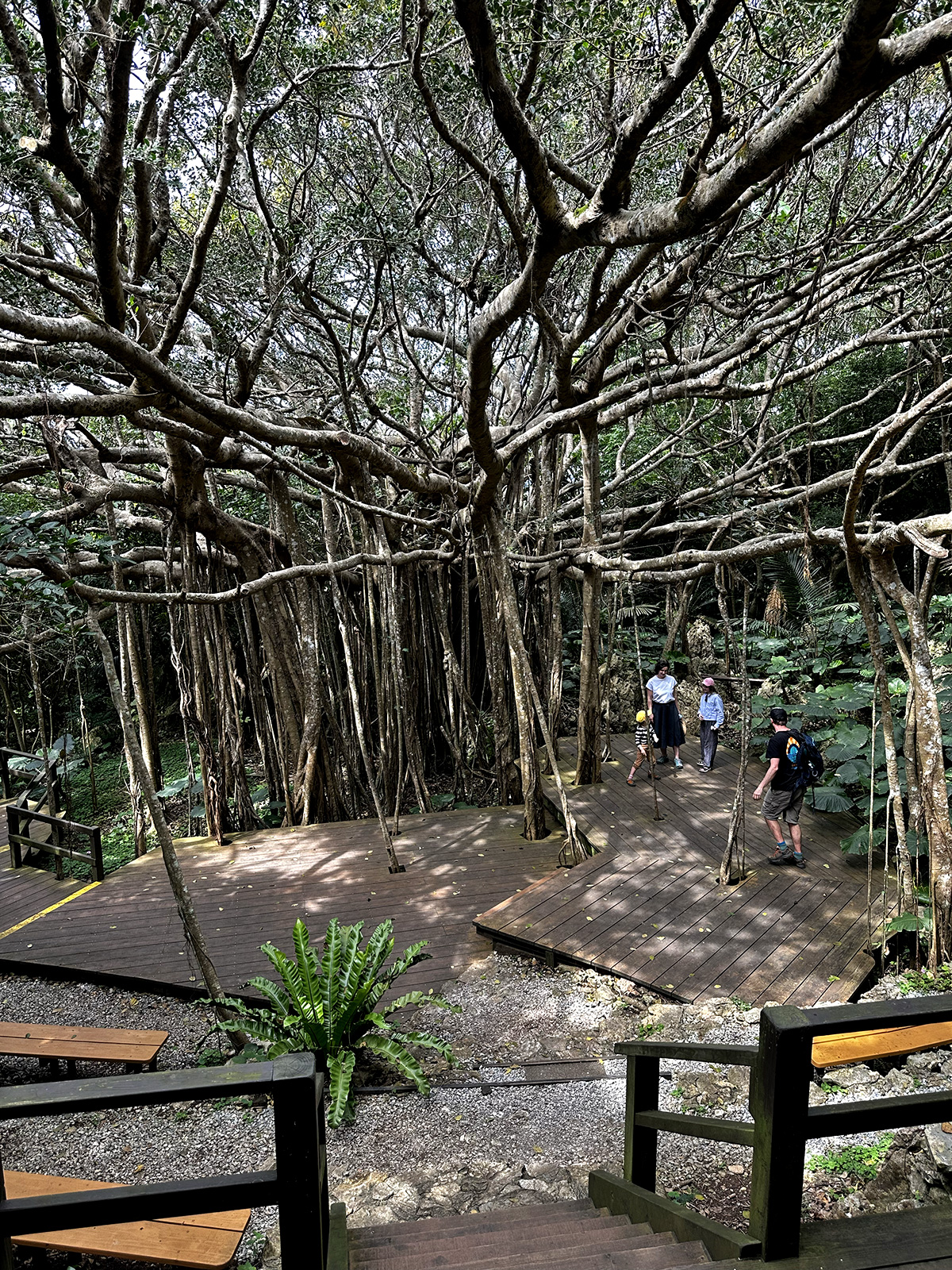
The Ugangajumaru Tree is at marker 24, where the shuttle bus takes guests who choose not to walk through the full length of Spirit Forest. From here, it’s about a 10-minute walk to the Stone Museum and the end of your hike.
Visit ASMUI SPIRITUAL HIKES FAQs
Is ASMUI Spiritual Hikes worth it?
Absolutely. We explored most of Okinawa Island, and ASMUI Spiritual Hikes was easily my favorite thing to do. If you have a rental car and enjoy hiking, then it’s definitely something to consider.
Can I visit ASMUI Spiritual Hikes using public transportation?
Probably not, even the ASMUI website discourages it: “Public transit and taxi service are limited in this area. To help you make the most of your day, we recommend bus tours.”
ASMUI Spiritual Hikes is remote, near the northernmost part of the island, so the easiest way to get there is by rental car.
Are the hikes physically demanding?
In my opinion, not really. As I said, it feels more like a casual stroll through the woods than a true hike.
THE FINAL SAY
By the time I made my way back to the Stone Museum, I couldn’t believe this started as little more than a side trip after Cape Hedo. I wasn’t even sure I was going to do the hike, but it turned out to be one of the most memorable experiences of our time in Okinawa.
Part of what makes ASMUI Spiritual Hikes so special is how difficult it is to categorize. It isn’t just a hike, nor is it a simple sightseeing attraction. It’s part nature walk, part geological wonder, part Ryukyuan mythology lesson, and part quiet spiritual retreat hidden deep within the forests of Yambaru.
Sometimes, it’s the destinations we stumble upon with few expectations – the spontaneous detours and “why not?” stops – that stay with us the longest. For me, ASMUI Spiritual Hikes was exactly that kind of place.
Disclosure
This article on ASMUI Spiritual Hikes contains affiliate links, meaning we’ll earn a small commission if you make a booking at no additional cost to you. We only recommend products and services that we use ourselves and firmly believe in. We really appreciate your support, as it helps us make more of these free travel guides. Arigato gozaimasu!
References
1. Spiritual heritage and dramatic landscapes mix at ASMUI Spiritual Hikes. Okinawa Island Guide.
2. ASMUI Spiritual Hikes. ANA.
