
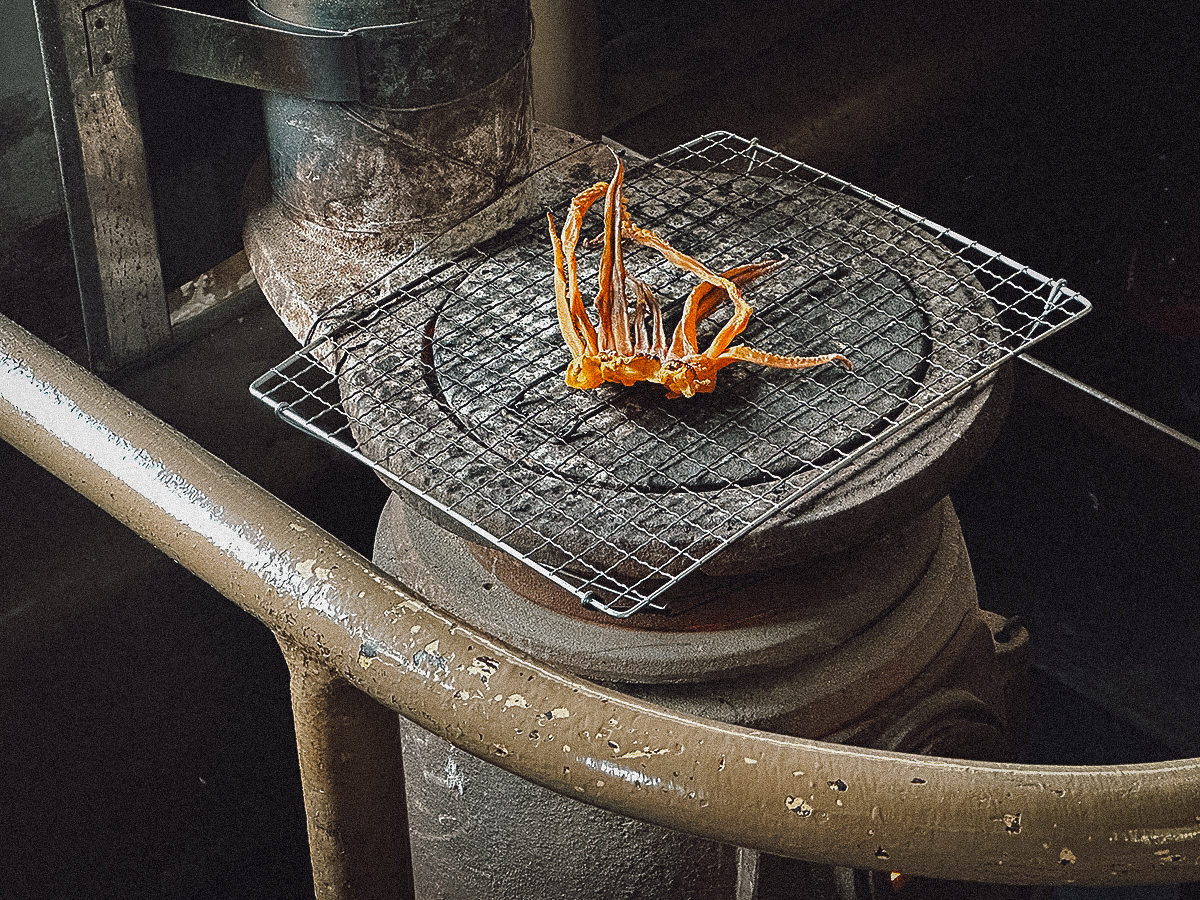
SUMMARY HIGHLIGHTS
- Operational in winter, the stove train runs between Tsugaru-Goshogawara and Tsugaru-Nakasato stations on the Tsugaru Railway line.
- Sipping sake and eating squid grilled on a coal stove inside a moving train has to be one of the most unique things you can do in Aomori.
As someone who runs a travel blog about Japan, I often feel this quiet pressure to cover as much ground as I can.
That sometimes means visiting places and trying experiences that, if I’m being completely honest, may not sound as exciting to me at first. More about responsibility than curiosity, if I’m going to write about Japan, then I need to experience as many sides of it as possible.
But every now and then, I come across something that lights me up. That’s exactly what happened when I first read about the retro stove train in Aomori.
The idea of riding an old-fashioned train through snowy landscapes at the height of winter, while sipping sake and eating squid grilled on a coal stove in front of me, wasn’t just another article for the blog.
It was something I genuinely could not wait to do.
VISIT AOMORI QUICK LINKS
To help you plan your trip to Aomori, I’ve compiled links to recommended hotels, tours, and other travel-related services here.
HOTELS
Top-rated hotels near Aomori Station, one of the most convenient areas to stay for exploring Aomori.
- Luxury: Daiwa Roynet Hotel Aomori
- Midrange: HOTEL MYSTAYS Aomori Station
- Budget: バンビハイツ長島302
EXPERIENCES
- Sightseeing Tour: Aomori Full-Day Private Trip with a Government-Licensed Guide
- Izakaya Tour: Izakaya & Bar Hopping Tour Around Aomori Station
- Market Tour: Local Market Tour & DIY Seafood Bowl (Nokke-don)
- Gastronomic Experience: Modern French Meets Aomori Tradition
- Trekking Tour: Private Trek Along Oirase Gorge and Lake Towada
- Cooking Class: Cooking Classes in Aomori
OTHER SERVICES
- Travel Insurance (non-US residents get 5% off)
- JR East Pass
- Japan Rail Pass
- Japan eSIM
WHAT IS THE RETRO STOVE TRAIN?
The Retro Stove Train is a seasonal sightseeing train that’s been taking passengers through the snowy countryside of Aomori Prefecture since 19301. It runs between Tsugaru-Goshogawara and Tsugaru-Nakasato stations on the private Tsugaru Railway Line.
What makes the train special are the old-fashioned daruma stoves installed inside the train cars. These coal potbelly stoves are a nostalgic feature that dates back to a time when Japanese trains had no modern heating systems2.
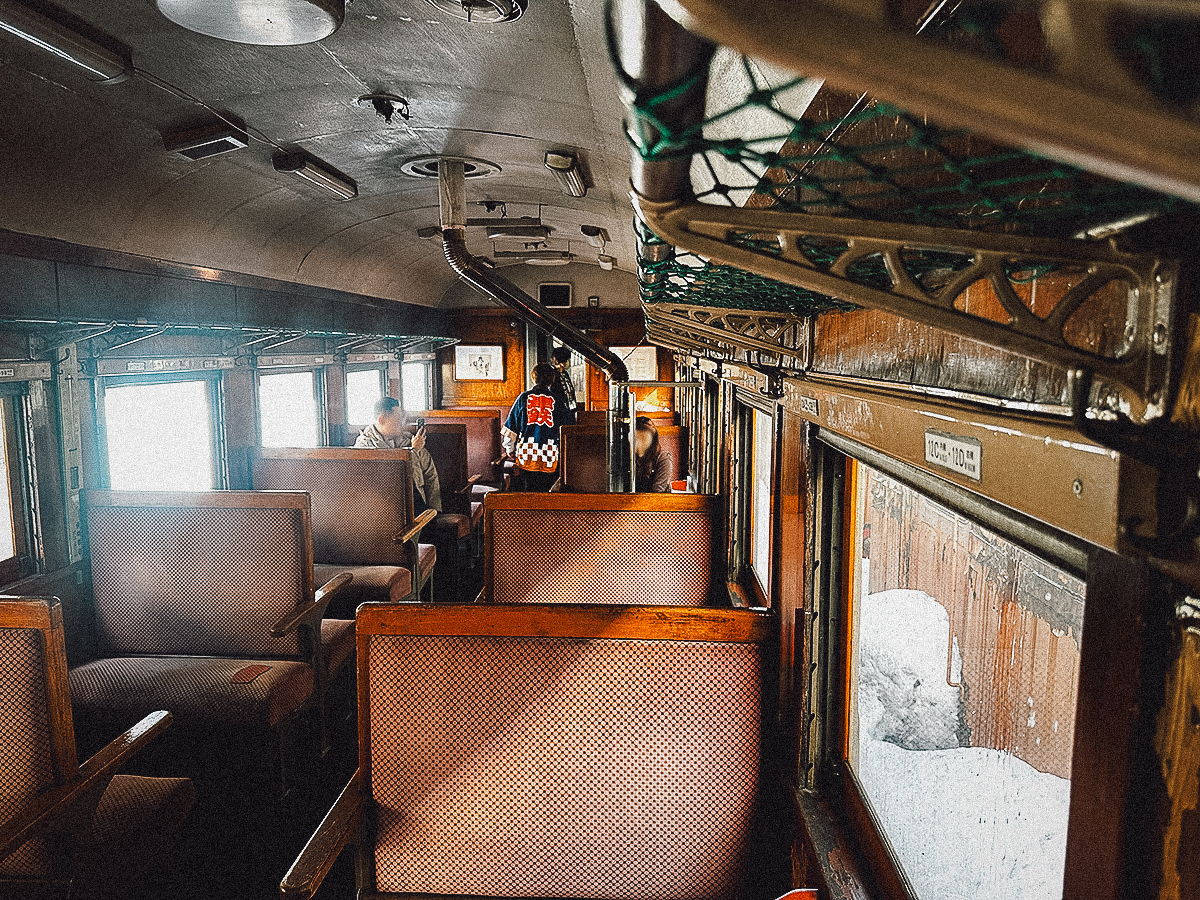
The train itself feels like a moving time capsule. The wooden interiors, retro decor, and glowing stoves create an atmosphere that feels worlds away from Japan’s sleek Shinkansen trains. Though still a local commuter train, it feels less about getting from one place to another and more about experiencing a side of old Japan that still survives today.
During the ride, passengers can purchase dried squid, which staff grill directly over the stove, along with small bottles of sake – perfect for warming you up in the chill of Aomori’s harsh winters.
STOVE TRAIN QUICK FACTS
Here are a few things you need to know before planning your trip. The information below is accurate as of March 2026.
Schedule
The stove train is a seasonal train that operates daily from December 1 to March 31. It takes around 45 minutes to travel between Tsugaru-Goshogawara and Tsugaru-Nakasato stations.
I couldn’t find an official timetable online, but according to the GaijinPot Travel website, the train makes three round-trip journeys daily from December 30 to March 31.
JAPAN TRAVEL DEALS
Planning a trip to Japan? Enjoy up to 50% off on selected experiences and activities with Klook and Get Your Guide. Click on the links for a list of discounts, promo codes, and limited-time offers.
Departing Tsugaru-Goshogawara: 9:35AM, 12NN, 2:40PM
Returning from Tsugaru-Nakasato: 10:53AM, 1:37PM, 3:54PM
However, from December 1-29, the timetable above only applies on weekends. On weekdays, the 9:35AM departure and 10:53AM return do not operate.
TICKET FareS / OTHER COSTS
The stove train consists of both stove cars equipped with daruma stoves and regular non-stove cars. The standard fare is JPY 870. If you’d like to ride in a stove car, then you’ll need to pay an additional JPY 500, bringing the total to JPY 1,370 one-way.
If you’d like to ride a stove car for just one leg of the journey, then you can simply pay the regular JPY 870 fare for the other ride without the supplemental fee.
A pack of dried squid costs JPY 800 while a small bottle of sake goes for JPY 500.
MY EXPERIENCE ON THE AOMORI STOVE TRAIN
I traveled to Goshogawara by bus from Aomori. It was faster for me to travel by bus, but depending on where you are, it may be easier to go by train instead. You can use Google Maps to find the route that works best for you.
After alighting, I made the mistake of walking into JR Goshogawara Station. I couldn’t find any signs for the stove train, so I knew something wasn’t right. If this happens to you, just walk out of the station and make a right. The correct station – Tsugaru-Goshogawara Station – is right next to JR Goshogawara Station.
Compared to the more modern JR station, Tsugaru-Goshogawara is smaller and much older. It’s exactly the type of station you’d expect to find a retro train.
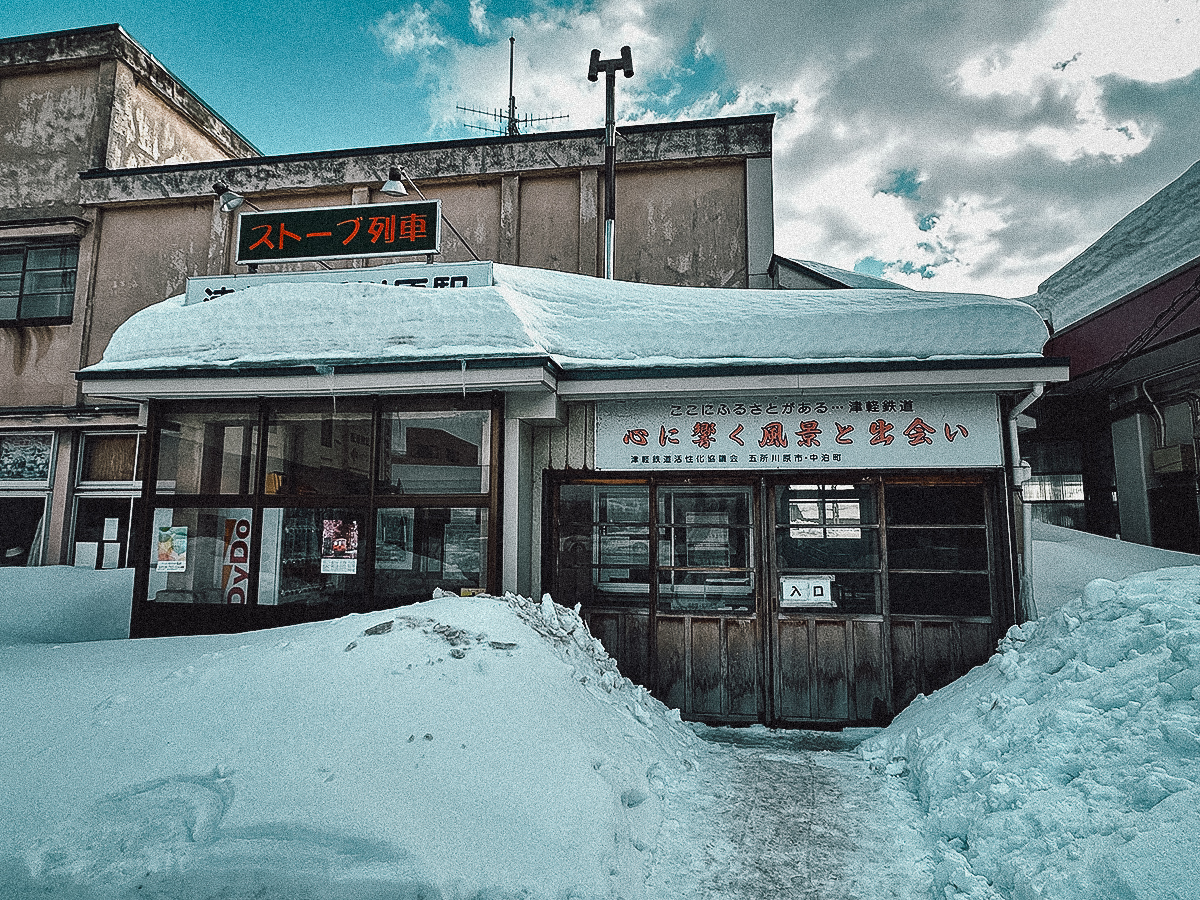
The moment you enter the station, you’ll feel like you’ve stepped back into Japan’s Showa era. Worn floors, old timetable boards, retro decorations – Tsugaru-Goshogawara Station feels like a time capsule.

From the station, I walked to the track and boarded a train that looked like it had just rolled in from the 1950s. If not for the mobile phone in this photo, you’d be hard-pressed to believe it was taken in 2026.
The daruma stoves used on the train are traditional coal-burning potbelly stoves that were once commonly found on trains across rural Japan. Made of cast iron, they’re named after Japanese daruma dolls thanks to their rounded shape.
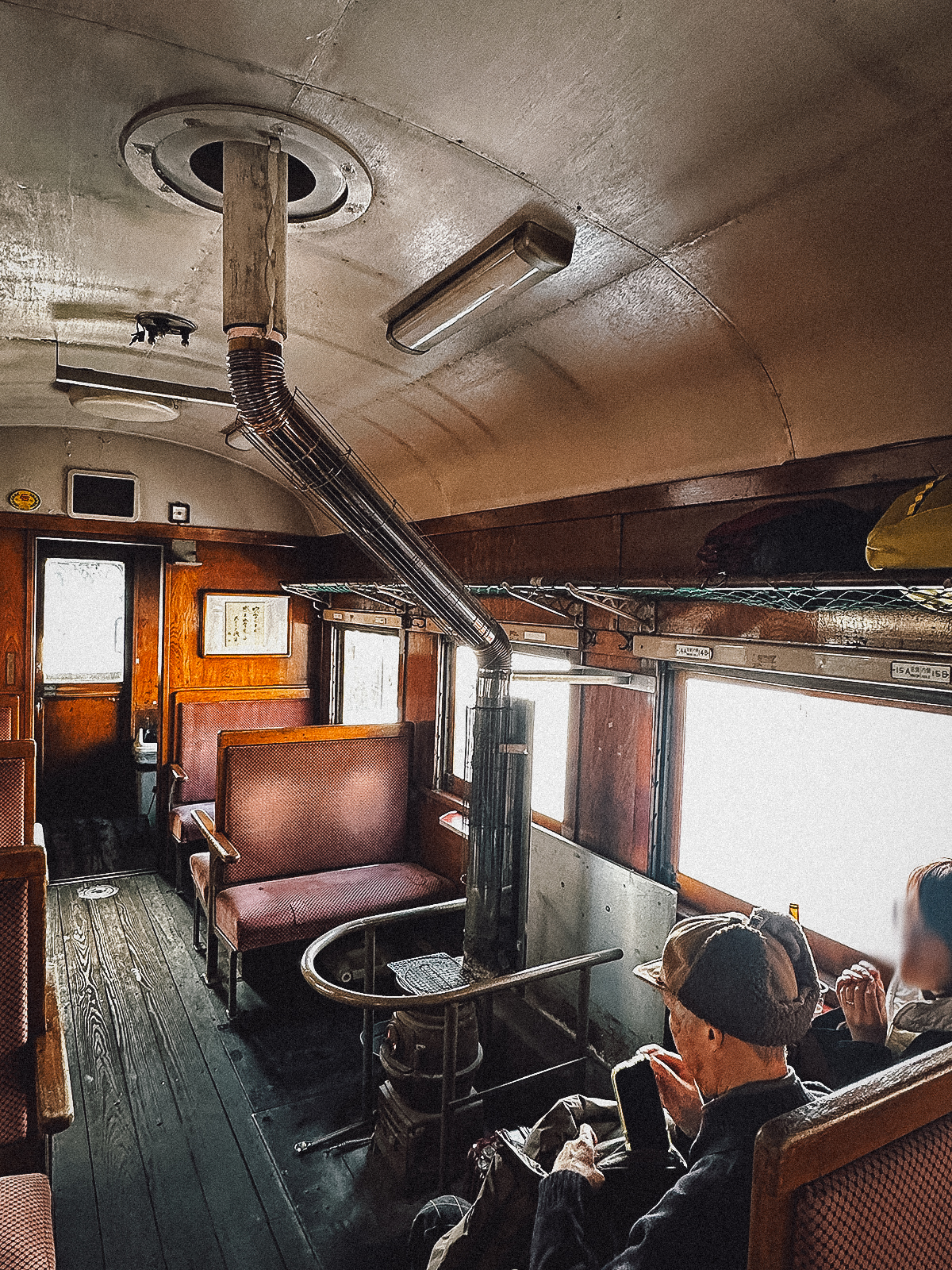
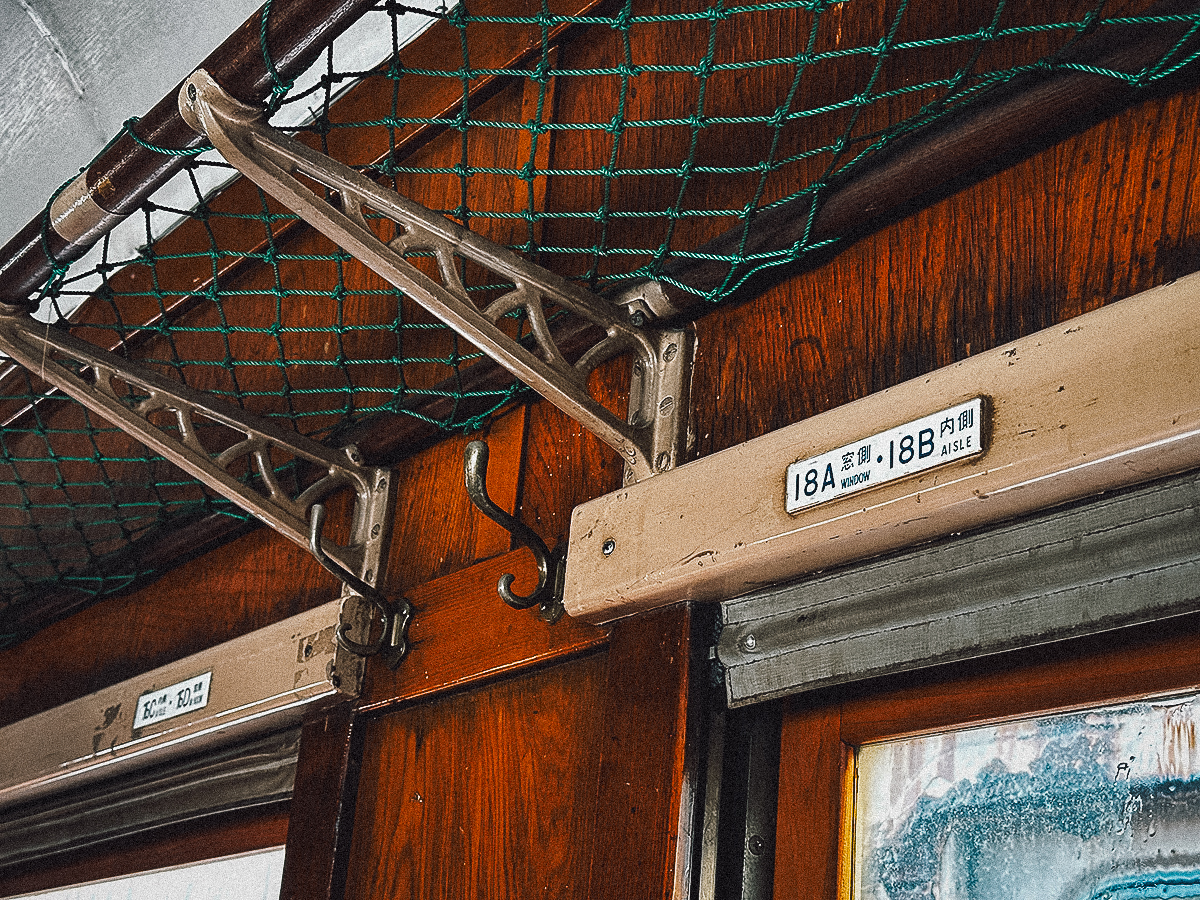
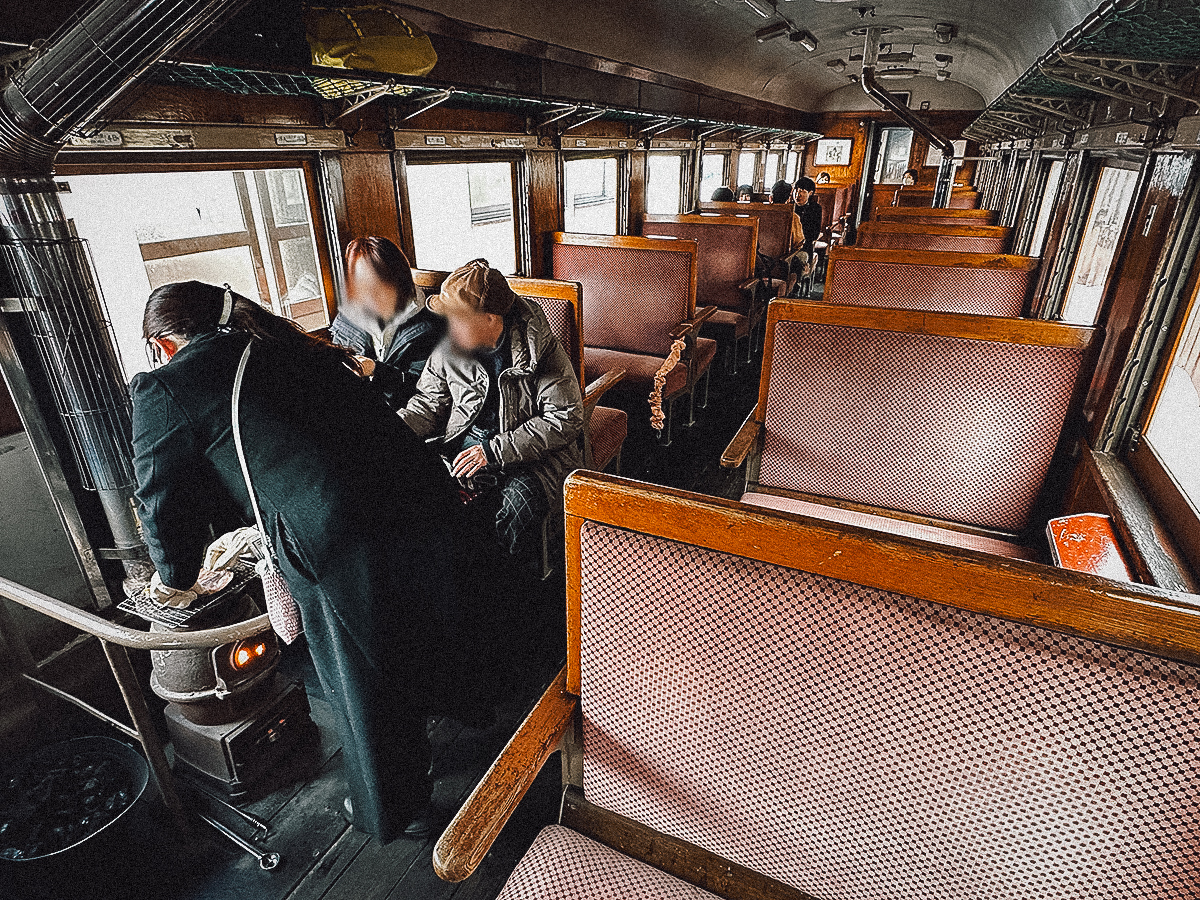
I love how they kept everything on these retro trains intact – from the dark wood-paneled walls to the metal luggage racks and worn seat markers. I found the forest green netting on the storage racks to be particularly charming.
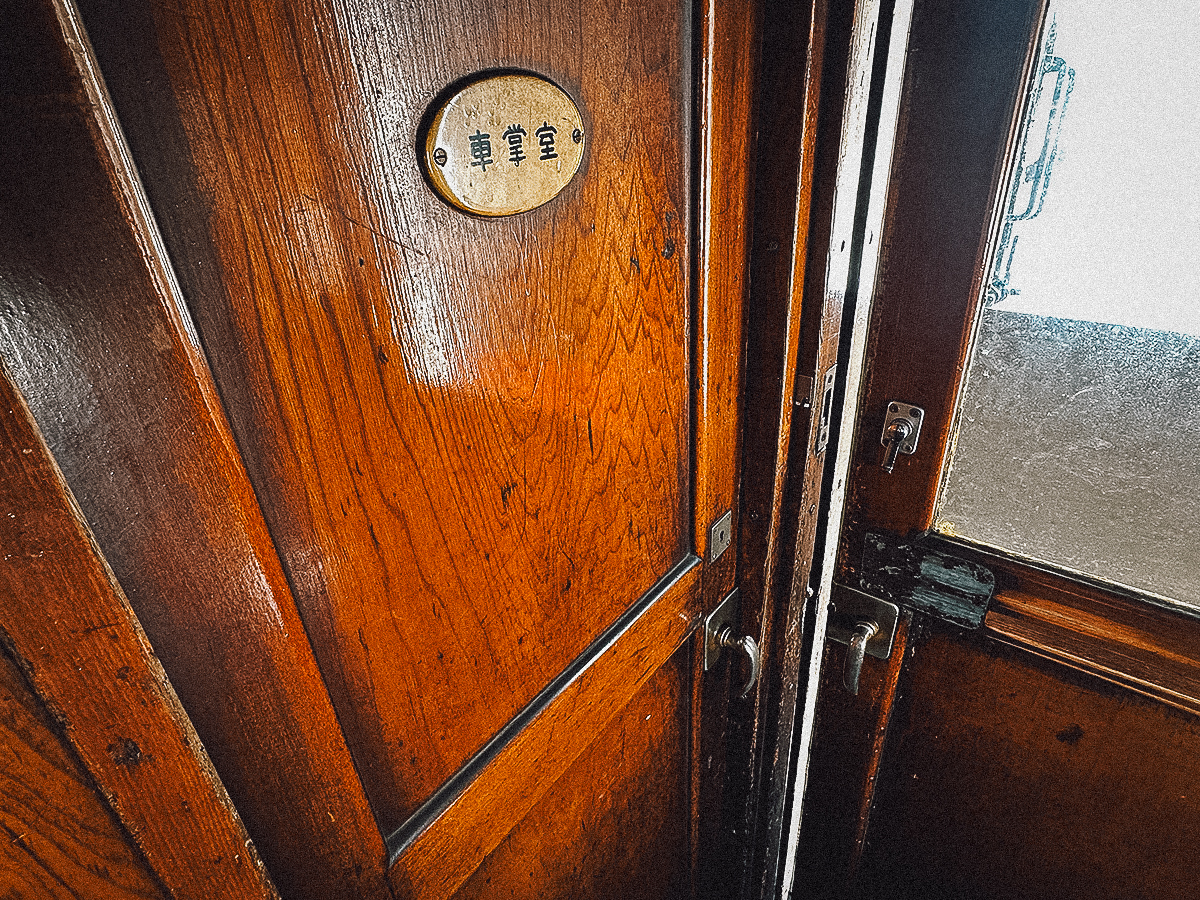
For anyone wondering, the kanji on the door says shashōshitsu, which means “conductor’s room” or “conductor’s apartment”. Unfortunately, it was locked.
One important thing – seats on the stove train are unreserved, so you’ll need to arrive early if you’d like to sit near one of the daruma stoves. Each stove car is equipped with two of these retro coal stoves. Note the bucket of coal next to the stove.
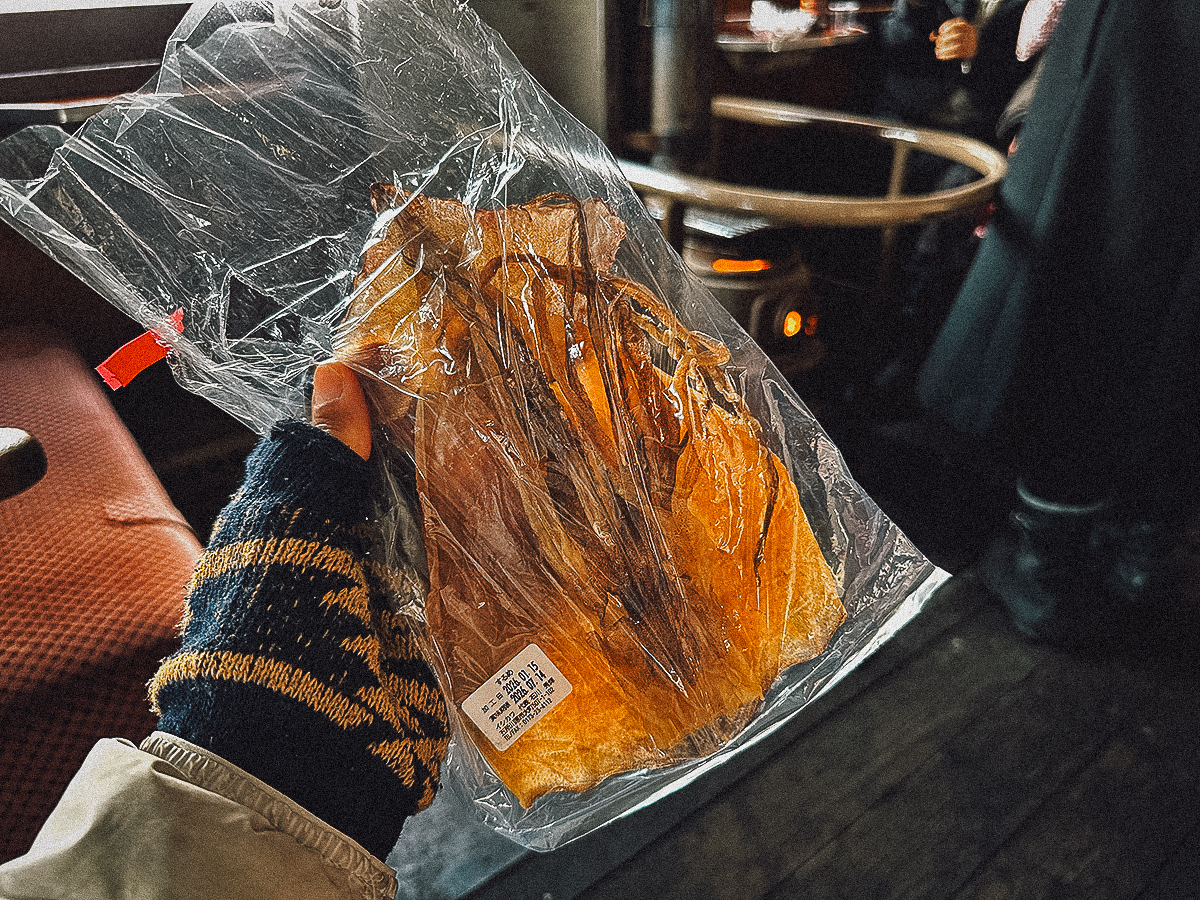
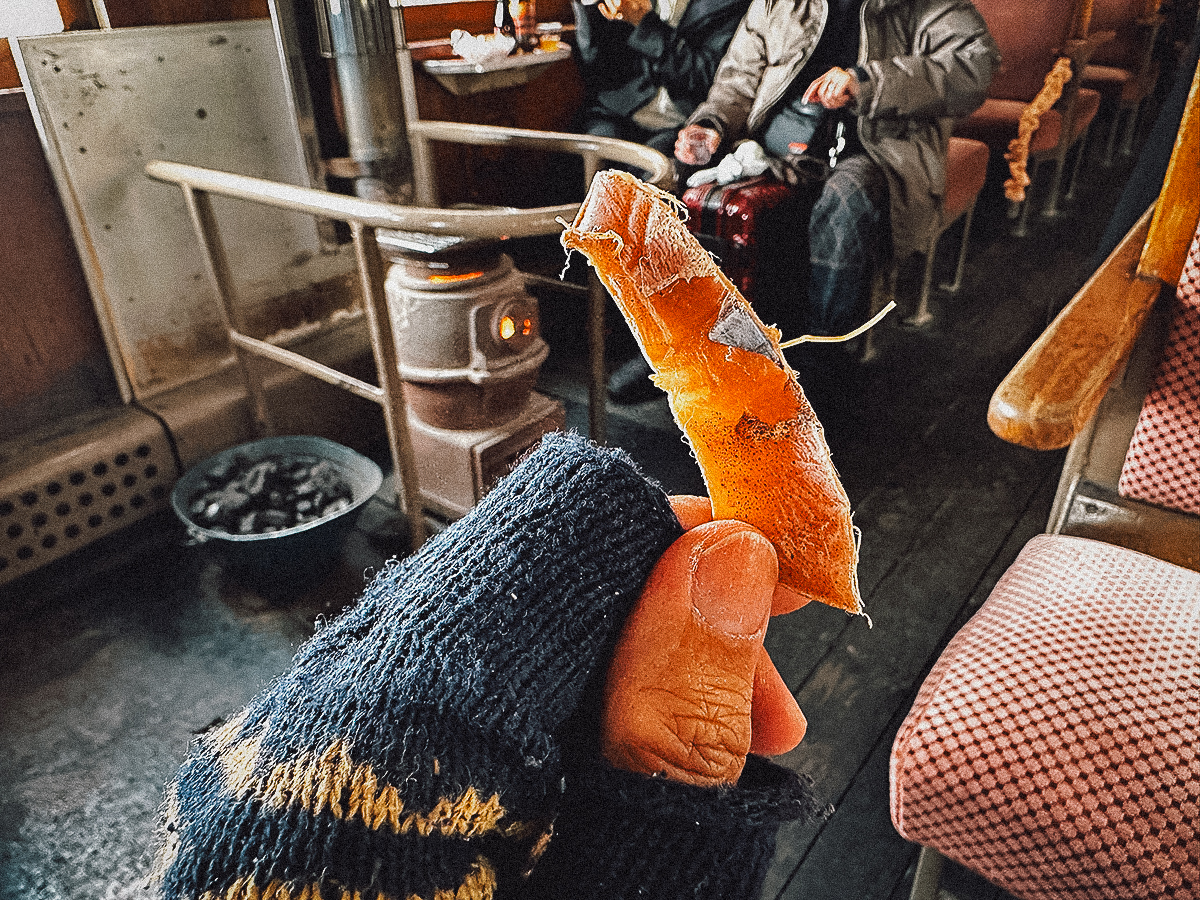
As described, a pack of dried squid costs JPY 800. It’s tough and very chewy, almost inedible until it’s been grilled on the stove.
Though it’s evident these stoves have been used since the train first began operating in 1930, it’s unclear how long this practice of grilling squid has been part of the experience. Based on what I’ve read, the tradition seems to date back decades.
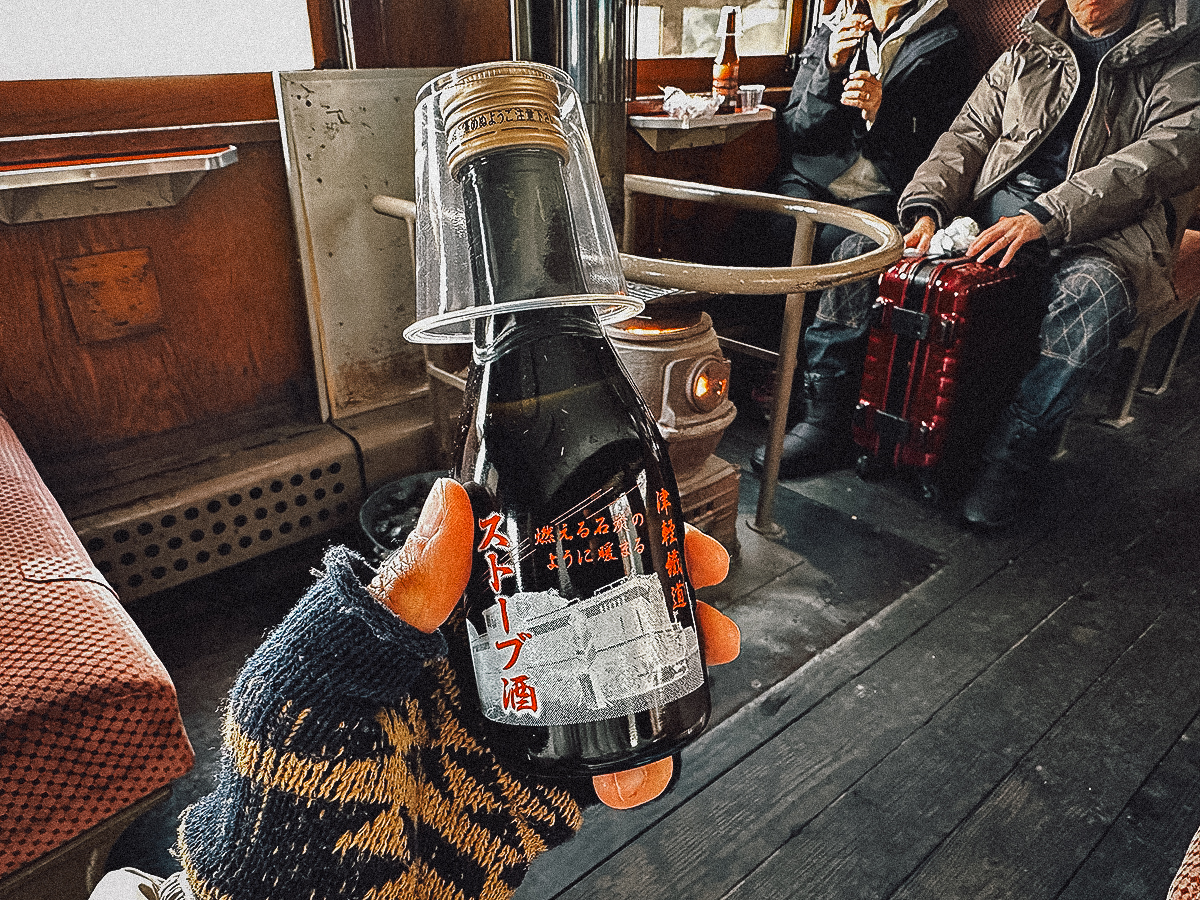
For JPY 500, you’ll have a small 180 ml bottle of sake to wash your squid down with. It’s a perfect pairing, especially in Aomori’s bitter winters.
You don’t need to grill the squid yourself. For obvious safety reasons, the train attendants will do all the grilling for you.
They lay the squid on top of wire racks and press them down onto the stove with their hands. The squid is already cooked – they simply warm it up to soften a bit before serving. When ready, they cut the squid into strips with scissors and serve them back to you in plastic bags.
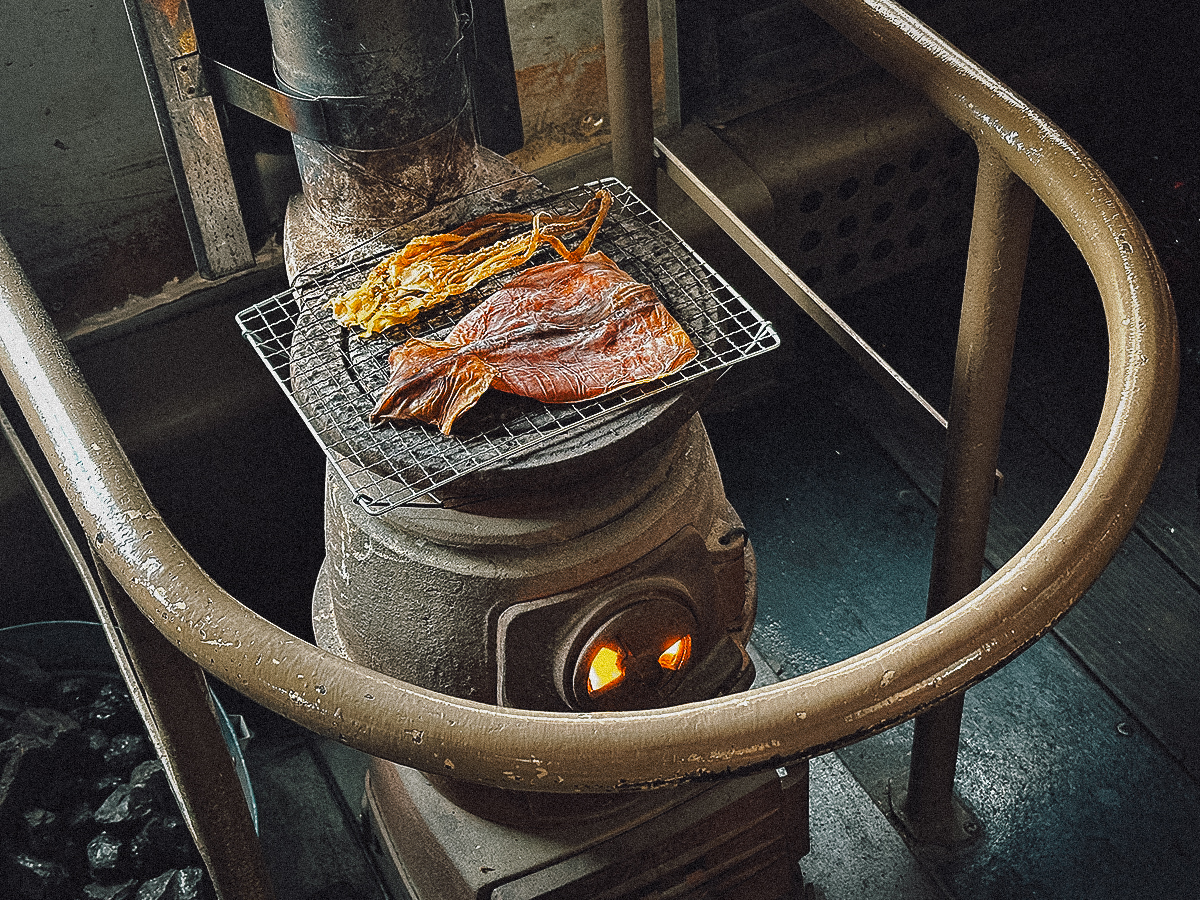
Even after being grilled and cut into strips, the squid remains firm and chewy. But that’s exactly the point – it’s all part of the nostalgic, no-frills charm of the experience.
With my squid grilled and my glass of sake filled, I was ready to make the journey to Tsugaru-Nakasato Station. But there was a problem – the stove train never left the station.
THE DECOUPLING incident of 2026
Just a few weeks before arriving in Aomori, I learned of an accidental train decoupling incident that happened along the Tsugaru Railway Line. This is the official statement posted at Tsugaru-Goshogawara Station. It’s a little hard to read because of the glare, so I’ve re-typed it:
At around 14:52 on December 29, 2025, the coupling between the leading diesel railcars (two Tsugaru Type 21 units) and the two passenger coaches became detached, causing the emergency brakes to activate on all cars and resulting in an emergency stop.
In response to this incident, and in order to conduct safety inspections of the track, we have suspended the coupling of the passenger coaches (Stove Train) and will halt the operation of the passenger coaches (Stove Train) for the time being.
Regarding Tsugaru Railway operations, all trains are currently being operated solely with diesel railcars (Hashire Melos) in accordance with the timetable revised on June 1, 2025. We kindly ask all passengers using the Tsugaru Railway to check the timetable before boarding.
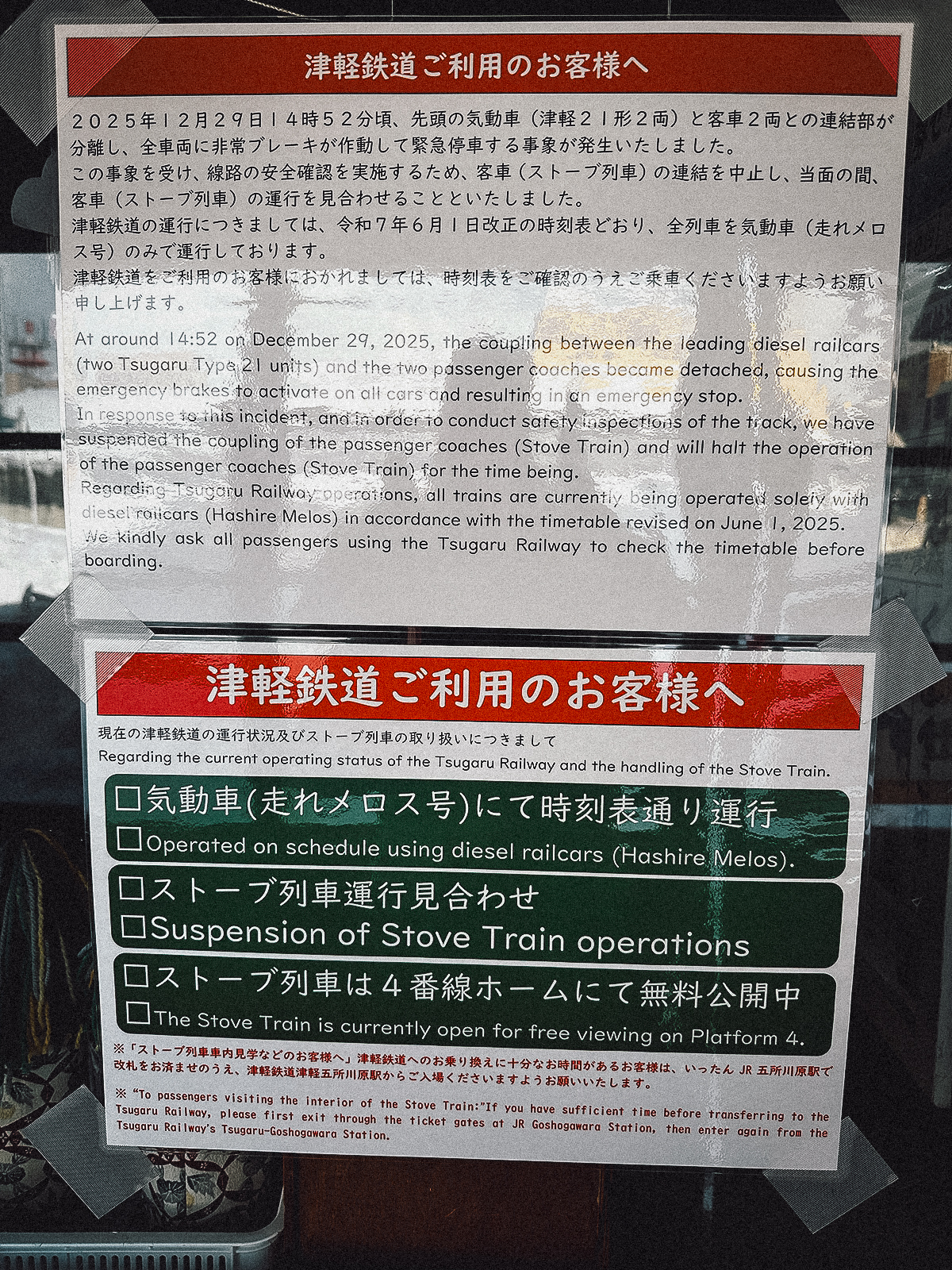
I was hoping they’d fix the issue before I planned on taking the stove train, but they never did. Major bummer.
As a consolation, Tsugaru Railway parked one of the stove cars at the station and allowed visitors to enjoy the squid and sake experience for free. You still had to pay for the dried squid and bottle of sake, but boarding the train came at no extra cost.
Even though I knew the train would never leave Tsugaru-Goshogawara Station, I went anyway. That’s how badly I wanted to experience this.
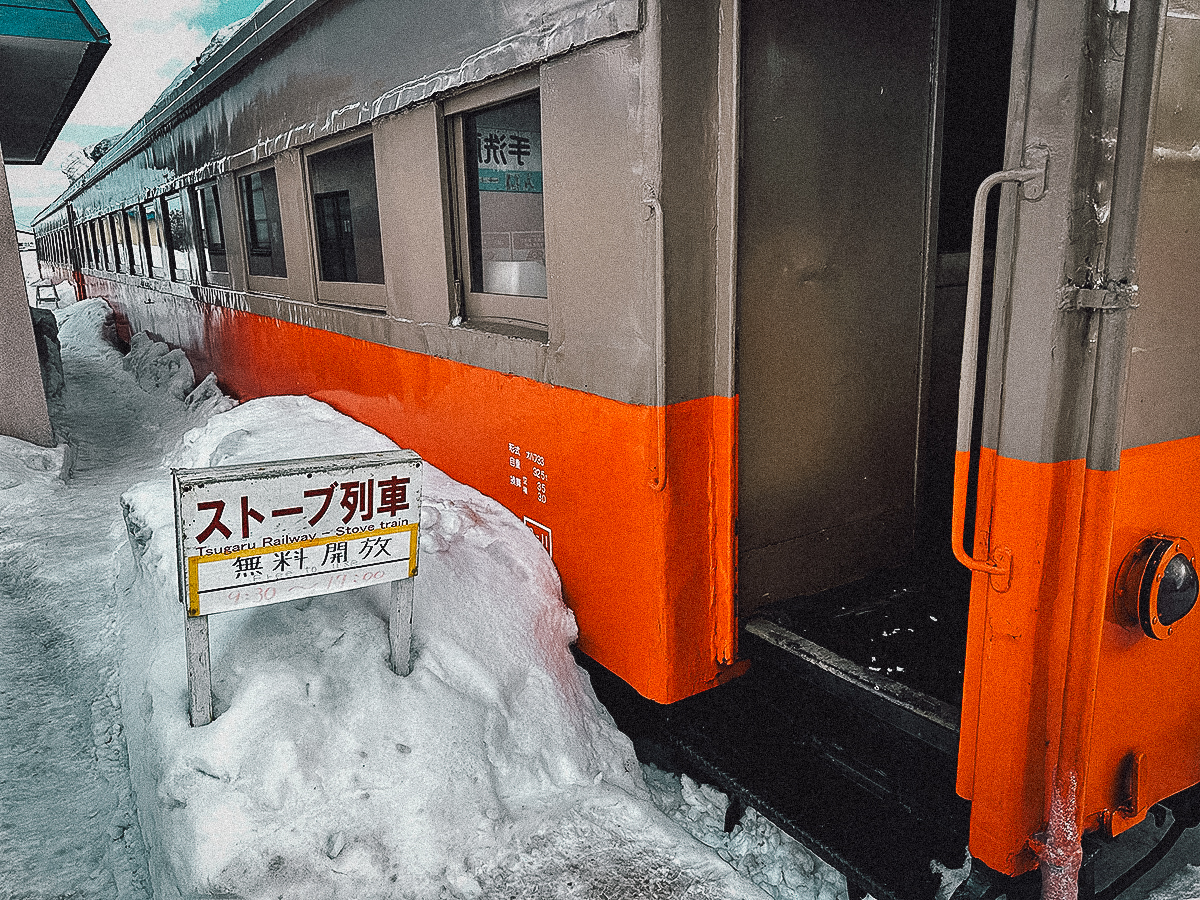
With still so much to see in Japan, I wasn’t planning on returning to this part of the country anytime soon, but the unexpected derailing of this experience left me with unfinished business in Aomori.
Retro stove train, I’ll be seeing you again soon.
RIDING THE RETRO STOVE TRAIN FAQs
Is it worth riding the Aomori stove train?
Absolutely. Even though my train never left the station, I still enjoyed the experience. The nostalgic atmosphere of the train, paired with the grilled squid and sake, was unique and something I don’t think you can experience anywhere else in Japan.
How much time do I need for the stove train?
Assuming you aren’t staying in Goshogawara City, I’d say no less than half a day. It really depends on where you’re coming from. Tsugaru-Goshogawara Station is fairly remote, so it’ll take some time to get there.
When I traveled from Morioka (via Aomori) by shinkansen and bus, the journey took around 2.5 hours. If you’re staying in Aomori, it’ll take roughly 1.5 hrs to get to Tsugaru-Goshogawara Station by bus.
THE FINAL SAY
Even though I didn’t get the full stove train experience, it was still one of the most memorable things I did in Aomori. Tsugaru-Goshogawara Station and the stove train had character, and there was something uniquely enjoyable about sipping sake and eating squid grilled on a potbelly stove inside the train, even when it wasn’t moving.
It’s because what makes the stove train special isn’t just the ride itself, but the atmosphere. From the moment you get on board, it feels nostalgic, authentic, and distinctly local. It’s less about getting somewhere and more about slowing down and soaking in the experience.
Disclosure
This article on Aomori’s retro stove train contains affiliate links, meaning we’ll earn a small commission if you make a booking at no additional cost to you. We only recommend products and services that we use ourselves and firmly believe in. We really appreciate your support, as it helps us make more of these free travel guides. Arigato gozaimasu!
References
1. King, Kerri. Tsugaru Railway Stove Train. GaijinPot Travel. (2026, February 22).
2. Koh, Kevin. Stoves, Literary Giants & Rustic Buildings: Riding the Tsugaru Railway Linn. Japan Rail Club. (2021, January 22).
