
SUMMARY HIGHLIGHTS
- Ryusendo Cave is celebrated for its crystal clear, sapphire-blue subterranean lakes.
- The JR East Pass and Japan Rail Pass are valid for travel between Morioka and Ryusendo Cave.
I don’t usually get excited about caves. I’m more of a forest and mountain person, and cave experiences tend to blur together in my mind. No offense to any spelunkers, but for me, they’re all about dark passages, damp air, and rock formations that may seem cool at first, but look “same same” after a while.
Nonetheless, thanks in part to my JR East Pass, I found myself taking the long bus ride to Ryusendo Cave, mainly to see why it’s ranked as one of Japan’s three great limestone caves. If it’s on one of Japan’s “three great” lists, then it must be cool, right?
Beyond the cave itself, visiting Ryusendo allowed me to get out of Morioka and see more of Iwate Prefecture, particularly the quieter, less-visited areas that don’t always make it onto the typical Tohoku itinerary.
VISIT IWATE QUICK LINKS
To help you plan your trip to Ryusendo Cave and Iwate Prefecture, we’ve compiled links to top-rated hotels, tours, and other travel-related services here.
HOTELS
Recommended hotels around Morioka Station, one of the most convenient areas to stay for exploring Iwate.
- Luxury: Richmond Hotel Morioka Ekimae
- Midrange: Toyoko Inn Morioka Ekimae
- Budget: Hotel New Carina
EXPERIENCES
- Sightseeing Tour: Private Guided Tour with a Government-Licensed Guide
- Bar Hopping Tour: Morioka Local Food Bar Hopping Tour
- Sake Tour: Asabiraki Brewery Tour with Sake Tasting
OTHER SERVICES
- Travel Insurance (non-US residents get 5% off)
- JR East Pass
- Japan Rail Pass
- Japan eSIM
Why MAKES RYUSENDO CAVE SO SPECIAL?
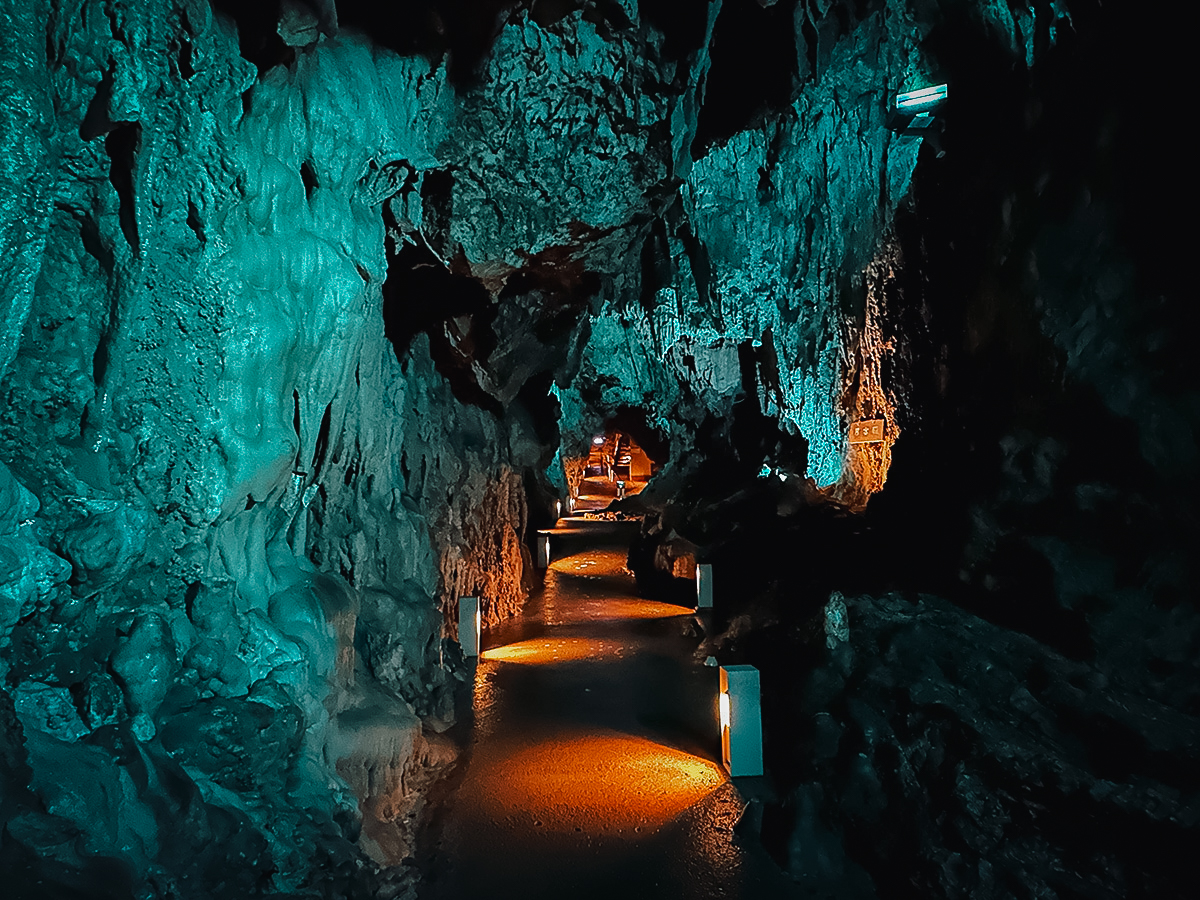
Nestled deep within the mountains of Iwate Prefecture, Ryusendo Cave is one of Japan’s three great limestone caves. It’s believed to stretch for nearly 5 km (3.1 miles) into the mountains, though only around 4 km (2.5 miles) have been explored since surveys began in the 1920s. Roughly 700 meters (2,297 ft) of the cave is open to the public1.
Ryusendo Cave is celebrated for its underground lakes. Deep within the cave system, vast amounts of crystal-clear blue water flow through an underground river, feeding four subterranean lakes hidden beneath the mountains of Iwate.
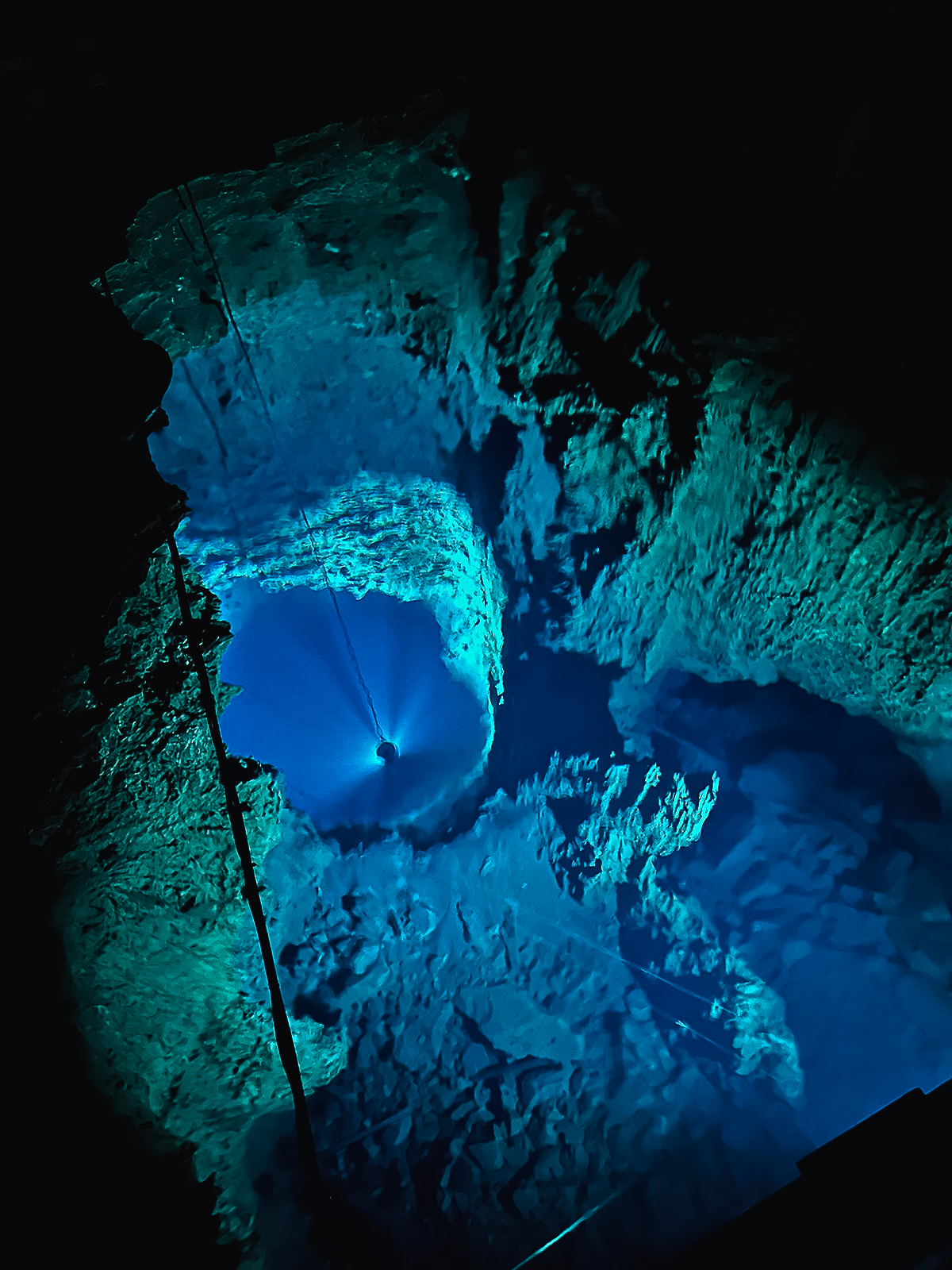
Visitors can view three of these lakes, which measure 35 meters (114.8 ft), 38 meters (124.7 ft), and 98 meters (321.5 ft) deep. Lit by powerful underwater lights, their otherworldly clarity and vivid sapphire-blue color are what make Ryusendo so famous.
Situated further into the cavern system, the fourth lake isn’t open to the public. At 120 meters (393.7 ft), it’s the deepest recorded underground lake in Japan1.
Visiting RYUSENDO CAVE
Ryusendo Cave is located in the mountains of Iwaizumi Town, a little over two hours east of central Morioka. It’s in the middle of nowhere, with limited bus departures, so a day trip from Morioka – the closest major transport hub – requires some advanced planning and at least half a day.
A visit to Ryusendo will actually take you to two caves – the main cave and a smaller adjacent cave that functions as a science museum. It’s believed that these two caves were once connected and part of the same cave system2. It’ll take the average person roughly two hours to visit both caves.
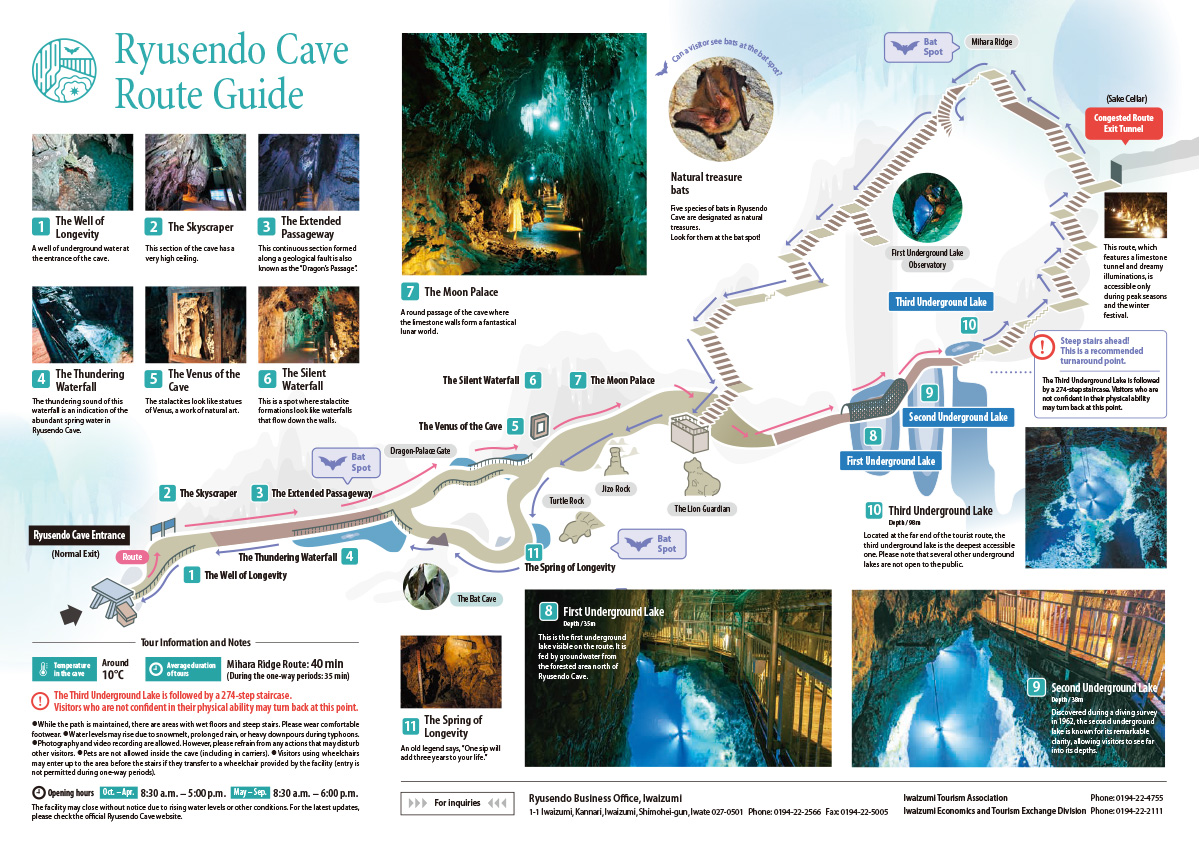
Pictured below is a copy of the map they give you upon entry. The caves can be explored via a well-developed network of pathways, stairs, and bridges.
As of May 2026, admission to both caves is JPY 1,100 per adult.
RYUSENDO CAVE
I may not be as fascinated by caves as some people, but entering one for the first time rarely fails to impress. Shortly after walking into the cave, you’ll go through this section called the Skyscraper. It’s an area known for its high, cathedral-like ceiling.
JAPAN TRAVEL DEALS
Planning a trip to Japan? Enjoy up to 50% off on selected experiences and activities with Klook and Get Your Guide. Click on the links for a list of discounts, promo codes, and limited-time offers.
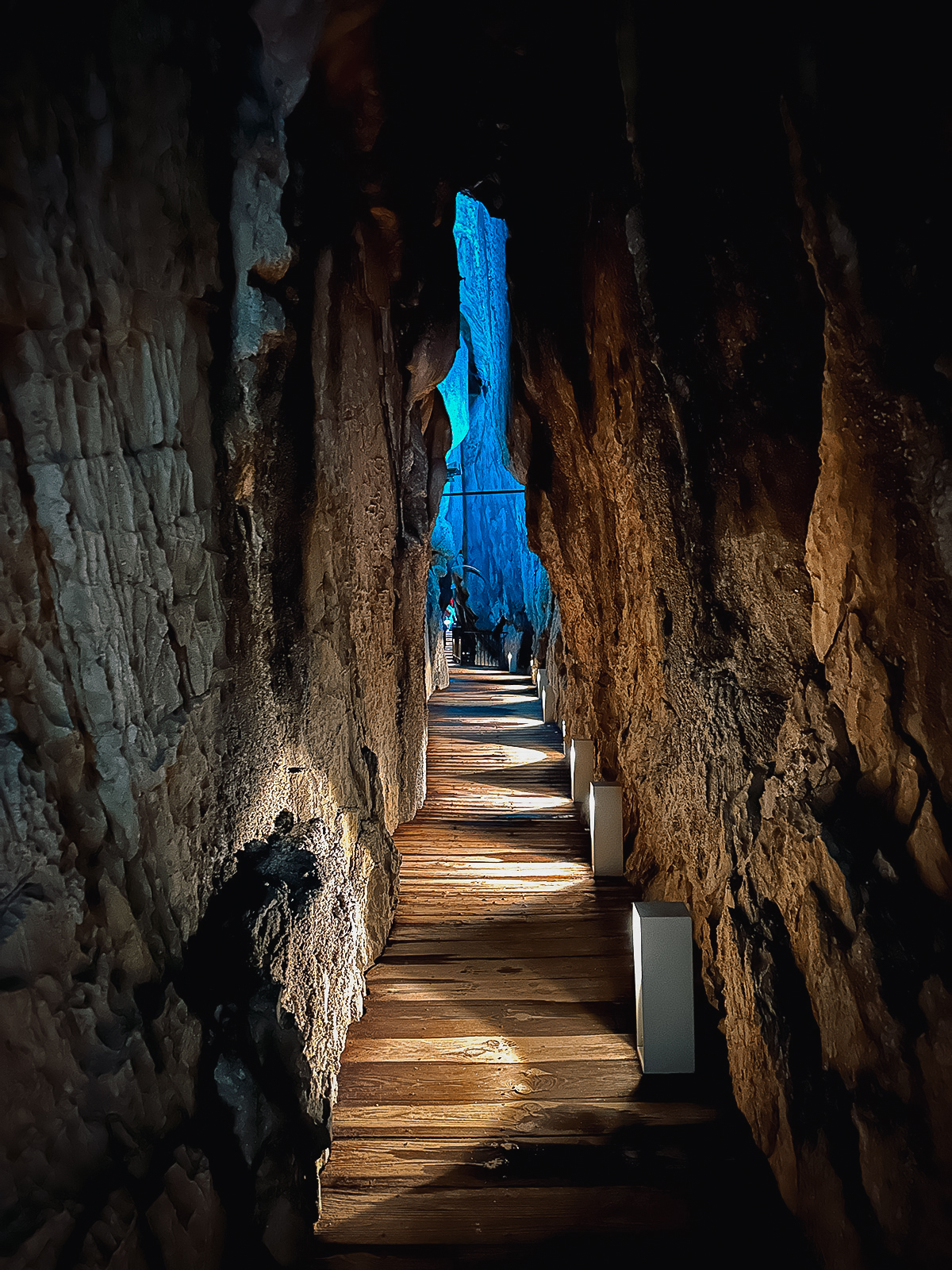
Formed along a geological fault, you’ll then go through this long section known as the Extended Passageway or the Dragon’s Passage. Ryusendo Cave is amply lit and well-maintained, so it’s easy to navigate throughout.
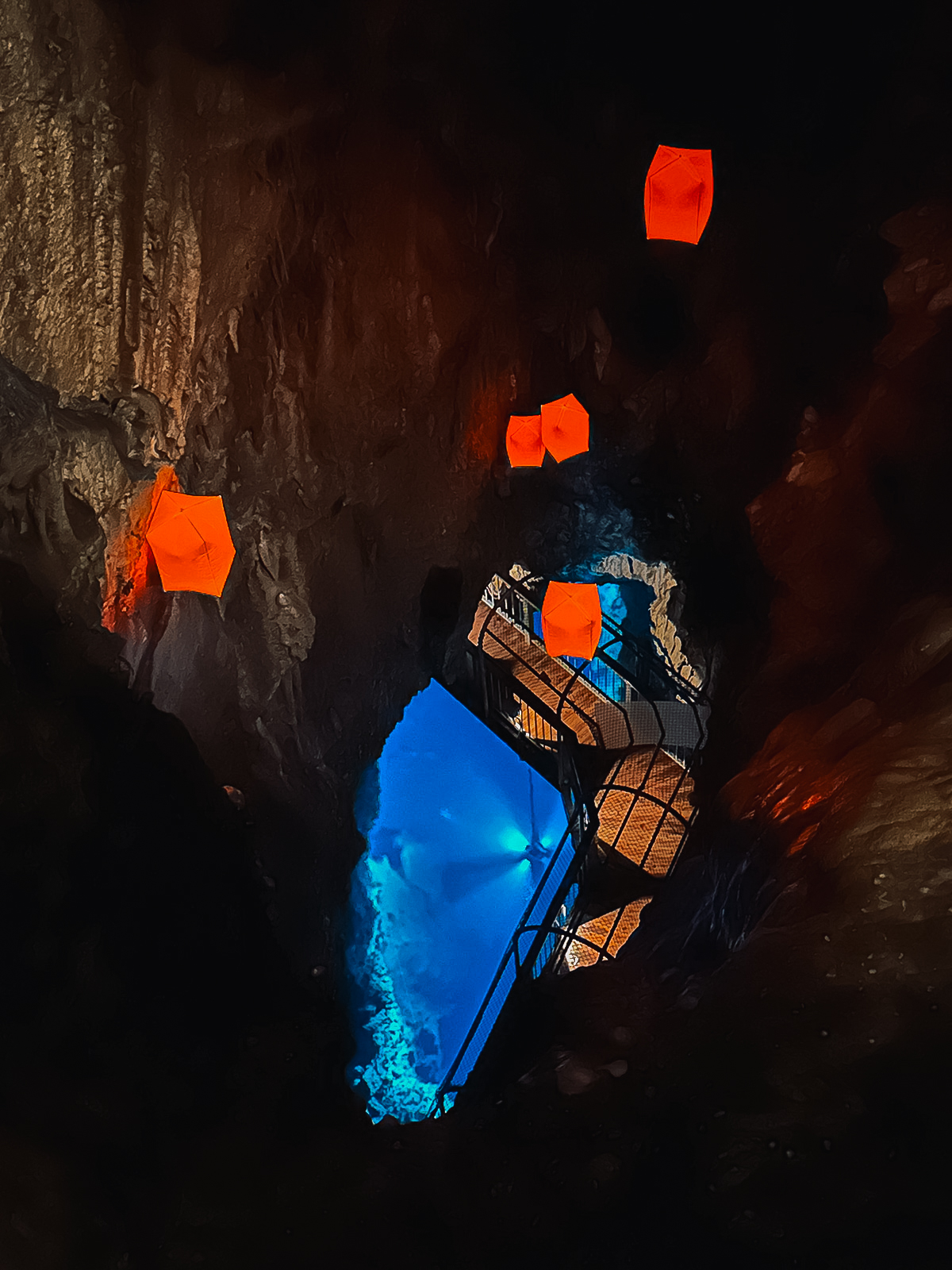
This was one of the most visually striking parts of the cave. What you’re looking at here is the First Underground Lake, but viewed from an observatory accessible via an elevated staircase. The red lanterns are suspended by wires for dramatic effect.
Note the intense blueness of the water, often described as a “dragon blue”. These underground lakes are fed by groundwater from the forested area north of Ryusendo Cave.
I didn’t see any but the cave is home to several varieties of bats, including rare and protected species. Your best chance of seeing them is from the Bat Spot, a lookout point near this observatory.
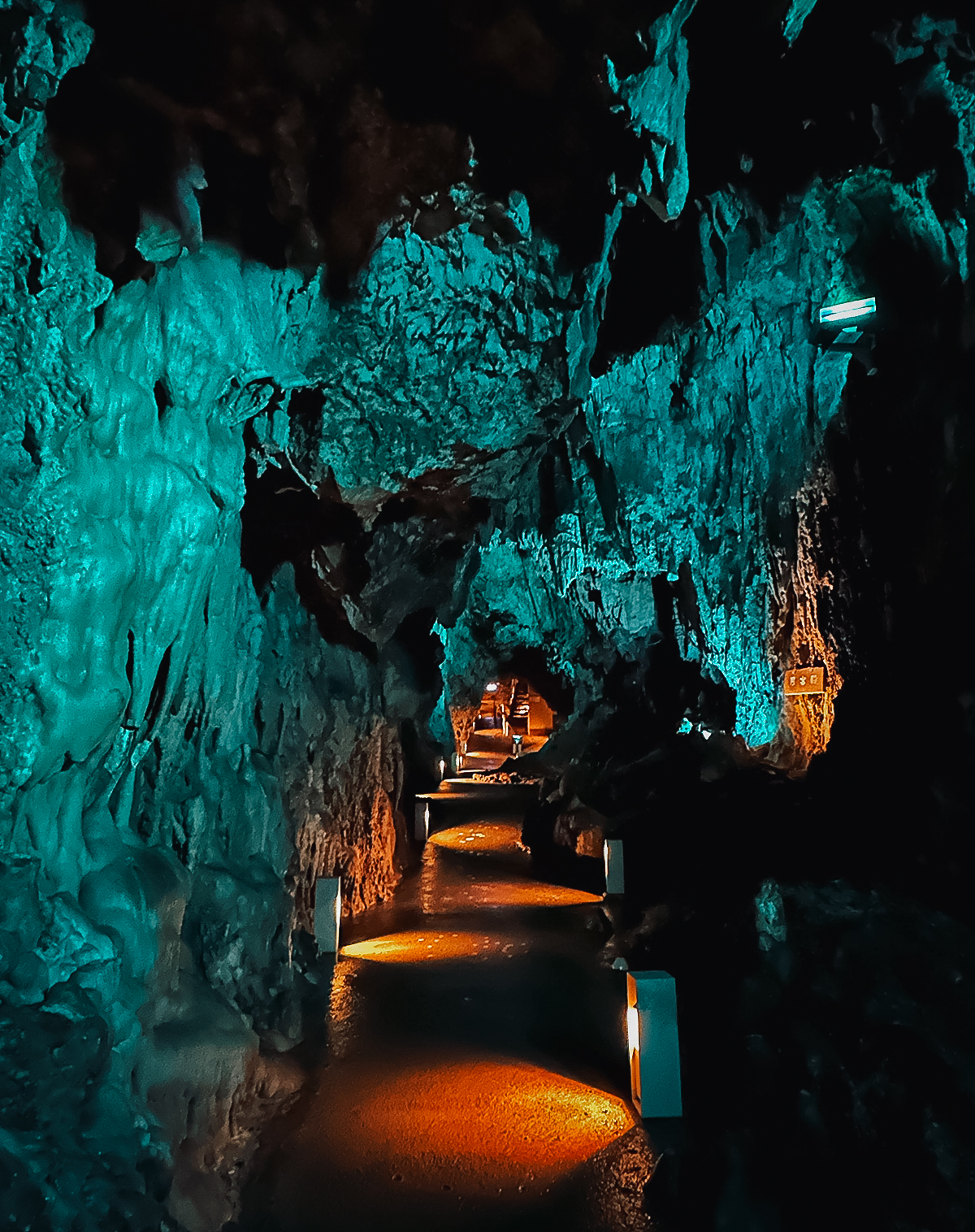
This passage is known as the Moon Palace, a section of the cave where the limestone walls resemble a lunar-like world.
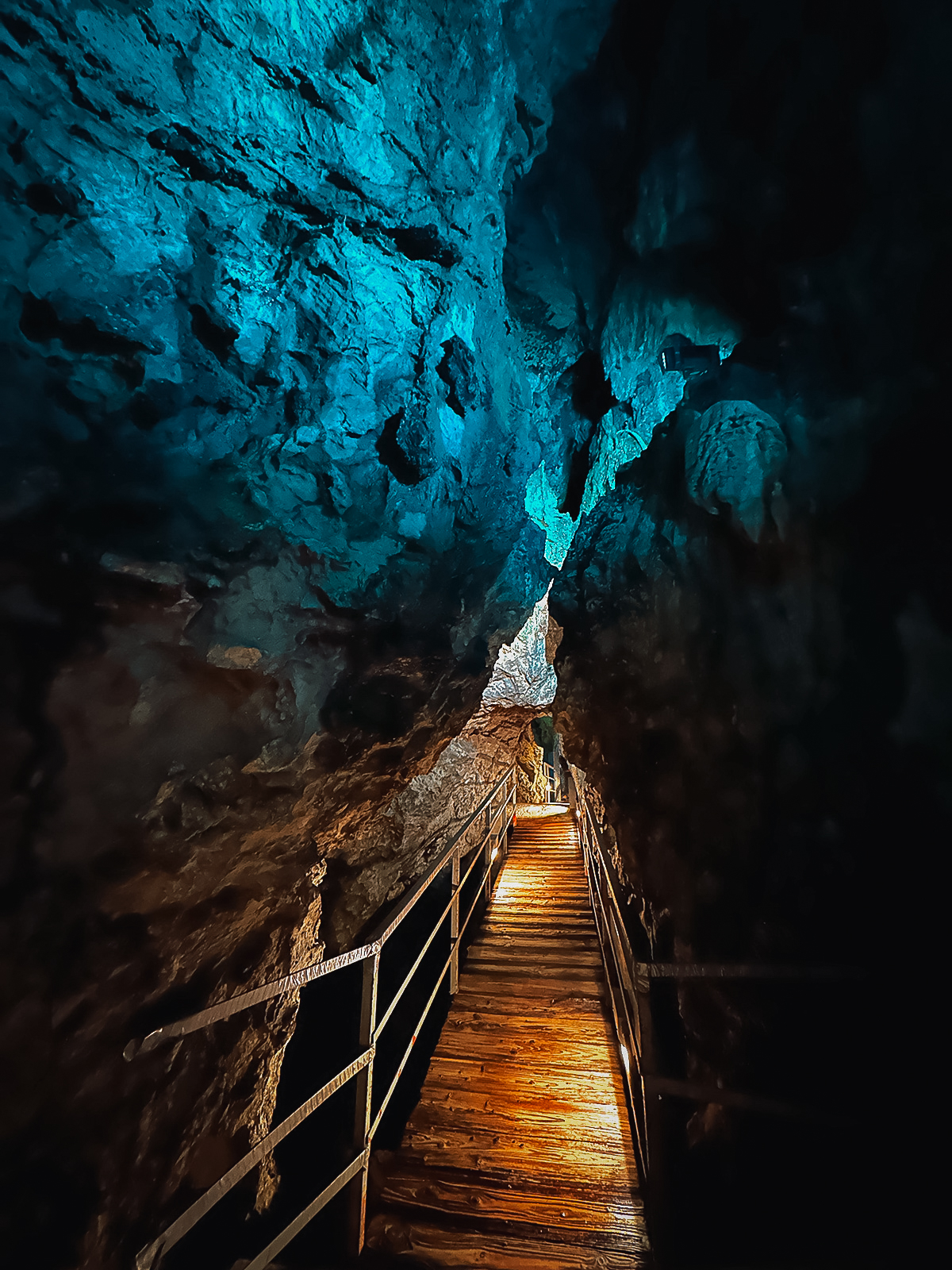
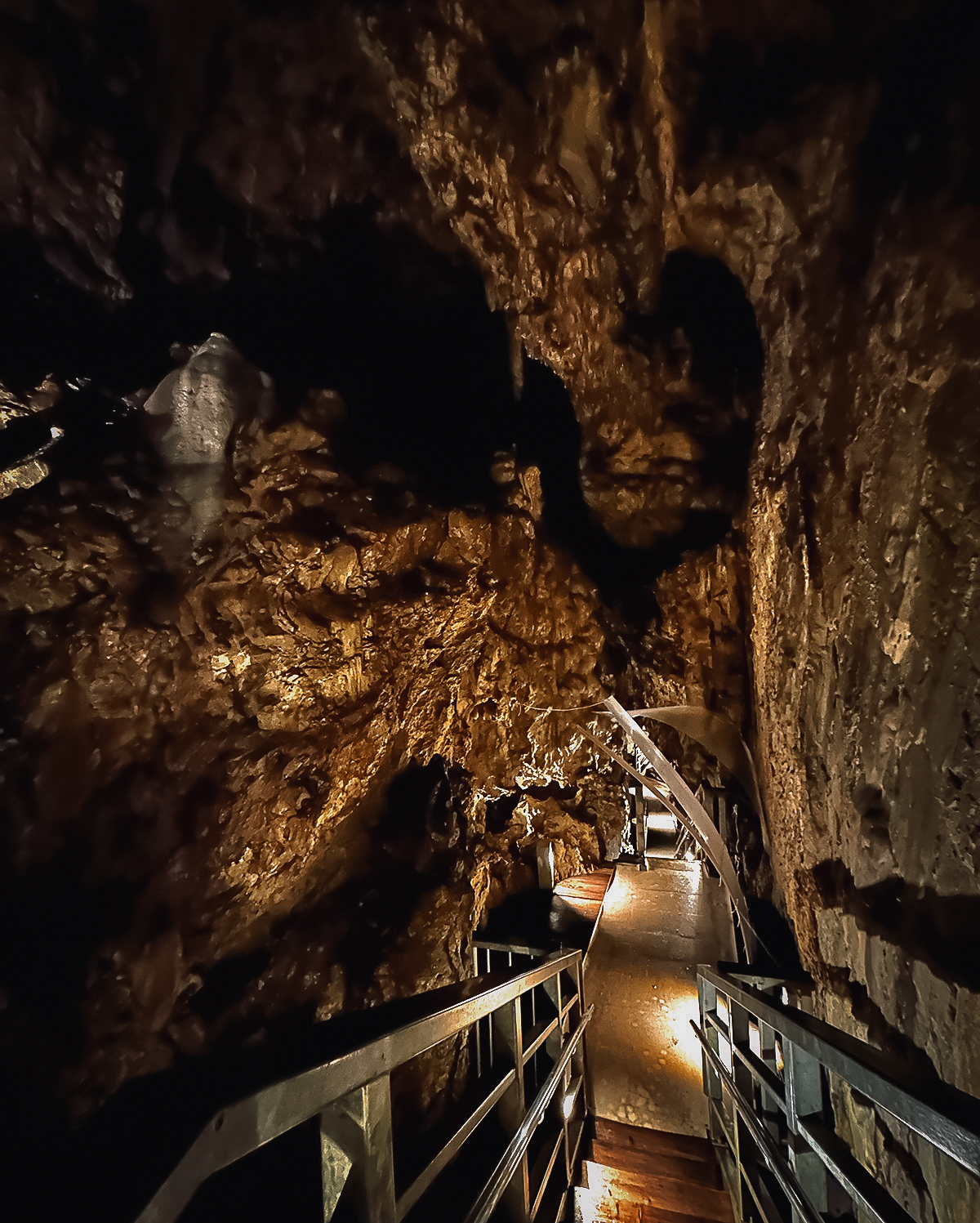
The stairs and pathways inside the cave are even and well-maintained, but they do get wet, so it’s important to wear appropriate footwear.
I didn’t find any section of the cave particularly challenging to get through, but you will climb a total of 274 steps. Guests who aren’t comfortable have the option of doubling back, though people with moderate levels of fitness shouldn’t have any difficulties.
This is the Second Underground Lake. Discovered in 1962, it’s known for its remarkable clarity, which allows guests to see far into its depths. The rich and vibrant blues of these lakes really are mesmerizing.
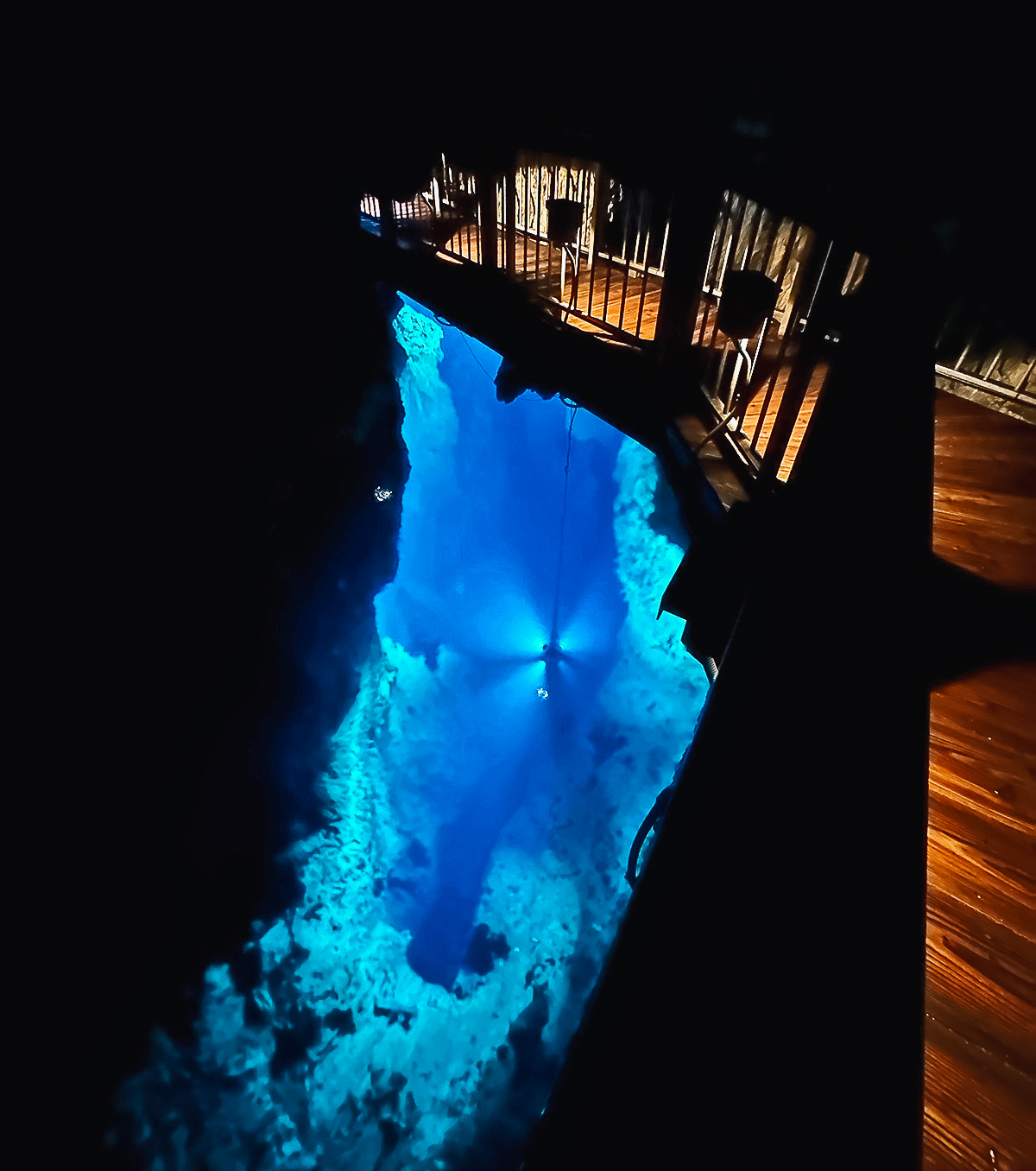
This is the Third Underground Lake and the deepest of the three accessible lakes. It has a recorded depth of 98 meters (321.5 ft), roughly equivalent to a 30-32 story building!
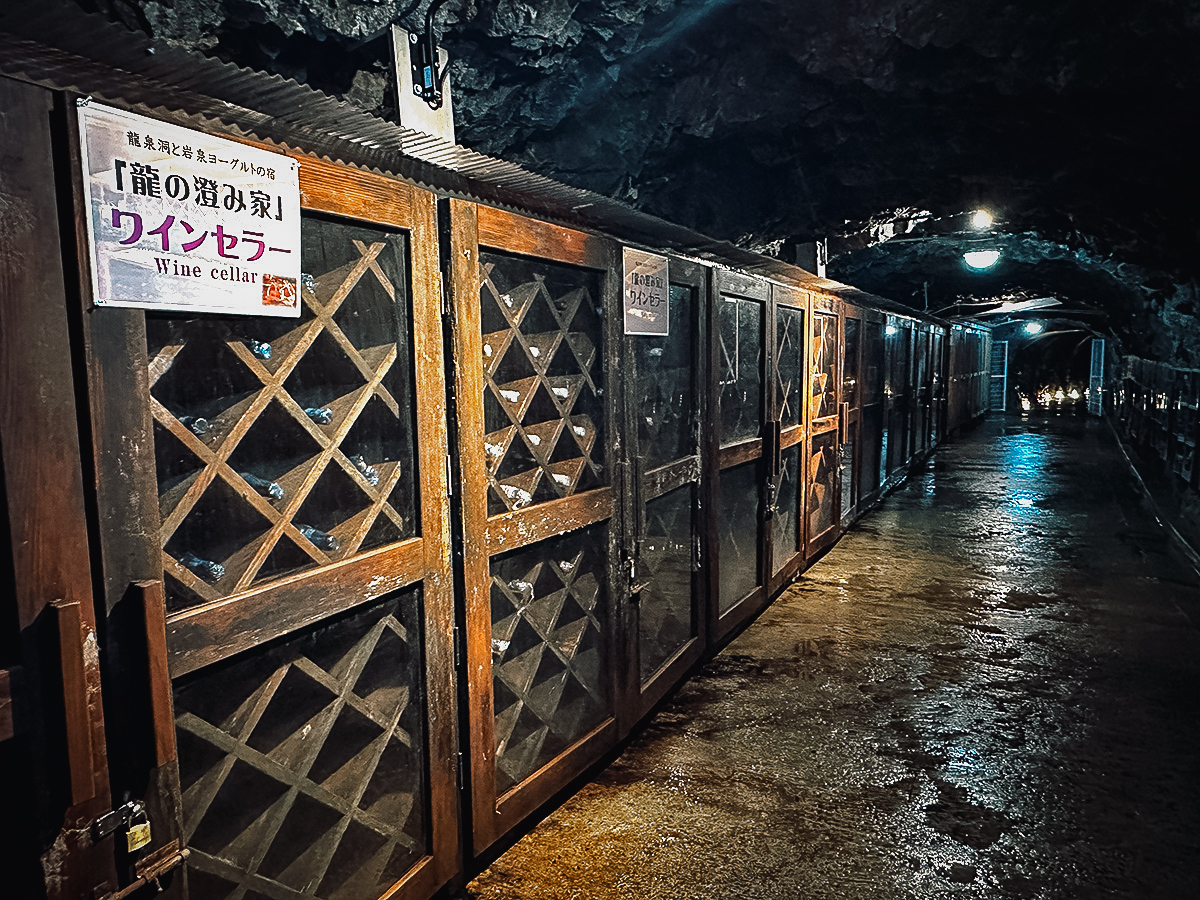
The temperature inside the cave stays below 10°C (50°F) year-round, making it an ideal place to store sake. This sake cellar is accessible only during peak seasons and the winter festival.
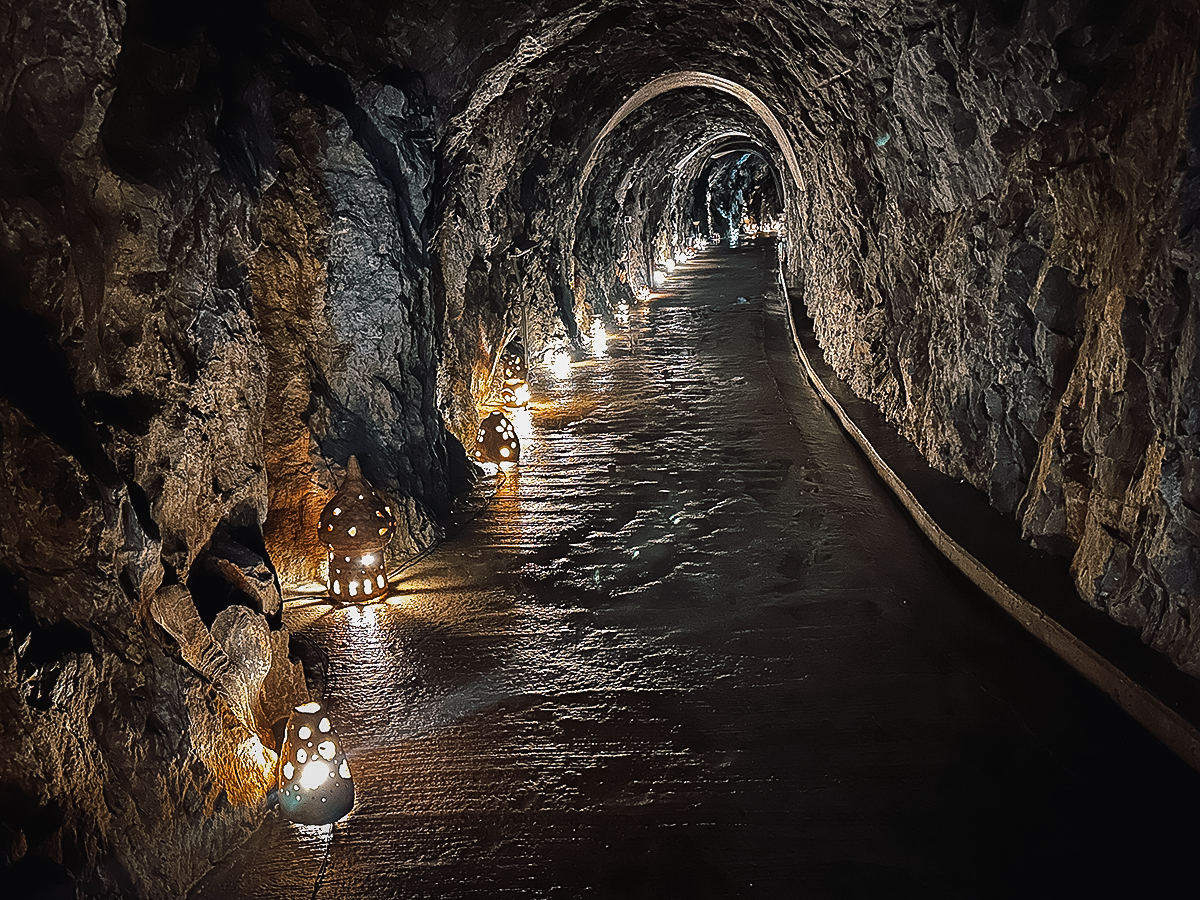
The sake cellar leads to this limestone tunnel. People visiting Ryusendo Cave in the off-season will need to do a loop back and exit the cave via the main entrance. In peak seasons and in winter, you’ll have the option of exiting through this tunnel.
RYUSENSHINDO SCIENCE MUSEUM
Located across the Shimizu River, just a short walk from Ryusendo Cave, is the Ryusenshindo Science Museum. When I read about a museum near Ryusendo, I expected a typical room in a building with exhibits about the cave. Never did I expect that the museum would be in another cave.
Upon entering the museum, you’ll descend into this tunnel with a few mildly interesting exhibits displayed along the walls.
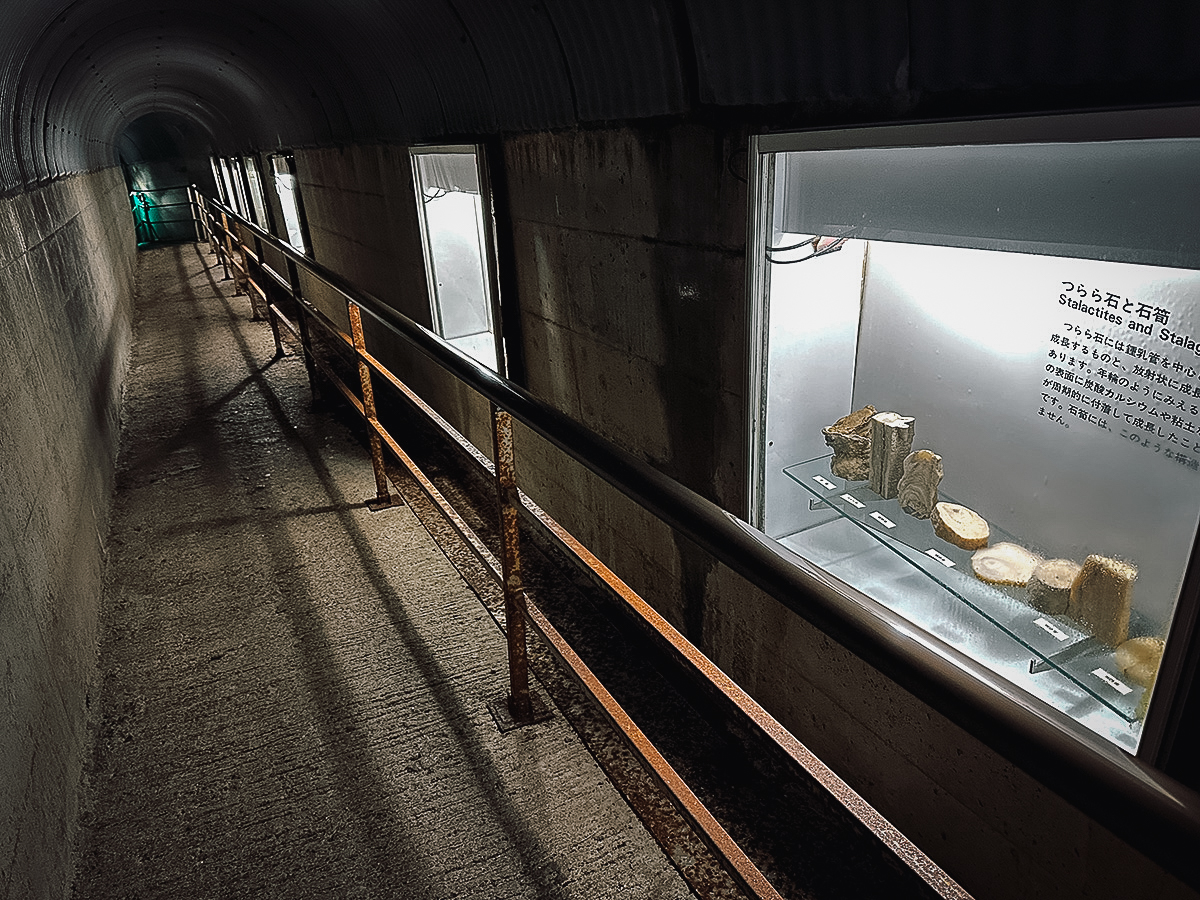
I’ve never seen a museum situated inside an actual cave, so I thought that was pretty cool. As previously mentioned, it’s strongly believed that this cave used to be connected to the larger Ryusendo cave complex.
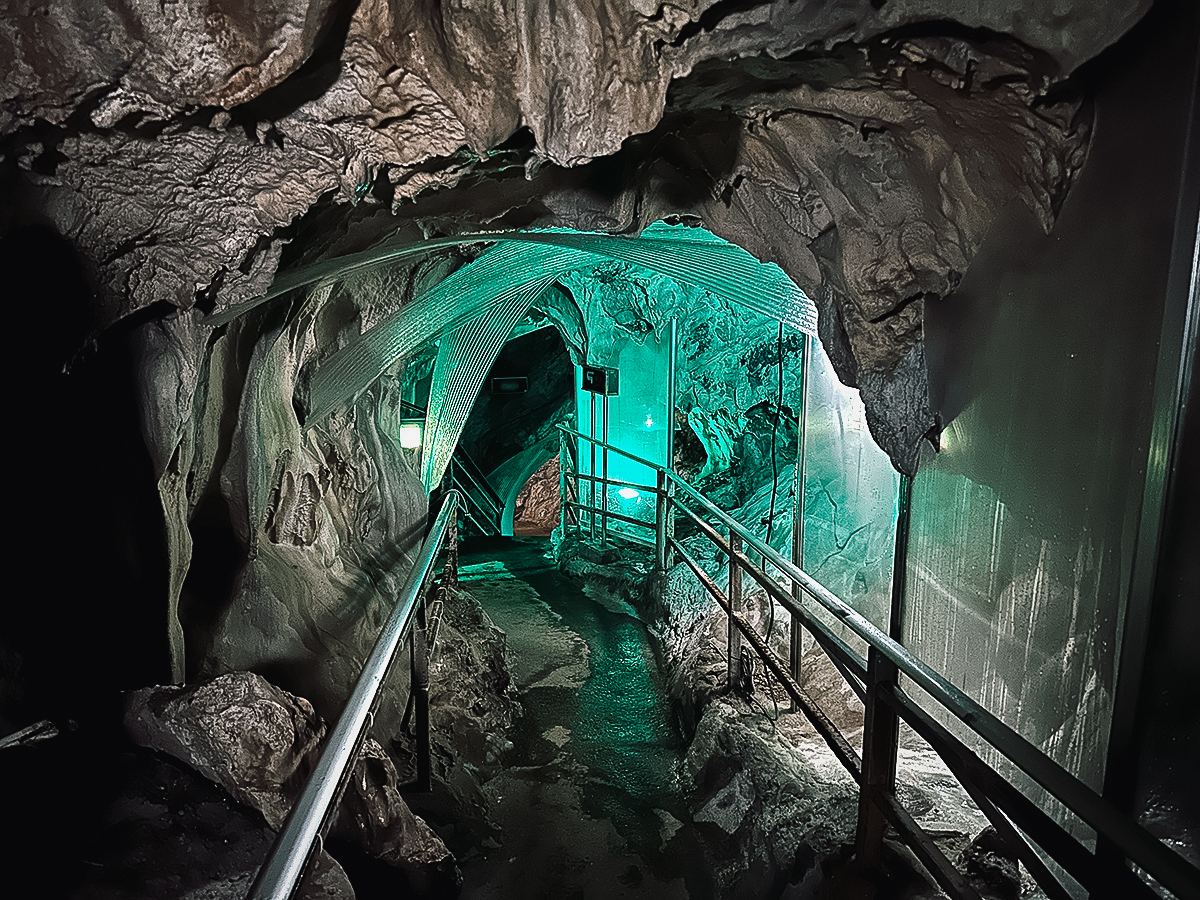
Inside the cave museum, you’ll find interpretive panels explaining the cave’s formations and the geology behind them. To the untrained eye, these rock formations can start to look pretty similar after a while, so the informational panels help you better understand and appreciate what you’re seeing.
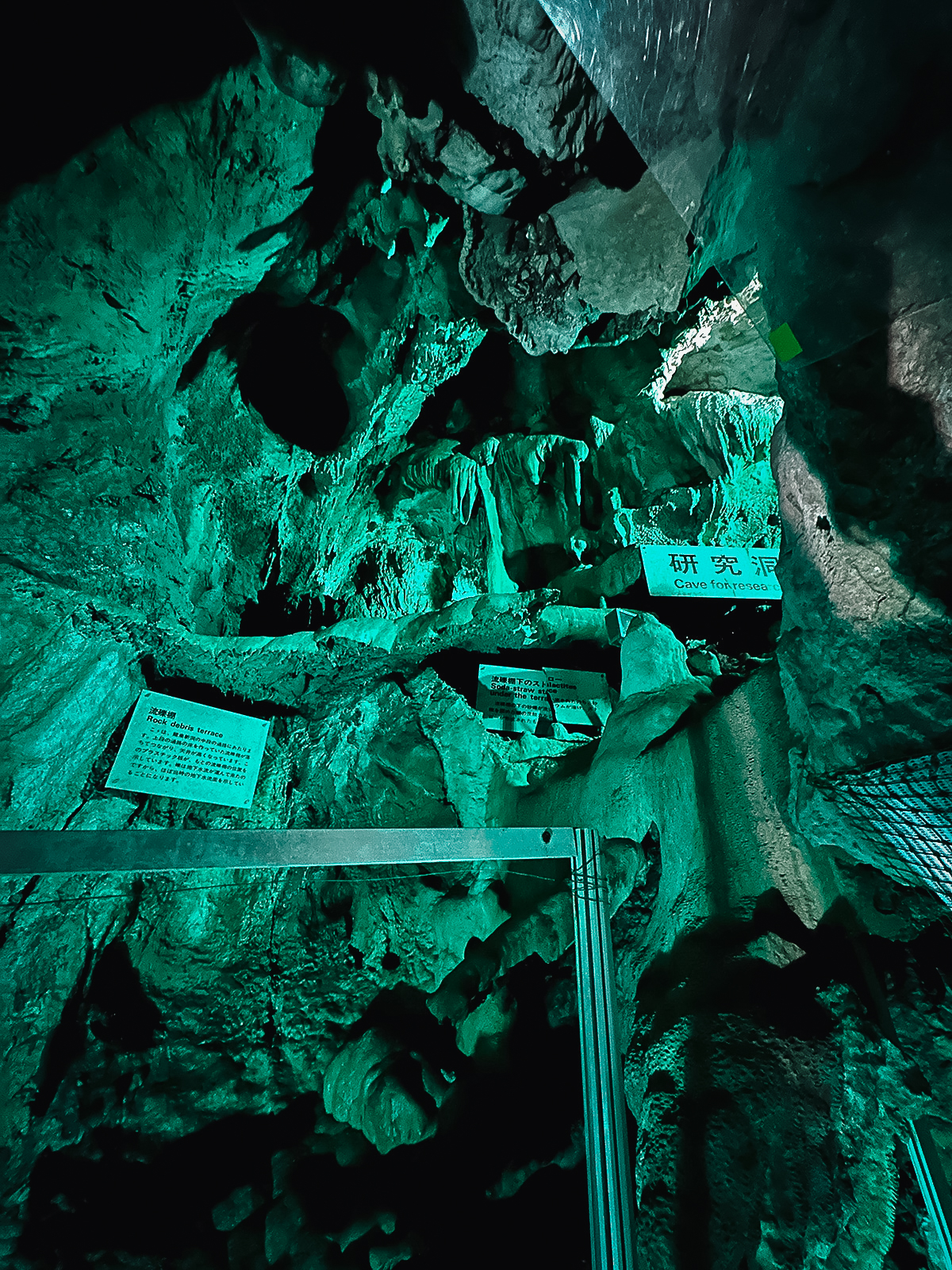
Without looking it up, can you confidently describe the difference between a stalactite and a stalagmite?
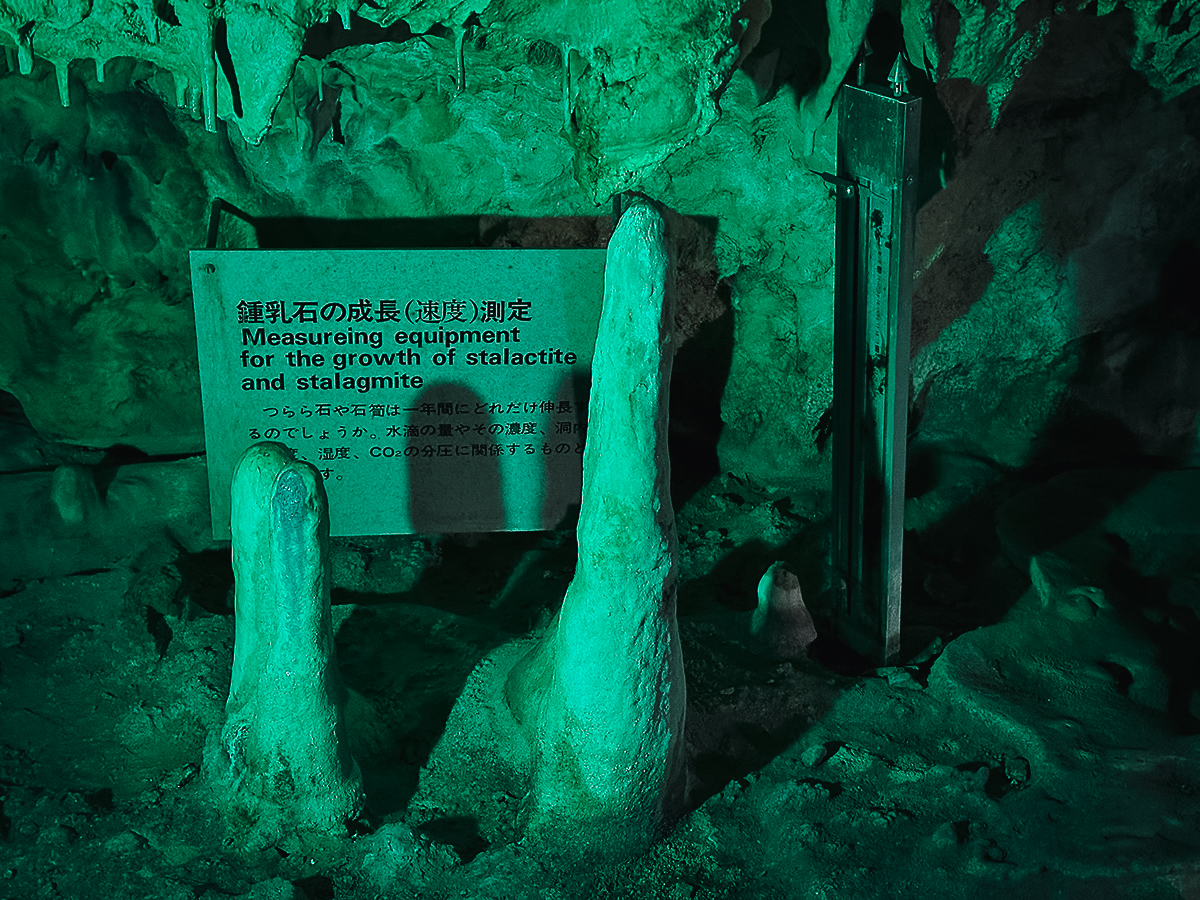
I like amphibians so it was cool to learn to learn about the types of salamanders that call Ryusendo home.
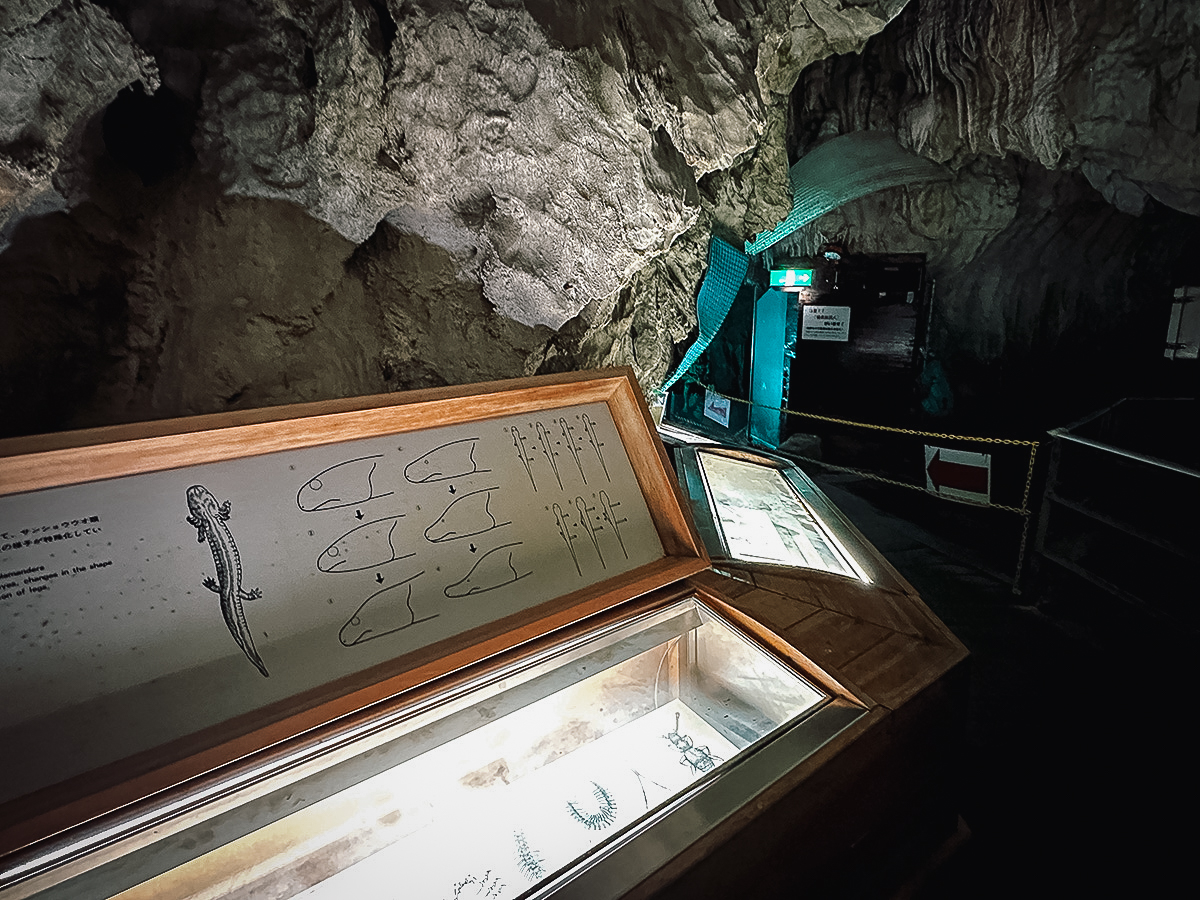
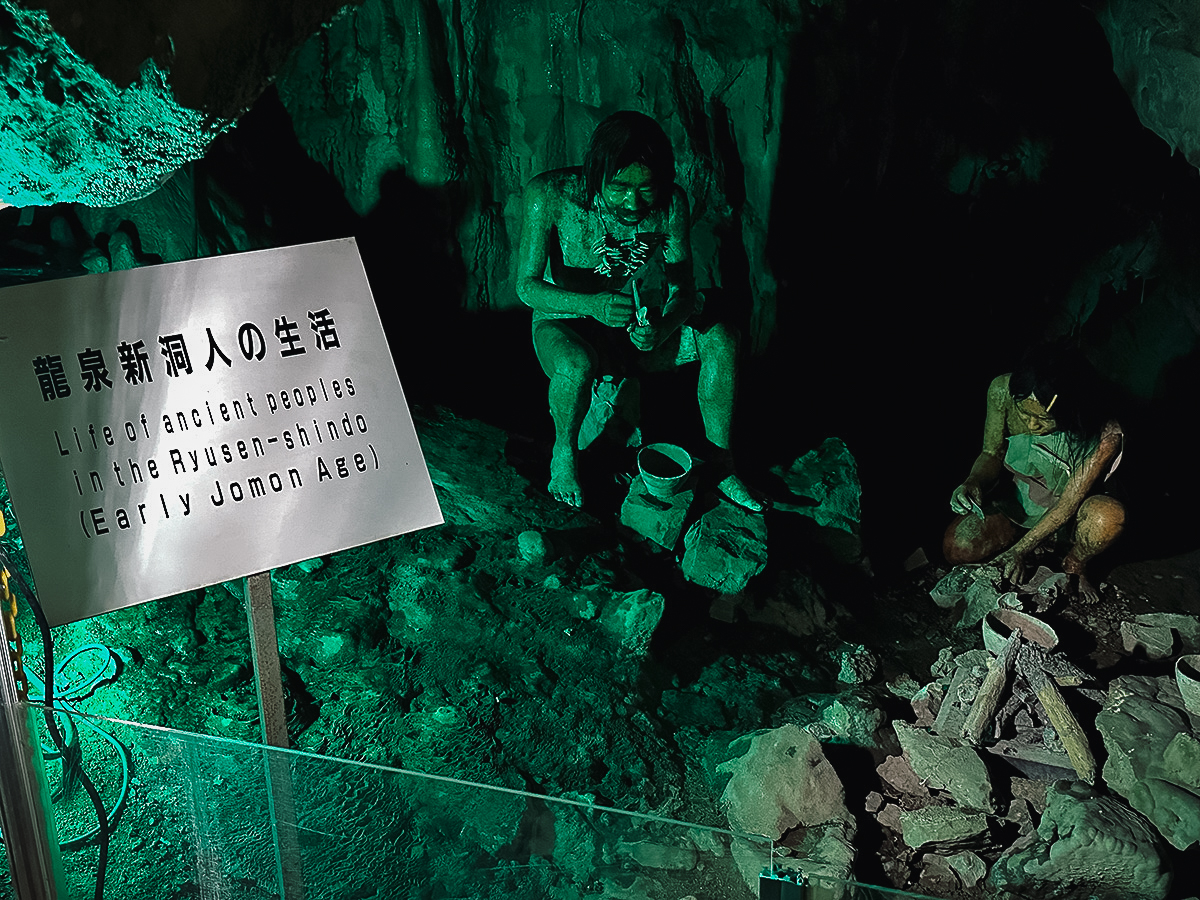
Turning a corner, this diorama nearly made me jump off the platform. The Japanese couple behind me reacted in the same way too. Ha!
Apparently, remains from the Jomon period have been discovered in this cave.
Visit Ryusendo Cave FAQs
Is Ryusendo Cave worth visiting?
Yes, I think so, and that’s coming from someone who isn’t that interested in caves to begin with.
Well-maintained and easy to navigate, going through the cave was a breeze, and seeing the underground lakes was quite cool. It’s also big enough to justify the 4+ hours of bus travel between Morioka and the cave.
Would I still have made the trip if transportation hadn’t been covered by the JR East Pass? Probably not. As of May 2026, the one-way trip costs JPY 2,710. Not exactly cheap!
Which passes cover transportation to Ryusendo Cave?
Aside from the JR East Pass, the trip between Morioka Station and Ryusendo Cave is fully covered by the Japan Rail Pass.
Are there luggage lockers at RYUSENDO CAVE?
Yes, there are coin-operated lockers at the tourist center. You can also store your luggage in lockers at Morioka Station, which is what I did.
Is there a place to eat near Ryusendo Cave?
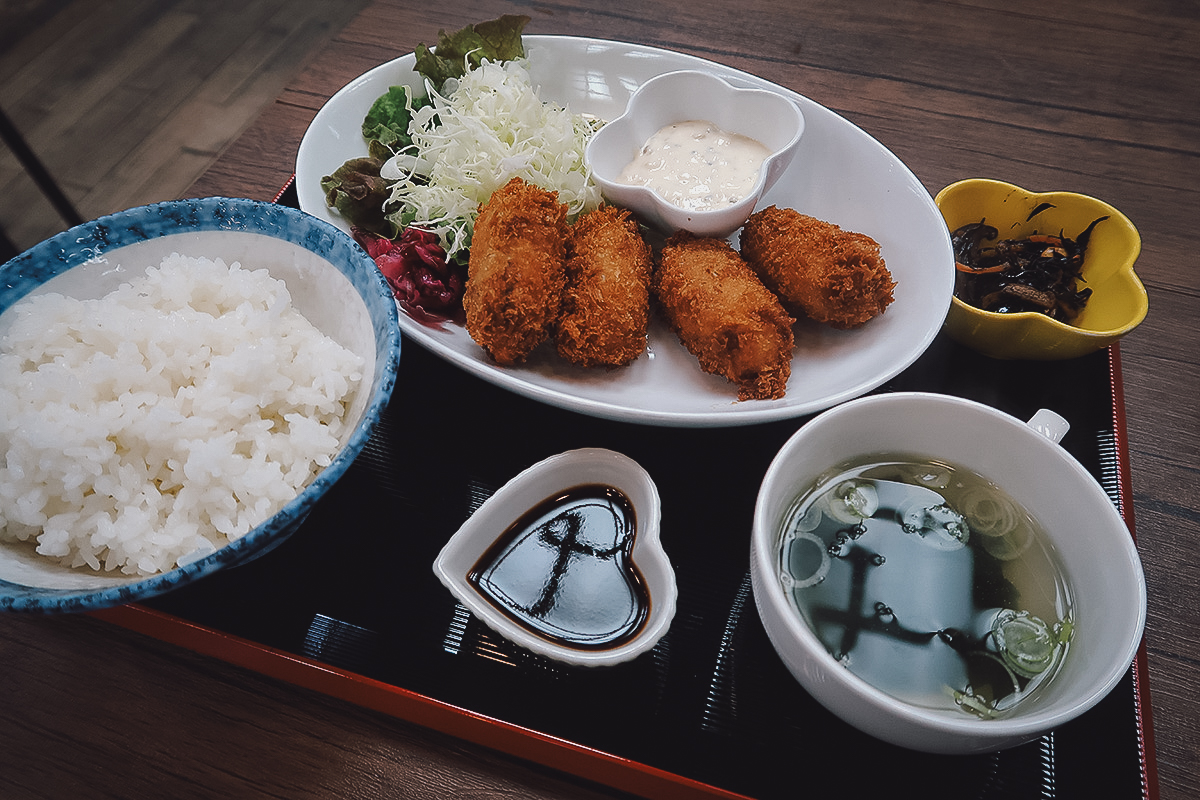
Ryusendo Cave is in the middle of nowhere, so I was worried about not having anything to eat. Thankfully, there’s a small restaurant at the tourist center that serves simple meals like this kaki (oyster) fry set. Oishi!
THE FINAL SAY
Even as someone who isn’t particularly fond of caves, I still wound up enjoying my visit to Ryusendo. I’ve been to bigger caves with more impressive rock formations, but Ryusendo’s underground lakes are genuinely mesmerizing. Their impossibly clear blue waters can’t adequately be captured in photos.
If you have a JR East Pass (or a Japan Rail Pass) and have extra time in the Tohoku region, I think Ryusendo is absolutely worth considering. It’s a chance to explore a more remote side of Iwate Prefecture and see one of Japan’s three great limestone caves.
But if you don’t have either rail pass, are short on time, or simply don’t have much interest in caves, then you may want to spend your time (and money) elsewhere.
Disclosure
This article on Ryusendo Cave contains affiliate links, meaning we’ll earn a small commission if you make a booking at no additional cost to you. We only recommend products and services that we use ourselves and firmly believe in. We really appreciate your support, as it helps us make more of these free travel guides. Arigato gozaimasu!
References
1. Experience the miraculous underground “Dragon Blue” lakes. Travel Japan.
2. Ryusen Shindo Science Museum. Ryusendo.
