
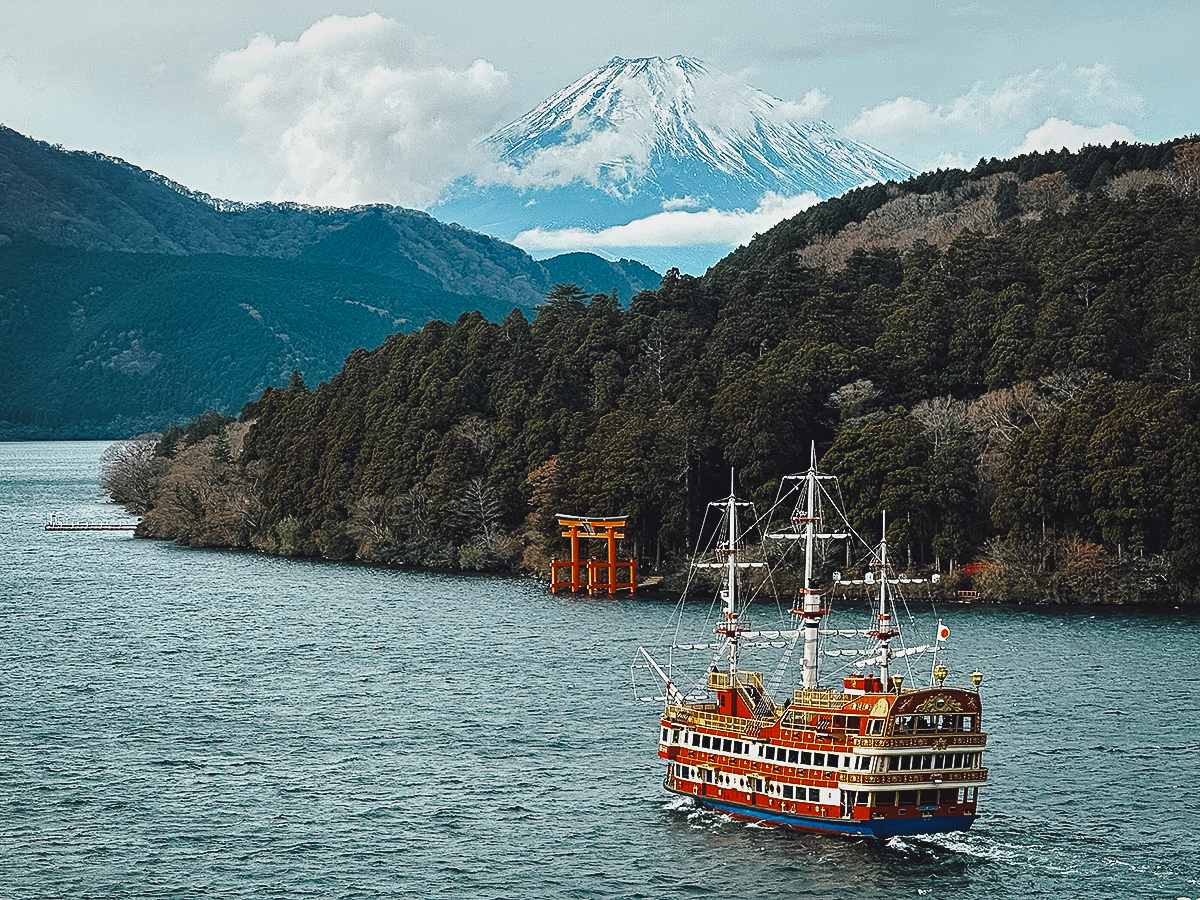
SUMMARY HIGHLIGHTS
- Hakone isn’t a single town, but a collection of seven small settlements spread out over Mt Hakone’s caldera.
- Winter offers the best chance to get that iconic shot of Mt Fuji rising up over Lake Ashi.
- The Hakone Free Pass can be a great investment.
I couldn’t wrap my head around Hakone. From the pictures, it was obviously one of the most popular places to take photos of Mount Fuji. I knew it was an onsen town famous for its hot springs, but that was pretty much all that made sense to me.
What I found baffling was the “Hakone Loop” – a transportation network that included trains, funiculars, ropeways, buses, and boats. It was an odd mix to me, especially since it sounded like an integral part of the Hakone experience. What made it even stranger were the “pirate ships” that looked completely out-of-place on a lake in Japan!
I couldn’t put the concept of Hakone together in my mind, until I spent a few days there and realized that the town isn’t a single unified town, but more a network of small settlements located in and around a caldera.
Based on people’s reviews, most tourists seem to love Hakone, while a few others have called it overrated and overpriced. In this article, I hope to shed more light on exactly what Hakone is, and what you can expect from this popular resort town in Kanagawa Prefecture.
VISIT HAKONE QUICK LINKS
To help you plan your trip to Hakone, I’ve put together links to recommended hotels, tours, and other travel-related services here.
HOTELS
Top-rated hotels in Gora, one of the best areas to stay in Hakone.
- Luxury: Hakone Honbako 箱根本箱
- Midrange: Tensui Saryo
- Budget: Kinkaku Onsen 金閣莊
EXPERIENCES
- Mt Fuji & Hakone Private Tour From Tokyo
- Zazen Meditation at a Historic Hakone Site
- Discover the Spirit of Karate and Shinto
- Hakone Hachiri Hiking Tour
OTHER SERVICES
- Travel Insurance (non-US residents get 5% off)
- Hakone Free Pass
- Japan Rail Pass
- Hakone Kamakura Pass
- Japan eSIM
GUIDE TABLE OF CONTENTS
UNDERSTANDING HAKONE
Hakone is a resort town in the mountains of Kanagawa Prefecture, around two hours southwest of Tokyo. Part of Fuji-Hakone-Izu National Park, it’s famous for its hot springs and iconic view of Mount Fuji rising up over Lake Ashinoko (or Lake Ashi for short).
Hakone is a small town with a population hovering between ten and fifteen thousand. Hakone’s size is what I found confusing. Why would a small town require such an elaborate transportation network? And why did this transportation system sound like a tourist attraction in its own right?
I couldn’t picture it in my head until I went there myself and realized that Hakone isn’t a single unified town, but a collection of seven small “villages” or settlements spread out over Mount Hakone’s vast caldera. This explained the elaborate transportation network and prevalence of natural hot springs in the area.
The Hakone Loop refers to the loop-shaped route people take when visiting Hakone. It consists of trains, buses, funiculars, ropeways, and cruise ships that connect the various settlements.
Starting at Hakone-Yumoto Station, which is located near the eastern edge of the caldera, visitors make their way down to Lake Ashinoko – a caldera lake – before traveling back up again.
Along the route, you can hop off at various stations to explore the different settlements. In each village-like area, you’ll find hotels, ryokans, restaurants, museums, shops, shrines, and other tourist attractions.
Visitors can purchase single ride tickets for any portion of the loop, but if you plan on doing the full loop, then the Hakone Free Pass is a worthwhile investment. It’s a travel pass that gives you unlimited use of Hakone’s transportation network for two or three days.
WHAT IS THE HAKONE FREE PASS?
This is just a quick summary but be sure to check out my detailed assessment of the Hakone Free Pass for more information and tips on using the pass.
JAPAN TRAVEL DEALS
Planning a trip to Japan? Enjoy up to 50% off on selected experiences and activities with Klook and Get Your Guide. Click on the links for a list of discounts, promo codes, and limited-time offers.
The Hakone Free Pass is a travel and discount pass by Odakyu Railway. It gives you unlimited use of the transportation network in Hakone along with discounts to select tourist attractions in the Hakone area for two or three consecutive days.
Available in digital or physical formats, you can purchase a Hakone Free Pass at select metro stations or in advance through Klook.
Here’s the pricing structure for the Hakone Free Pass (June 2026). You can get it with or without roundtrip transportation from Shinjuku Station.
| 2-Day Pass | 3-Day Pass | |
| With Roundtrip Transportation From Shinjuku Station* | JPY 7,100 | JPY 7,500 |
| Without Roundtrip Transportation | JPY 6,000 | JPY 6,400 |
The following map** shows the routes and stations covered by the Hakone Free Pass. Pass holders can travel along these routes as often as they want within the validity period of their pass.
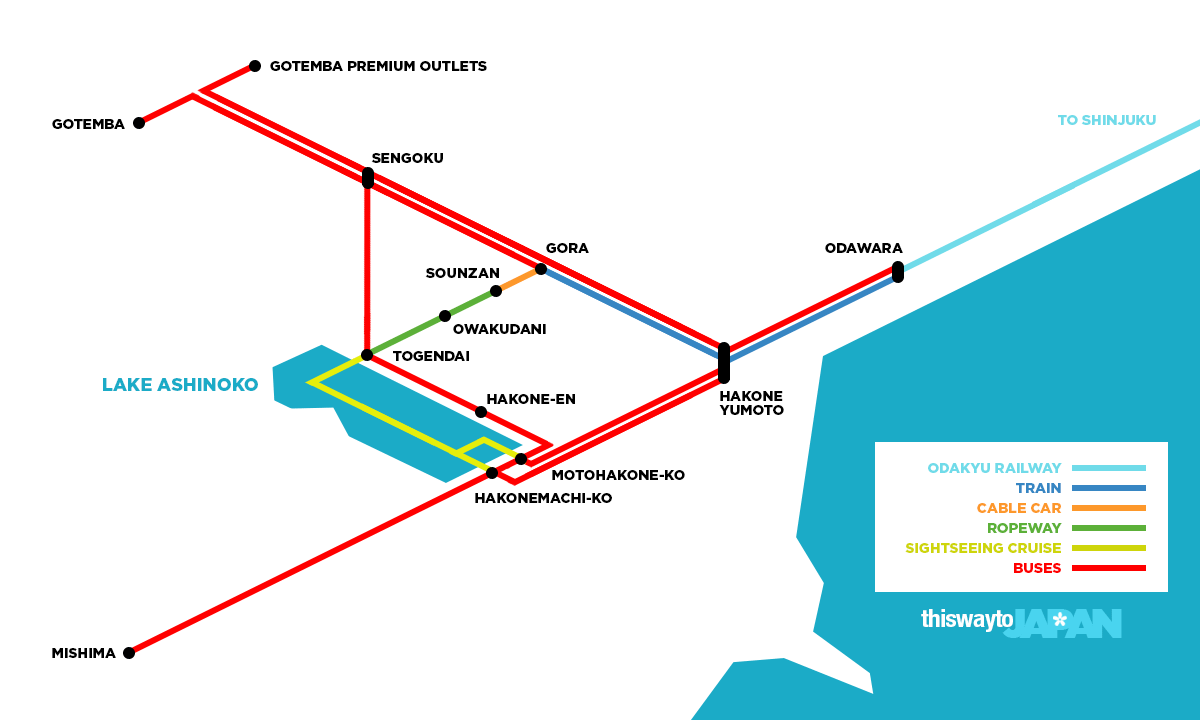
*Can be upgraded to the limited express “Romancecar” train for an additional fee.
**Please note that the map above is a simplified version to help you visualize available routes. You can visit the Odakyu website to see all lines and stops covered by the Hakone Free Pass.
BEST TIME TO VISIT HAKONE
It’s ideal to visit Hakone when the skies are clear for two reasons. One, you’ll be spending a lot of time outdoors so you don’t want to be bogged down by bad weather. And two, Mount Fuji is notoriously fickle so it’s best to go when visibility is at its highest. This usually happens in winter, around December and January.
Hakone is beautiful at any time of the year but especially in autumn thanks to its colorful fall foliage. The leaves start to change colors around early November, which is right around the time when the rains start tapering off as well.
For these reasons, I think late November to early December is the perfect time to visit Hakone. It’ll give you an opportunity to catch the tail end of autumn while giving you a better chance for clear views of Mount Fuji.
WHERE TO STAY IN HAKONE
Most if not all the villages that make up Hakone offer accommodations, but some are more convenient than others if you plan on doing the Hakone Loop.
Being the main transportation hub, the area around Hakone-Yumoto Station is the busiest but it may not be the best place to stay in Hakone. I recommend staying instead in Gora. It’s the biggest and most developed village-like area in Hakone with a good number of hotels, ryokans, restaurants, and tourist attractions.
You can check Booking.com for hotel listings around Gora Station. Here are some of the top-rated hotels in the area:
- Luxury: Hakone Honbako 箱根本箱
- Midrange: Tensui Saryo
- Budget: Kinkaku Onsen 金閣莊
THINGS TO DO IN HAKONE
Do the Hakone Loop
Hakone may be a small town by population but it’s spread out across a mountainous, volcanic landscape. To fully appreciate it, you’ll need to traverse an expansive network of transportation options known as the Hakone Loop (or Hakone Round Course). Not only does it get you from point A to point B, but it’s the most scenic way of appreciating the natural beauty of the Hakone area.
Hakone-Yumoto is the main station in Hakone and where you’ll be starting and ending the Hakone Loop. I went counter-clockwise along the loop but you can also go clockwise if you prefer. If you go counter-clockwise, this is the route you’ll take (map):
Hakone-Yumoto –> (by train to) Gora –> (by funicular to) Sounzan –> (by ropeway to) Owakudani –> (by ropeway to) Togendai –> (by ship to) Hakonemachi-ko –> (on foot to)* Motohakone-ko –> (by bus to) Hakone-Yumoto
There are tourist attractions and restaurants at most stops so depending on how much time you have and what you’re interested in, you can spend as much or as little time at each station as you like. I stayed at a ryokan near Sounzan Station so I did the loop over two days.
The entire transportation network along the Hakone Loop is fully covered by the Hakone Free Pass.
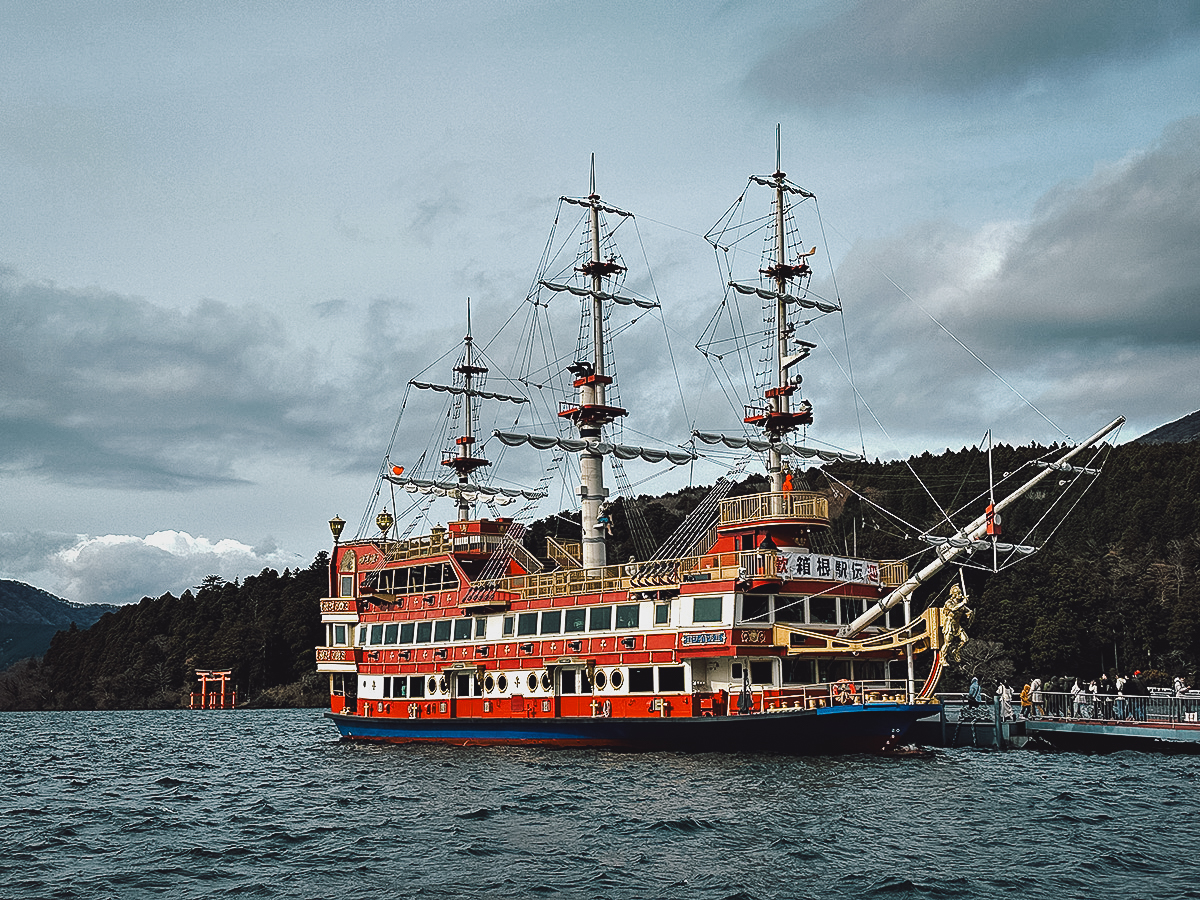
*If you’d prefer not to walk between Hakonemachi-ko and Motohakone-ko ports, then you can stay on the ship when it docks at Hakonemachi-ko and get off at Motohakone-ko instead.
Take That Iconic Shot of Mt Fuji
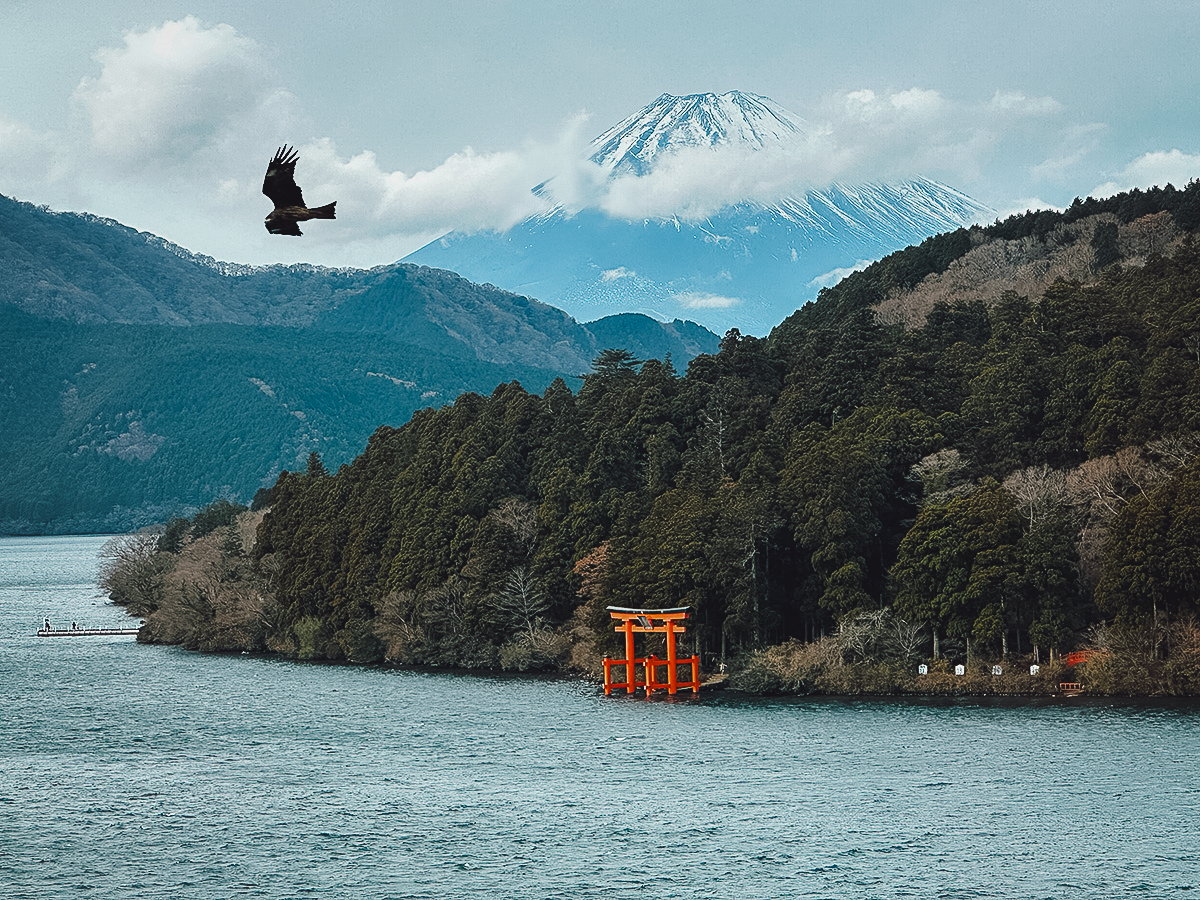
Hakone is a beautiful hot spring area with lots to offer, but you can’t deny that one of its top draws is this dramatic view of Mount Fuji rising up over Lake Ashinoko. With Hakone Shrine’s vermilion torii gate adding a touch of color in the foreground, it’s a spectacular sight that can make even amateur shutterbugs (like me) look somewhat competent.
You can take great photos from the southern shores of Lake Ashi, but I suggest camping out at the panorama lounge and cafe of Narukawa Museum. It gives you a slightly higher vantage point and a comfortable seat with food and drinks while waiting for the perfect shot.
Mount Fuji is notoriously shy, but the winter months offer the clearest skies and the best chance of photographing this iconic volcano.
Enjoy a Ryokan Stay and Soak in an Onsen
Fuji-Hakone-Izu National Park is known for its natural hot springs, so staying at a ryokan and soaking in an onsen, especially in winter, is one of the most enjoyable things you can do in Hakone. There are a few dozen ryokan to choose from in the area, ranging in price from around a hundred US dollars a night to over a thousand.
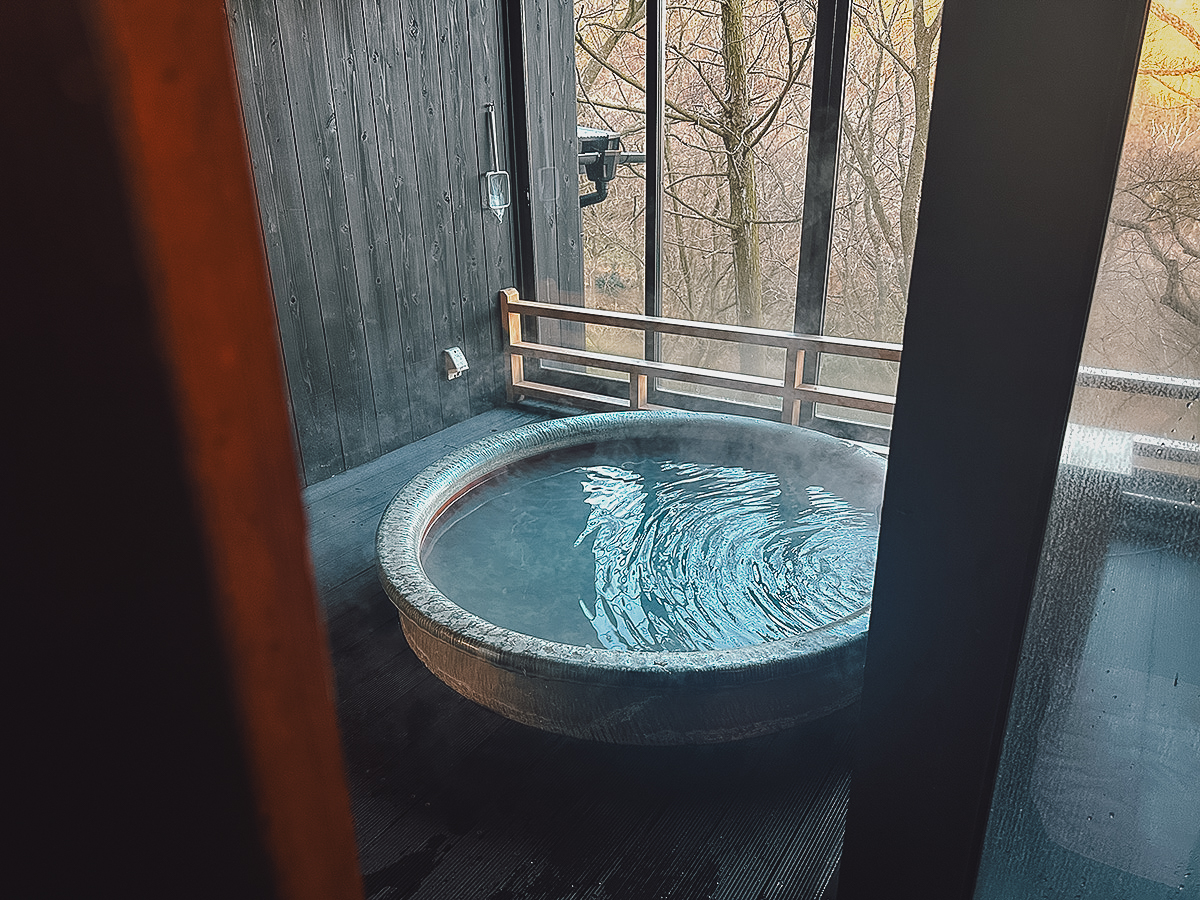
I stayed at Nagominoyado Hanagokoro, a 3-star ryokan located near Sounzan Station. There are only eight rooms at the ryokan, each with its own attendant and private onsen, so guests are well taken care of.
This was our private hot spring bath, which we were free to use as often as we wanted during our stay. Like the view? The trees were already barren in late December, but I can only imagine how stunning the scenery must be in the fall.
If you’re visiting Hakone for the day but would like to soak in an onsen, then you can do so at Hakone Yuryo, a hot spring resort that offers day rates for onsen use. Holders of a Hakone Free Pass are entitled to discounts on onsen rates.
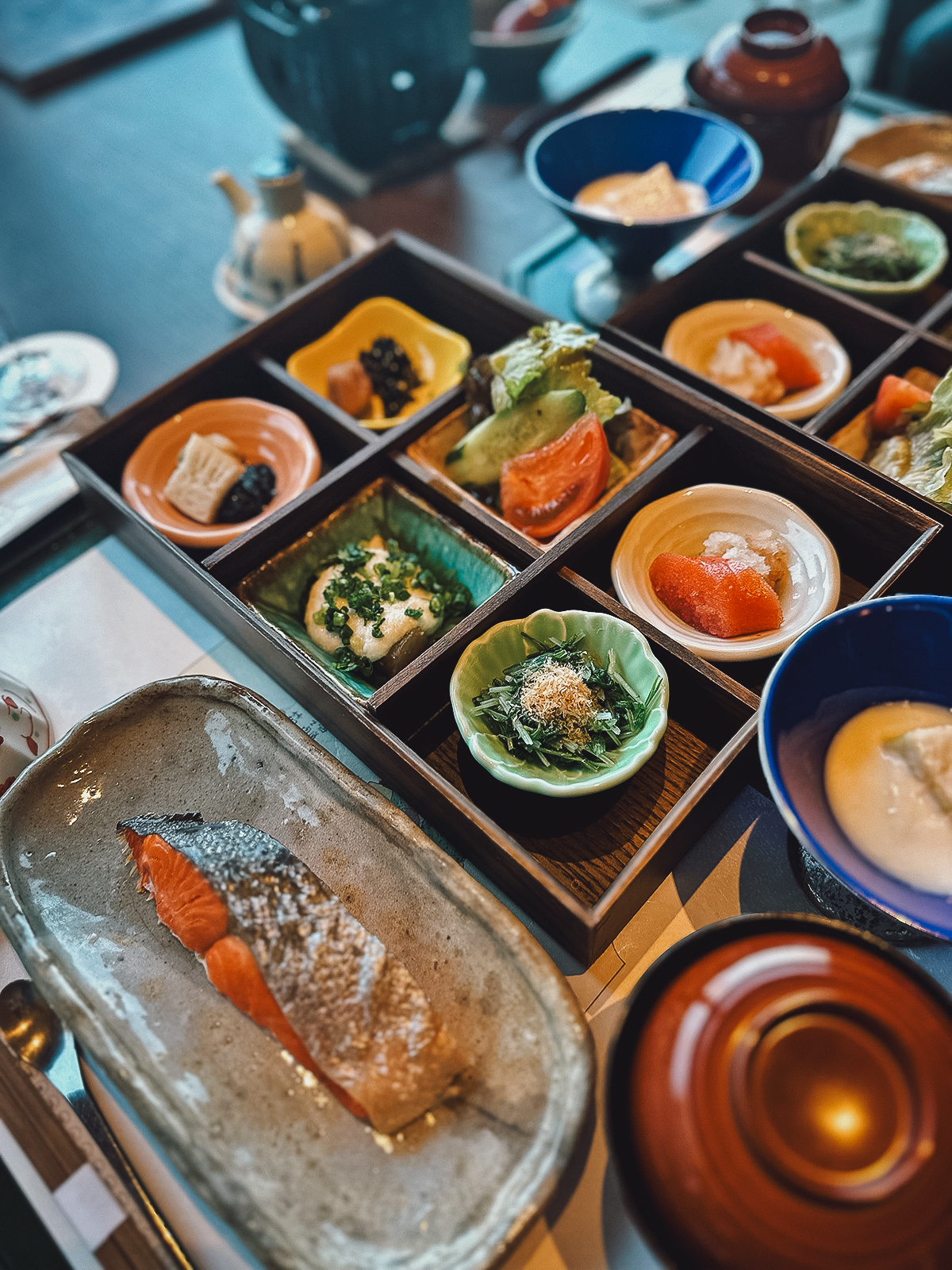
Aside from the hot spring baths, one of the things I look forward to the most when staying at a ryokan is the food. Some ryokans offer stays without meal plans but I highly recommend booking a room with dinner and breakfast already included. In my opinion, it’s worth the splurge.
Pictured below was our fantastic Japanese breakfast. We enjoyed an equally delicious multi-course kaiseki dinner the night before.
Visit a Museum
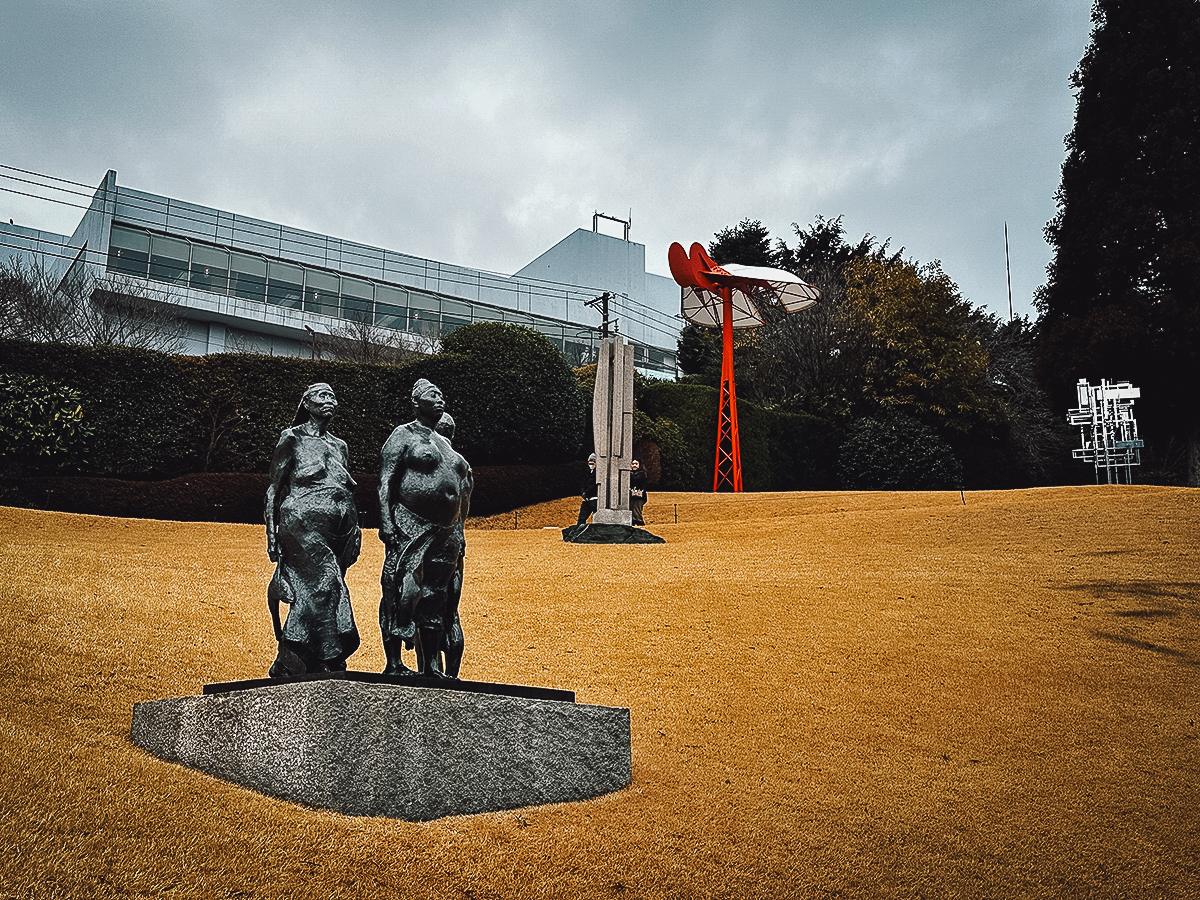
Hakone is home to a few interesting museums, none more popular perhaps than the spectacular Hakone Open-Air Museum. It’s a sprawling museum compound with a lovely sculpture garden and various indoor and outdoor exhibits showcasing works by famous artists like Pablo Picasso, Henry Moore, and Joan Miro.
If you’re traveling with kids, the museum offers plenty of attractions to keep them entertained, from interactive art installations and a stained-glass tower to a giant net playground and a sunken maze. This place is a lot of fun and can easily take up half your day.
The Hakone Open-Air Museum is the most popular, but there are a few other museums you can visit in the area. The aforementioned Narukawa Museum has a few art exhibits, but it’s more interesting for its panoramic view of the lake and Mount Fuji. Other notable museums include the Pola Museum, the Okada Museum, the Hakone Museum of Art, and the Venetian Glass Museum.
You can get a discount on admission to the Open-Air Museum and other select attractions with the Hakone Free Pass.
Make a Wish at a TEMPLE OR Shrine
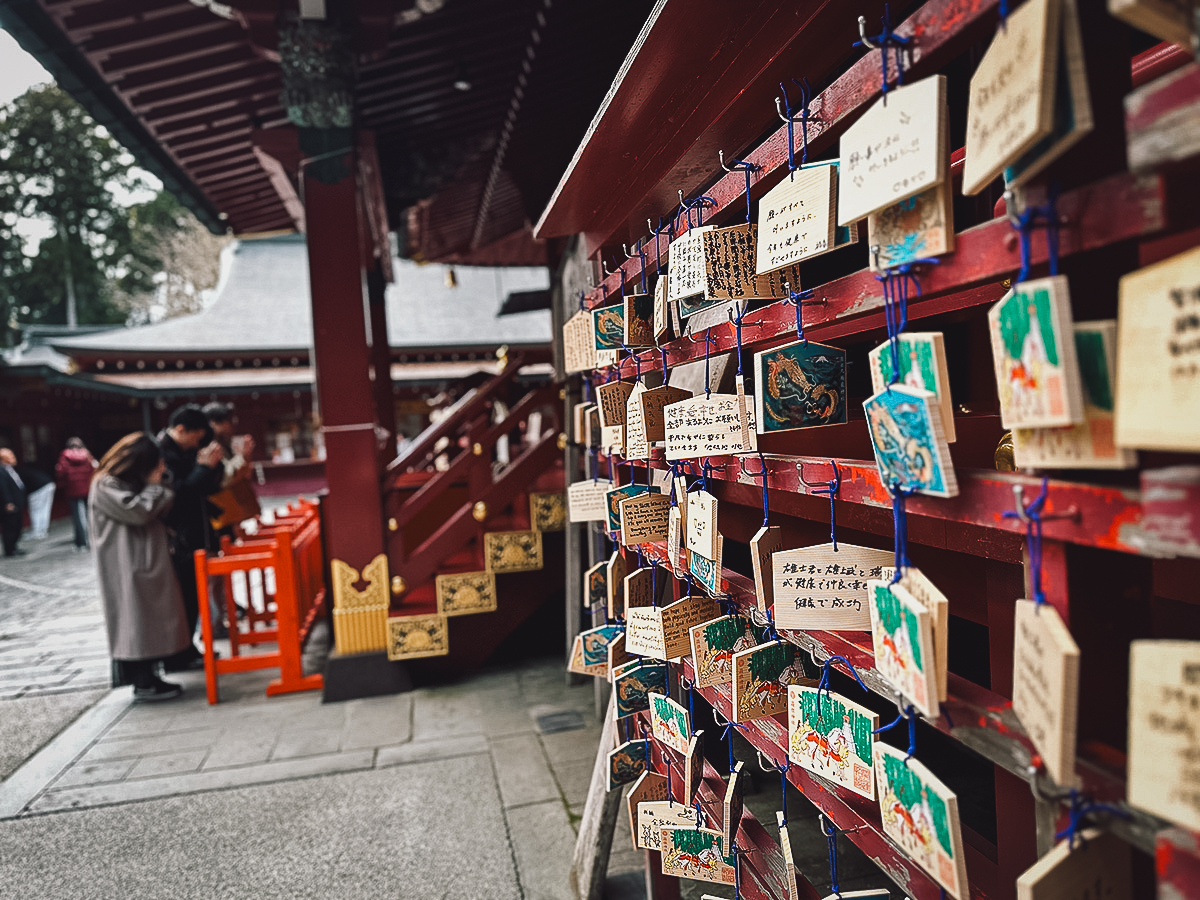
Hakone has its fair share of temples and shrines. None is more popular than Hakone Shrine, a Shinto shrine nestled in the woods of Moto-Hakone. That striking vermilion torii gate on Lake Ashinoko has probably been photographed millions of times, but it’s just one part of the shrine complex.
Personally, I didn’t find anything to be particularly remarkable about Hakone Shrine itself, at least nothing that makes it seem any different from other Shinto shrines in Japan, but it does look quite beautiful surrounded by a dense forest of cedar trees.
This is what the torii gate looks like from the other side. As you can see, there’s a long line of people waiting to get their patent torii gate selfie.
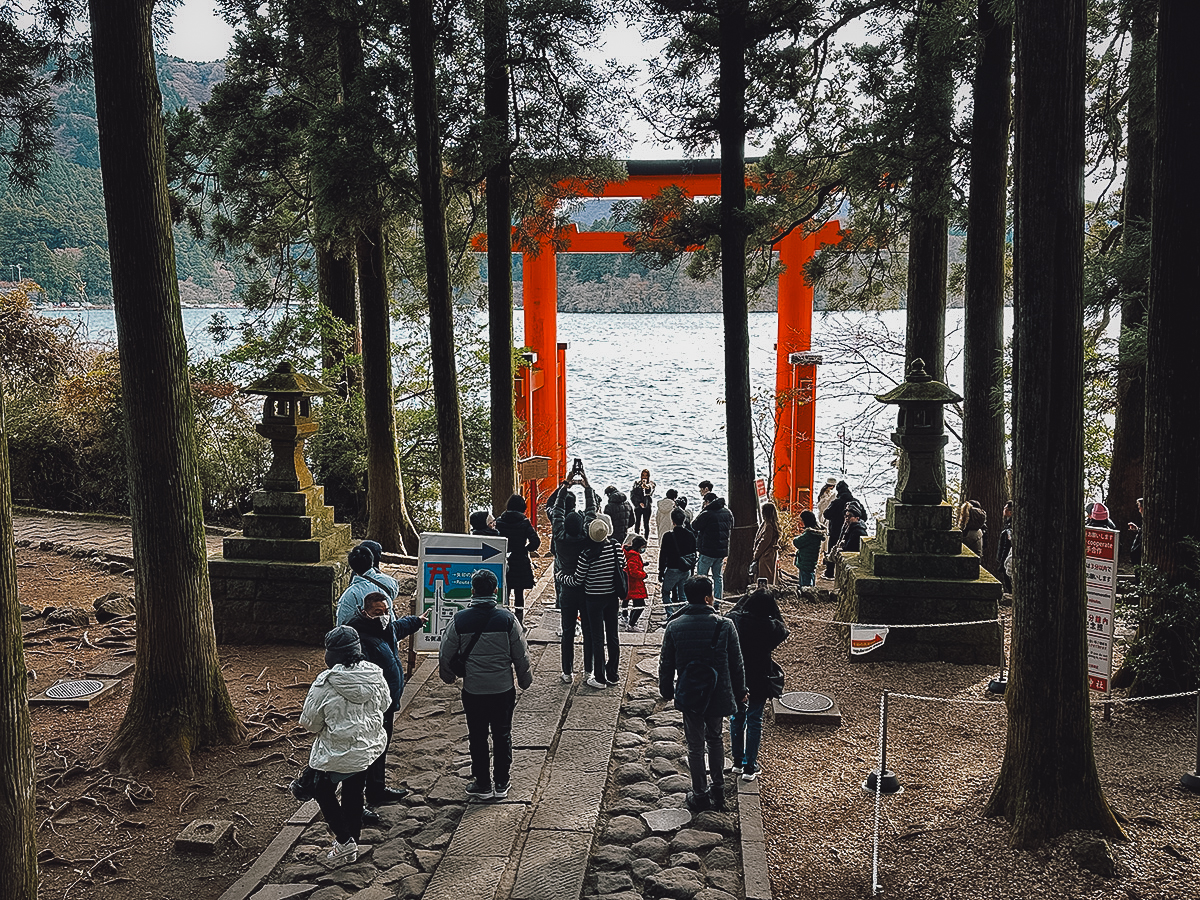
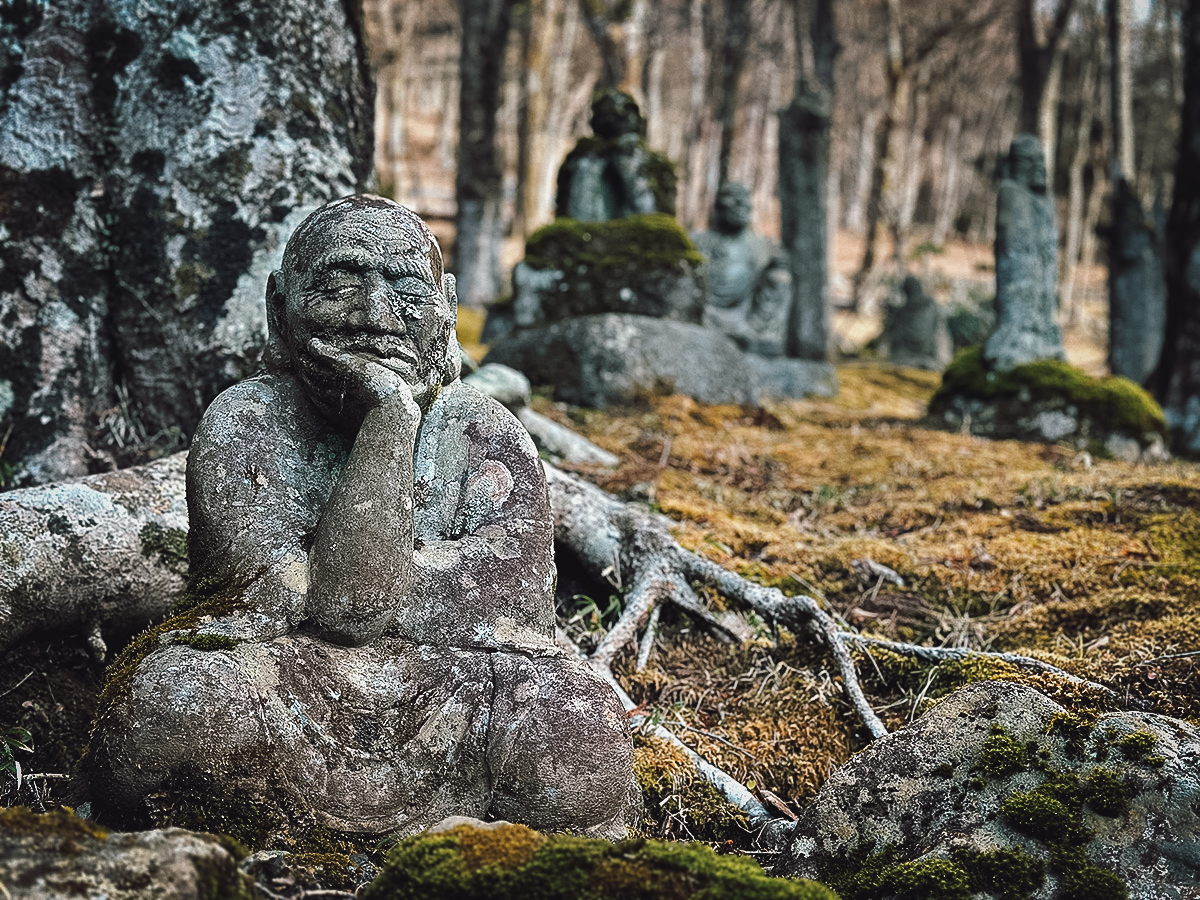
Aside from Hakone Shrine, other interesting temples and shrines you can visit in Hakone include Ryukozan Choanji (pictured below) and Fukazawa Zeniarai Benten.
Ryukozan Choanji (aka Sotoshuryukozanchoan Temple) is known for its lush forested garden with over 200 rakan statues. Rakan statues are highly expressive stone sculptures depicting the enlightened disciples of the historical Buddha.
Accessible from the platform of Tonosawa Station along the Hakone Tozan Line – which, in itself, is unique and quite interesting – Fukazawa Zeniarai Benten is a Benzaiten shrine where visitors can “wash” their money in sacred spring water. Doing so is believed to bring good fortune and multiply wealth.
Eat Black Eggs in Boiling Valley
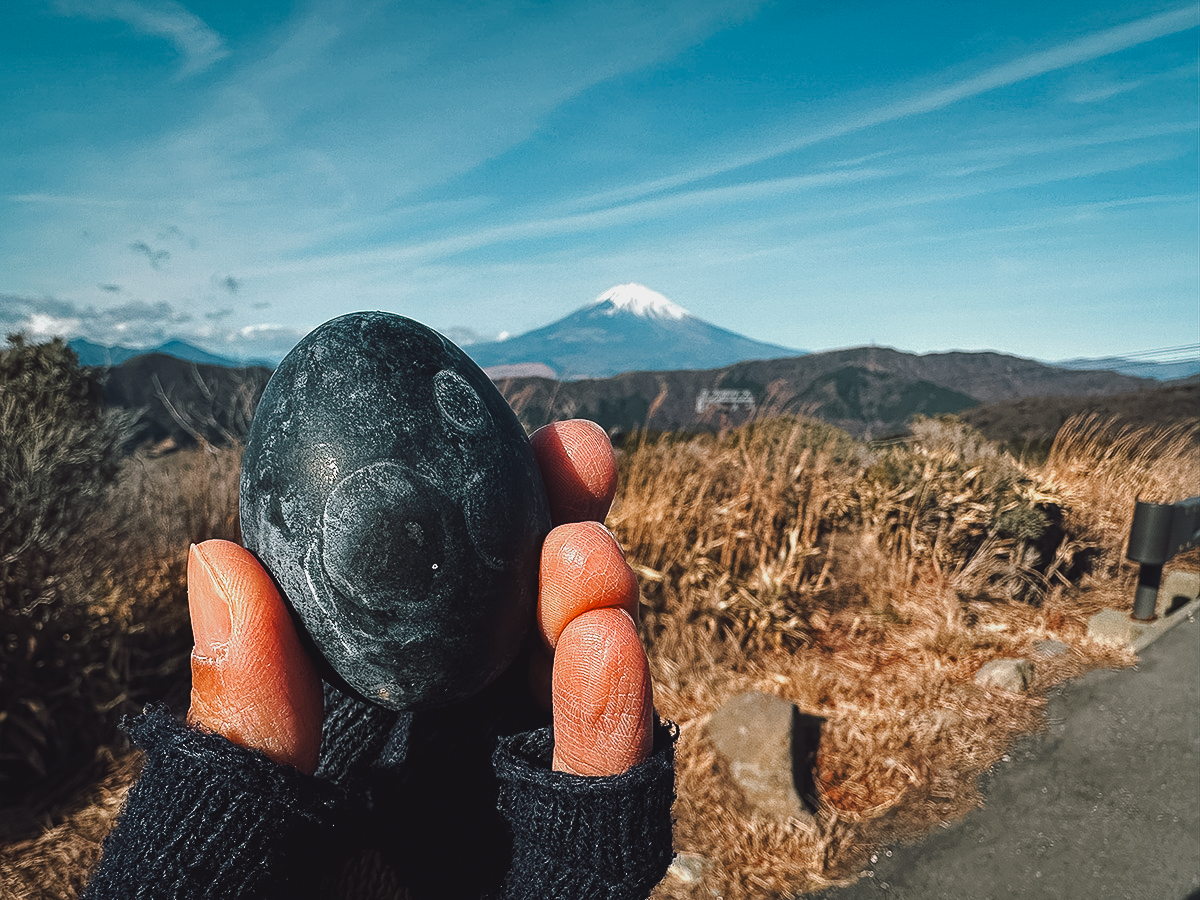
Though it hasn’t erupted in 3,000 years, Mount Hakone is classified as an active volcano. Its ongoing volcanic activity is evident in the sulfurous fumes rising from Owakudani, a volcanic valley often referred to as “Boiling Valley”.
Some people might bypass Owakudani on the ropeway from Sounzan to Togendai, but I suggest making a quick stop here. Not only can you snack on black eggs that are said to prolong your life by seven years, but you’ll have a new vantage point for another selfie with Mount Fuji in the background.
Stroll Through Silver Grass Fields
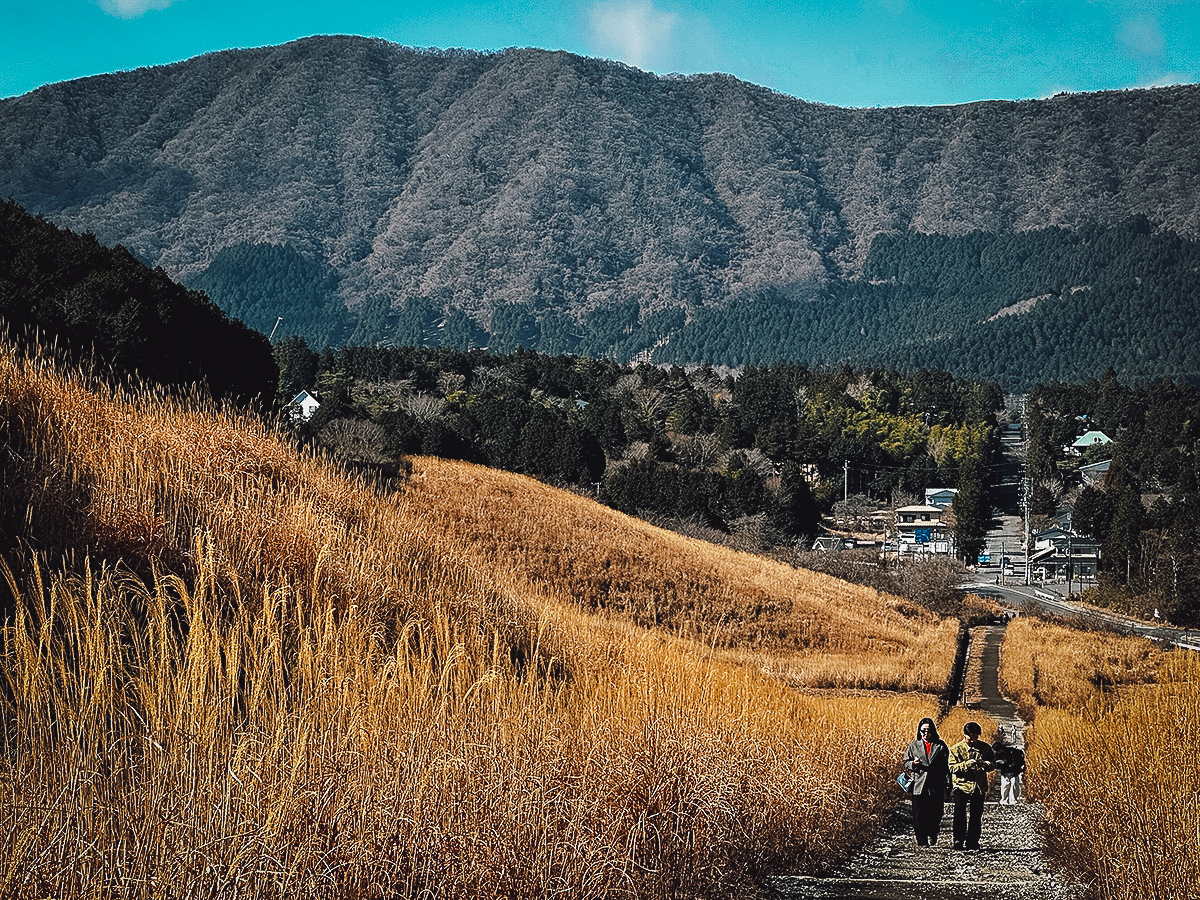
I enjoy walking, so this was one of my favorite experiences in Hakone. The area is peaceful, and the views are spectacular.
Located on the western slopes of Mount Hakone in the Sengokuhara district, this vast field of silver grass blankets the rolling hillside for hundreds of meters. The grass grows to around 1–2 meters (5–6.5 ft) tall, creating a sea of swaying stalks that stretches as far as the eye can see. Visitors can follow a broad trail that gradually climbs to a scenic viewpoint before turning around and walking back down.
I visited in winter, when the fields had taken on a warm golden-brown hue, but the landscape changes dramatically with the seasons. The grasses transform from a vibrant green in the summer to a shimmering, silvery gold in autumn.
Walk the Old Tokaido Road to Amazake Chaya
This was another of my favorite experiences in Hakone, though I was admittedly more nervous for this one.
From Moto-Hakone, you can walk along a trail that was part of the historic Tokaido Road, the main route that connected Tokyo and Kyoto during Japan’s Edo period. The trail winds through a cedar forest before taking you to Amazake Chaya, a teahouse that’s been serving travelers for over 400 years.
The trail is uneven in places, with centuries-old cobblestones, exposed roots, and occasional steep sections. I went on a drizzly day, and the trail got quite slippery in parts, so sturdy footwear and careful footing are advised.
What made me nervous was the bear warning sign I spotted along the route. Compared to other parts of the country, bear encounters aren’t as common in Hakone, but visitors should stay on the marked trail and exercise appropriate caution. As with any wilderness hike, you’ll need to assess conditions for yourself and proceed at your own risk, especially since bear sightings have been on the rise in Japan.
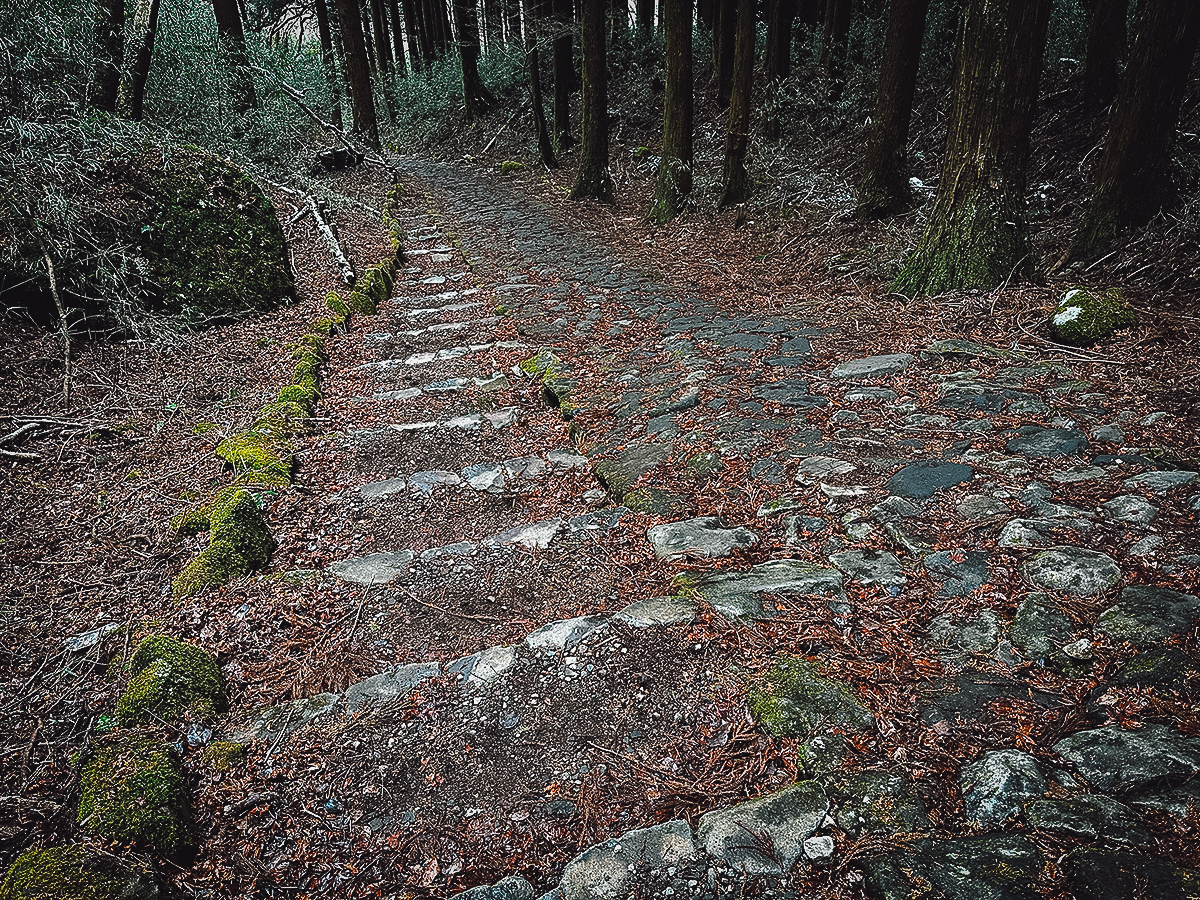
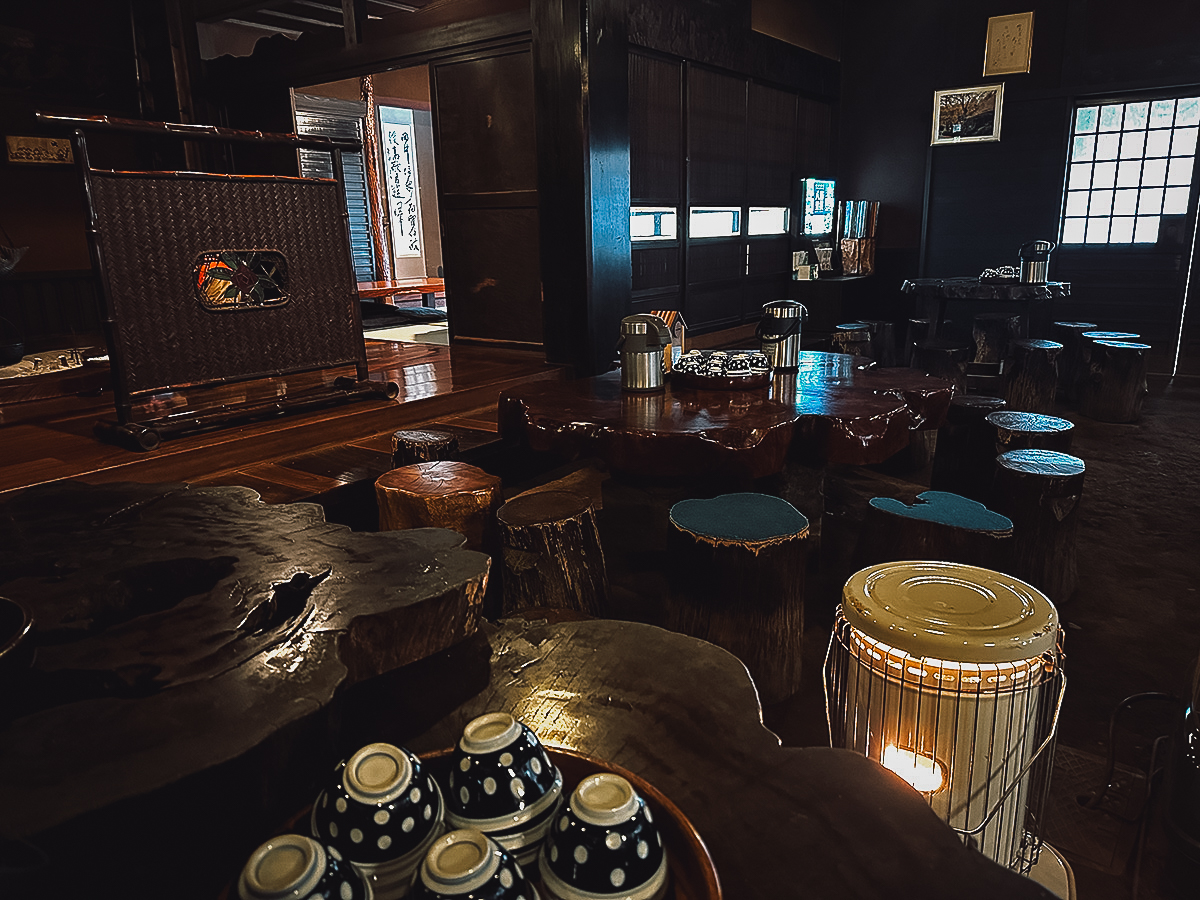
The moment you step into Amazake Chaya, you’ll feel as though you’ve been transported straight back to the Edo period. This historic teahouse sits about 2 km (1.2 miles) from Moto-Hakone and can be reached on foot in roughly 30–45 minutes via the Old Tokaido Trail.
As its name suggests, Amazake Chaya specializes in amazake, a traditional Japanese drink made by fermenting rice with koji – the same culture used in the production of sake. Despite being fermented, amazake contains little to no alcohol.
At Amazake Chaya, you can enjoy it with miso oden or three varieties of chikara-mochi, soft rice cakes topped with sweet seasonings.
Go Bargain Hunting at Gotemba Premium Outlets
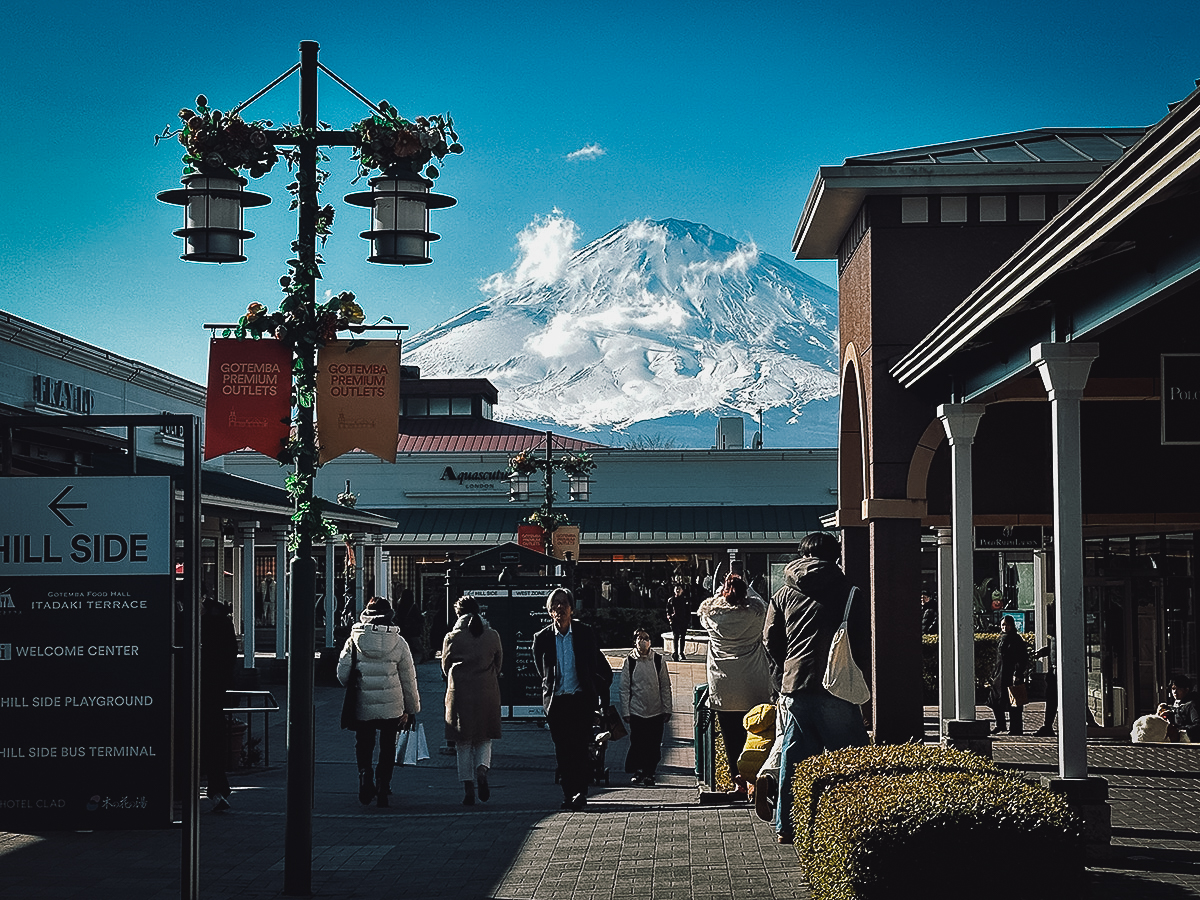
This isn’t technically in Hakone, but the Hakone Free Pass covers travel to Gotemba and its premium outlets. One of the largest outlet centers in Japan, Gotemba Premium Outlets is home to over 200 designer and brand-name stores, all while offering some of the most stunning views of Mount Fuji.
Gotemba Premium Outlets is huge, so serious shoppers may need more than a day to go through all its shops. There are many bargains to be had, though I did find many of the stores to be carrying mostly older styles and inventory.
Make a Stop at Odawara Castle
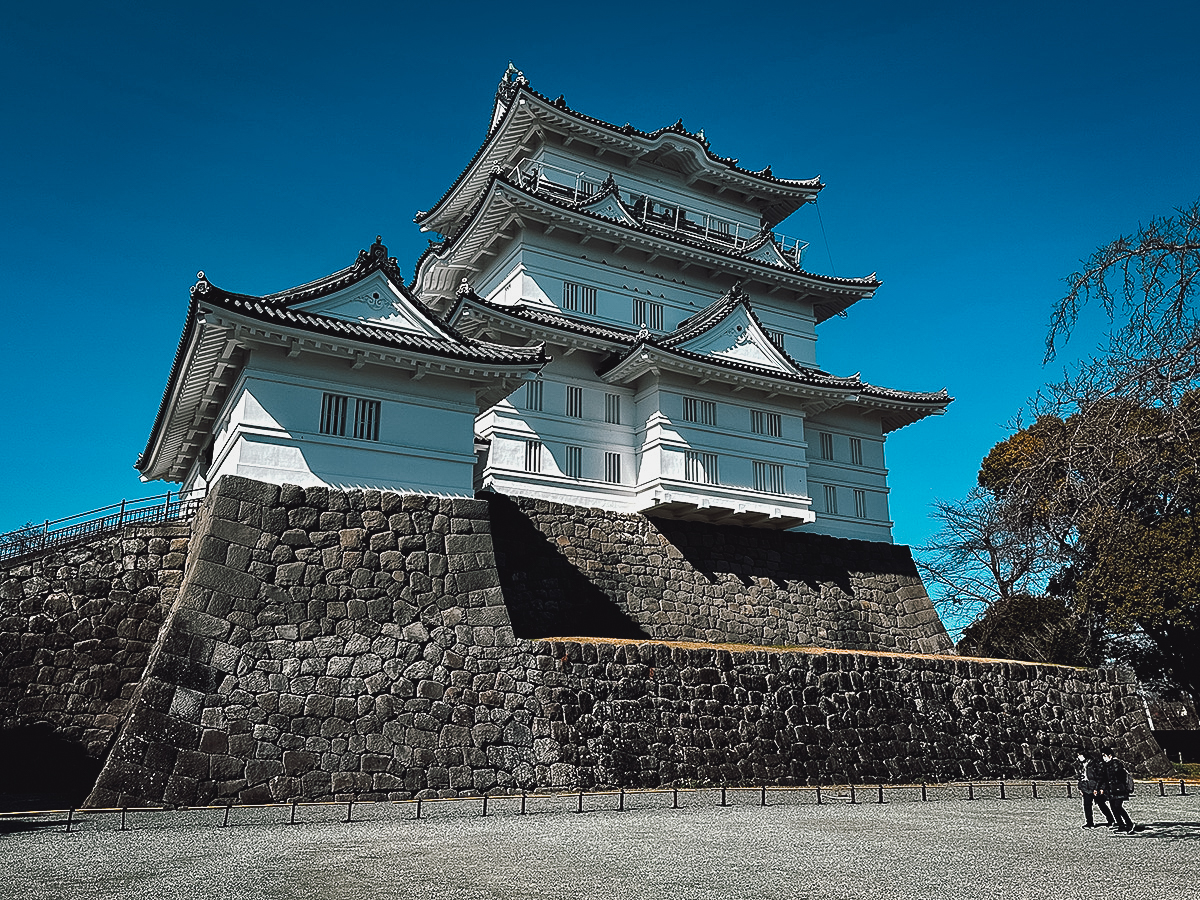
Like Gotemba Premium Outlets, Odawara Castle isn’t in Hakone. It’s in Odawara, the main town just before Hakone when you’re traveling from Tokyo.
Surrounded by pine trees and seasonal cherry blossoms, Odawara Castle is a beautifully restored castle that once served as the stronghold of the Hojo clan during Japan’s Sengoku period. It makes for an ideal stop, either en route to Hakone or on your way back to Tokyo.
VISIT HAKONE FAQs
Is Hakone worth visiting?
Yes, absolutely. The view of Mount Fuji rising over Lake Ashi is often shared on social media, but there are plenty of other things to look forward to in Hakone. The hot springs are great, and the Open Air Museum is exceptional. The Hakone Loop alone is fun and unique, and in my opinion, worth the trip in itself.
Having said that, I’m not entirely sure I’d go back to Hakone again. I enjoyed my stay, but it did feel like one of those “been there, done that” kind of places.
Should I stay overnight in Hakone?
If you’re only interested in doing the Hakone Loop and not much else, then a day trip from Tokyo is fine. But if you’d like to do more – like visit a few museums, go hiking, or soak in an onsen – then it’s best to stay for at least one night.
I think arriving early on the first day and staying for two nights is ideal. The 3-day version of the Hakone Free Pass would be perfect for this.
Is the Hakone Free Pass worth it?
Yes, but it depends on how you use it. If you use it to do the full Hakone Loop, then the 2-day pass already pays for itself, even on a day trip from Tokyo.
Using Google Maps to estimate fares, doing the Hakone Loop with roundtrip transportation from Shinjuku Station will cost you around JPY 9,840 without the pass. The 2-day Hakone Free Pass with roundtrip transportation costs JPY 7,100 (June 2026). That’s a savings of JPY 2,740 even if you use it for just one day!
Can I use my JR Pass or Tokyo Wide Pass to visit Hakone?
Yes you can, but they’re only valid until Odawara Station (just outside Hakone). You’ll need a Hakone Free Pass or pay for single-journey tickets to use the transportation network within Hakone.
Is Hakone expensive?
Yes, it can be, but like most places in Japan, it doesn’t have to be.
As described, you can save on transportation and attraction fees with the Hakone Free Pass. I stayed at a mid-range ryokan, but there are cheaper options, including ryokans for less than half the price. If you’d rather not spend too much on food, then you can buy cheaper meals at konbinis.
There are ways to spend less at many destinations in Japan, and Hakone is no exception.
THE FINAL SAY
Hakone is one of the most popular side trips people make from Tokyo, and with good reason. It’s a beautiful onsen town that offers much more than just an iconic view of Mount Fuji.
I don’t think many people will need an extra nudge to visit Hakone, but I do hope this travel guide sheds more light on what you can expect there.
Disclosure
This Hakone travel guide contains affiliate links, meaning we’ll earn a small commission if you make a booking at no additional cost to you. As always, we only recommend products and services that we’ve used ourselves and can personally vouch for. We appreciate your support as it helps us make more of these free travel guides. Arigato gozaimasu!
