
SUMMARY HIGHLIGHTS
- Winter is the best time to photograph Mt Fuji.
- They aren’t as easy to get to, but it’s worth going beyond Lake Kawaguchi and photographing Mt Fuji from the other four lakes.
I had a lot of ground to cover, so I left my Airbnb shortly after sunrise. I walked along the coast to catch a train at Kamakurakoko-Mae Station, one of the most photographed spots on the Enoden Line. If I got lucky, maybe I could catch a video of a train rolling past the ocean to post on our Instagram Stories.
It wasn’t as cold in Kamakura that morning as it had been in Tokyo, but the chill of late winter still made its presence felt. The air was crisp, even biting, but the quiet streets and empty shoreline made the early start worthwhile. Admiring the ocean, I glanced over my right shoulder towards Enoshima, and that’s when I saw her.
Bathed in the golden light of sunrise, in all her snow-capped glory, was Mt Fuji. I stopped abruptly in my tracks and reached for my phone.
The funny thing is, it wasn’t my first time seeing Japan’s most iconic landmark. I’d already photographed her dozens of times from different corners of Yamanashi and Shizuoka. But on that day, and on many other days, it was like seeing her for the very first time.
Such is the power of Mt Fuji.
VISIT KAWAGUCHIKO QUICK LINKS
To help you plan your trip to Lake Kawaguchi, I’ve put together links to recommended hotels, tours, and other travel-related services here.
HOTELS
Top-rated hotels near Kawaguchiko Station, one of the most convenient areas to stay for first-time visitors to Lake Kawaguchi.
- Luxury: THE TOKI fujikawaguchiko
- Midrange: SEVEN House
- Budget: Hostel SAMURISE Mt Fuji
EXPERIENCES
- Day Trip From Tokyo: Mt Fuji Top 6 Spots Day Tour
- Electric Mini Car Tour: Lake Kawaguchiko Electric Mini Car Guided Tour
- Libations Tour: Guided Tour of Mt Fuji Featuring Wine, Sake, and Craft Beer
- Trike Tour: Mt. Fuji 2-Hour Scenic Trike Tour from Lake Kawaguchi
- Cultural Experience: Ukiyo-e Indigo Dyeing Workshop at Mt. Fuji
OTHER SERVICES
- Travel Insurance (non-US residents get 5% off)
- Fuji-Hakone Pass
- Hakone Kamakura Pass
- Japan Rail Pass
- Japan eSIM
When is the Best Time to See Mt Fuji?
Mt Fuji is notoriously shy. She can be seen year-round, but clear views are far from guaranteed. The mountain creates its own weather1, and clouds can gather around the summit, obscuring what could have been a perfect view.
Generally speaking, winter is the best season for viewing Mt Fuji. From December through February, colder temperatures and lower humidity often result in crystal-clear skies, making it possible to see the mountain from remarkable distances. This is also when you’re most likely to see Fuji covered in snow.
Spring and autumn can also offer excellent visibility, particularly on clear mornings after a cold front has passed1. Spring brings the bonus of cherry blossoms, while autumn offers colorful foliage that can make for stunning photographs.
Summer is typically the most challenging season for viewing Mt Fuji1. Higher humidity, haze, and frequent cloud cover often obscure the mountain, especially in the middle of the day.
It’s important to understand that even though winter offers the best chance of seeing Mt Fuji, it still doesn’t guarantee clear views. Weather can be unpredictable, so a clear view one day can be followed by grey, cloud-filled skies the next. This happened to me on my most recent trip to Lake Kawaguchi.
Where to Photograph Mt Fuji
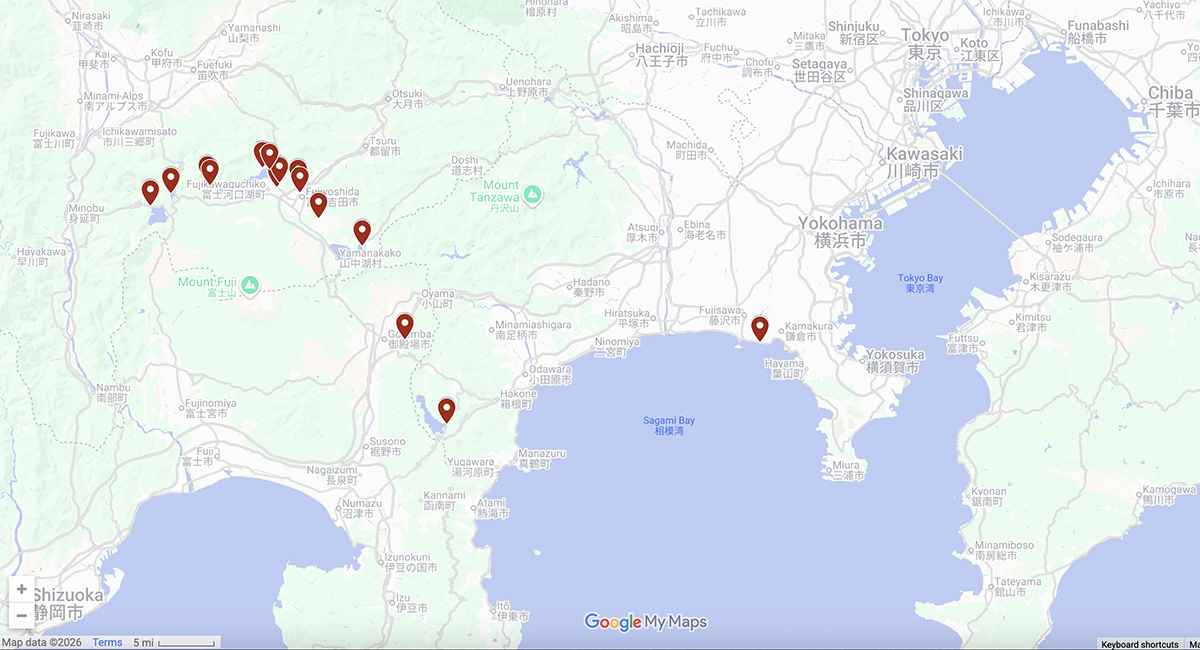
For your convenience, I’ve pinned all of the locations recommended here on a map. Just click on the link to jump directly to it.
LAKE KAWAGUCHI
There’s no better place to start this list than Kawaguchiko. For many travelers, it’s the first destination that comes to mind when they think of viewing Mt Fuji. Located at the northern foot of the mountain, it’s the most famous and accessible of the Five Fuji Lakes, offering many spectacular viewpoints for photographing Mt Fuji.
JAPAN TRAVEL DEALS
Planning a trip to Japan? Enjoy up to 50% off on selected experiences and activities with Klook and Get Your Guide. Click on the links for a list of discounts, promo codes, and limited-time offers.
Lawson
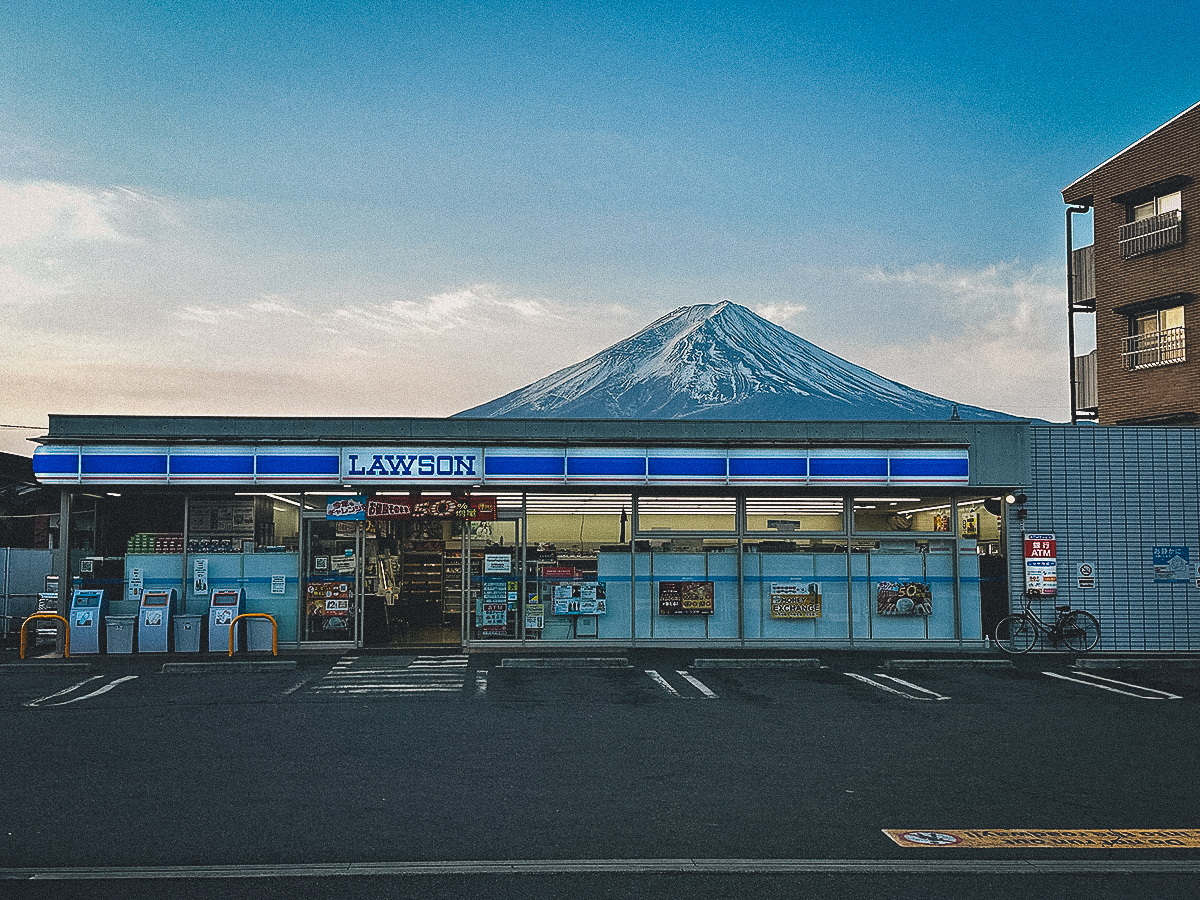
Thanks to social media, this Lawson convenience store branch has become one of the most famous backdrops for photos with Mt Fuji. It’s located just a few steps from Kawaguchiko Station, making it easily accessible to visitors, even day-trippers.
To the annoyance of locals, this Lawson branch is extremely popular and is often mobbed with tourists taking pictures throughout the day. To get a clean shot like this one, you’ll need to arrive as early as possible.
Another thing, these photos of Mt Fuji rising up from behind Lawson are taken from across a busy street with passing traffic. Having so many tourists here can be disruptive to locals, so please be mindful and exercise caution when crossing the street.
Kawaguchiko Station
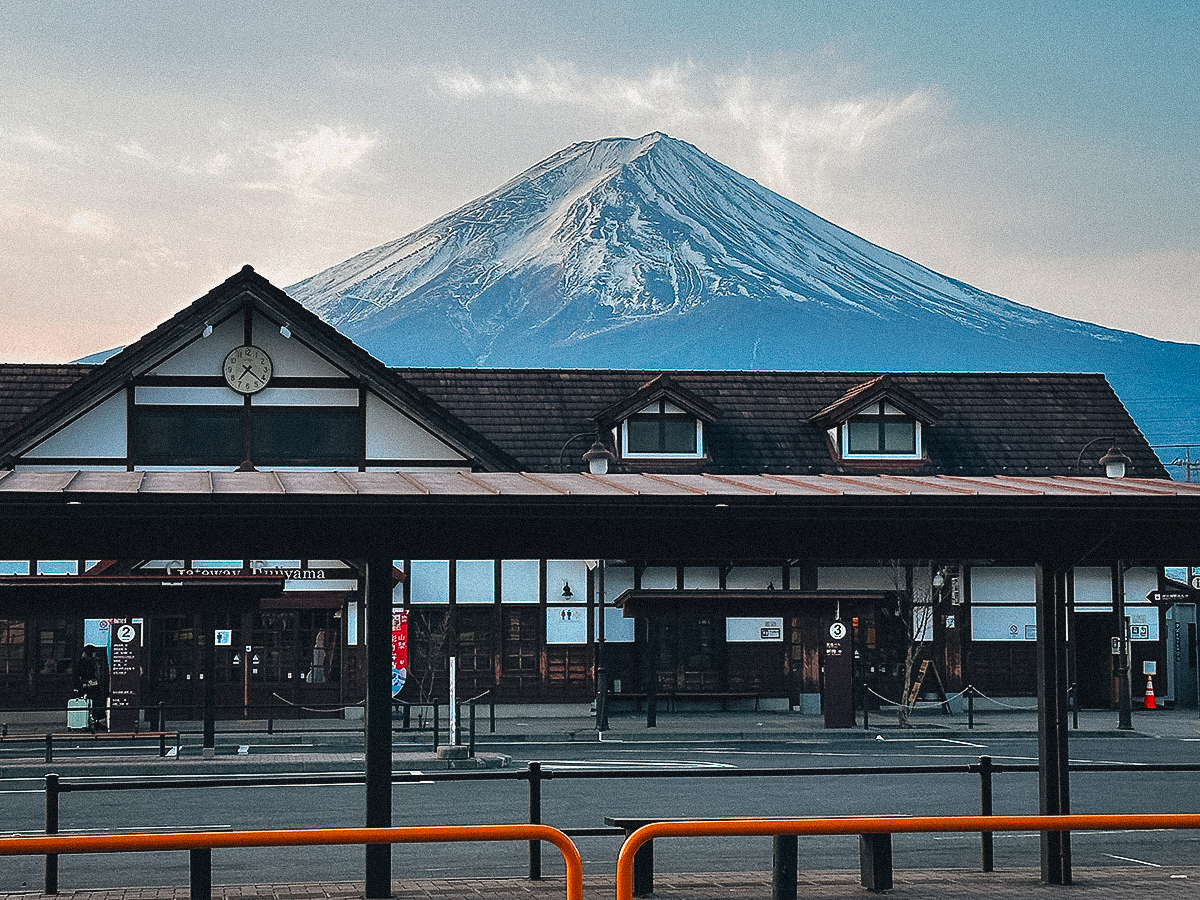
Kawaguchiko Station is less than a 5-minute walk from Lawson and offers a similar view of Mt Fuji. Being the main entry point to Lake Kawaguchi, it gets extremely busy and chaotic during operating hours. Your only chance of getting a shot like this one is early in the morning, before the first trains start to arrive.
Mt Fuji Panoramic Ropeway
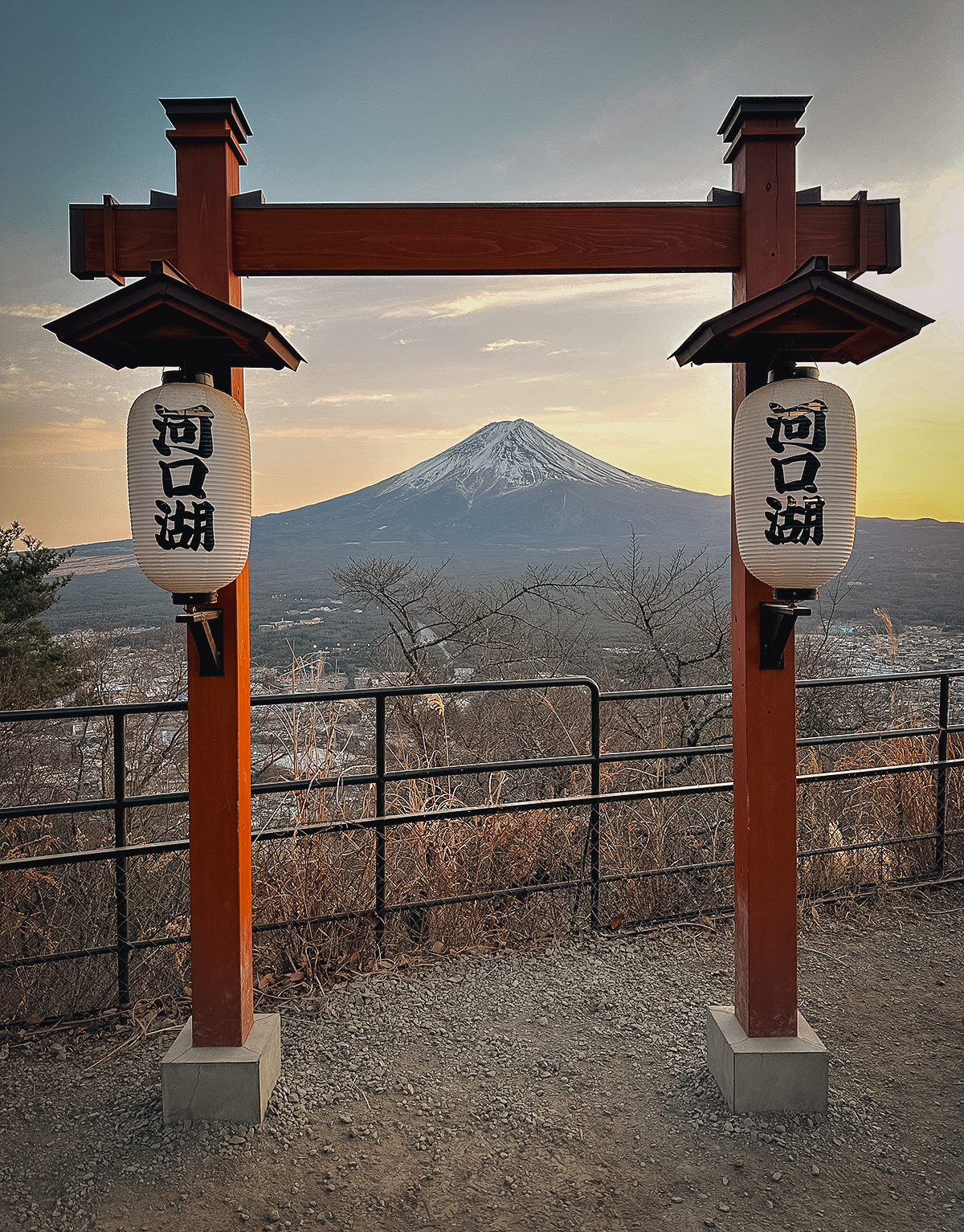
At the top of Mt Fuji Panoramic Ropeway is an observation area with this orange torii gate. Built specifically as a photo spot, it’s undeniably touristy, but it does make for a fun foreground element when taking selfies with Mt Fuji in the background.
Lake Kawaguchi and its surrounding towns look interesting from up here, but personally, I think Mt Fuji looks more dramatic when photographed from street level.
Oishi Park
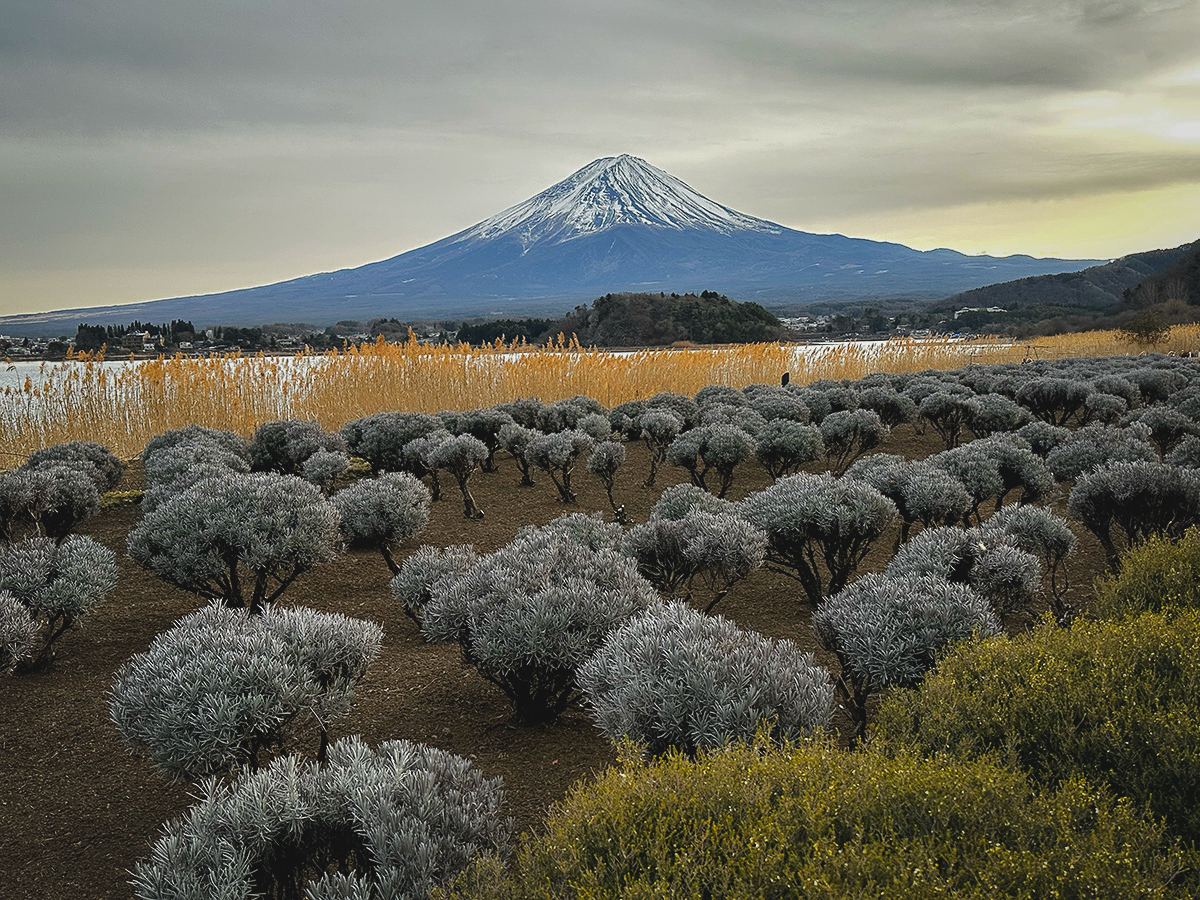
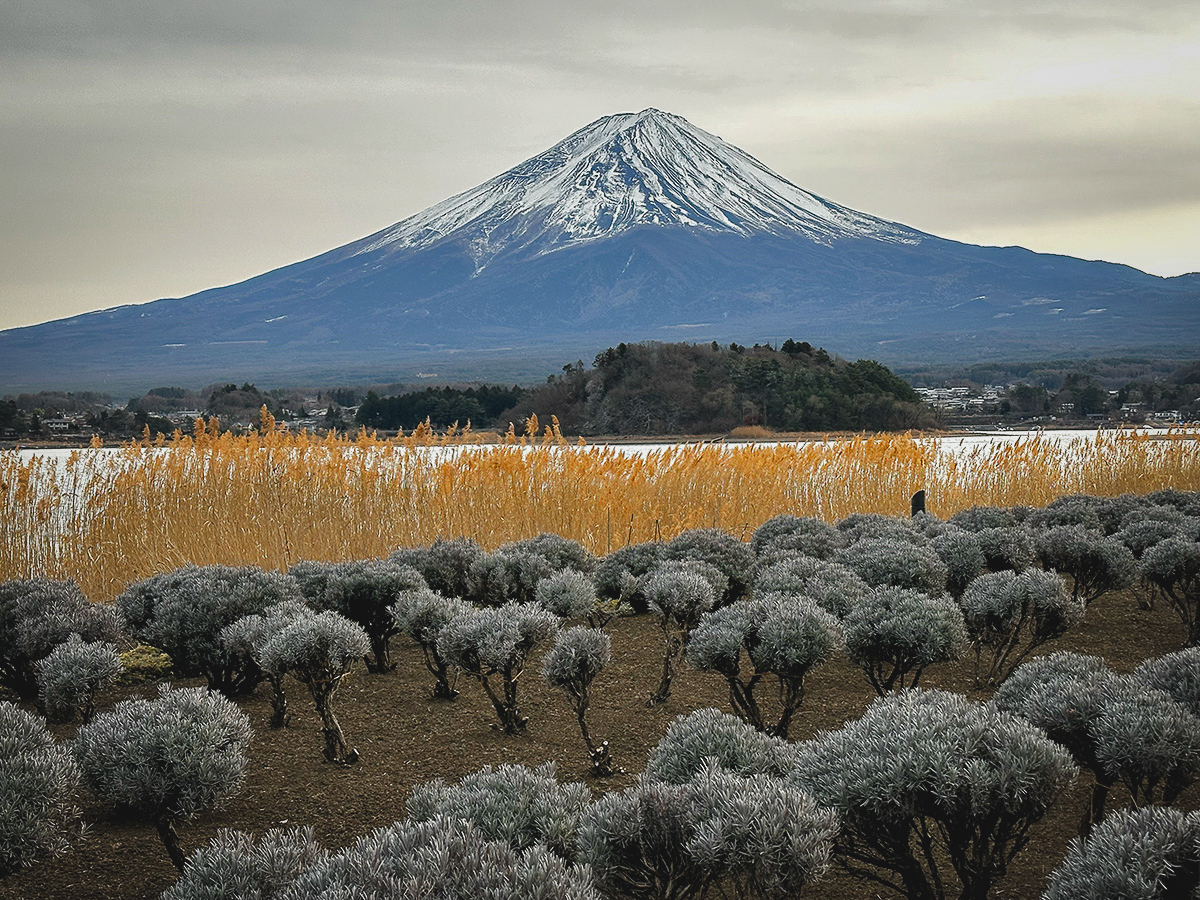
In my opinion, Oishi Park offers the most striking pictures of Mt Fuji from Kawaguchiko.
Located on the northern shore of Lake Kawaguchi, the park offers views that incorporate both the lake and Mt Fuji. Japanese silver grass and kochia shrubs add color, texture, and visual interest to the foreground, creating a more dynamic composition.
This picture was taken in late winter, when the grass had turned a golden brown and the kochia shrubs had faded to a less dramatic silvery green. Google “oishi park autumn” and you’ll find photos of the same landscape awash in fiery reds, oranges, and yellows.
The main drawback of Oishi Park? It’s also quite popular, so you’ll need to wait and time your shots to get clean pictures of Mt Fuji.
Nagasaki Park
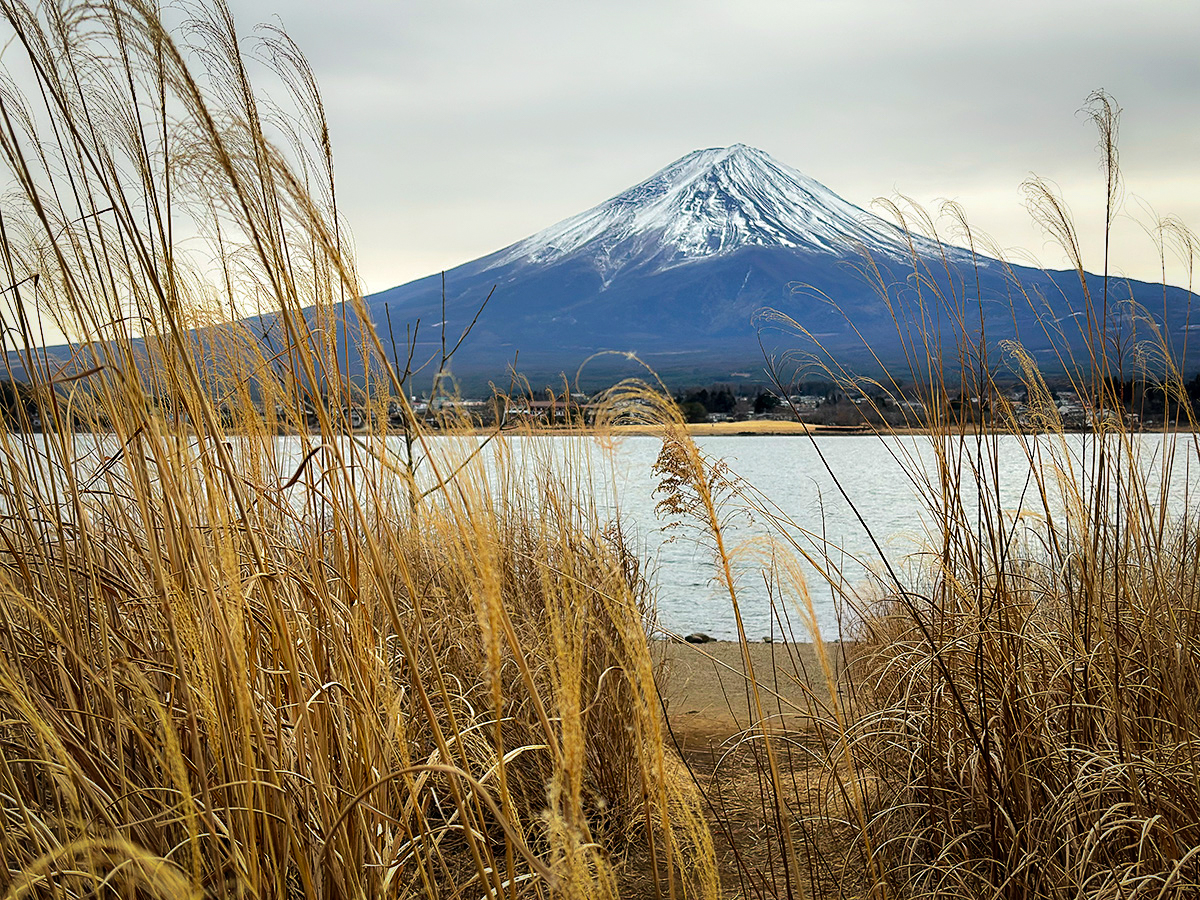
Due to its popularity, crowds are a given at Lake Kawaguchi, but there are a few spots that offer a quieter viewpoint for photographing Mt Fuji. Located about a 15-20 minute walk east of Oishi Park, Nagasaki Park offers a similar vantage point, but minus the crowds.
Aside from its quieter atmosphere, one of the things I enjoyed about Nagasaki Park was the ability to walk through the grass right up to the water’s edge. It presented unique perspectives and made for some pretty cool photos.
LAKE SAIKO
Located directly west of Kawaguchiko, Lake Saiko isn’t nearly as developed as Lake Kawaguchi, but it does offer a couple of prime viewing spots for Mt Fuji.
Saiko Iyashi-no-Sato Nemba
Saiko Iyashi-no-Sato Nemba is a reconstructed traditional Japanese village close to the northwestern tip of Lake Saiko. It consists of over twenty restored thatched-roof farmhouses – many housing artisanal shops selling locally made crafts – set against a backdrop of Mt Fuji.
Like Oshino Hakkai, Nemba offers a unique opportunity for people to take pictures of Mt Fuji against a rustic backdrop that feels quintessentially Japanese. The landscape was devoid of color in winter, but visit in another season, and you’ll find the village awash in much more vibrant seasonal colors.
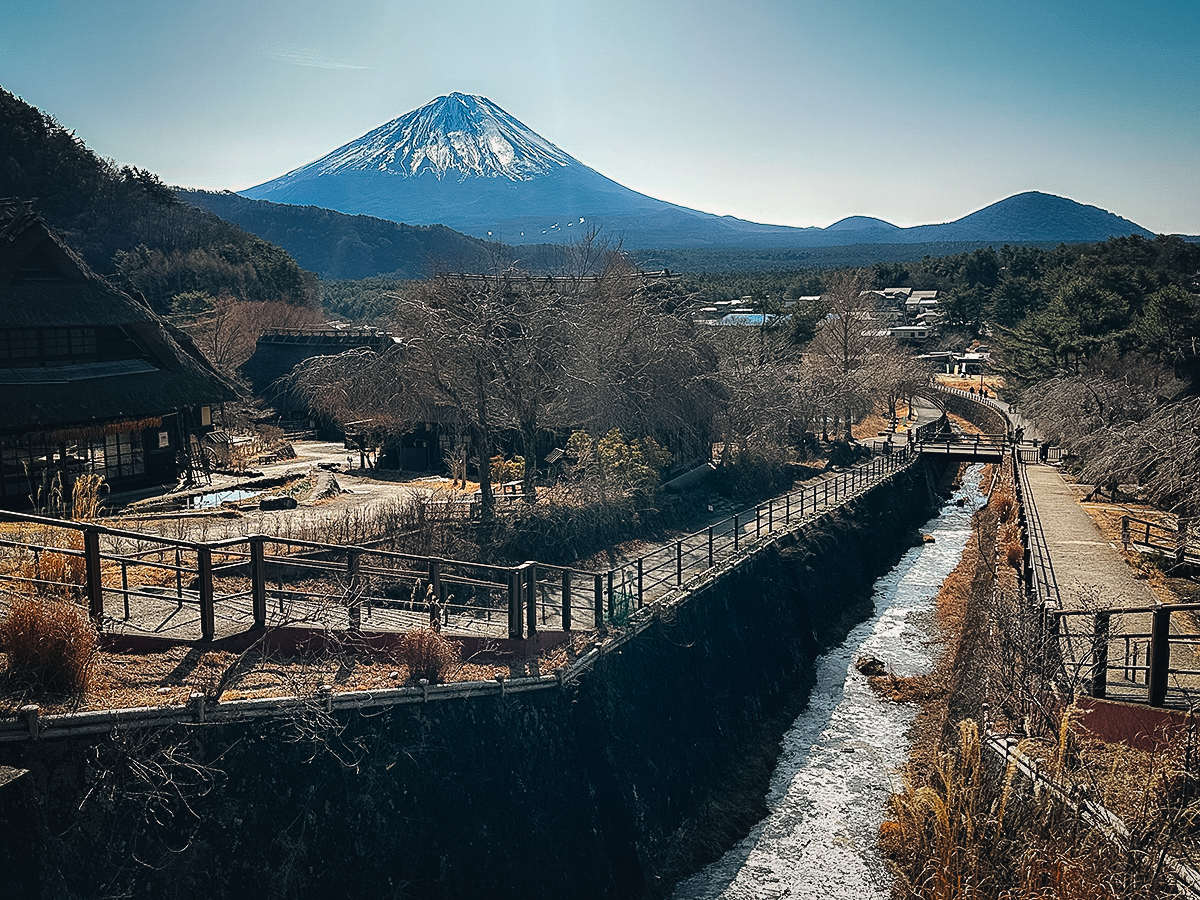
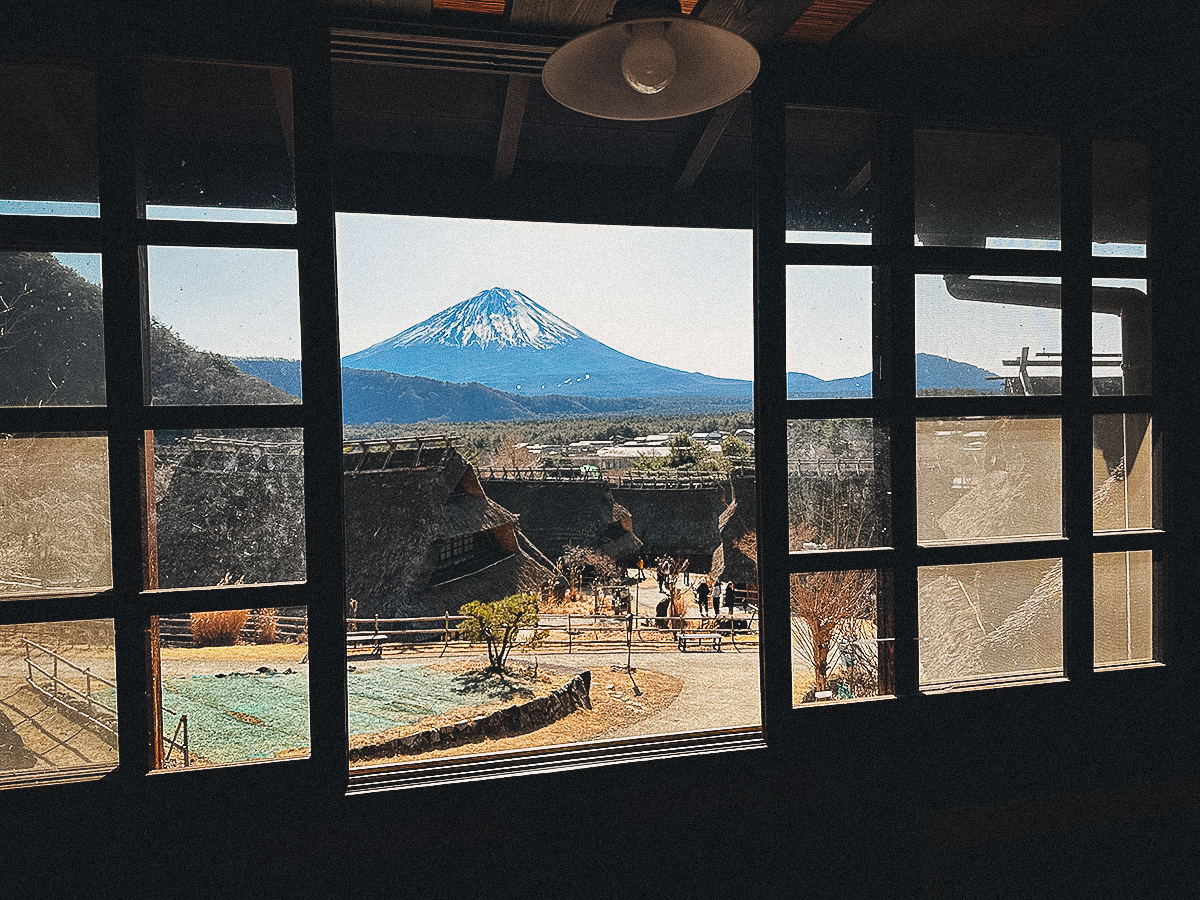
When you visit the village, be sure to look for Miharashi-ya. Marked as house number 11, it offers a terrific view of Mt Fuji through the upstairs window.
Saiko Nenba-hama
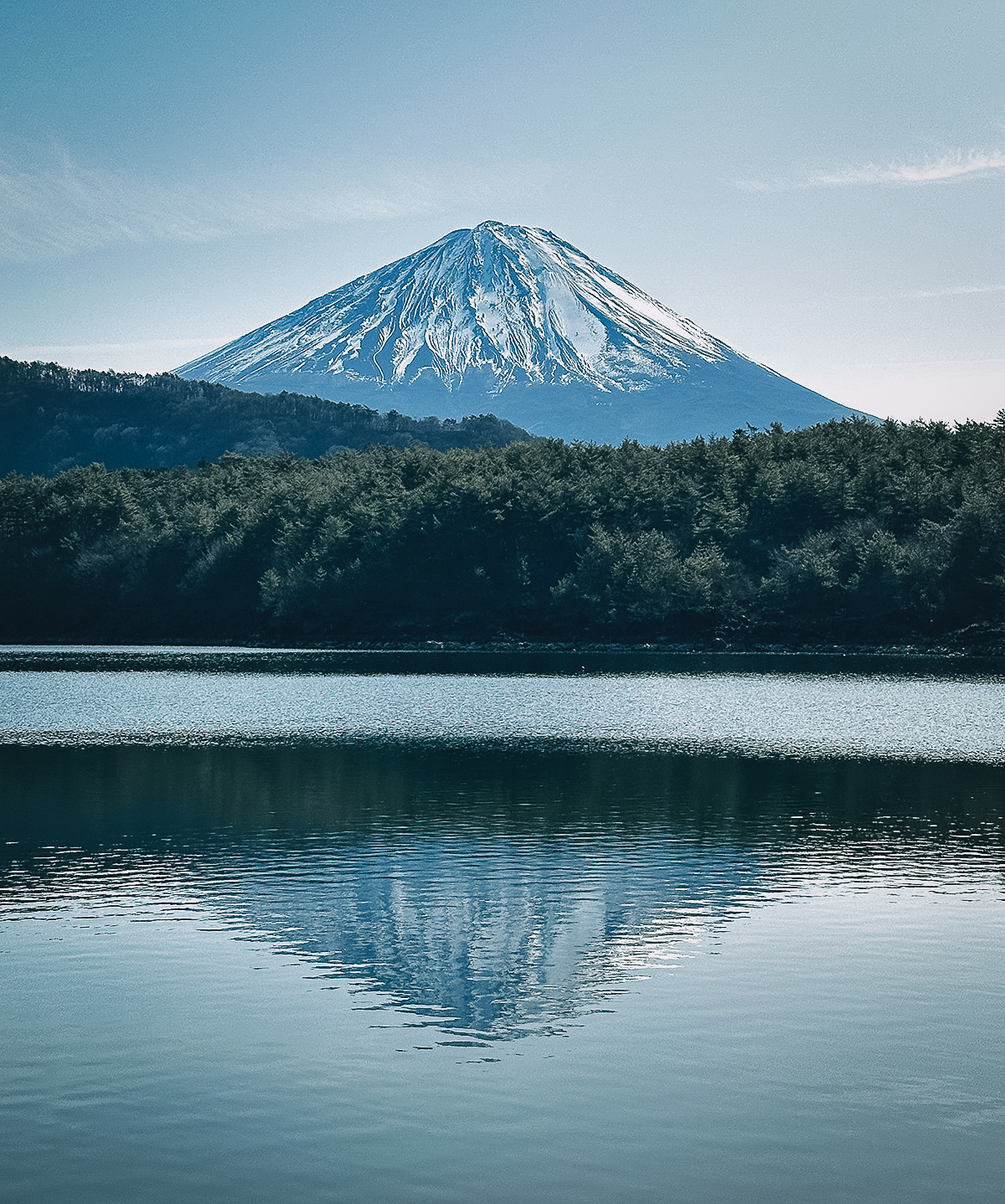
After visiting Saiko Iyashi-no-Sato Nemba, I was making my way to the bus stop when I spotted a location marked as a scenic viewpoint on Google Maps, right on the shore of Lake Saiko. I had time before the next bus, so I walked over and was rewarded with this view of Mt Fuji and its reflection on the lake’s surface.
From here, the mountain feels surprisingly close, and on calm days, its reflection can make for some pretty dramatic shots.
LAKE YAMANAKA
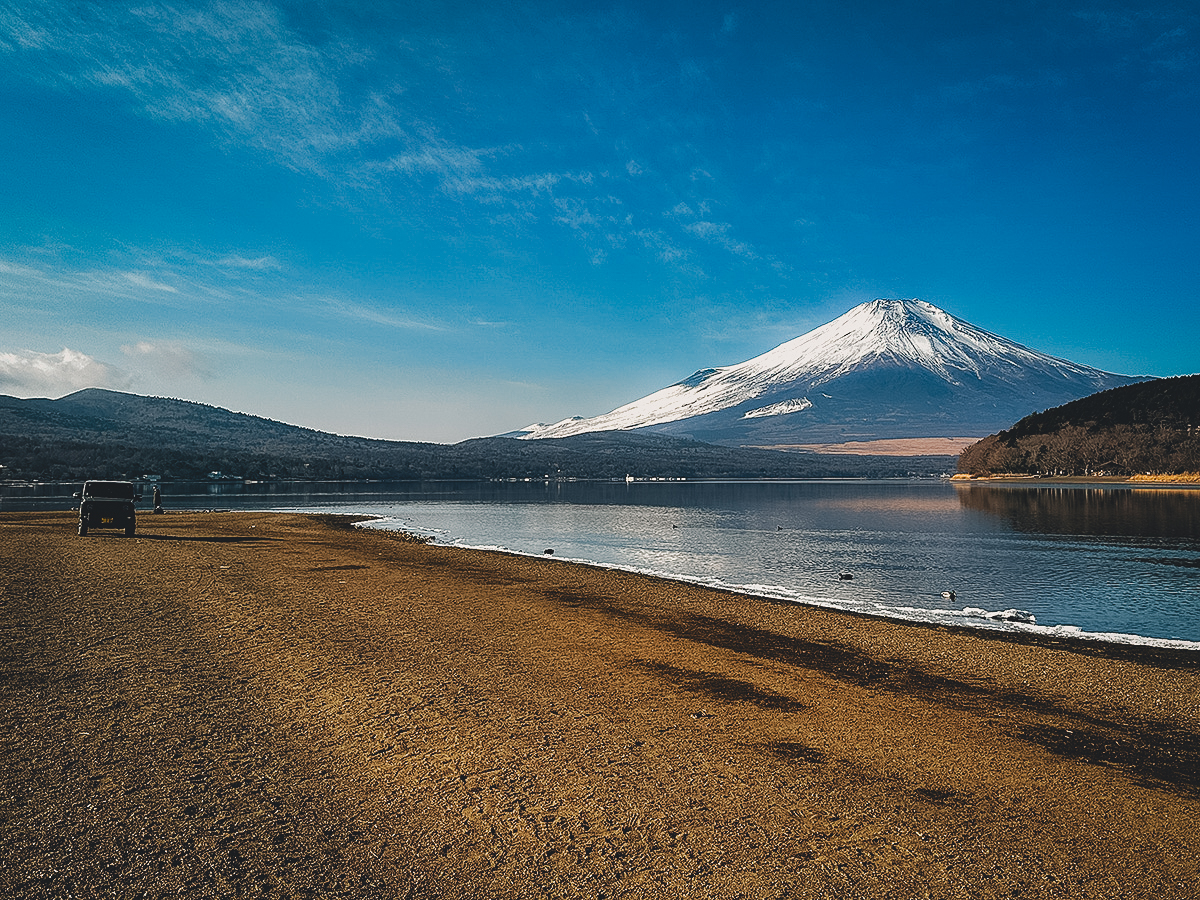
Lake Yamanaka is the largest of the Fuji Five Lakes and the second most developed after Lake Kawaguchi. I didn’t have enough time to fully explore the area, but I did manage to find a fantastic viewpoint on the eastern shore of the lake.
Hirano Beach
Because of its location, the eastern end of Lake Yamanaka is a great spot to photograph Mt Fuji with the lake in the foreground. From here, you can fit almost the entire length of the lake in your photos.
LAKE SHOJI
Lake Shoji is the smallest of the Fuji Five Lakes and one of the least developed. Tourist infrastructure is virtually nonexistent, save for a handful of hotels and campsites scattered along its northern shore.
Tatego-Hama Beach
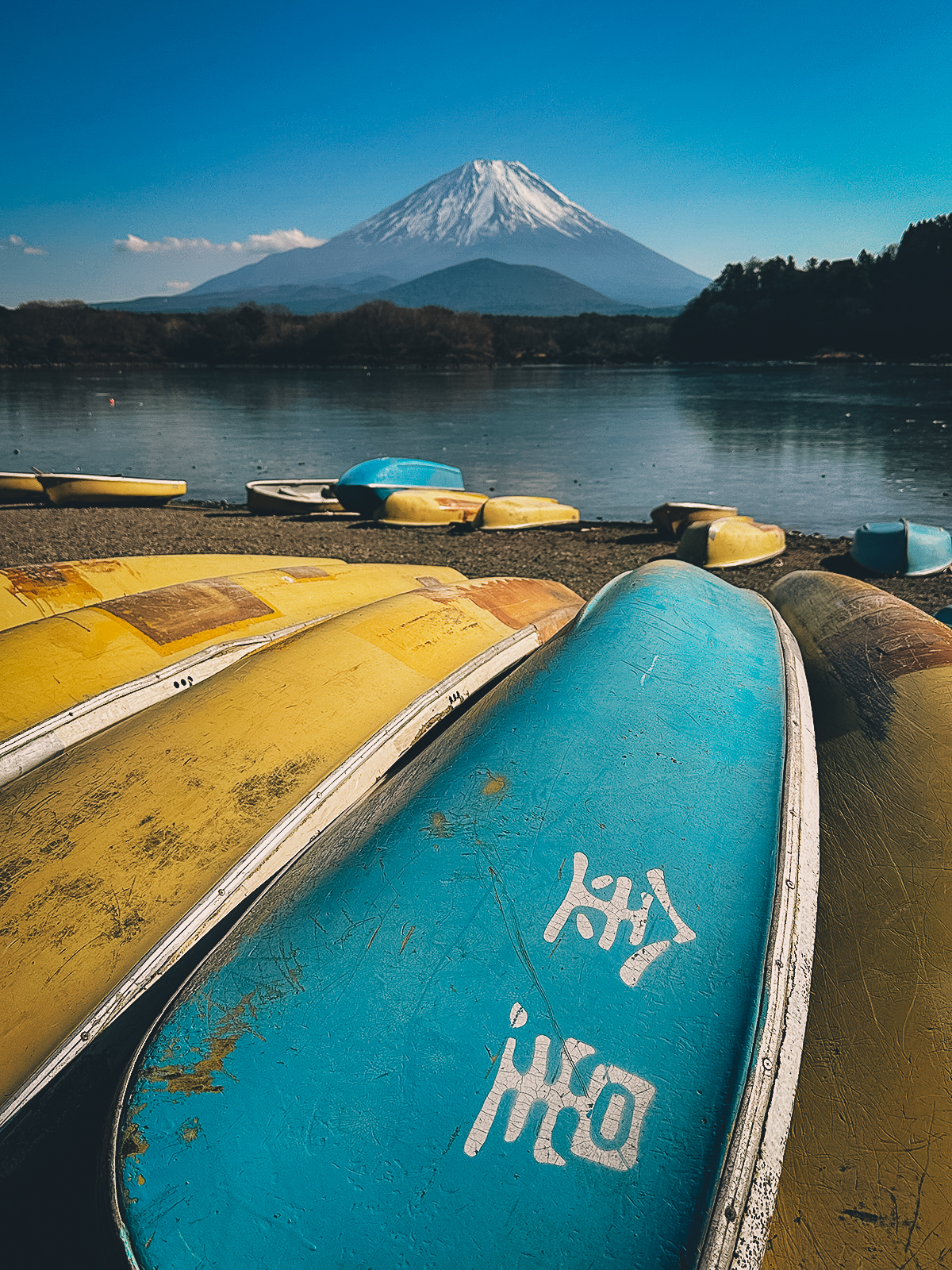
To get a shot of Mt Fuji with Lake Shoji in the foreground, you’ll need to go to the northern part of the lake. There weren’t any obvious viewpoints marked on Google Maps, so I just got off the bus where the scenery looked promising – at Fujimiso bus stop, near Tatego-Hama Beach.
I don’t know if these blue and yellow canoes are always on the beach, but they added a nice pop of color to my photos. The lake was still partially frozen at the time, which made the scenery look even more interesting.
LAKE MOTOSU
Lake Motosu is the westernmost of the Five Fuji Lakes and one of the least developed. Like Laje Shoji, it remains largely undeveloped, with only a handful of campsites dotting its shores.
Lake Motosu is best known for appearing on the reverse side of a former 1,000 yen bill. However, that viewpoint – Nakanokura Pass – is located on the northwestern point of the lake, which the local bus doesn’t take you to. To get there, you’ll need to walk, ride a bike, or drive on your own.
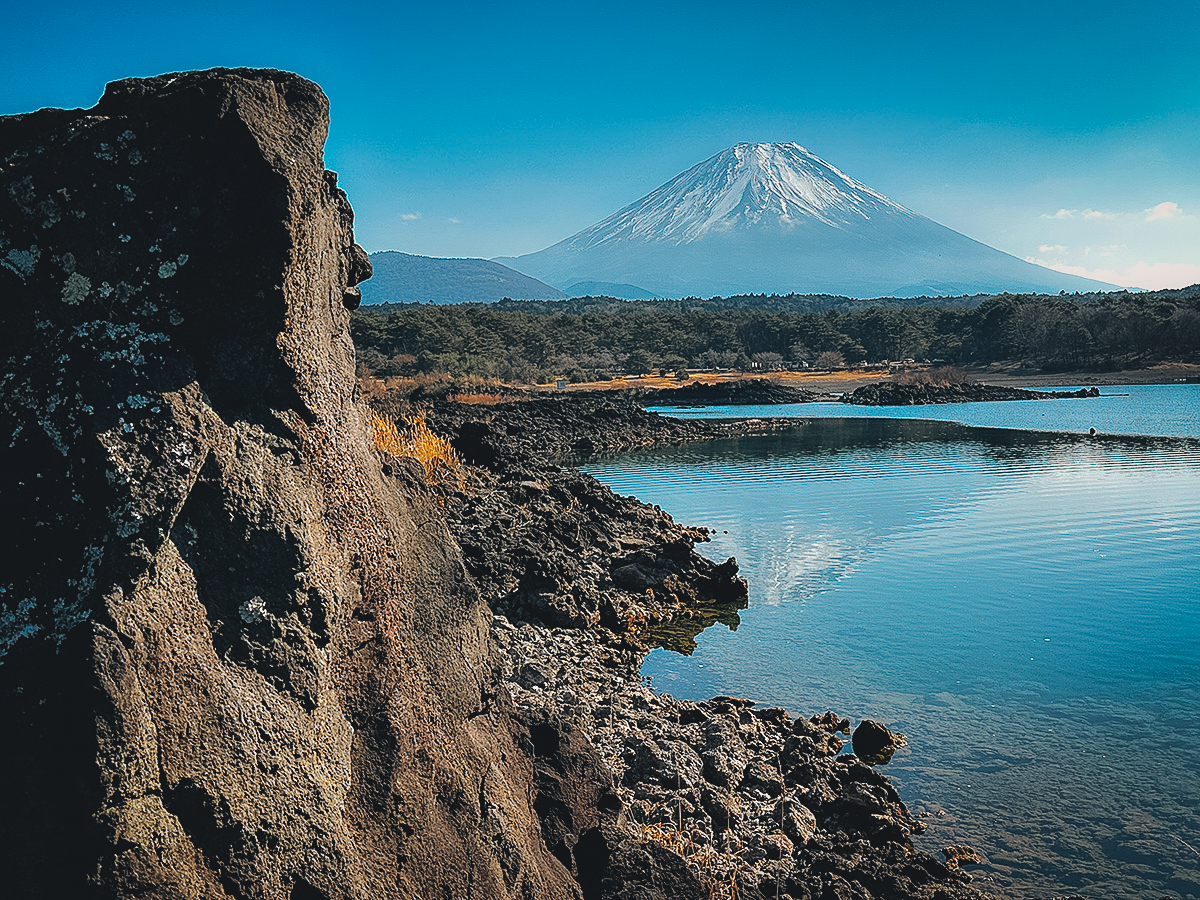
The bus only takes you as far as the southeastern point of the lake, where the geography makes it harder to include Lake Motosu in photos of Mt Fuji. Thankfully, I found this spot on the eastern shore of the lake, a few kilometers from the bus stop.
FUJIYOSHIDA
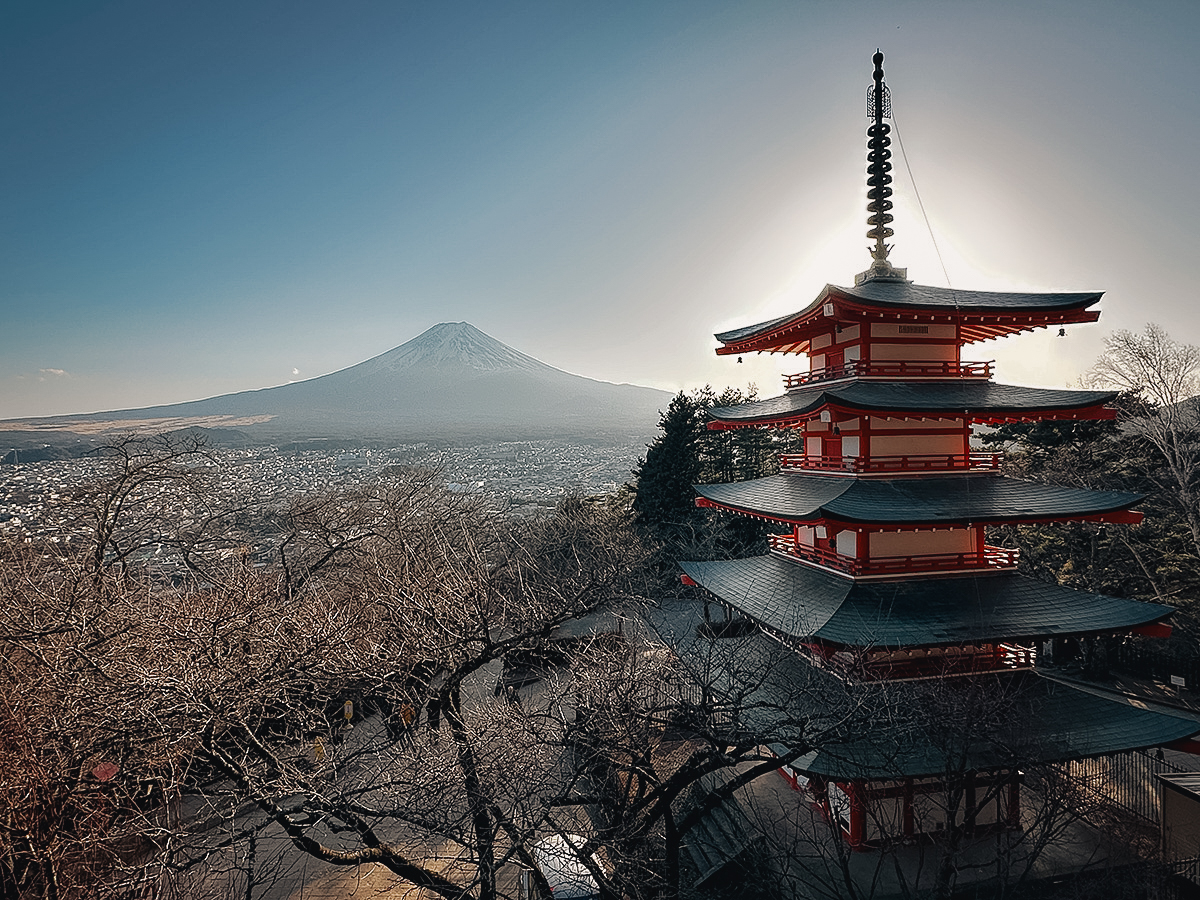
Fujiyoshida is a small city around twenty minutes away by train from Kawaguchiko Station. It’s home to one of the most popular viewpoints of Mt Fuji – Chureito Pagoda.
Chureito Pagoda
If you’ve looked at enough photos of Mt Fuji, you’ve probably come across this one featuring the red pagoda. It’s one of the mountain’s most iconic views and regularly appears on postcards, travel brochures, and promotional materials for Japan.
When I visited in winter, the trees were bare and devoid of leaves. Return in spring or autumn, however, and you’ll find the same landscape transformed by vibrant seasonal colors. The view from here is truly spectacular, but as you’d expect, it draws large crowds throughout the day.
Getting there also requires a climb of nearly 400 steps up the mountainside. You’ll be huffing and puffing by the time you reach the pagoda, but in my opinion, it’s worth it.
Fujiyoshida Retro Shopping Street
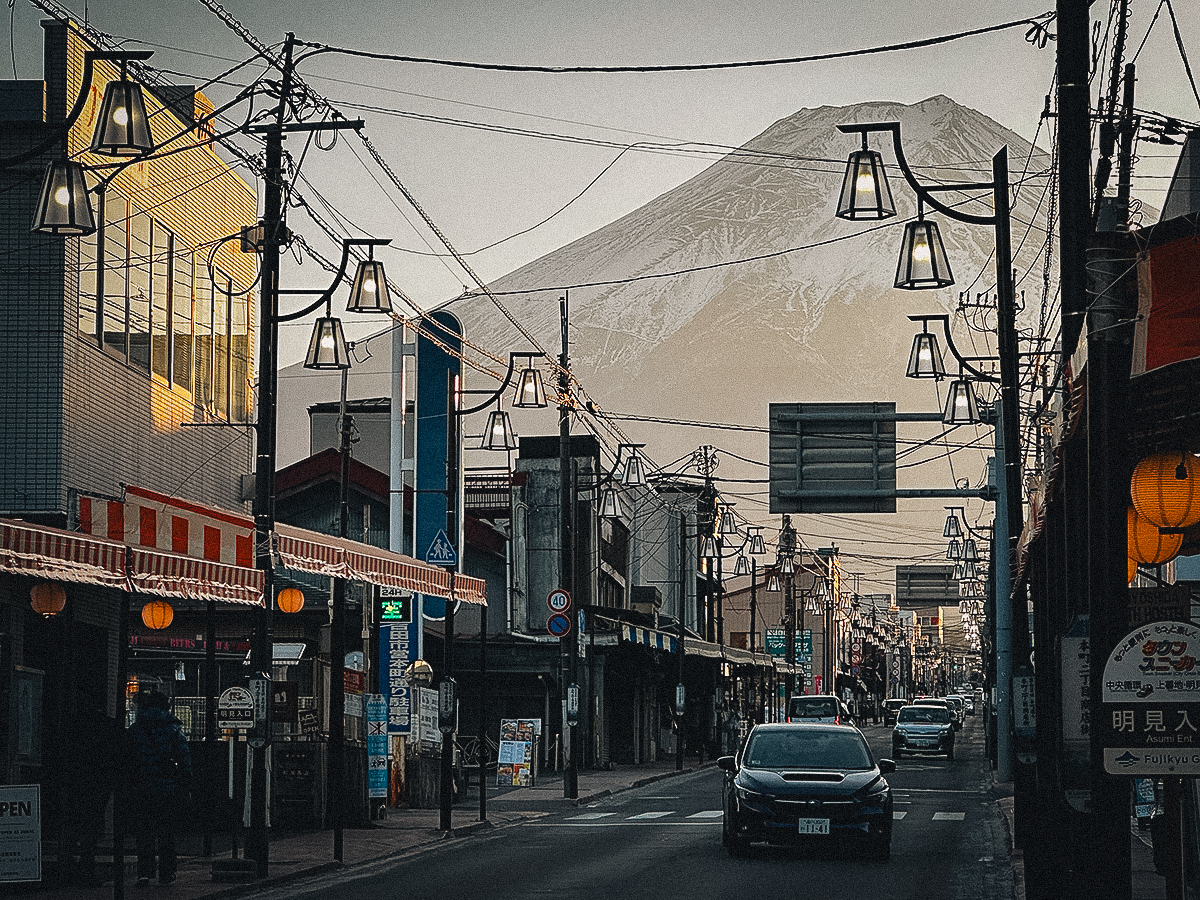
This retro shopping street doesn’t receive as much attention as Chureito Pagoda, which may be a good thing. In my opinion, it’s one of the most underrated places to photograph Mt Fuji.
Most Mt Fuji viewpoints are celebrated for their natural beauty, but Honcho Street in Fujiyoshida offers something different. Instead of lakes or cherry blossoms, the mountain is framed by vintage street lamps, overhead wires, and weathered shopfronts. The contrast is both unexpected and visually striking, making this one of my favorite places to photograph Mt Fuji.
When visiting Honcho Street, remember that it’s a busy thoroughfare used by residents and commuters. Please be mindful of your surroundings, exercise caution when crossing the street, and avoid standing in the middle of the road or obstructing traffic just to take a photo.
OSHINO Village
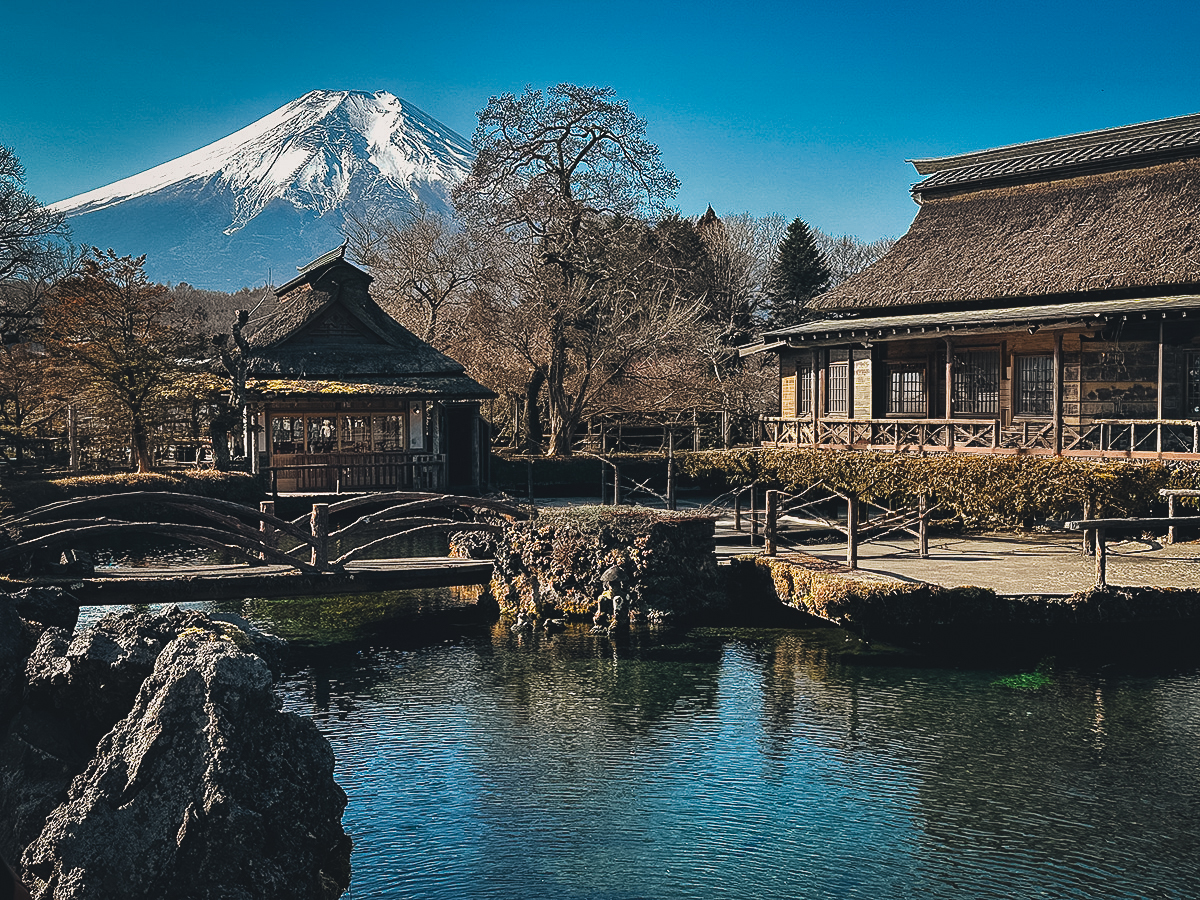
Oshino Village is a small rural community located between Lake Yamanaka and Fujiyoshida. Like Saiko Iyashi-no-Sato Nemba, it offers a quintessentially Japanese setting with its thatched-roof farmhouses, flowing streams, and traditional water wheels. The village is best known for Oshino Hakkai, a collection of eight crystal-clear spring-fed ponds formed by snowmelt filtering down from Mt Fuji.
The view of Mt Fuji rising behind the village’s rustic farmhouses is stunning – even more impressive than the views at Nemba – but it’s also one of the most crowded places I’ve visited so far in the Fujigoko region. The village was absolutely packed with tourists at the time, which made it almost impossible to get a clean photo.
HAKONE
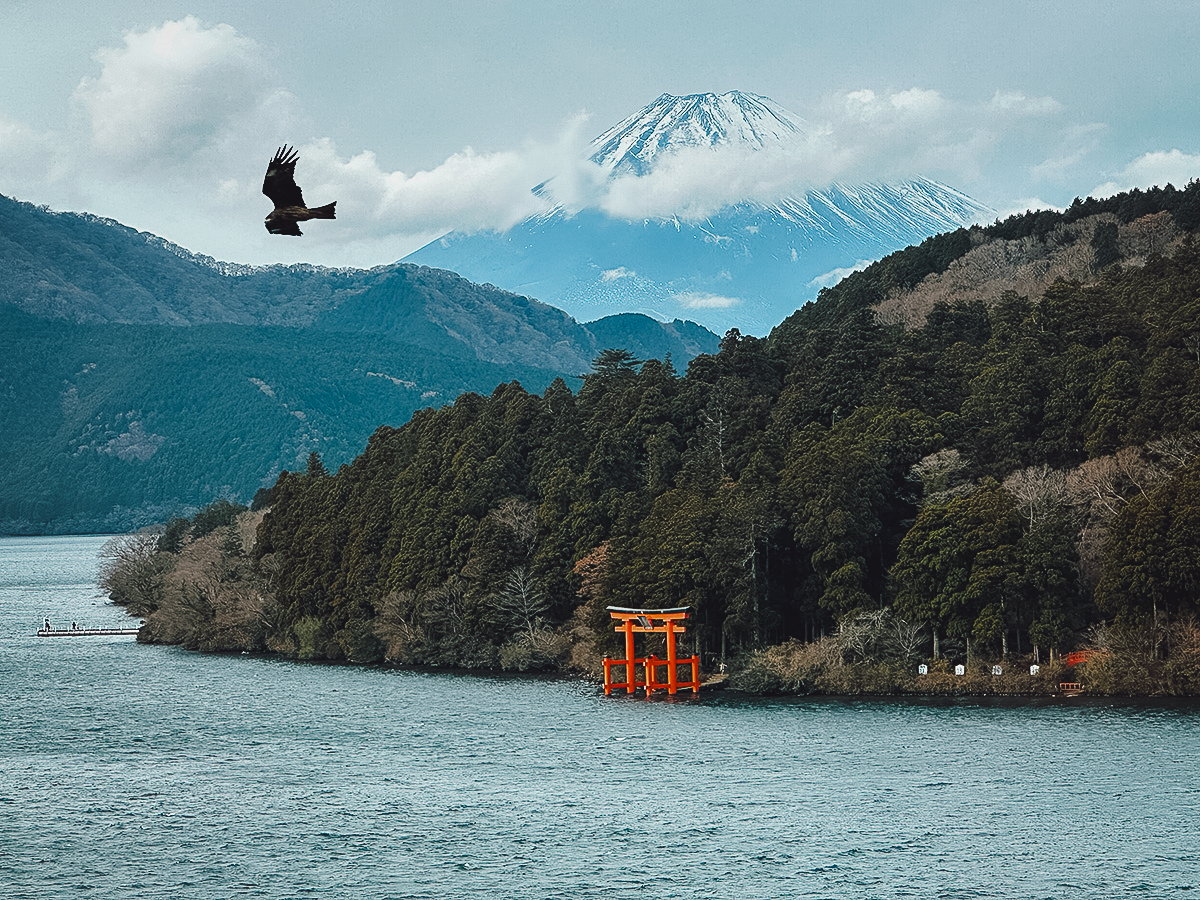
After Lake Kawaguchi, Hakone is arguably the most popular destination for photographing Mt Fuji. The area is famous for its hot springs and the majestic sight of Mt Fuji rising beyond the waters of Lake Ashi.
Lake Ashi
Though Mt Fuji appears more distant from here than it does at Lake Kawaguchi, the view is undeniably striking. The mountain rising beyond Lake Ashi creates a dramatic scene, made even more spectacular by the pop of vermillion from Hakone Shrine’s floating torii gate.
You can get excellent photos from the southern shoreline of Lake Ashi, but I’d recommend sitting by the window at Narukawa Museum‘s panorama lounge and cafe. It gives you a slightly higher vantage point and a comfortable seat with food and drinks while waiting for the perfect shot.
GOTEMBA
Gotemba is a city in Shizuoka Prefecture situated on the eastern base of Mt Fuji. Famous for its massive luxury outlet mall, it serves as a major base camp for tourists looking to climb Mt Fuji.
Gotemba Premium Outlets
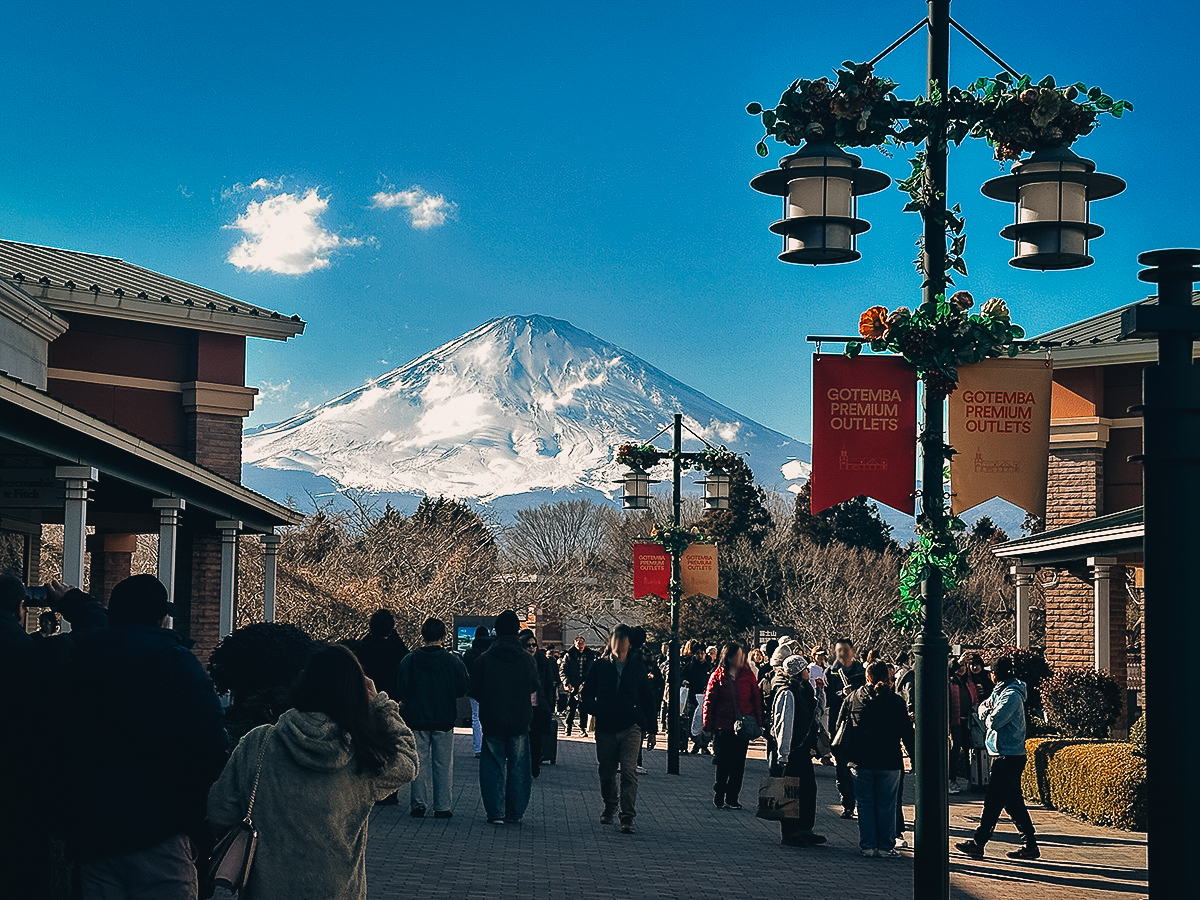
Is this the most scenic shopping mall in Japan? At Gotemba Premium Outlets, Mt Fuji is never far from view – looming over the complex and providing a surprisingly effective backdrop for a shopping spree.
With over 200 designer and brand-name stores, including Loewe, Gucci, Issey Miyake, and Fred Perry, it ranks among Japan’s largest outlet centers. But it’s the dramatic views of Mt Fuji that make it truly stand out.
KAMAKURA
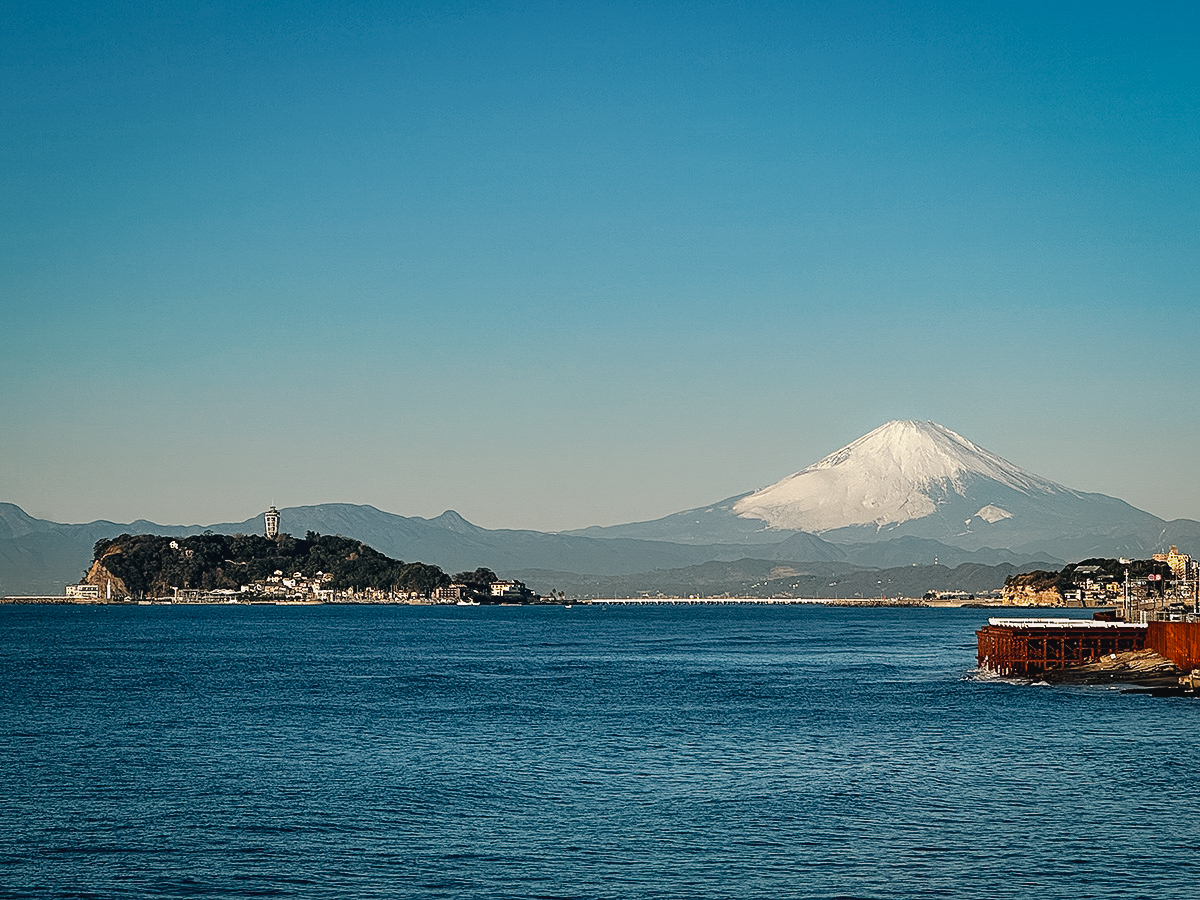
As I mentioned at the top of this article, I wasn’t expecting to see Mt Fuji from Kamakura, but there she was, majestic as ever on a clear winter day. I’ve visited Kamakura in other seasons without catching a glimpse of her, which goes to show just how much better your chances are of seeing Mt Fuji in winter.
Shichirigahama Beach
Mt Fuji is visible from Enoshima Island, but I think it looks more impressive from one of Kamakura’s beaches, with Enoshima and the Sea Candle included in the frame.
Fujisan, you never fail to take my breath away.
LOCATION MAP
To help you navigate, I’ve pinned the spots listed here on Google My Maps. Click on the link for a live version of the map.
THE FINAL SAY
Day-trippers don’t usually have time to go beyond Lake Kawaguchi, but it’s absolutely worth staying longer to properly explore the Fuji Five Lakes area, especially if you enjoy chasing Mt Fuji as I do.
A rental car is the easiest way to explore the Fuji Five Lakes, but I managed to get around using the Fujisan Fujigoko Passport. It’s a two-day train and bus pass that covers all five lakes, including Fujiyoshida and Oshino Village.
If you’re planning to explore both Fujigoko and Hakone, the Fuji-Hakone Pass is worth considering. If your itinerary includes Hakone, Kamakura, and Gotemba, then the Hakone Kamakura Pass can be a good investment.
With so many Fujisan viewpoints still on my radar, this list is hardly exhaustive. It only documents the places I’ve been to thus far, but it’s a list that will continue to grow with every new discovery.
Disclosure
Some of the links in this article on the best Mt Fuji photo spots are affiliate links, meaning we’ll make a small commission if you make a booking at no extra cost to you. As always, we only recommend products and services that we use ourselves and can personally vouch for. We really appreciate your support, as this helps us make more of these free travel guides. Arigato gozaimasu!
References
1. Best Time to See Mount Fuji. Mt Fuji Tours. (2026, May 20).
