
SUMMARY HIGHLIGHTS
- Both located in Shinjuku, Omoide Yokocho and Golden Gai are two of the most popular yokochos in Tokyo.
- For a more local feel, head to Sangenjaya Sankaku Chitai or Oimachi Yokocho.
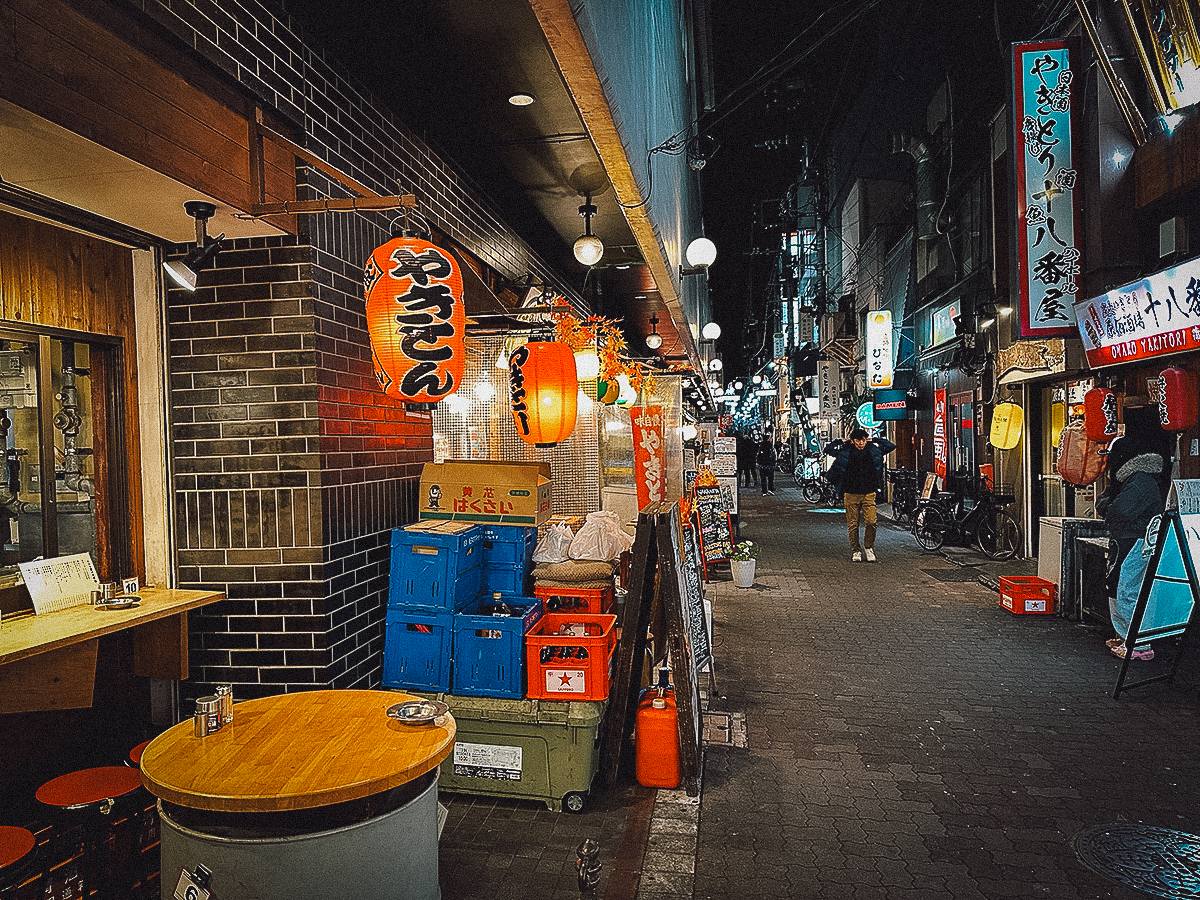
It felt like I had stepped through a crack in the city and emerged in a different world.
I had been nudging my way through busy Shinjuku when I noticed the narrow gap between two buildings. Curious, I stepped inside. The noise of the main street faded almost instantly. In its place were lantern-lit storefronts, the smell of grilled meat, and a row of tiny izakayas packed into an alley barely wide enough for two people to pass.
I remember thinking how strange it was that a place like this could exist in the middle of one of Tokyo’s busiest districts. Just a few minutes before, I was standing beneath giant video screens and department stores, dodging tourists and salarymen rushing to catch trains. But in this alley, time seemed to move at a different pace. It no longer felt like Tokyo, or the 21st century for that matter.
That contrast is what makes Tokyo’s yokochos so captivating. As much as I love Tokyo, the city can be overwhelming at times, alienating even. The moment you walk into a yokocho, it can feel as though you’ve discovered a version of Tokyo that feels a little smaller and less intimidating.
Yokochos aren’t hidden like speakeasies, but they can be just as easy to overlook. This guide takes you to some of Tokyo’s most atmospheric alleyways, where tiny bars, old-school eateries, and an unmistakably retro charm continue to thrive within the cracks of the modern city.
VISIT TOKYO QUICK LINKS
To help you plan your trip to Tokyo, I’ve put together links to recommended hotels, tours, and other travel-related services here.
HOTELS
Top-rated hotels in Shibuya, one of the most convenient areas to stay for first-time visitors to Tokyo.
- Luxury: Hotel Indigo Tokyo Shibuya
- Midrange: Shibuya Tokyu REI Hotel
- Budget: Almond Hostel and Cafe Shibuya
EXPERIENCES
- Sightseeing Tour: Asakusa and Sensoji Walking Tour
- Izakaya Tour: Shinjuku Local Bar & Izakaya Crawl Tour
- Food Tour: Shinjuku Food Tour
- Tea Ceremony: Authentic Japanese Tea Ceremony in a Private Tea Room
- Kintsugi: Experience Kintsugi and Its Philosophy of Renewal in Minami-Aoyama
- Cooking Class: Cooking Classes in Tokyo
OTHER SERVICES
- Travel Insurance (non-US residents get 5% off)
- Airport Transfers: Narita Airport | Haneda Airport
- Tokyo Subway Ticket
- Japan Rail Pass
- Japan eSIM
WHAT IS A YOKOCHO?
In Japanese, the word yokocho simply means “alleyway” or “side street.” In practice, however, the term usually refers to narrow lanes lined with small bars, izakayas, and eateries packed closely together.
Many of Tokyo’s most famous yokochos trace their roots to the years following World War II, when black markets sprang up near major train stations to serve a city struggling to rebuild1. Over time, these improvised clusters of food stalls and drinking establishments evolved into permanent fixtures, becoming gathering places where locals could eat and drink while enjoying a sense of closeness and community.
Today, yokochos remain some of the most atmospheric places in Tokyo. While the city around them continues to modernize, many of these alleys retain a distinctly old-school feel – hanging lanterns, smokey yakitori grills, and spaces so small and intimate that it’s virtually impossible not to rub elbows with fellow diners.
THINGS TO REMEMBER BEFORE VISITING A YOKOCHO
- Most izakayas are tiny, with the capacity to seat just four to ten people. If you’re traveling in larger groups of five or six, you may have to split your group or make advanced reservations. Your hotel can usually help you with this.
- Some of the more local bars and restaurants may not have English menus. Thankfully, Google Translate usually does a good job of bridging the language gap.
- Try not to linger. Because izakayas are so small, quick table turnover helps keep them in business. Once you’ve finished eating and drinking, it’s considered courteous to settle your bill and make room for the next customer.
- While many of Tokyo’s larger restaurants accept credit cards, smaller izakayas often accept cash only. To avoid any awkward moments, it’s a good idea to bring enough cash with you.
- Japan has no tipping culture. If you’re visiting from a country where tipping is customary, you’ll need to leave that practice at home.
YOKOCHOS TO VISIT IN TOKYO
I’ve divided this list into two categories – popular yokochos already known to tourists and lesser-known yokochos. The latter are typically located in less touristy areas and frequented mostly by locals.
POPULAR YOKOCHOS
OMOIDE YOKOCHO
Number of Establishments: Around 40
Closest Station: Shinjuku
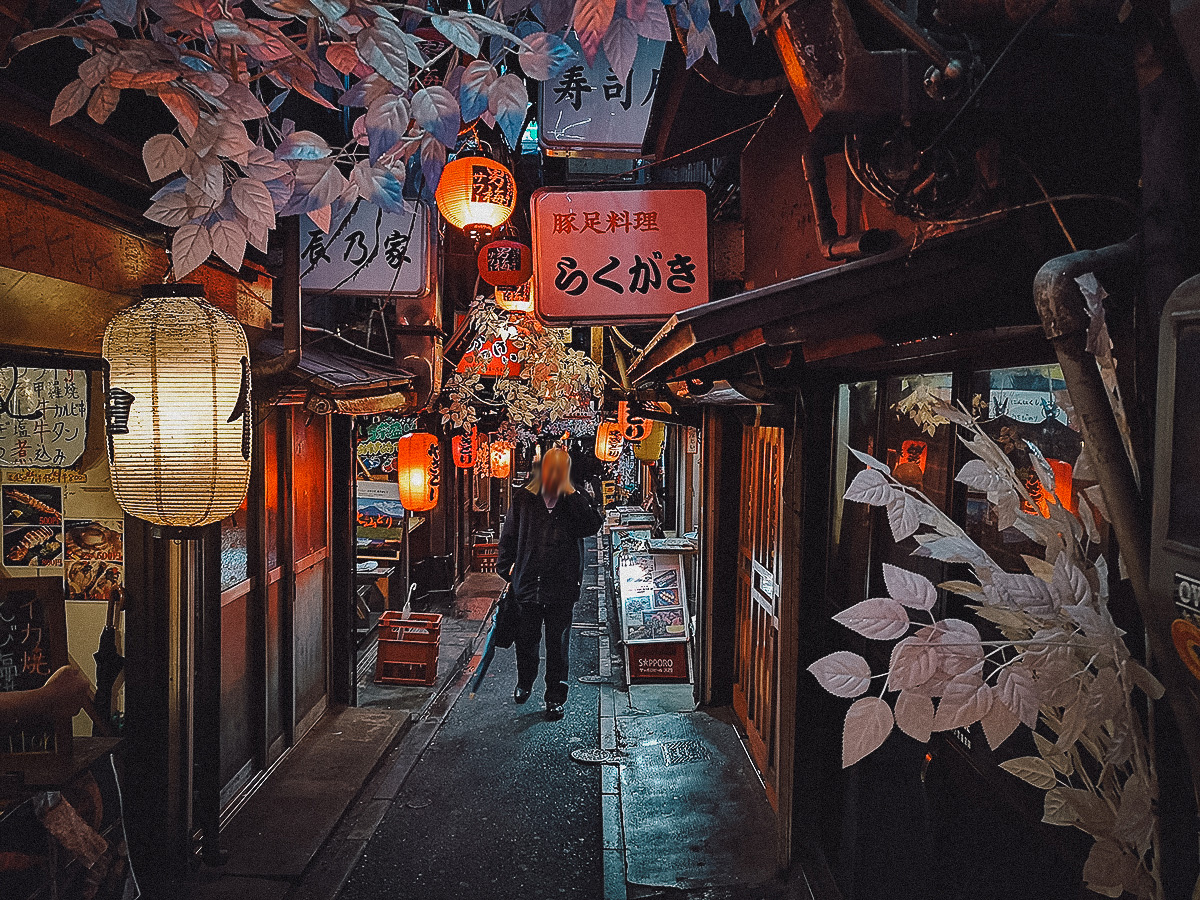
Omoide Yokocho was the very first yokocho I visited in Japan. I was so captivated by it that it inspired me to seek out and document as many yokochos as I could find in Tokyo.
Located right next to one of the busiest train stations in the world, Omoide Yokocho is arguably Tokyo’s most famous yokocho, and with good reason. Despite being surrounded by skyscrapers and department stores, this atmospheric alley feels remarkably detached from the modern city around it.
JAPAN TRAVEL DEALS
Planning a trip to Japan? Enjoy up to 50% off on selected experiences and activities with Klook and Get Your Guide. Click on the links for a list of discounts, promo codes, and limited-time offers.
Originally established as a postwar black market2, Omoide Yokocho evolved into a cluster of tiny eateries and drinking establishments catering to workers and residents. Much of its postwar atmosphere has endured to this day – hanging lanterns illuminate its alleyways while tiny izakayas draw diners in with cold beer and the smoky aroma of charcoal-grilled yakitori.
Interestingly, the name Omoide Yokocho translates to “Memory Lane”, but the alley had become known by a less flattering nickname – “Piss Alley”. This was due to the lack of modern plumbing in its early years, so patrons would relieve themselves against the alley walls. Rest assured, you won’t have to do that anymore.
Thanks to its popularity, Omoide Yokocho can feel touristy at times, especially during the evening rush, but it’s well worth visiting. If you’re looking to experience your first yokocho, then this is an excellent place to begin.
GOLDEN GAI
Number of Establishments: Approximately 200-300
Closest Station: Shinjuku or Shinjuku-sanchome
I thought I was impressed with Omoide Yokocho, until I walked over to Golden Gai. Mysterious and more urban in feel, this place felt like something out of a Murakami novel.
Just a short walk from Piss Alley, Golden Gai is one of Tokyo’s most distinctive nightlife districts. It fits the loose definition of a yokocho, but its atmosphere is noticeably different. Instead of yakitori stalls and casual izakayas, Golden Gai is known for its collection of tiny bars – roughly 200-300 packed in a tiny grid-like network of six alleyways – many of which can seat fewer than a dozen customers.
Originally developed after World War II, Golden Gai was once associated with black-market trading and prostitution3. During the 1950s and 1960s, creatives and intellectuals began frequenting its bars, gradually transforming and cleaning up its reputation. It became known as bunkajin no machi, or the “district of cultivated people,” and it was around this time that the name Golden Gai first came into use.
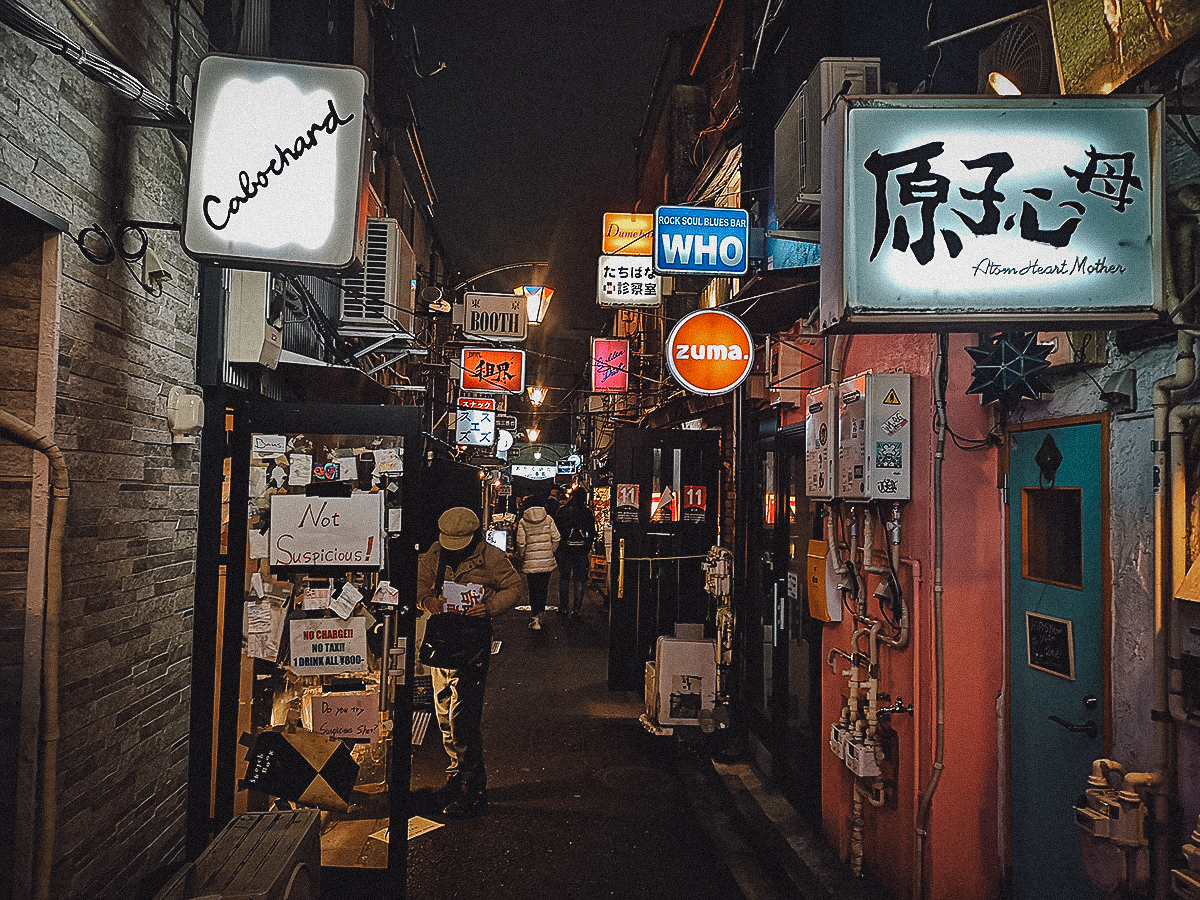
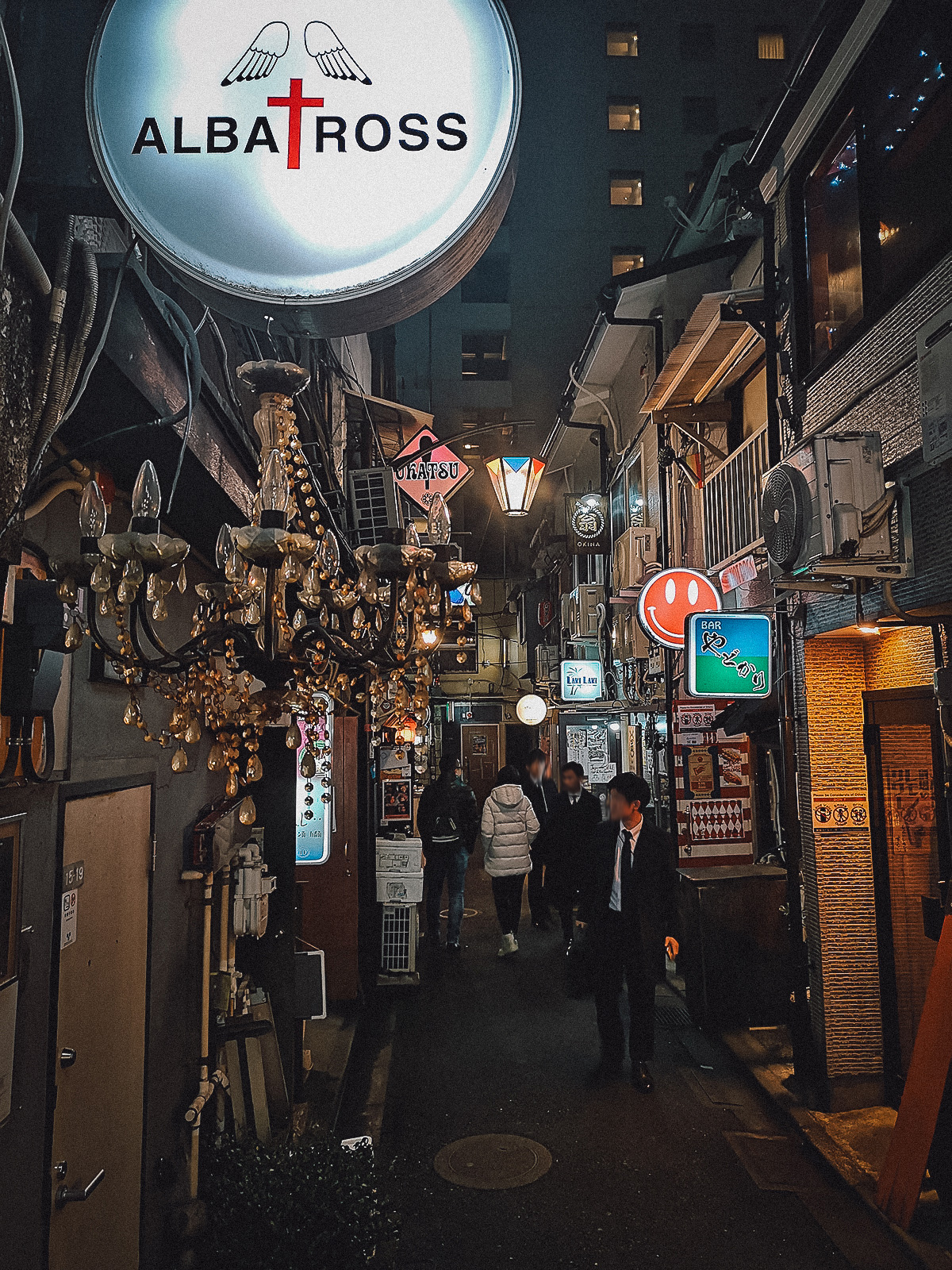
Today, the area’s narrow alleyways are lined with tightly packed two-story buildings, making it one of Tokyo’s most atmospheric places to visit at night. Aside from the sheer number of choices, what I loved about Golden Gai is that its bars stand out as individual destinations, each with its own unique personality.
Many bars in the area have a distinct theme, ranging from jazz, R&B, punk, and flamenco, to more niche interests like exploitation films and horse racing4. Some establishments cater exclusively to regulars, while others are more welcoming to foreign tourists with signs and price lists displayed in English.
Like Omoide Yokocho, Golden Gai is no stranger to tourists, but it’s absolutely worth visiting. Even if you don’t stop to eat or get a drink, it remains one of the city’s most fascinating corners to wander and explore after dark.
HARMONICA YOKOCHO
Number of Establishments: Around 40
Closest Station: Kichijoji
Located just outside Kichijoji Station, Harmonica Yokocho is named after the way its tightly packed bars and izakayas resemble the reeds of a harmonica. It traces its origins to a postwar flea market that gradually evolved into the small network of shops, eateries, and bars that it is today.
Unlike Golden Gai and many of Tokyo’s drinking-focused alleys, Harmonica Yokocho is active throughout the day. More neighborhood hub than nightlife district, you’ll find florists, produce vendors, and clothing shops sharing space with standing bars and restaurants, giving the area a more local feel.
Although Harmonica Yokocho is known to foreigners, it takes a little more effort to get to, being located several stops west of Shinjuku Station. It doesn’t get as many tourists as Omoide Yokocho or Golden Gai, which helps it retain its neighborhood atmosphere.
HOPPY STREET
Number of Establishments: Around three dozen
Closest Station: Asakusa
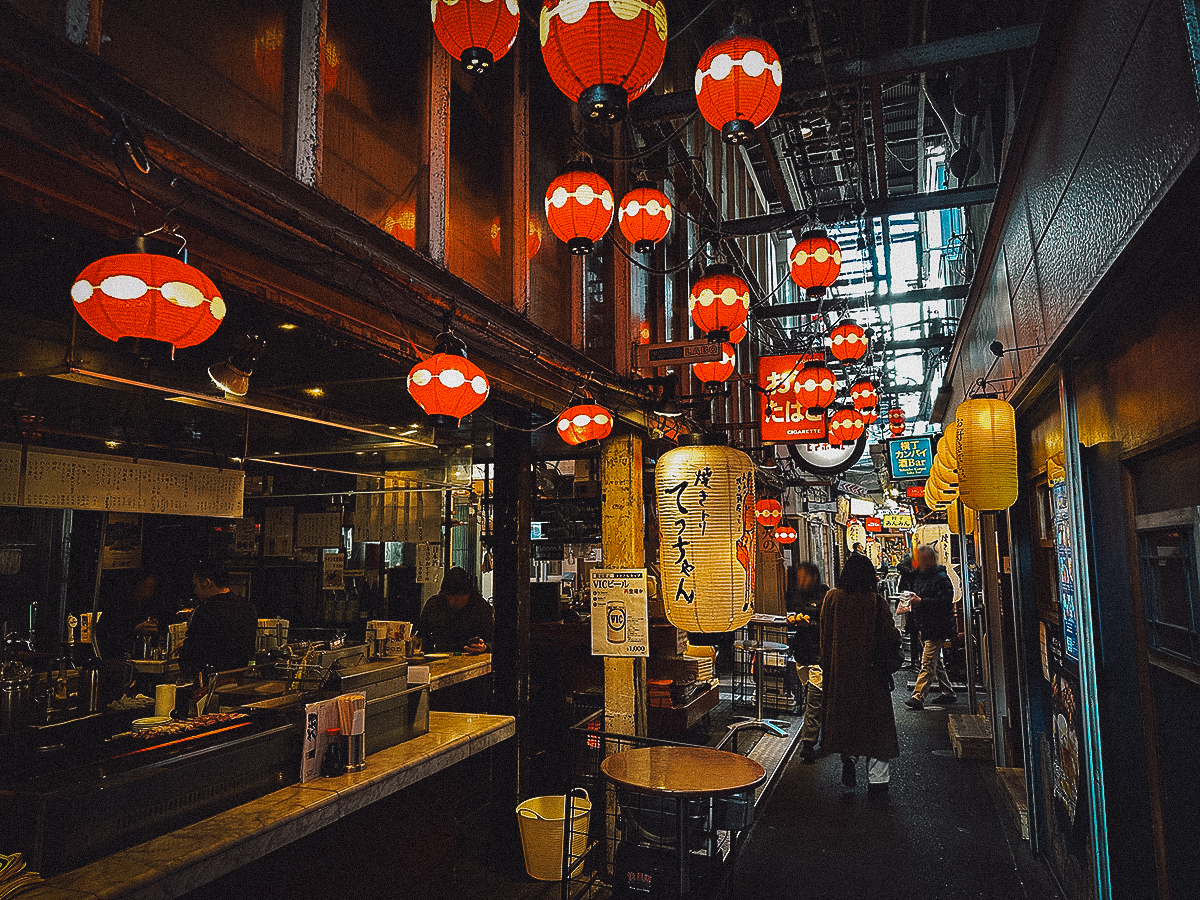
If you’ve enjoyed soju and Korean BBQ at pojangmacha in Seoul, then Hoppy Street will feel familiar to you. Just a short walk from Senso-ji Temple, it offers a different kind of yokocho experience from the previous three.
Located in Asakusa, the street gets its name from the low-alcohol beer-flavored drink known as “Hoppy”. Typically mixed with shochu, it became popular in postwar Japan as a cheaper alternative to beer. Many bars along this street served Hoppy, which is how the street came to be known as Hoppy Street5.
Hoppy isn’t as popular as it used to be, but it’s still served at many bars, izakayas, and retro nightlife districts in Tokyo, including Hoppy Street.
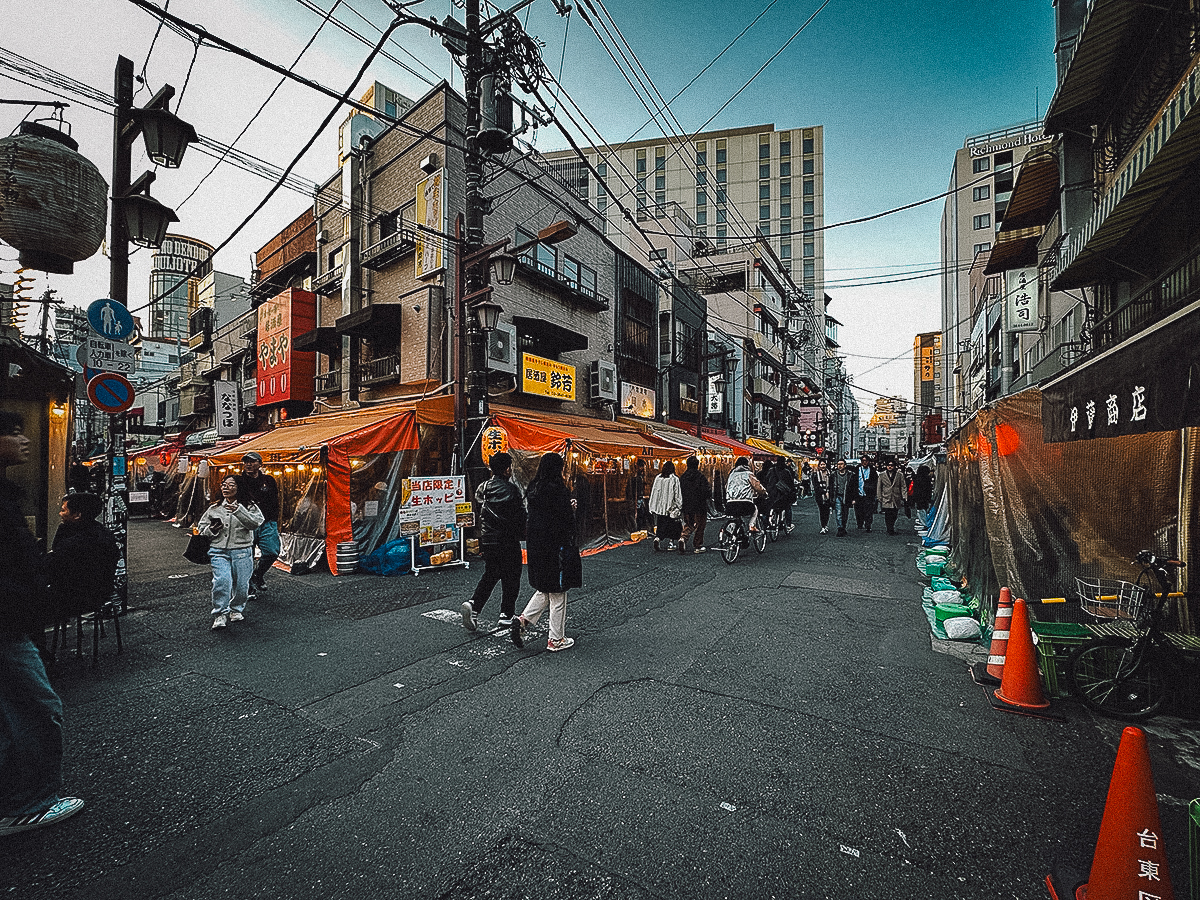
What makes Hoppy Street different from other yokochos is that it consists of around three dozen casual restaurants shielded by plastic tents, reminiscent of Korean pojangmacha. As you can see from the picture below, seating spills out onto the street, which explains the need for the coverings.
Asakusa may be one of the most touristy areas in Tokyo, but Hoppy Street is popular with both locals and tourists alike. On the afternoon these pictures were taken, virtually every restaurant along Hoppy Street was packed with locals.
SHIBUYA NONBEI YOKOCHO
Number of Establishments: Around three dozen
Closest Station: Shibuya
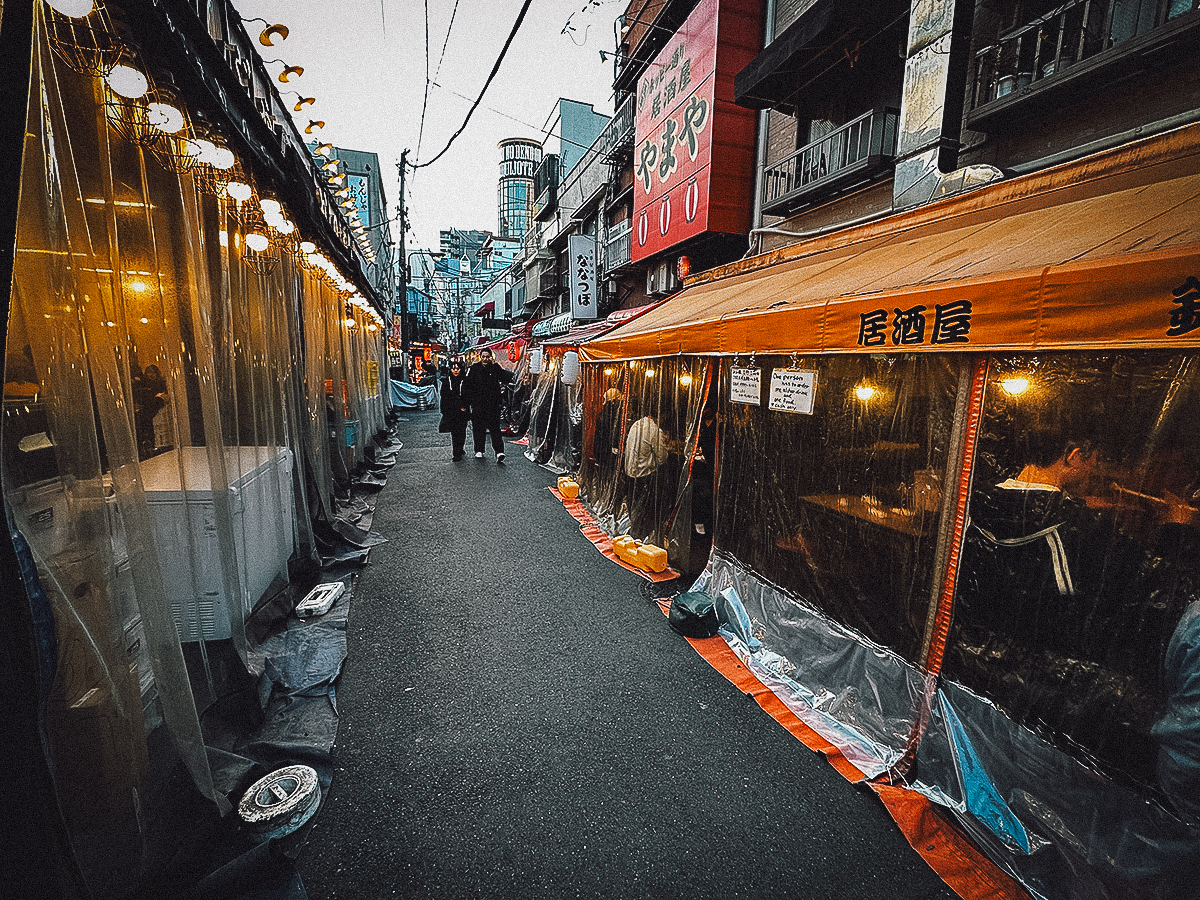
Shibuya Scramble Crossing is one of the most frenetic parts of Tokyo, but less than five minutes away is a much quieter corner of the city that’s remained largely unchanged since the postwar era.
Meaning “Drunkard’s Alley”, Nonbei Yokocho is a cluster of roughly three dozen tiny izakayas and restaurants tucked into two parallel alleyways. It’s been around since 19526 and remains a favorite among local office workers and regulars looking to unwind over skewers of yakitori and glasses of cold beer.
Despite sitting just outside Shibuya Station, Nonbei Yokocho is surprisingly easy to miss. I’ve spent a lot of time in Shibuya over the years, yet I never knew this vestige of the Showa era even existed until I actively sought it out.
EBISU YOKOCHO
Number of Establishments: Around 20
Closest Station: Ebisu
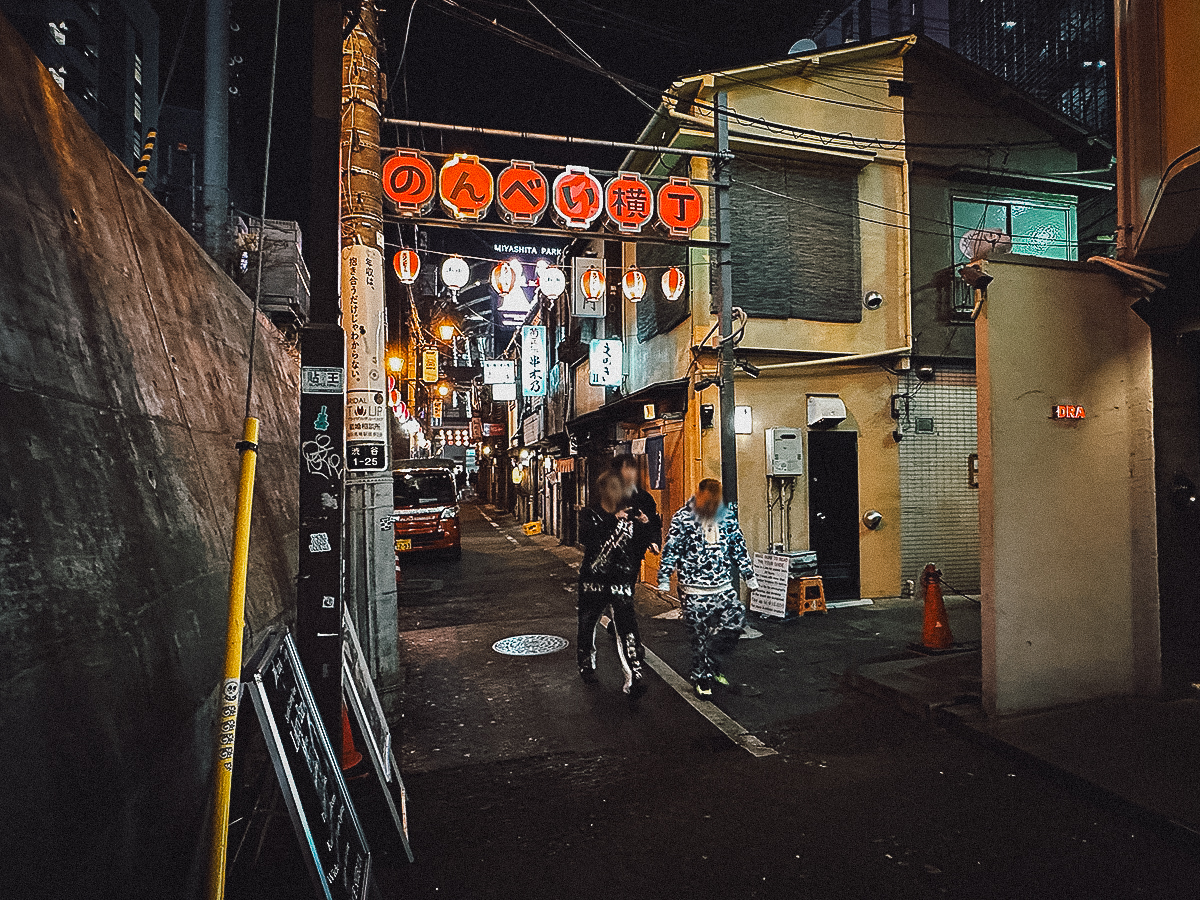
By the strictest definition, yokochos are alleyways, but not all fit that description. Some, like Ebisu Yokocho, are located underground or in covered complexes.
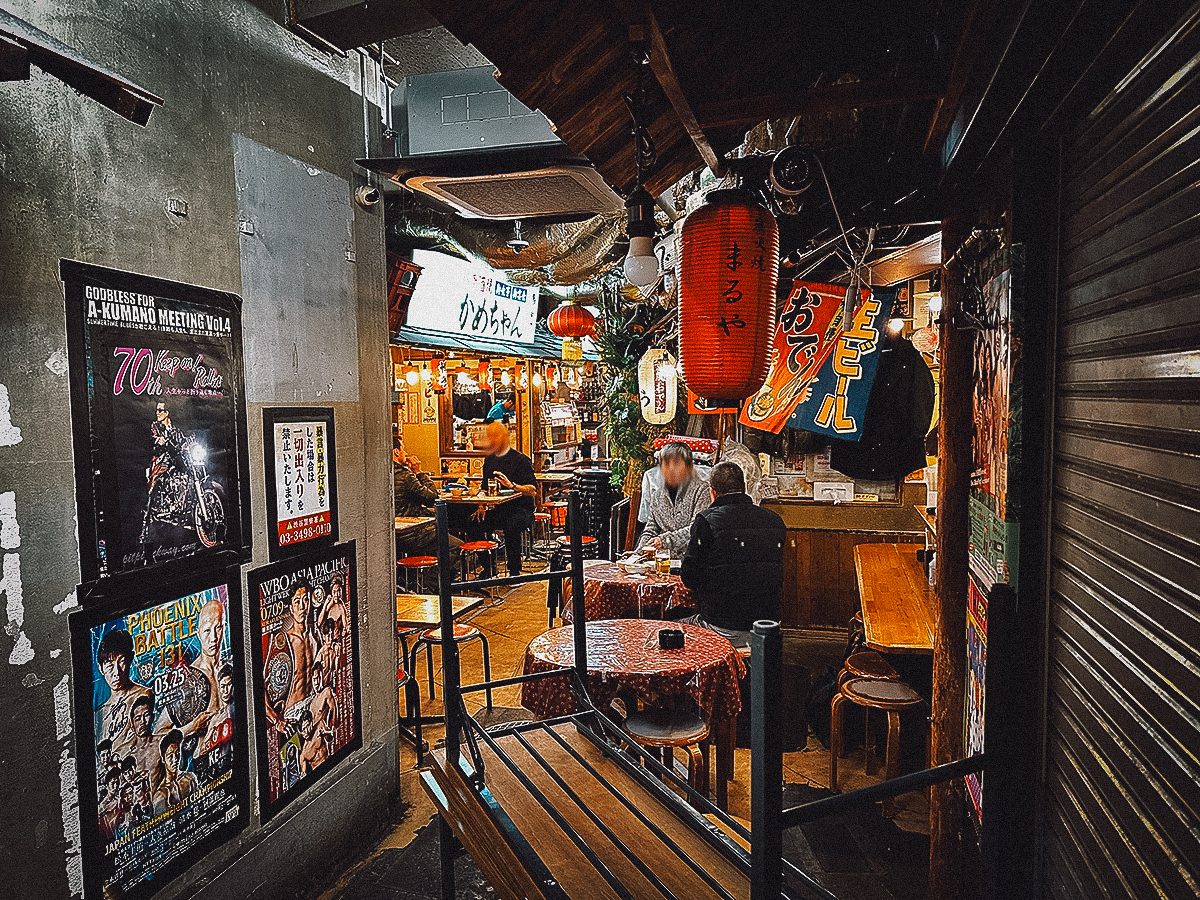
Just a stone’s throw from Ebisu Station, Ebisu Yokocho consists of around twenty bars and izakayas – some no bigger than twenty-five square metres – crammed together in an L-shaped covered space. The establishments inside offer the usual late-night staples like oden, yakitori, okonomiyaki, and more.
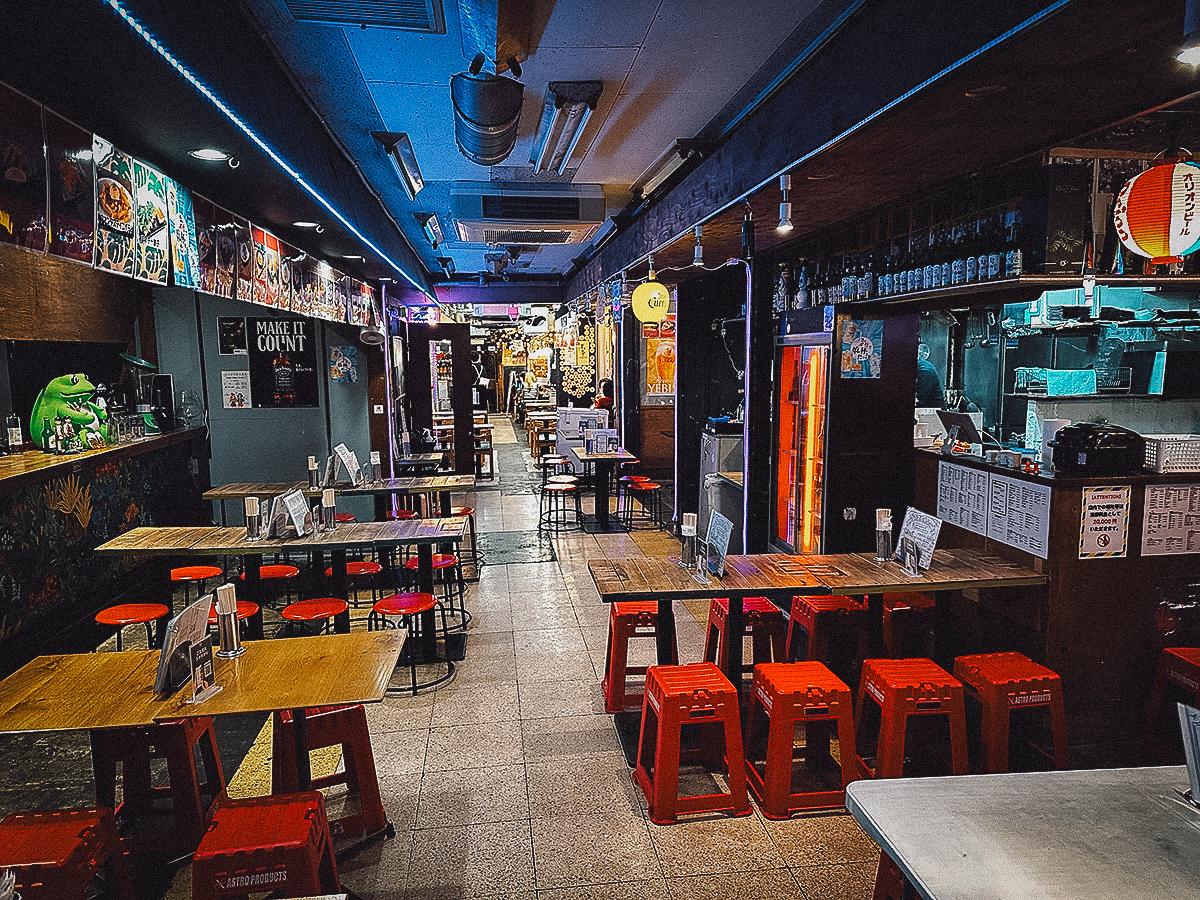
Built in 1998 on the remains of the old Yamashita shopping center7, Ebisu Yokocho may not have the history of some of the more established yokochos on this list, but it’s no less atmospheric. It feels like a more modern interpretation of a yokocho, like a food hall, with dozens of small bars and eateries gathered together into a single indoor space.
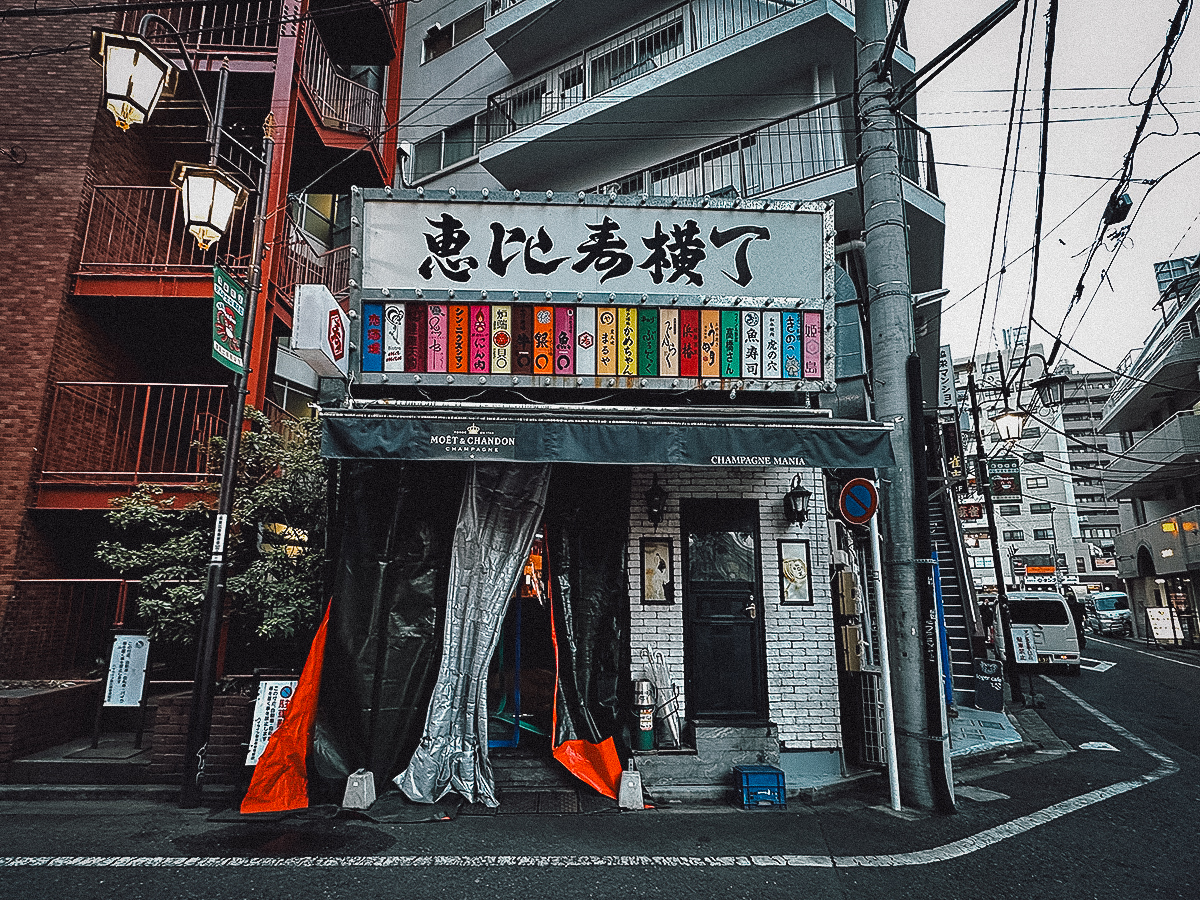
Ebisu Yokocho is located less than a 5-minute walk from Ebisu Station. From the street, you’d never guess that an atmospheric yokocho-inspired food hall is waiting for you inside.
ASAKUSA UNDERGROUND STREET
Number of Establishments: Around 15
Closest Station: Asakusa
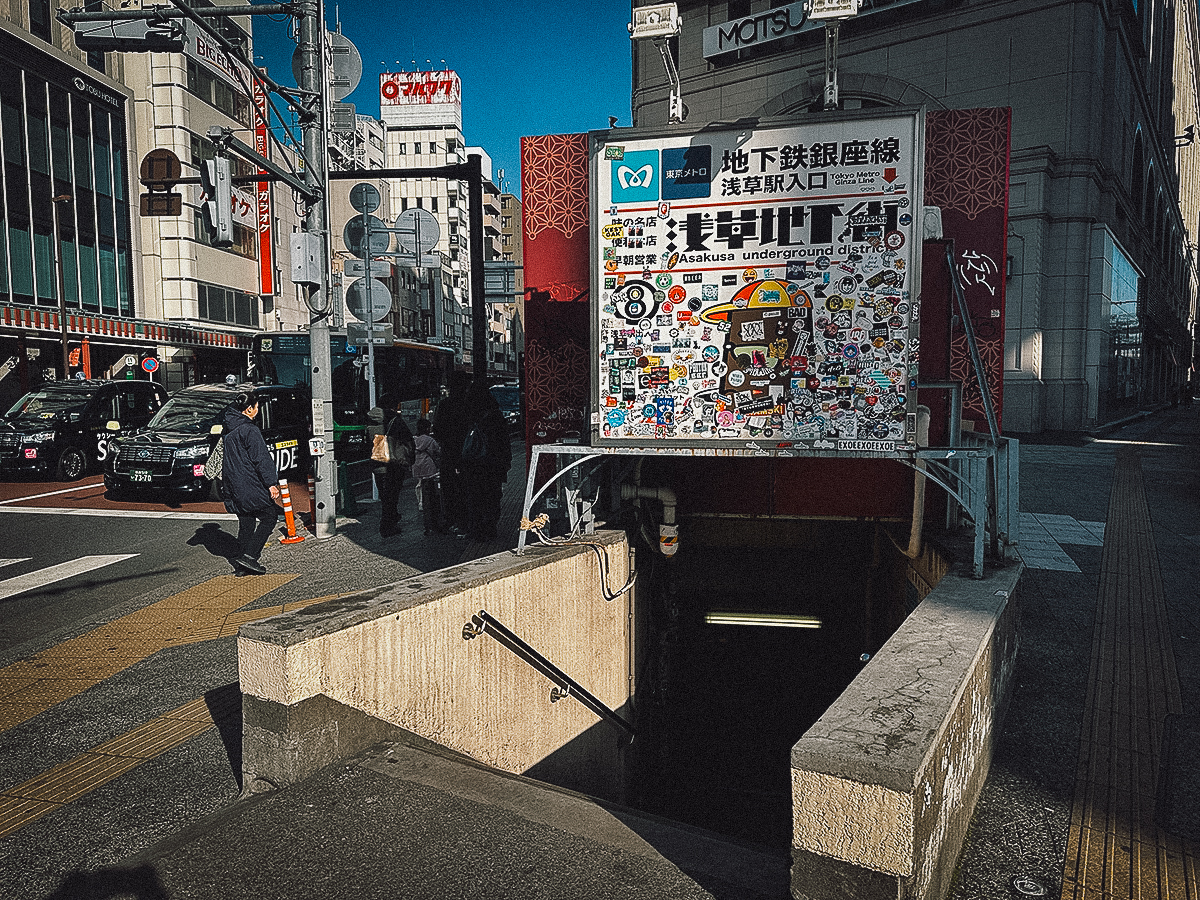
If most yokochos feel hidden, Asakusa Underground Street feels almost forgotten. Despite being less than a 5-minute walk from Senso-ji, I couldn’t even find it the first time I went looking for it.
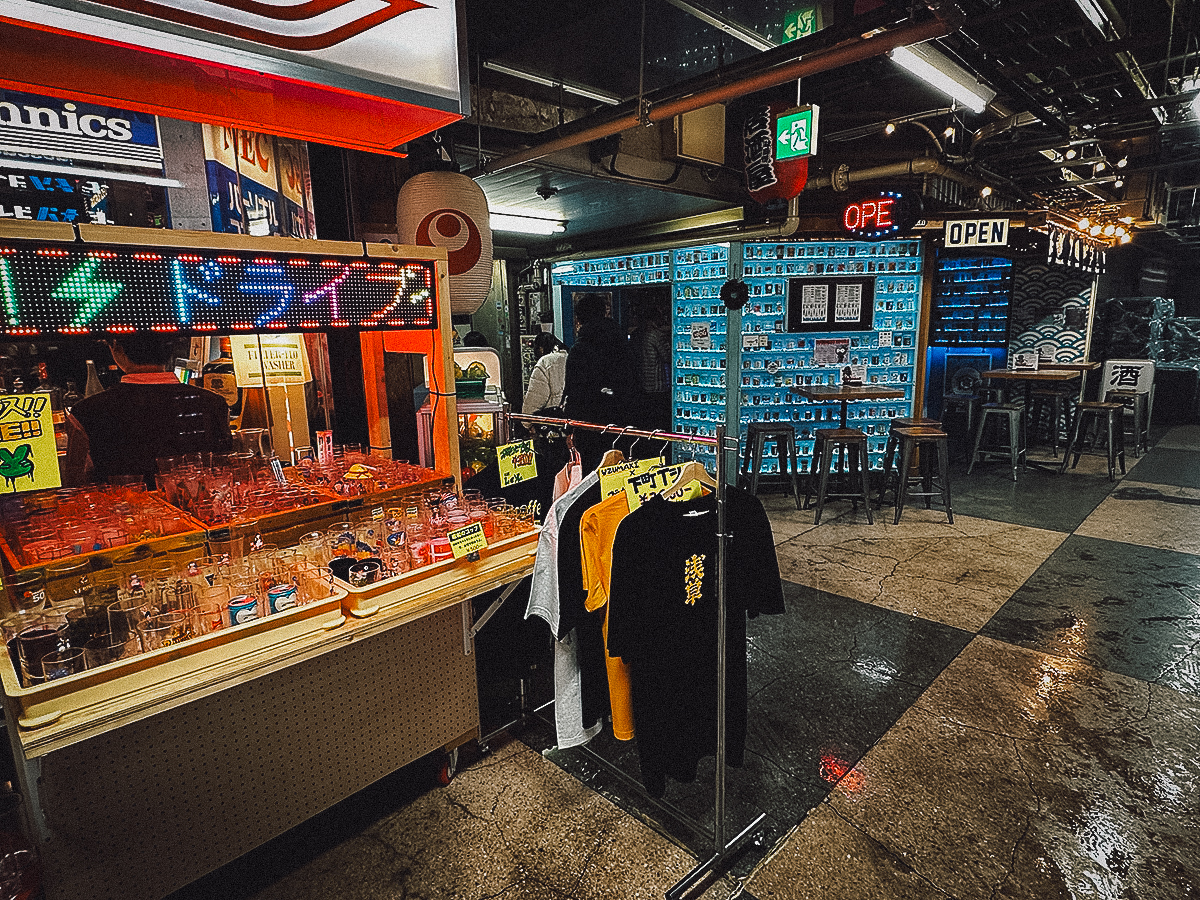
Opened in 1955, the Asakusa Underground Shopping Street is Japan’s oldest underground shopping arcade8. Descending the stairs from street level, you’ll find a dimly lit passage lined with small eateries, bars, and shops that feel largely untouched since the Showa era.
Unlike Ebisu Yokocho, which feels like a more modern yokocho-inspired food hall, Asakusa Underground Street is absolutely authentic. Fluorescent lights, aging signboards, and weathered storefronts give the arcade – which, in itself, has seen better days – a distinctly lived-in character.
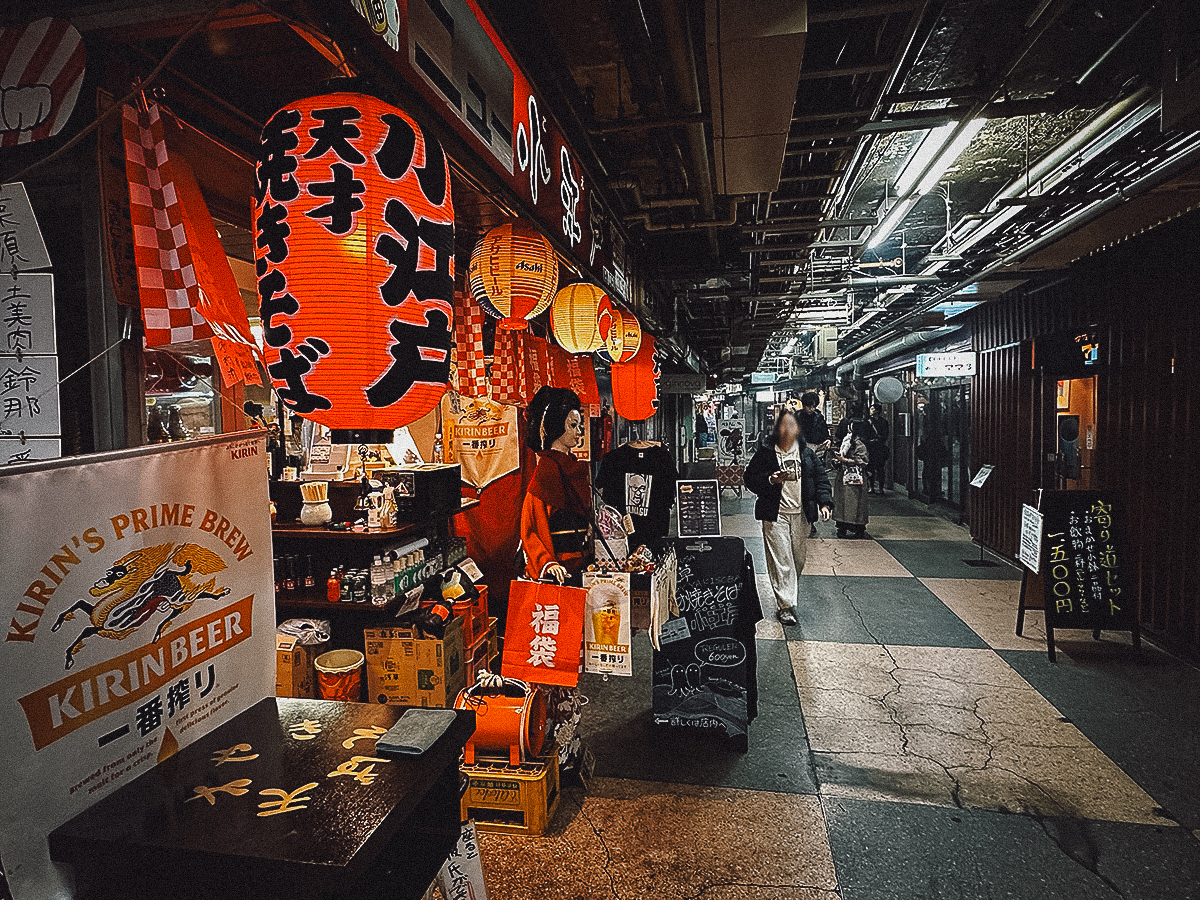
Asakusa Underground Street is essentially a small underground shopping arcade, with around fifteen businesses crammed into a single corridor. Alongside the bars and restaurants is an eclectic mix of shops, offering everything from vintage clothing and vinyl records to discount tickets and general merchandise. There’s even an old-school barbershop.
This is the entrance to the Asakusa Underground Shopping Street. Make a left as soon as you descend the stairs. Otherwise, you’ll end up in the Tokyo Metro.
YURAKUCHO SANCHOKU YOKOCHO
Number of Establishments: Less than 10
Closest Station: Yurakucho, Hibiya, or Ginza
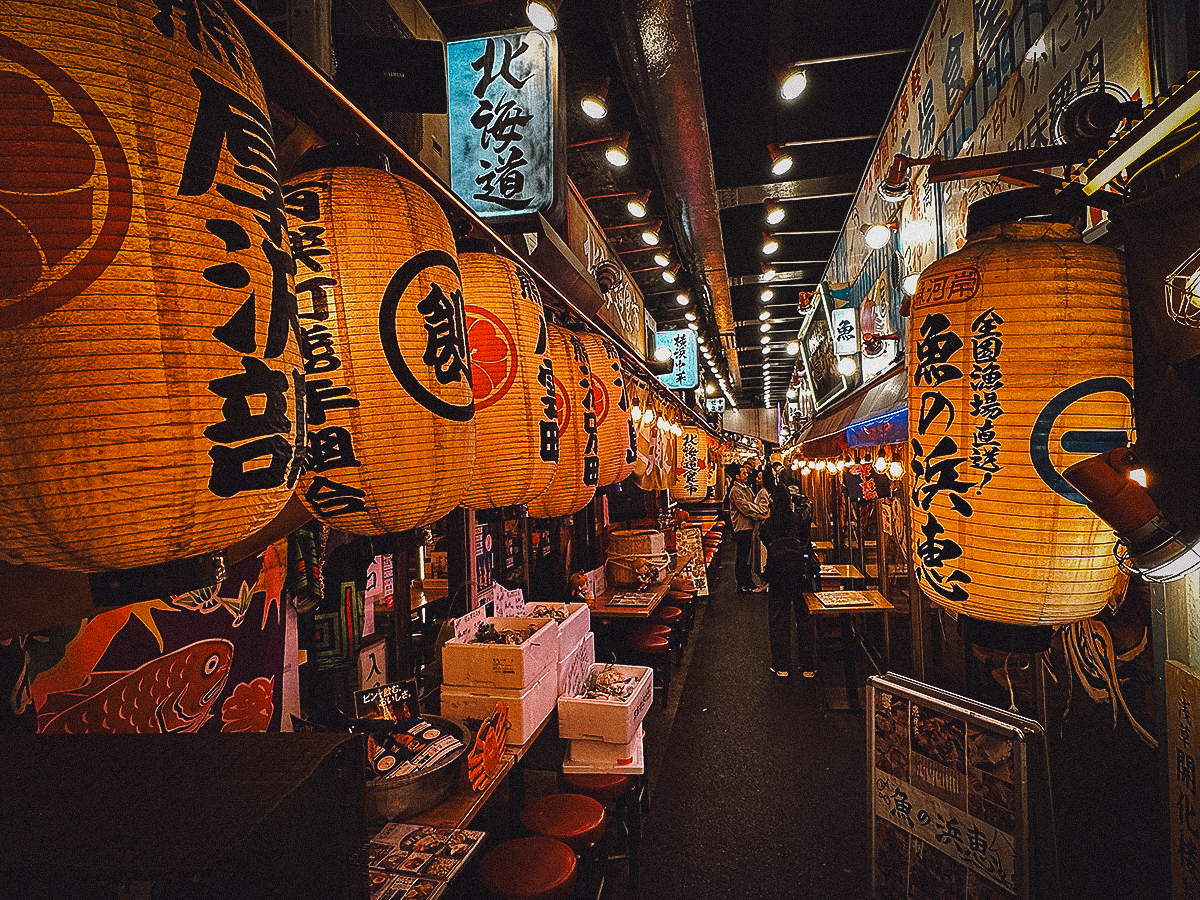
Located beneath the railway tracks in Yurakucho, Sanchoku Yokocho has a similar feel to Ebisu Yokocho. It isn’t indoors, but it does seem like a more modern interpretation of a yokocho.
Based on what I’ve read online, the complete name of this yokocho is Sanchoku Inshokugai, which loosely translates to “Farm-fresh izakaya street”9. Open since 2010, its name reflects the concept of bringing together regional specialties and locally sourced ingredients from across Japan.
Spread across its ten or so restaurants are dishes showcasing regional ingredients like horse meat from Kumamoto, Hokkaido-raised wagyu beef, Shizuoka seafood, and chicken from Kyushu.
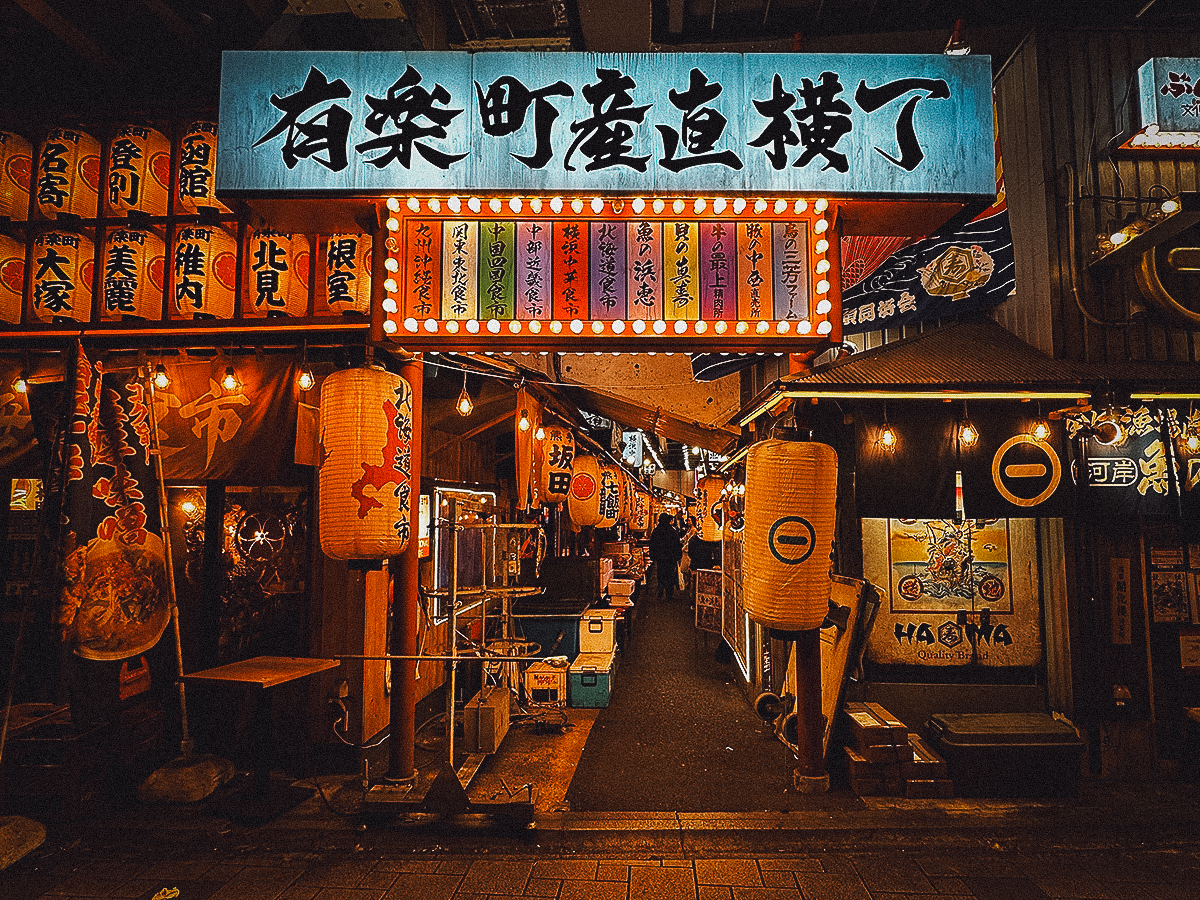
Yurakucho Sanchoku Yokocho is undeniably atmospheric and compelling in concept, but its less-than-stellar reviews on Google Maps tell a more complicated story.
Reviews complaining of high prices and mediocre food are common, with some even describing it as a tourist trap. Before coming here, I recommend doing a bit more research to make sure it matches your expectations.
LESSER-KNOWN YOKOCHOS
SANGENJAYA SANKAKU CHITAI
Number of Establishments: Around 40-50
Closest Station: Sangenjaya
If you’d like to get a drink somewhere further off the tourist trail, Sankaku Chitai in the Sangenjaya neighborhood is a cool yokocho to explore.
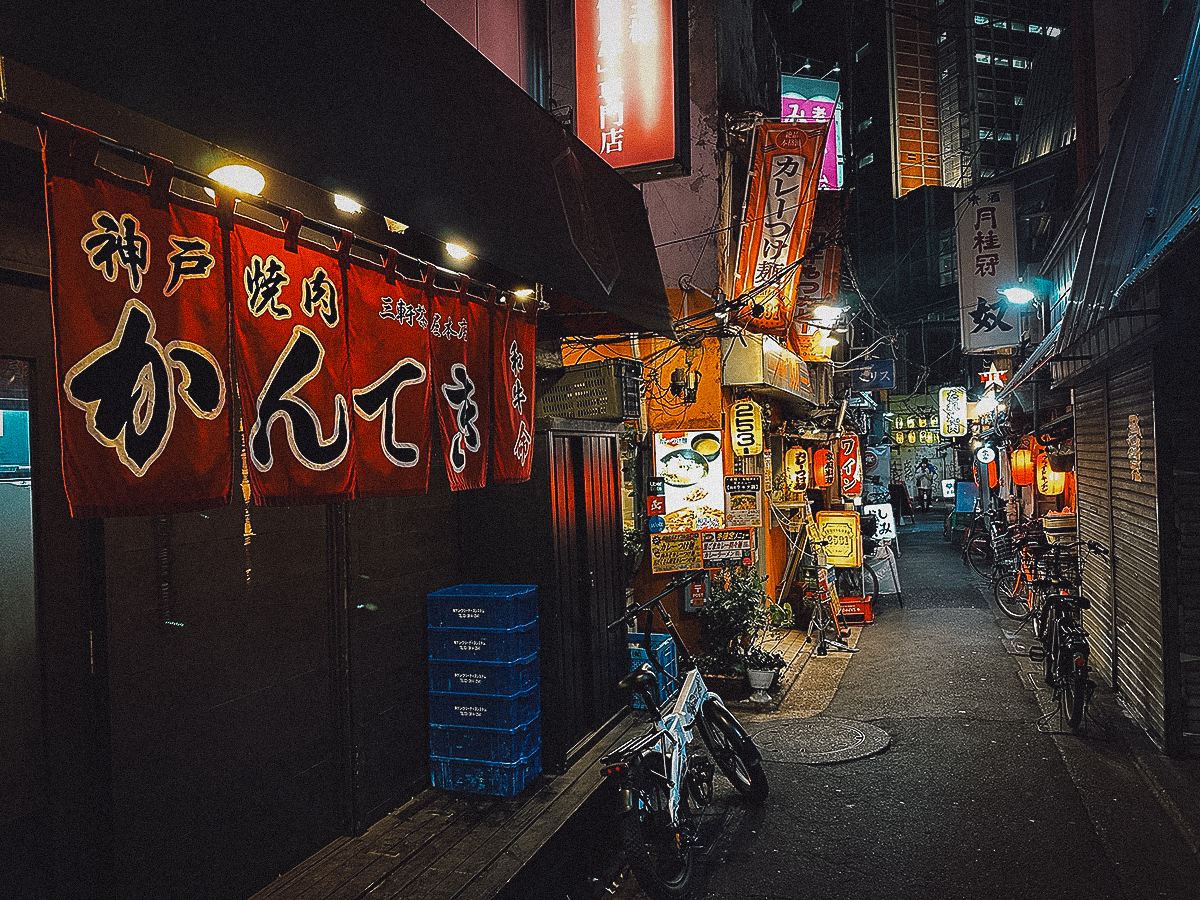
Located across the street from Sangenjaya Station, Sankaku Chitai – literally “Triangle Zone” – takes its name from the triangular patch of land it sits on. Packed into this small area is a surprisingly dense network of narrow alleys lined with bars, izakayas, and restaurants.
Unlike more famous yokochos like Omoide Yokocho and Golden Gai, Sankaku Chitai attracts relatively few tourists. The crowd tends to be younger and more local, giving the area a distinctly neighborhood feel despite its proximity to central Tokyo.
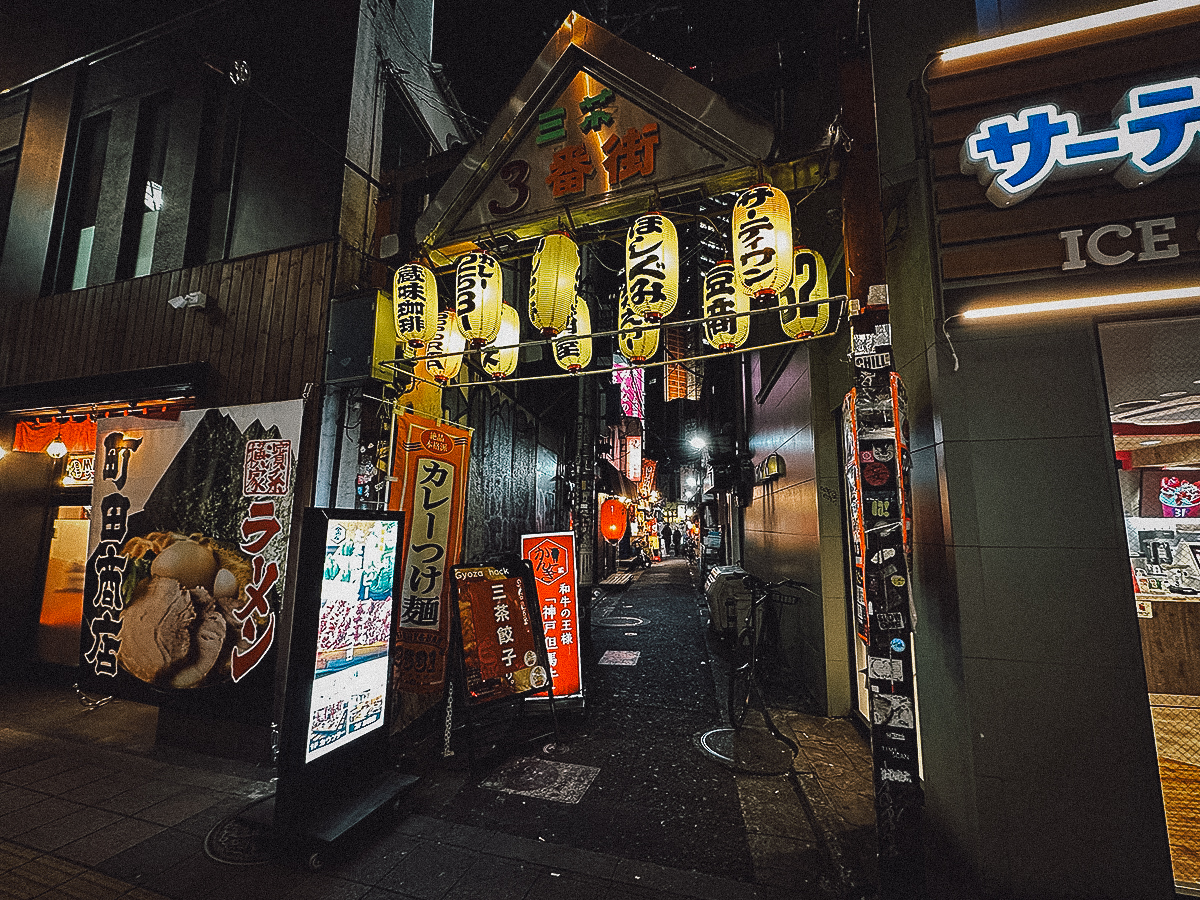
Unlike other yokochos that tend to be more uniform in layout, Sankaku Chitai feels a little more maze-like. It seems larger than it actually is, with tiny side streets branching off in multiple directions and new bars appearing around every corner.
Among all the yokochos I’ve visited in Tokyo so far, Sangenjaya Sankaku Chitai is one of my favorites. It feels grittier than others, with more graffiti, but I never felt unsafe.
OIMACHI YOKOCHO
Number of Establishments: Around 60
Closest Station: Oimachi
Located close to Oimachi Station, Oimachi Yokocho is similar in feel to Sangenjaya Sankaku Chitai. It’s well off the tourist trail, so it feels a lot more local than the better-known yokochos on this list. You’ll find relatively few tourists there, in part because the yokocho’s location isn’t clearly marked on Google Maps.
Oimachi Yokocho consists of two parallel alleyways. One has around forty bars and izakayas on both sides of the alley, while the other has roughly half that amount, mostly on one side.
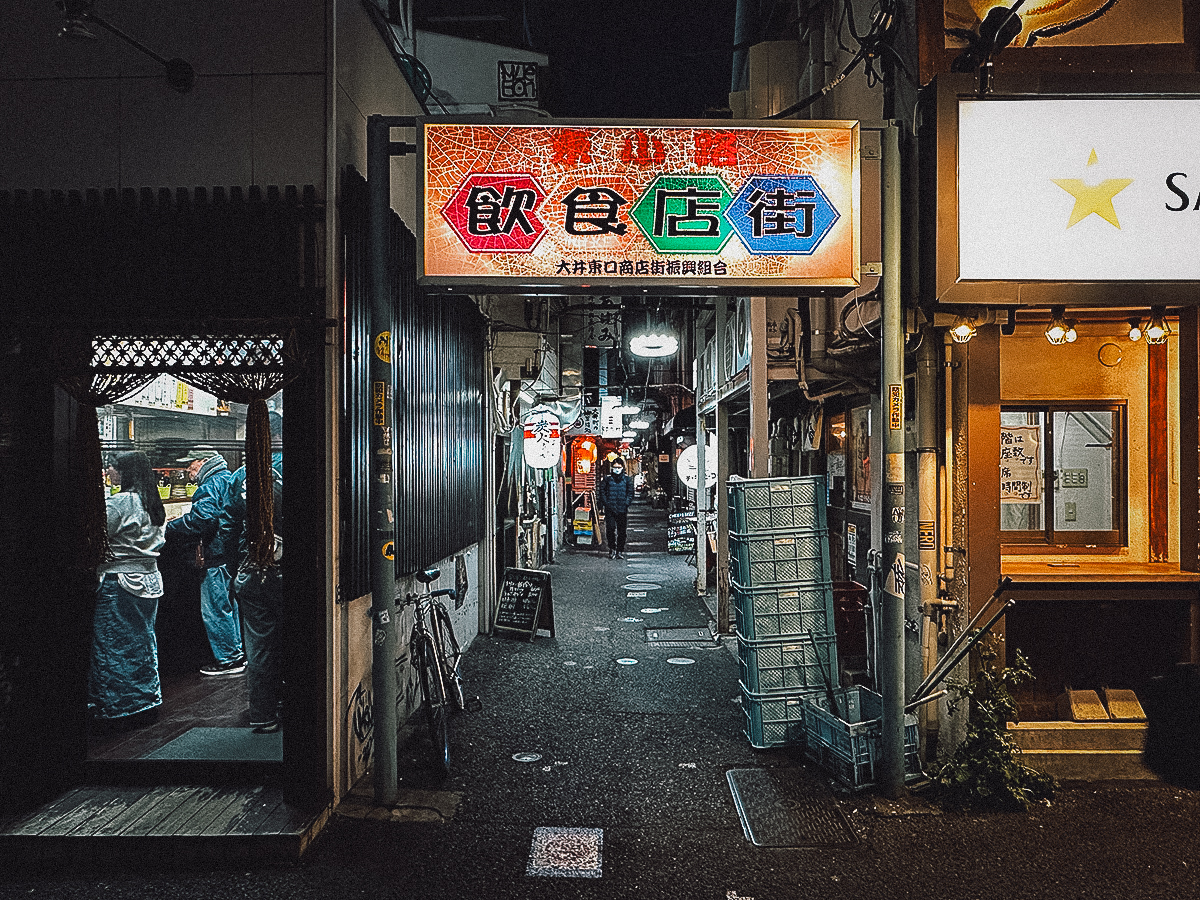
Because it wasn’t clearly marked on Google Maps, Oimachi Yokocho felt like an urban legend. I pieced together what information I could find online and set out to track it down. I knew it was somewhere near Oimachi Station, but I didn’t know exactly where. Thankfully, I eventually found it and pinned its location on the map at the bottom of this article.
WILLOW ALLEY
Number of Establishments: Around 15
Closest Station: Nishi-Ogikubo
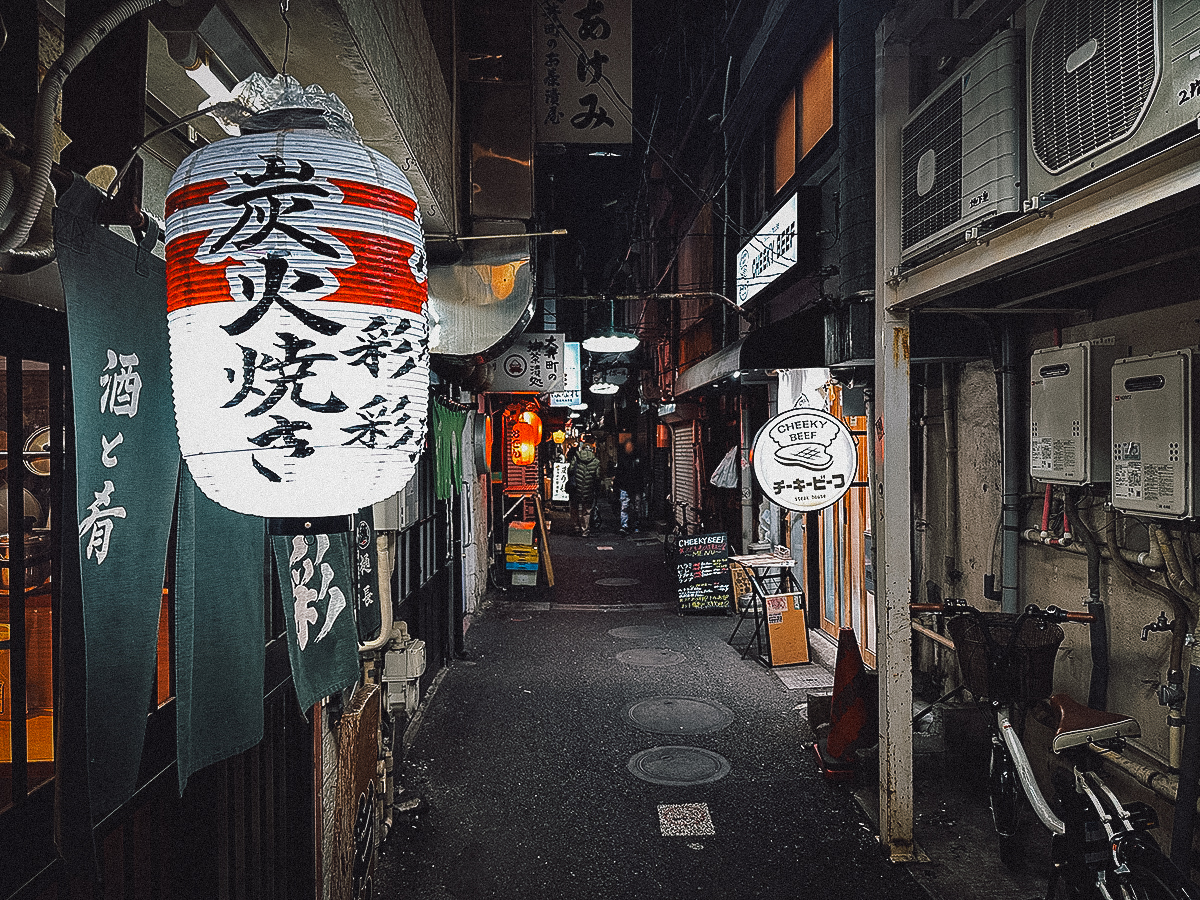
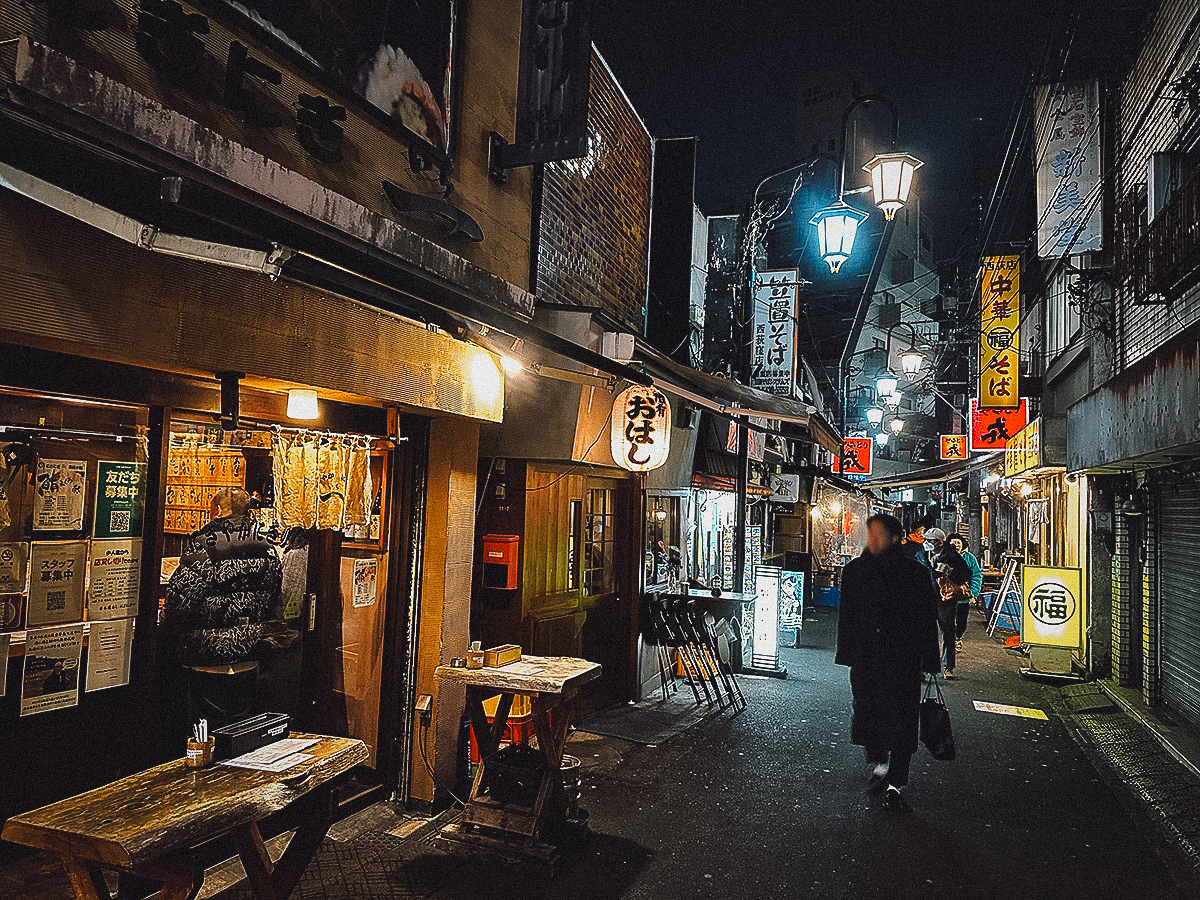
I once stayed in the Nishi-Ogikubo neighborhood for several weeks and would walk through this yokocho every night. Located just outside Nishi-Ogikubo Station, it’s well off the tourist trail and sees relatively few foreigners.
Known as Yanagi Koji in Japanese, Willow Alley was built in the 1940s on the site of a postwar black market10. Thanks to its less central location, it isn’t as well-known as Omoide Yokocho or Golden Gai, even though it shares a similar history and is every bit as atmospheric.
Like Oimachi Yokocho, Willow Alley isn’t clearly marked on Google Maps, but it’s fairly easy to find. To help you navigate, I’ve pinned its location on the map at the bottom of this article.
BOURBON ROAD
Number of Establishments: Around 60
Closest Station: Kamata
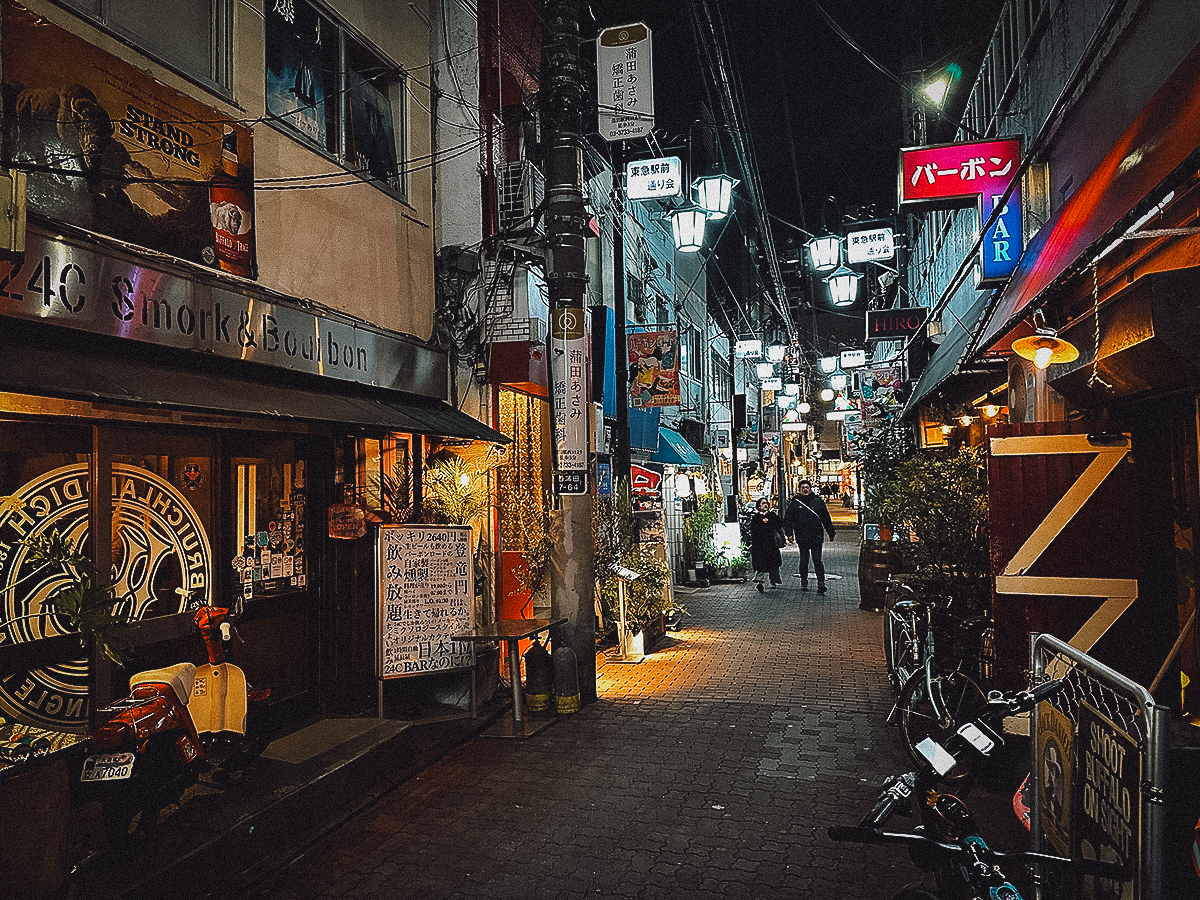
Bourbon Road is another neighborhood yokocho located in a less central part of Tokyo. You’ll find it in the vicinity of Haneda Airport, close to Kamata or Keikyu-Kamata Station. I stayed near here on another trip to Tokyo and enjoyed the lively, more local feel of this yokocho.
Despite its American-sounding name, Bourbon Road is a classic Tokyo yokocho that traces its roots to the postwar era. The origin of the name isn’t entirely clear, though many believe it’s in reference to the popularity of American whiskey during the postwar occupation.
Bourbon Road is home to around sixty bars and izakayas, many of them with a Western-inspired theme. Kamata is also regarded as the birthplace of hanetsuki gyoza, or “gyoza with wings” – a local specialty that’s worth seeking out when you’re here.
KOENJI GADO-SHITA
Number of Establishments: At least 30-40
Closest Station: Koenji
If you’ve read this far, then you may notice a pattern – many of the yokochos in Tokyo are located close to train stations or beneath elevated rail tracks. This is because postwar black markets were often set up in these areas to take advantage of foot traffic from daily commuters.
Located beneath the elevated train line near Koenji Station, Koenji Gado-shita is no different. In fact, the term gado-shita literally means “under the girders”.
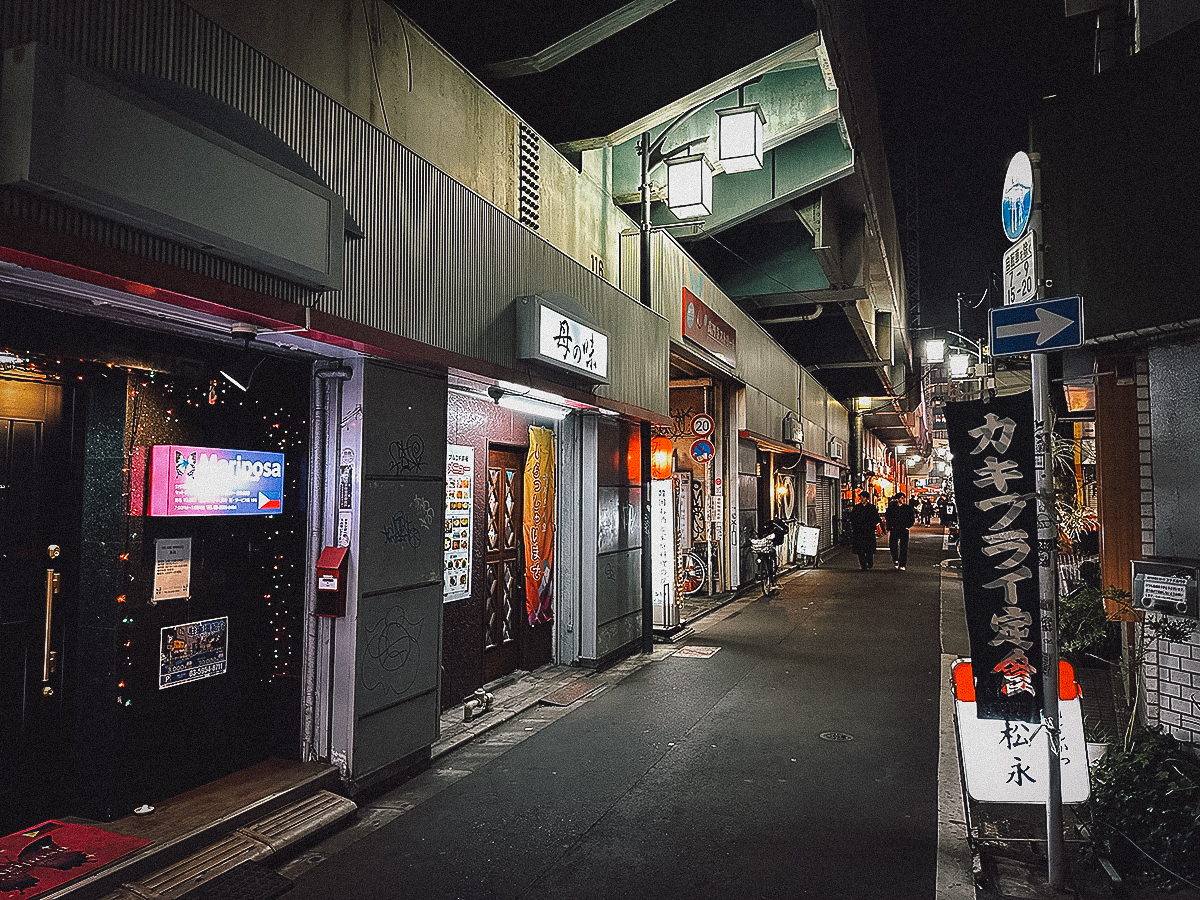
Koenji Gado-shita is home to more than 30-40 restaurants and izakayas, most of which operate directly beneath the rail tracks, so hearing and feeling trains rumbling overhead is part of the experience.
For me, Koenji is one of the coolest neighborhoods in Tokyo. It’s home to independent music venues and some of the city’s best vintage clothing shops. After a day of shopping, Koenji Gado-shita is a great place to grab a drink and a bite to eat before taking the train back to your hotel.
DAIICHI ICHIBA
Number of Establishments: Around 10
Closest Station: Koenji
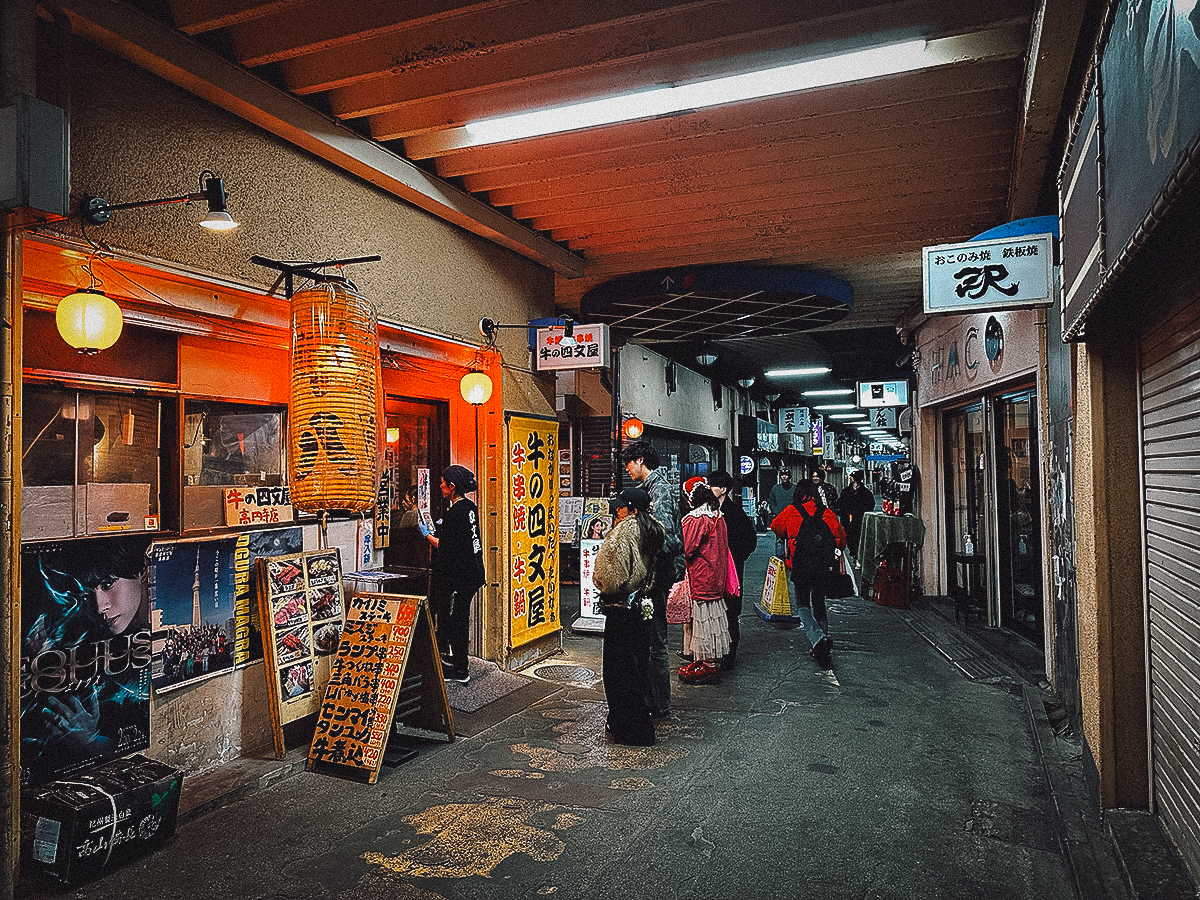
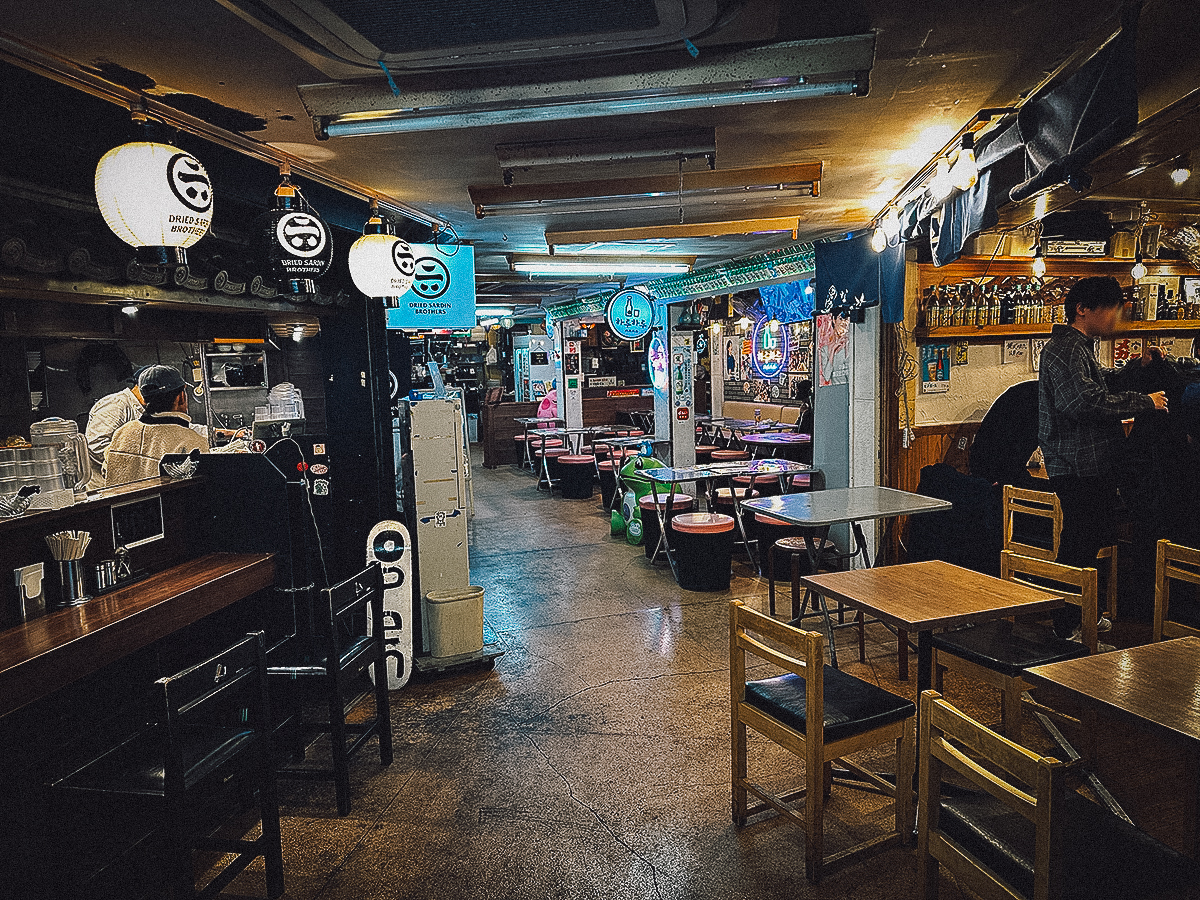
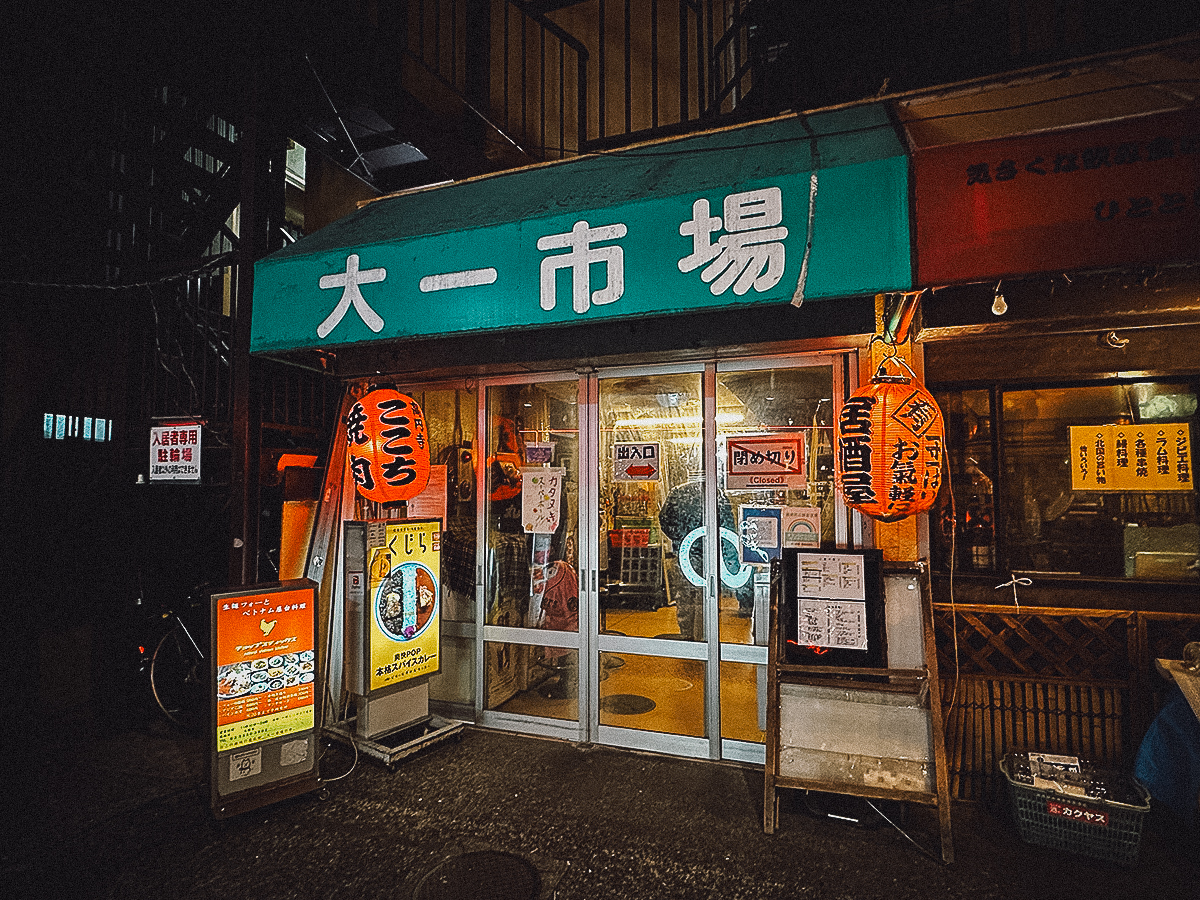
Just a short walk from Koenji Gado-shita is Daiichi Ichiba, an indoor yokocho-inspired food hall that’s home to roughly ten small restaurants, bars, and izakayas. Atmospheric in feel, similar to Ebisu Yokocho, it’s located in an L-shaped space that used to house an indoor market.
Daiichi Ichiba isn’t as well-known to foreigners, so it’s a good place to unwind and grab a drink if you prefer yokochos that feel a bit more local.
Like Ebisu Yokocho, it’s easy to walk by the entrance of Daiichi Ichiba without realizing what’s inside.
SHOWA-SHINDO SHOPPING STREET
Number of Establishments: At least 50
Closest Station: Nakano
After a day spent documenting the otaku haven of Nakano Broadway, I was feeling a little dizzy and needed a place to unwind and clear my head. Thankfully, this Showa-era shopping street is just outside.
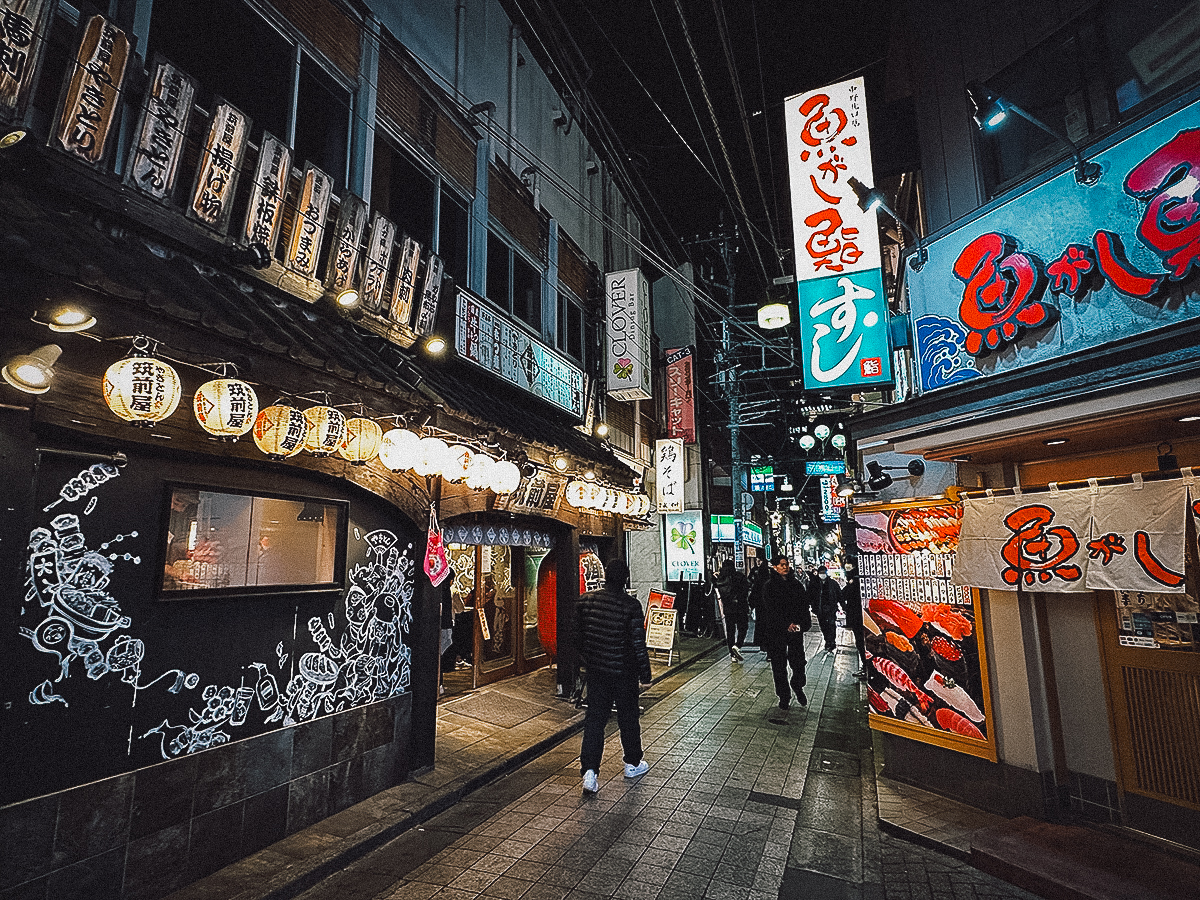
Showa-Shindo Shopping Street is part of Nakano’s dense network of retro shopping arcades and drinking alleys that branch off from the main Sun Mall corridor. The area has a distinctly Showa-era atmosphere, characterized by narrow alleyways filled with izakayas, casual eateries, and long-established local businesses.
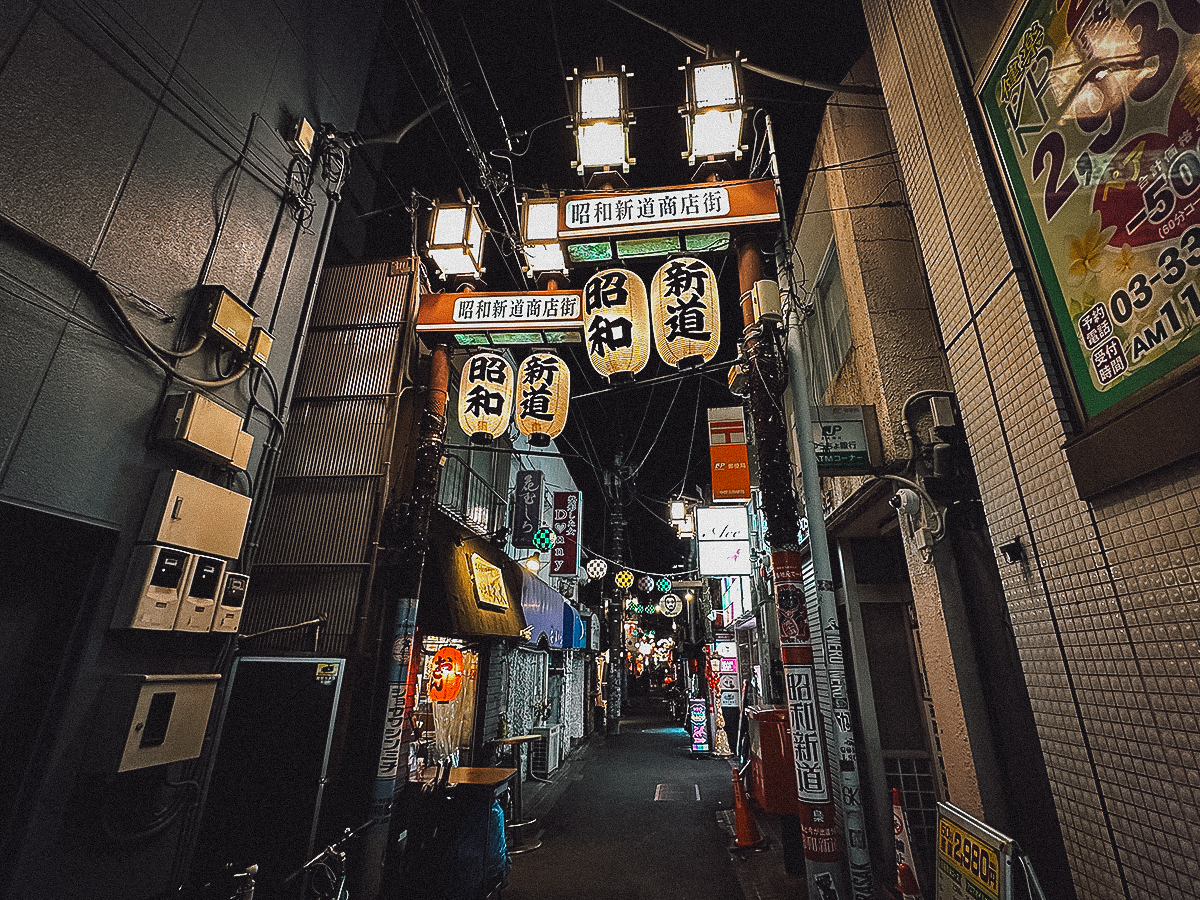
It’s unclear where Showa-Shindo Shopping Street starts and where it ends, but it doesn’t really matter. It’s a great place to grab a drink and a few skewers of yakitori while sorting through your latest Nakano Broadway haul.
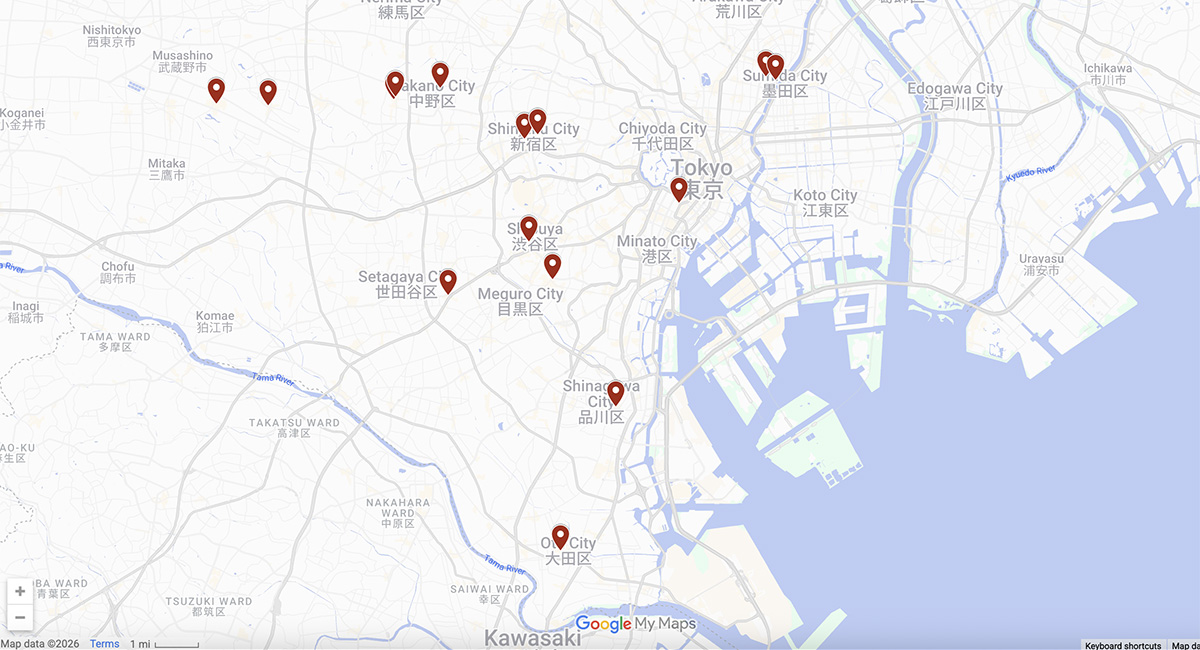
LOCATION MAP
To help you navigate, I’ve pinned the yokochos listed here on Google My Maps. Click on the link for a live version of the map.
THE FINAL SAY
Like food halls or food courts, one of the things I love most about yokochos is that there’s something for everyone. With so many restaurants and izakayas to choose from in one place, you’re bound to find something that appeals to you.
Unless I’m visiting a particularly famous izakaya, I usually don’t bother researching restaurants beforehand. Heading to a yokocho without a plan and finding a spot that catches my eye is part of the fun.
Disclosure
Some of the links in this article on yokochos in Tokyo are affiliate links, meaning we’ll make a small commission if you make a booking at no extra cost to you. As always, we only recommend products and services that we use ourselves and can personally vouch for. We really appreciate your support, as this helps us make more of these free travel guides. Arigato gozaimasu!
References
1. The Cultural Legacy of Tokyo’s Yokocho Alleys. Toki. (2024, October 4).
2. The history of Shinjuku Nishiguchi Omoide Yokocho. shinjuku-omoide.
3. Thomson, D.J. Discover Golden Gai: Tokyo’s mythical nightspot. JR Pass. (2023, June 6).
4. Shinjuku Golden Gai. Wikipedia. (2007, July 8).
5. Nabe. Where to Drink in Asakusa? A Top-Rated Spot on Hoppy Street – What It’s Like & My Impressions. K’s House Quality Hostels. (2025, September 10).
6. Yasuhiro. Nonbei Yokocho Shibuya 2026: Best Bars in Drunkard’s Alley & What to Know Before You Go. Magical Trip. (2026, May 25).
7. Ebisu Yokocho. TimeOut. (2024, July 4).
8. Nagatani, Yuta. Asakusa Underground Shopping Street the Japan’s Oldest Underground Mall. The Japan News. (2024, April 22).
9. Roseveare, Tom. Yurakucho’s Sanchoku Inshokugai. Japan Travel. (2015, April 21).
10. 柳小路の地図~Map of Willow Alley~. Nishiogiology – 西荻町学.
