
SUMMARY HIGHLIGHTS
- Gotoku-ji isn’t the only beckoning cat temple in Tokyo.
- Sengaku-ji, the final resting place of the 47 ronin, is a must-visit.
- You can have your electronics blessed at a shrine in Akihabara.
How many religious sites can you visit before temple fatigue starts setting in? According to this Reddit thread, some people tap out after just two or three, while others can visit twenty over the course of two and a half weeks and still not get bored.
One commenter made a good point: if you simply hop from temple to temple without knowing anything about their history, it’s easy to get bored. But if you take the time to learn a little more before going, the experience can become vastly different, especially when there’s an intriguing story behind it.
With Senso-ji and Meiji Jingu each welcoming roughly 30 million visitors annually1, they hardly need any coaxing. But Tokyo is home to thousands of other temples and shrines you’ve probably never heard of. Not all of them are worth visiting, but some have fascinating histories, unusual traditions, or quirky details that make them well worth seeking out.
In this article, we’ll introduce some of Tokyo’s most interesting temples and shrines, and the stories that make them worth adding to your itinerary.
VISIT TOKYO QUICK LINKS
To help you with your Tokyo trip planning, I’ve put together links to highly-rated hotels, tours, and other travel-related services here.
HOTELS
Recommended hotels in Shibuya, one of the best areas to stay for first-time visitors to Tokyo.
- Luxury: Cerulean Tower Tokyu Hotel
- Midrange: Shibuya Tokyu REI Hotel
- Budget: Almond Hostel and Cafe Shibuya
EXPERIENCES
- Sightseeing Tour: Asakusa and Sensoji Walking Tour
- Temple Tea Ceremony: Tea Ceremony at Ekoin Temple with Traditional Tea Utensils
- Food Tour: Shinjuku Food Tour
- Market Tour: Tsukiji Fish Market Guided Walking Tour
- Calligraphy: Learn Calligraphy with a Sumi Artist at Kinryu-ji in Asakusa
- Cooking Class: Cooking Classes in Tokyo
OTHER SERVICES
- Travel Insurance (non-US residents get 5% off)
- Airport Transfers: Narita Airport | Haneda Airport
- Tokyo Subway Ticket
- Japan Rail Pass
- Japan eSIM
TEMPLES & SHRINES IN TOKYO WITH COOL BACKSTORIES
Gotoku-ji
Temple of a Thousand Lucky Cats
Thanks in part to social media, Gotoku-ji has become one of the most popular temples in Tokyo. It’s one of the places where Japan’s famous maneki-neko, or beckoning cat, is said to have originated.
According to legend, the connection dates back to the early Edo period, when Ii Naotaka, daimyo of the Hikone domain, was hunting with falcons when a cat sitting at the temple’s gate appeared to beckon him inside. Moments later, a lightning bolt struck the very tree he was standing under. Grateful for the cat that seemingly saved his life, Naotaka became a patron of Gotoku-ji and made it the ancestral temple of the Ii clan2.
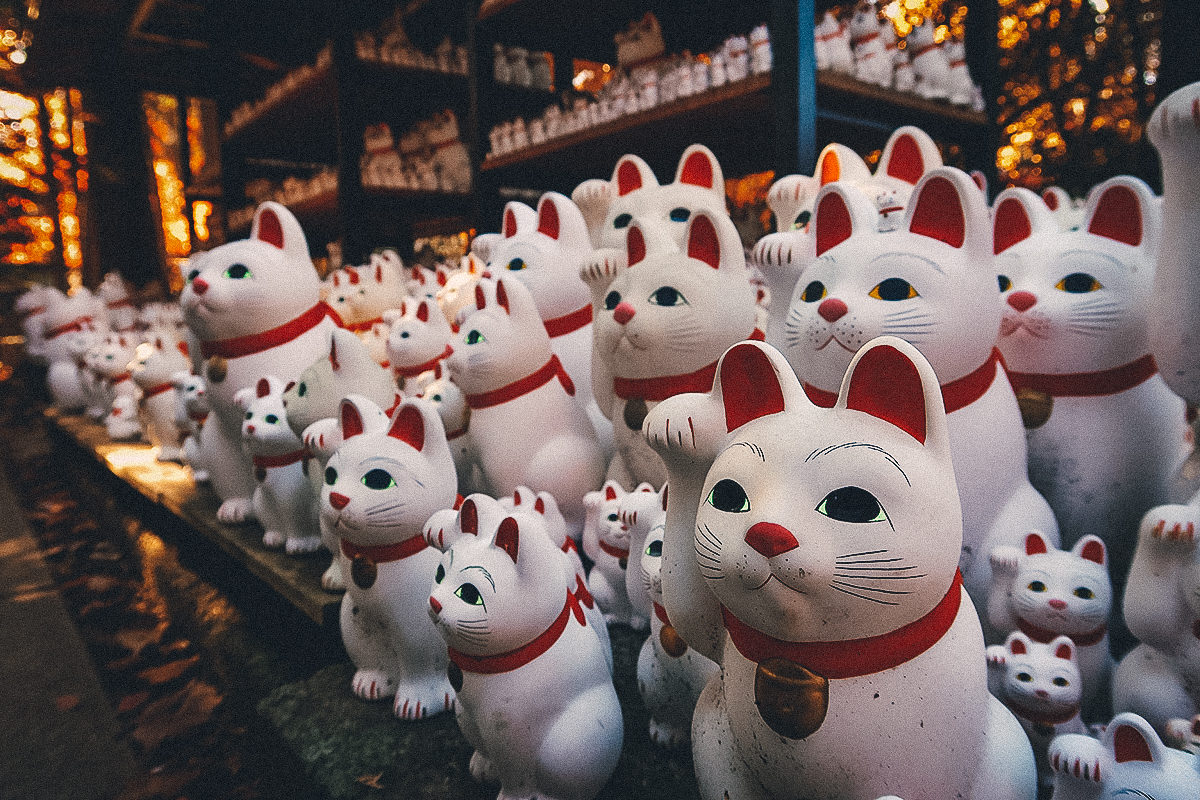
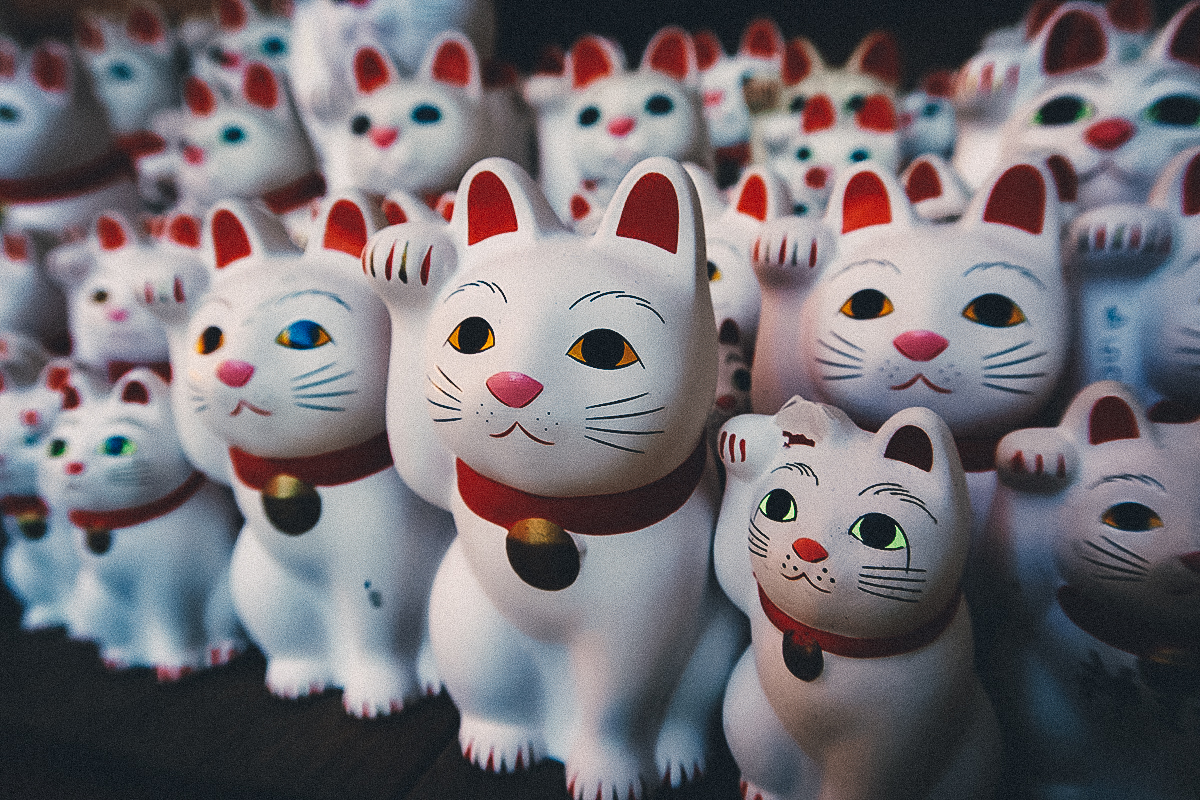
Today, the temple is famous for the hundreds, if not thousands, of little white maneki-neko gathered at the temple’s Shofuku-den. Limited to one per person, they’re available in different sizes and can be purchased and taken home as souvenirs.
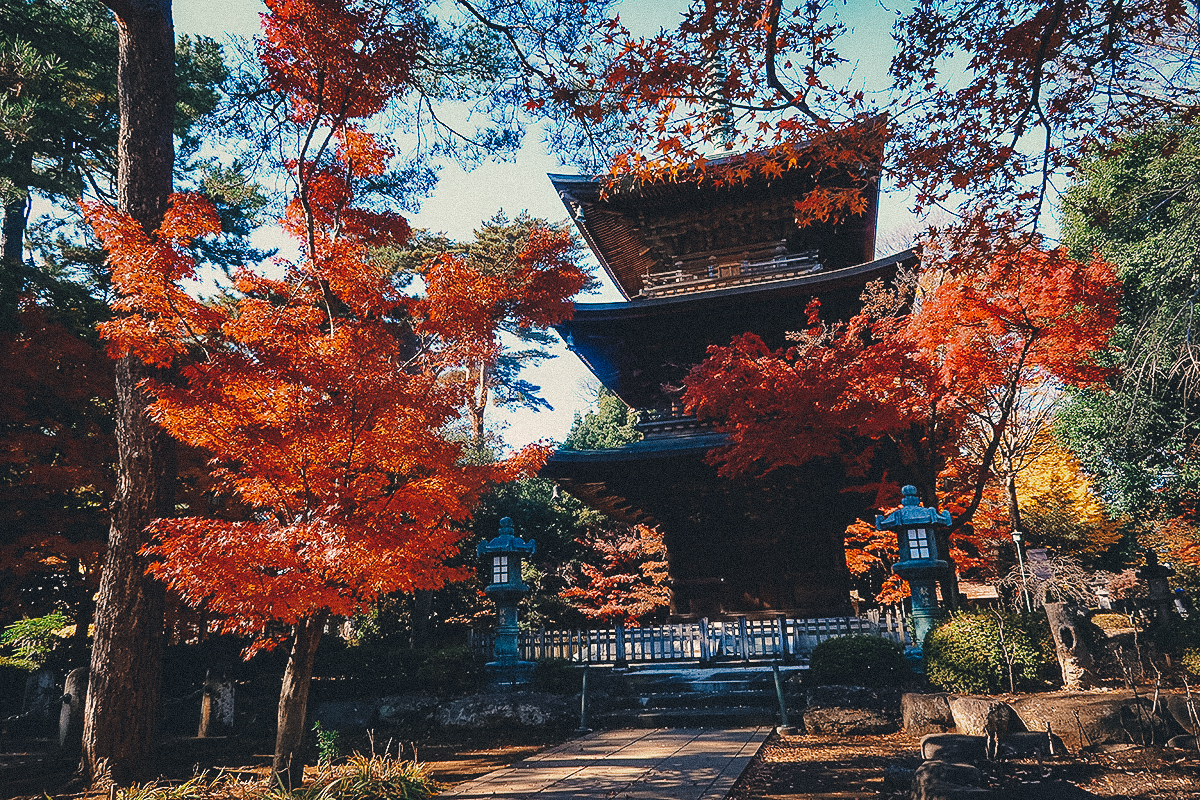
Most tourists come for the cats, but there’s more to Gotoku-ji than its famous feline statues. Despite the crowds, the temple grounds are surprisingly tranquil – with wooded paths, traditional buildings, and a three-story pagoda that makes for a dramatic backdrop for photos.
As you can see below, the temple becomes especially colorful in the fall.
Imado Jinja
The Other Birthplace of Japan’s Beckoning Cat
Imado Shrine is another religious site in Tokyo that’s associated with the maneki-neko.
JAPAN TRAVEL DEALS
Planning a trip to Japan? Enjoy up to 50% off on selected experiences and activities with Klook and Get Your Guide. Click on the links for a list of discounts, promo codes, and limited-time offers.
According to an Edo period legend, an elderly woman living in Imado was so poor that she could no longer afford to feed her beloved cat and was forced to let it go. That night, the cat appeared to her in a dream and told her to make dolls in its image, promising that they would bring her good fortune. She followed the cat’s instructions, making figurines from Imado-yaki, the pottery traditionally produced in the area. The cat figurines became popular, eventually lifting the woman out of poverty3.
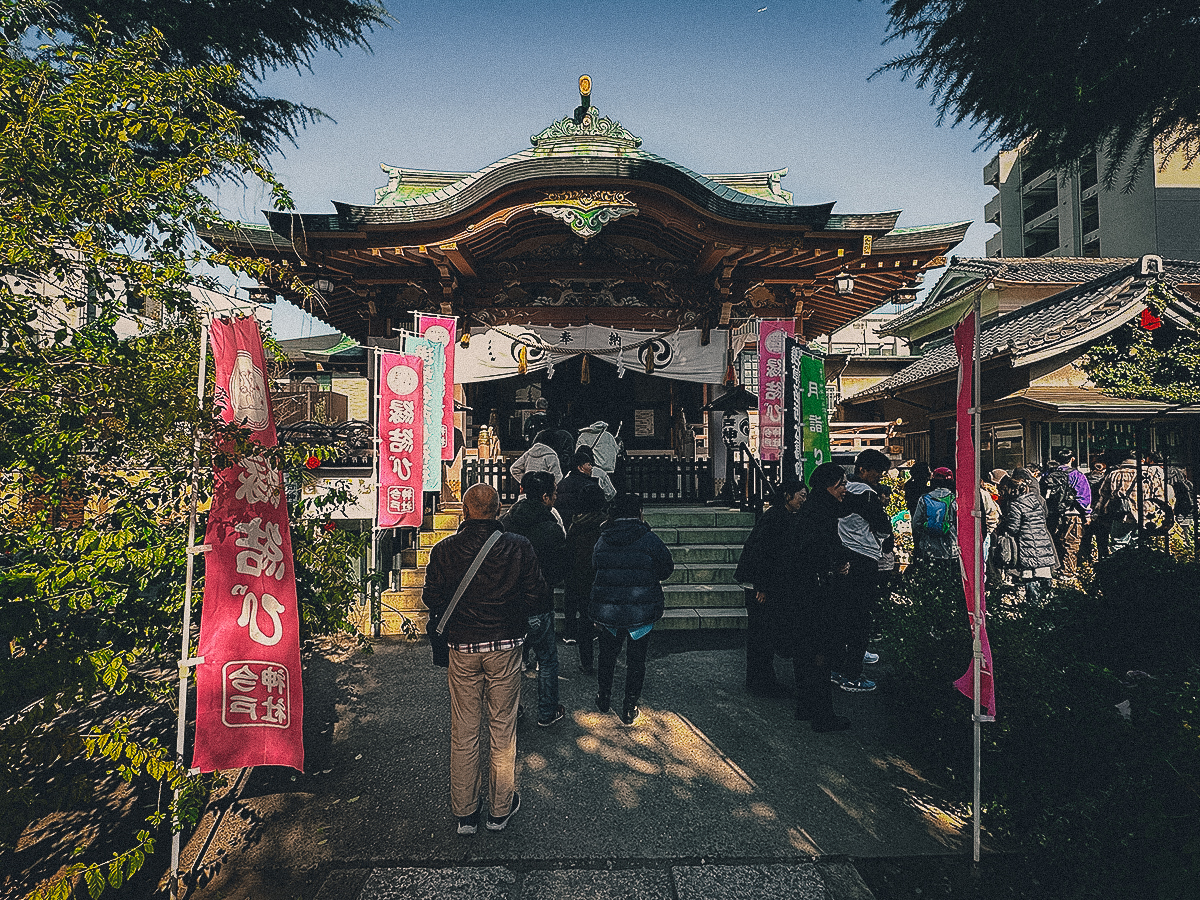
Imado Shrine has another reason for attracting visitors – love and matchmaking3. The shrine enshrines Izanagi and Izanami, the divine couple from Japanese mythology, and is popular with people praying for good relationships. You’ll often see pairs of maneki-neko around the shrine – including large statues inside the main building – reinforcing its reputation as a place to pray for enmusubi, or the forming of romantic connections.
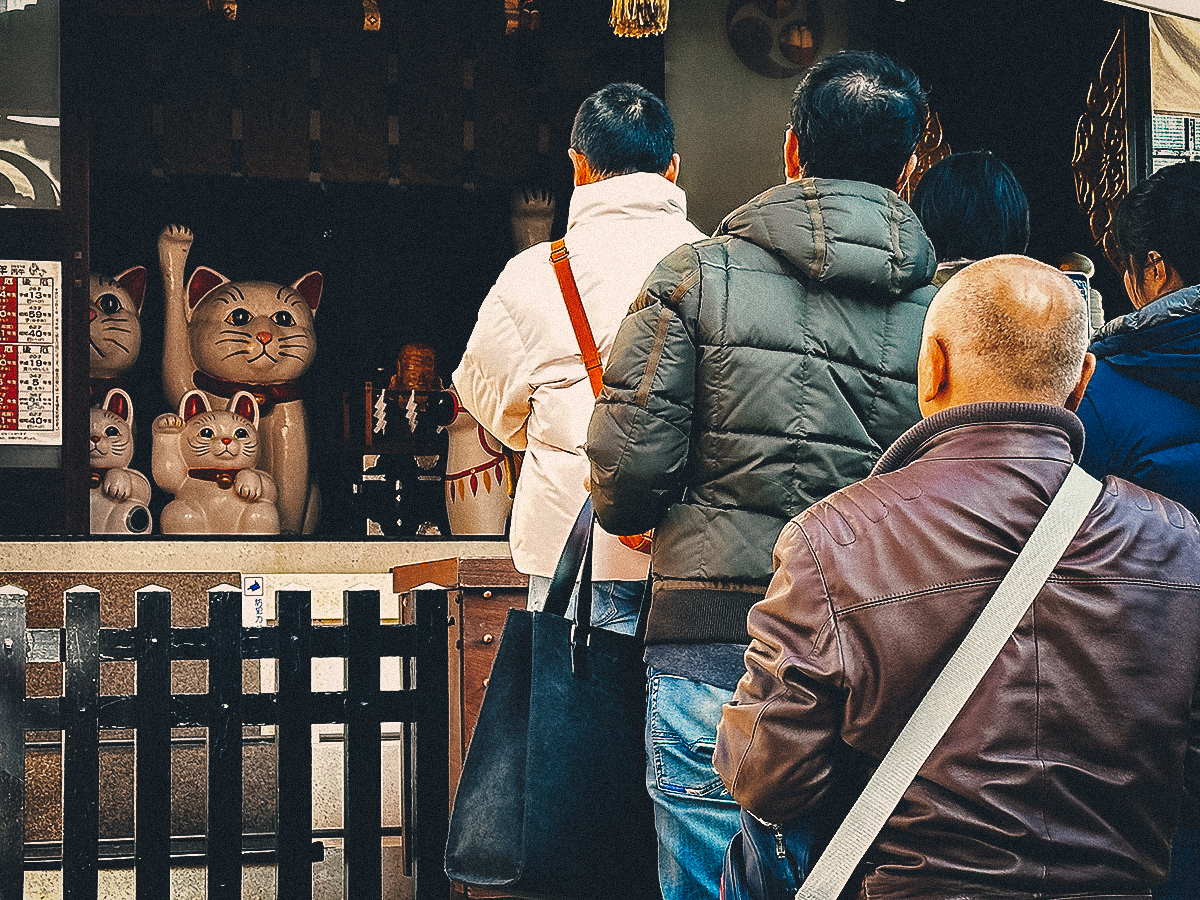
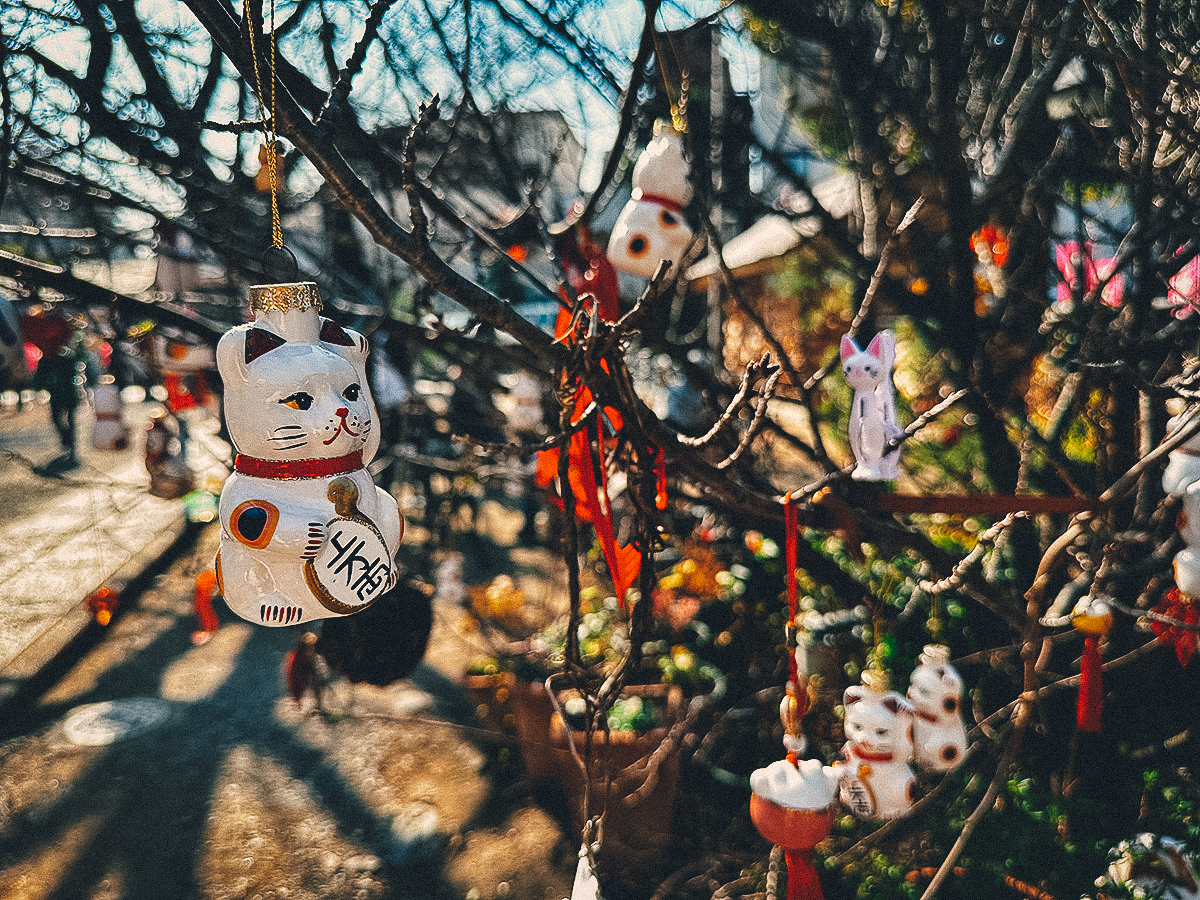
With Gotoku-ji’s competing origin story, it’s impossible to know what the beckoning cat’s true origin is, but Imado’s connection to the tradition has become an important part of the shrine’s identity. Though not as impressive or photogenic as the maneki-neko at Gotoku-ji, you’ll find beckoning cats everywhere around its grounds.
Takagi Shrine
Tokyo’s Onigiri Shrine
At first, Takagi Shrine in Oshiage looks like a fairly ordinary neighborhood shrine, but then you start noticing the rice balls. Onigiri-shaped decorations, charms, and ema plaques are scattered around the grounds, giving Takagi Shrine its unofficial nickname as Tokyo’s “onigiri shrine.”
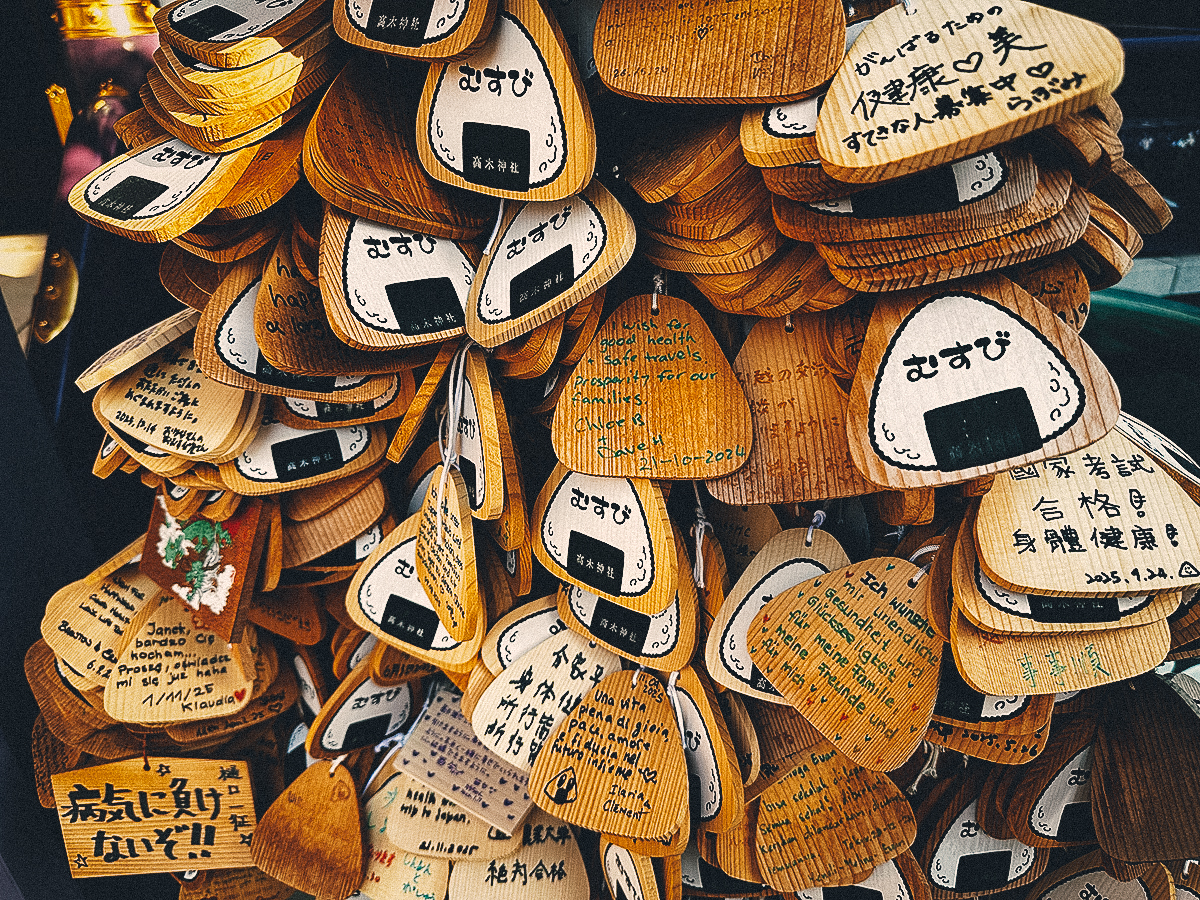
Takagi Shrine enshrines Takami-musubi no Kami, a deity whose name is associated with musubi. For non-Japanese visitors, the word musubi conjures images of those delicious rice balls you can buy at konbini, but it can also refer to the Shinto concept of creation, connection, and bringing things together.
The shrine’s connection to musubi gives the onigiri motif a clever double meaning. Musubi can refer to both the deity’s creative power and to the act of forming rice into an onigiri. Takami-musubi no Kami is also known as “Takagi no Kami”, which explains the shrine’s name.
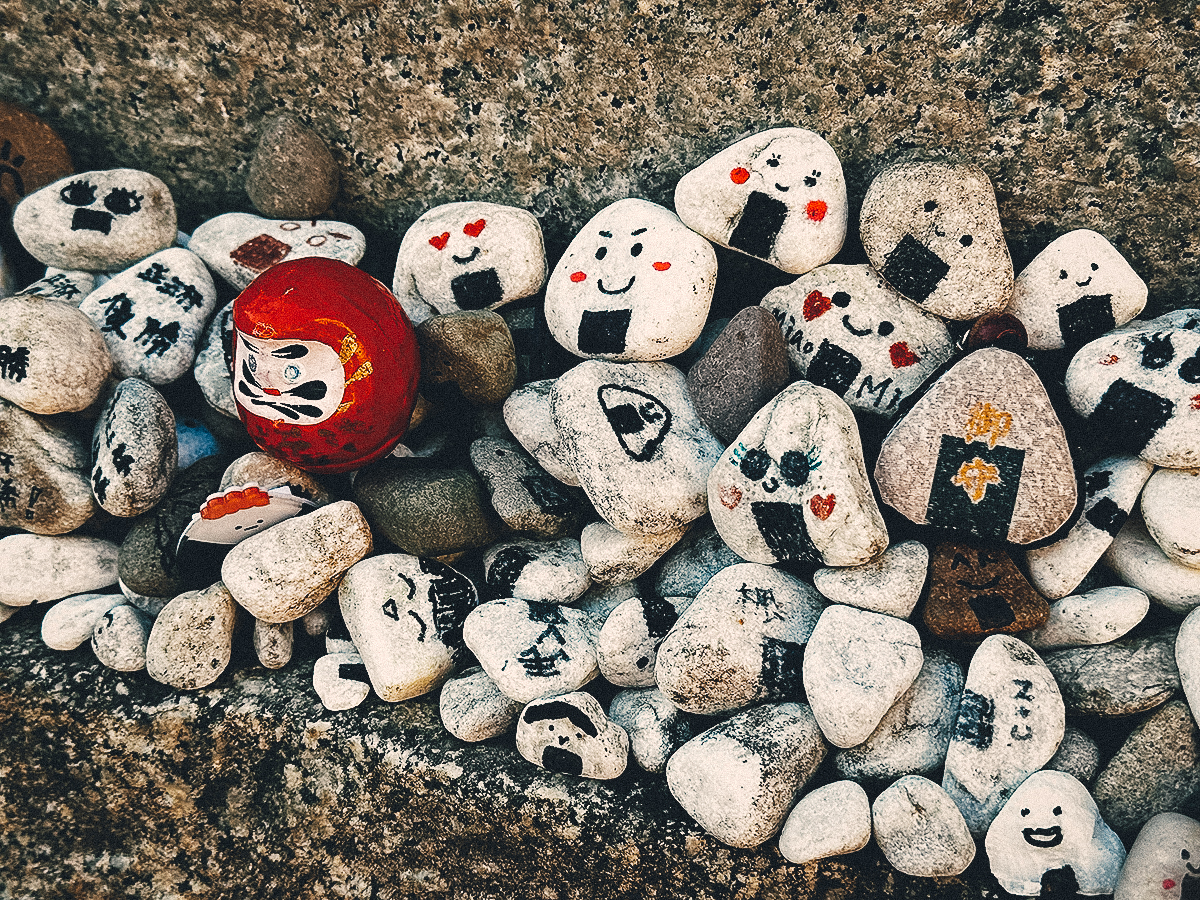
Takagi Shrine is within walking distance of Tokyo Skytree, making it a convenient stop if you’re exploring Oshiage and the eastern side of Tokyo.
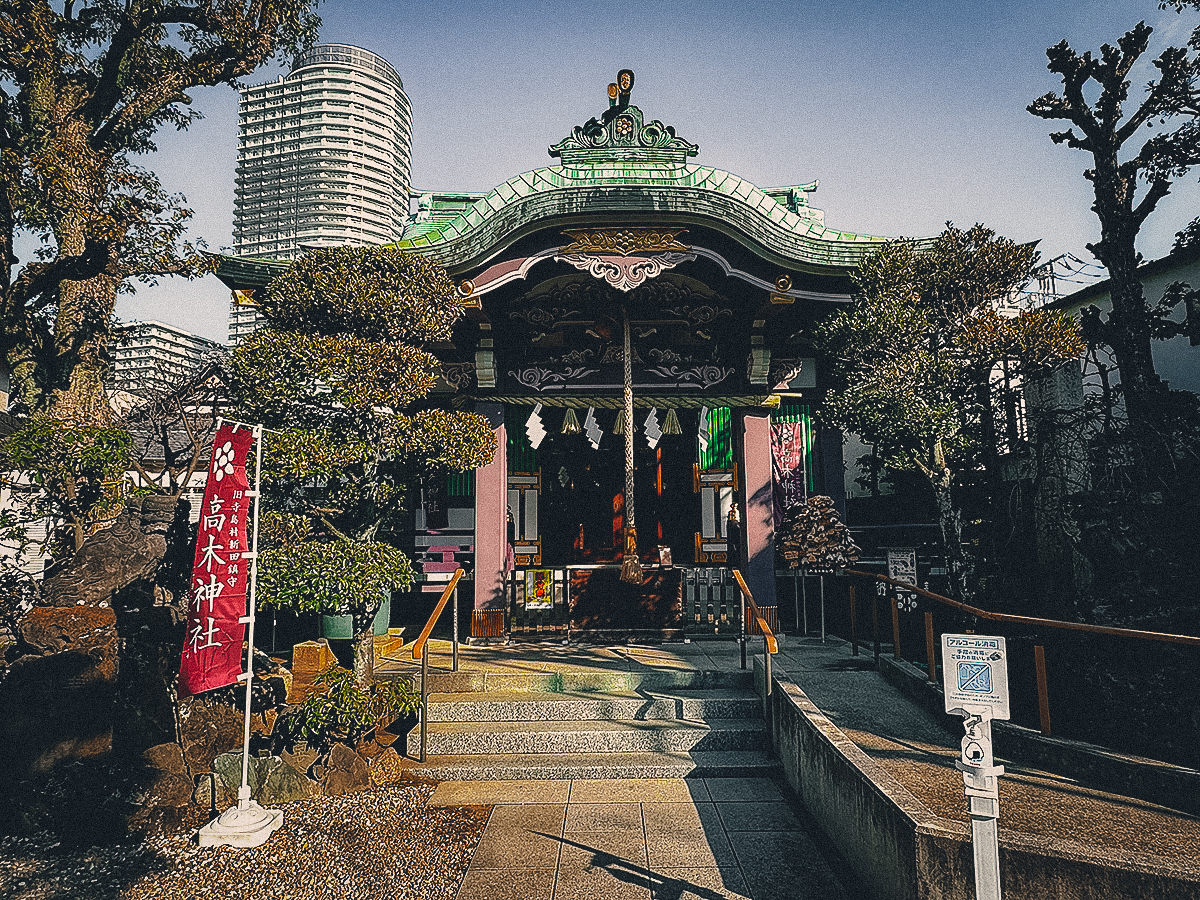
Matsuchiyama Shoden
Temple of Giant Daikon Radishes
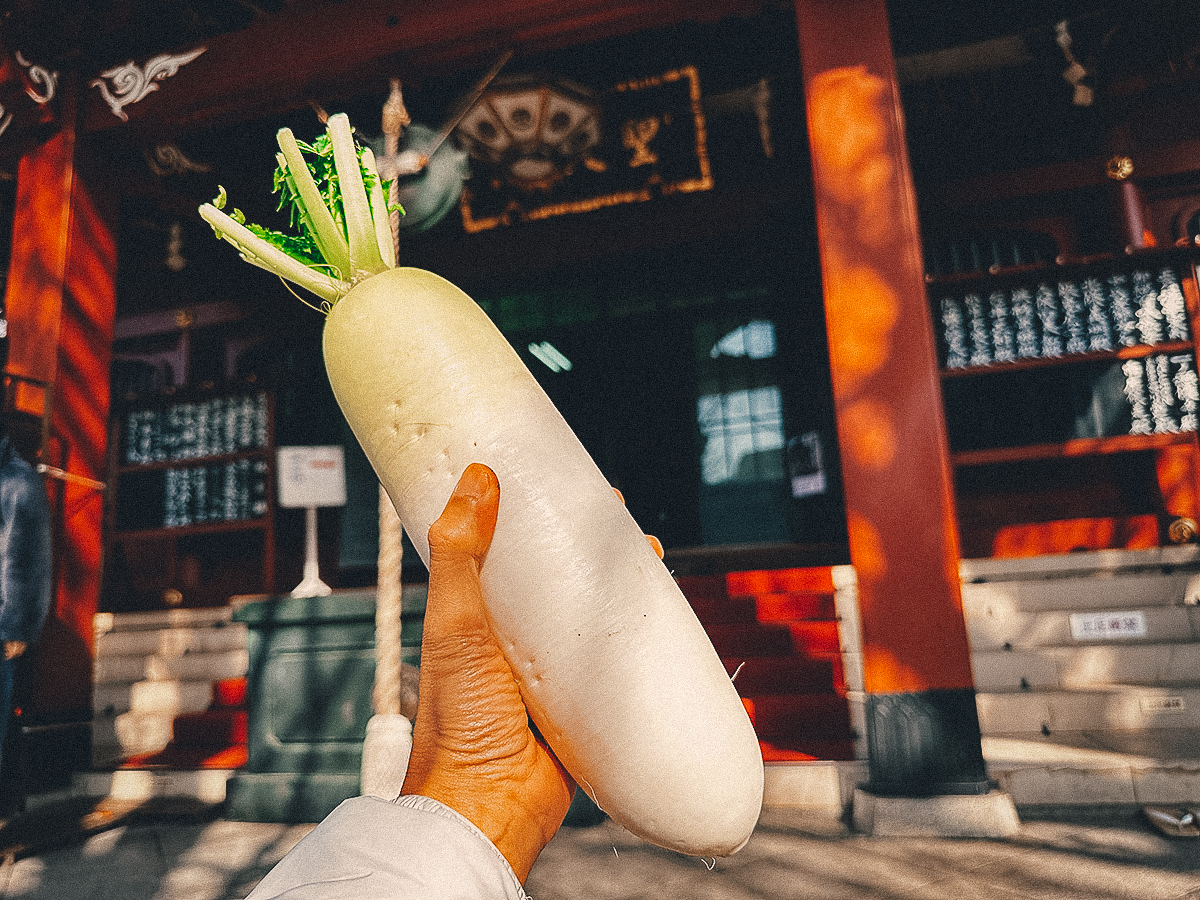
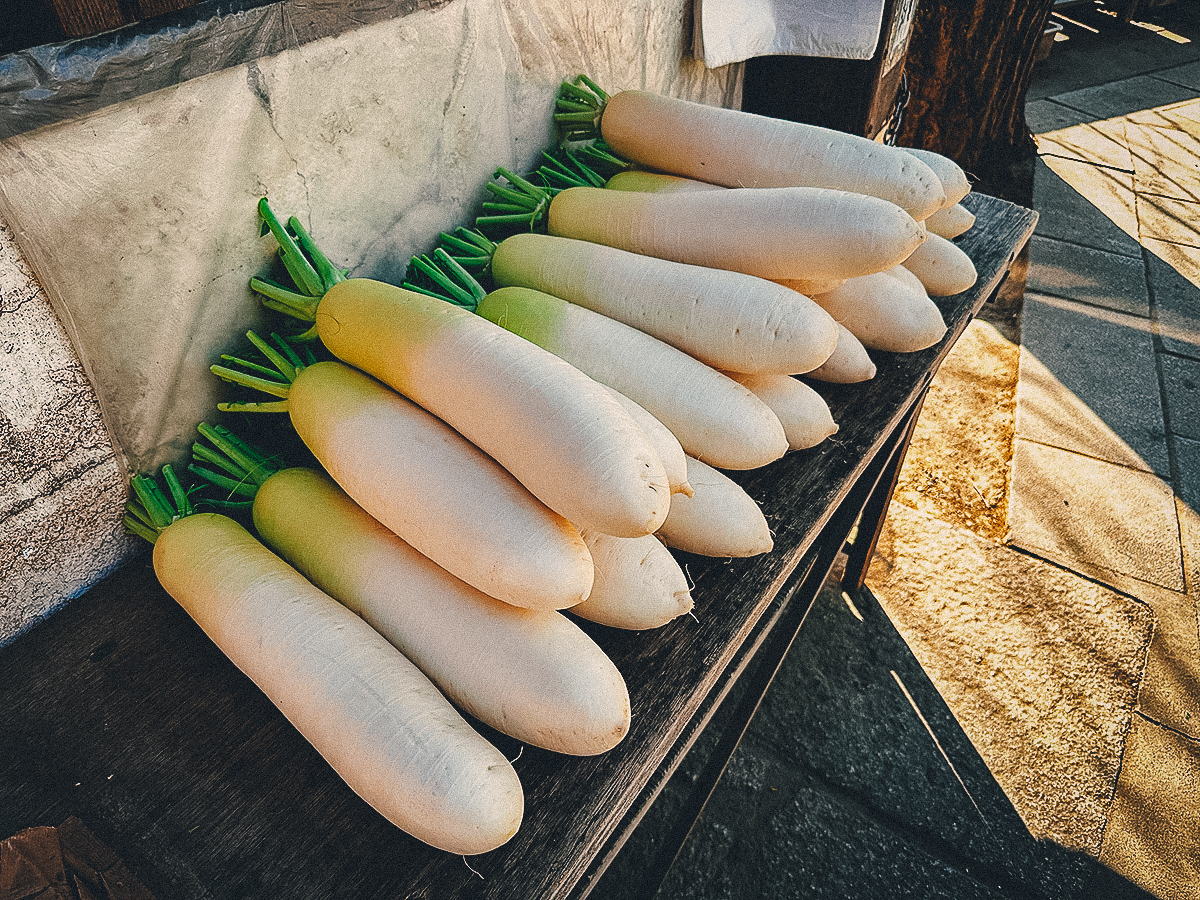
I’ve visited a few interesting temples and shrines in Tokyo, but one of the most memorable has been Matsuchiyama Shoden, a small Buddhist temple perched on a hill overlooking the Sumida River. The temple is affectionately known as “Daikon Temple”, and once you see the giant radishes around the grounds, you’ll understand why.
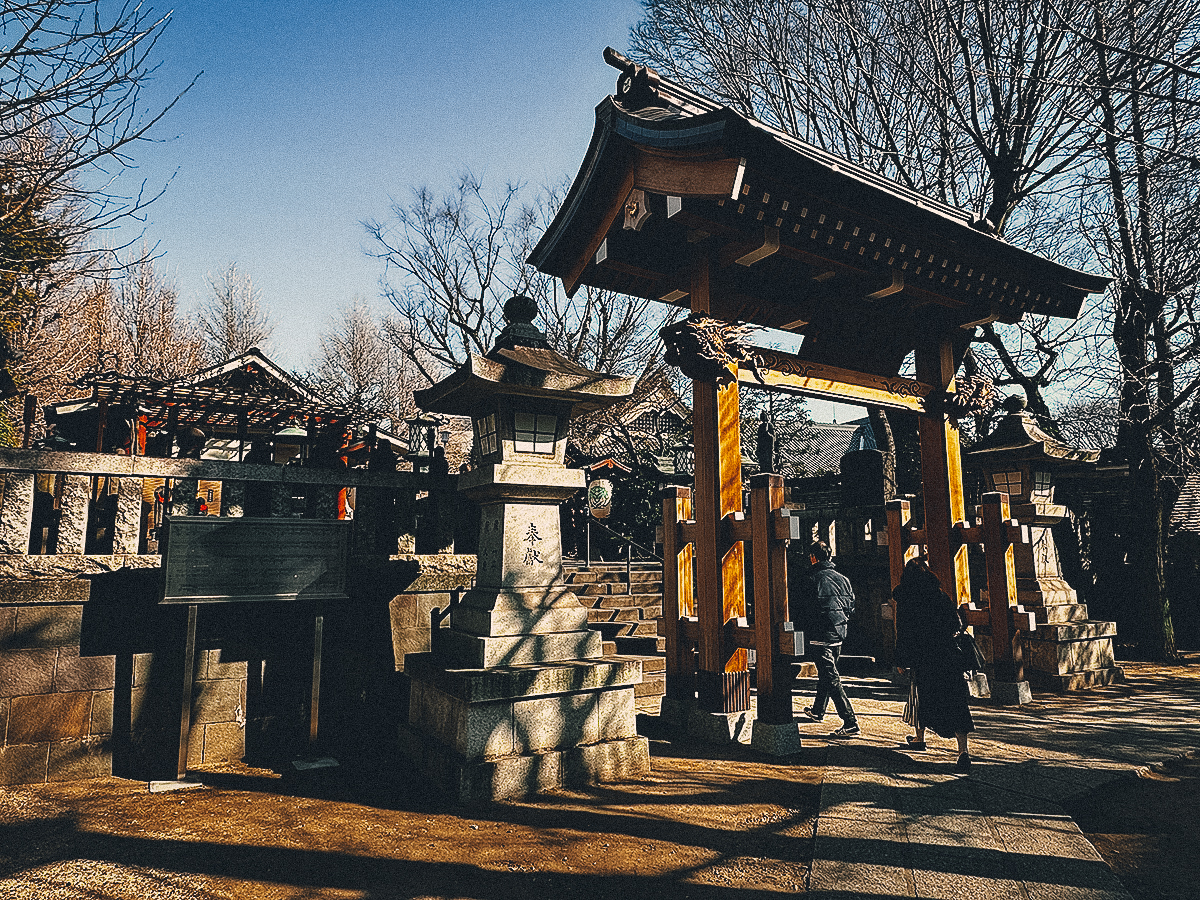
Visitors can purchase and offer daikon radishes at this temple. The vegetable is an important symbol of Matsuchiyama Shoden and is associated with the blessings of the deity worshipped here, Shoden (or Kangiten), a form of the Buddhist deity Ganesha. A symbol of good health and marital harmony, daikon radishes are said to represent the three poisons of Buddhist thought – delusion, greed, and hatred – and offering the vegetable to the deity is said to symbolize purification.
The temple also uses the image of a drawstring purse, or kinchaku, as another important symbol, representing prosperity and material blessings4.
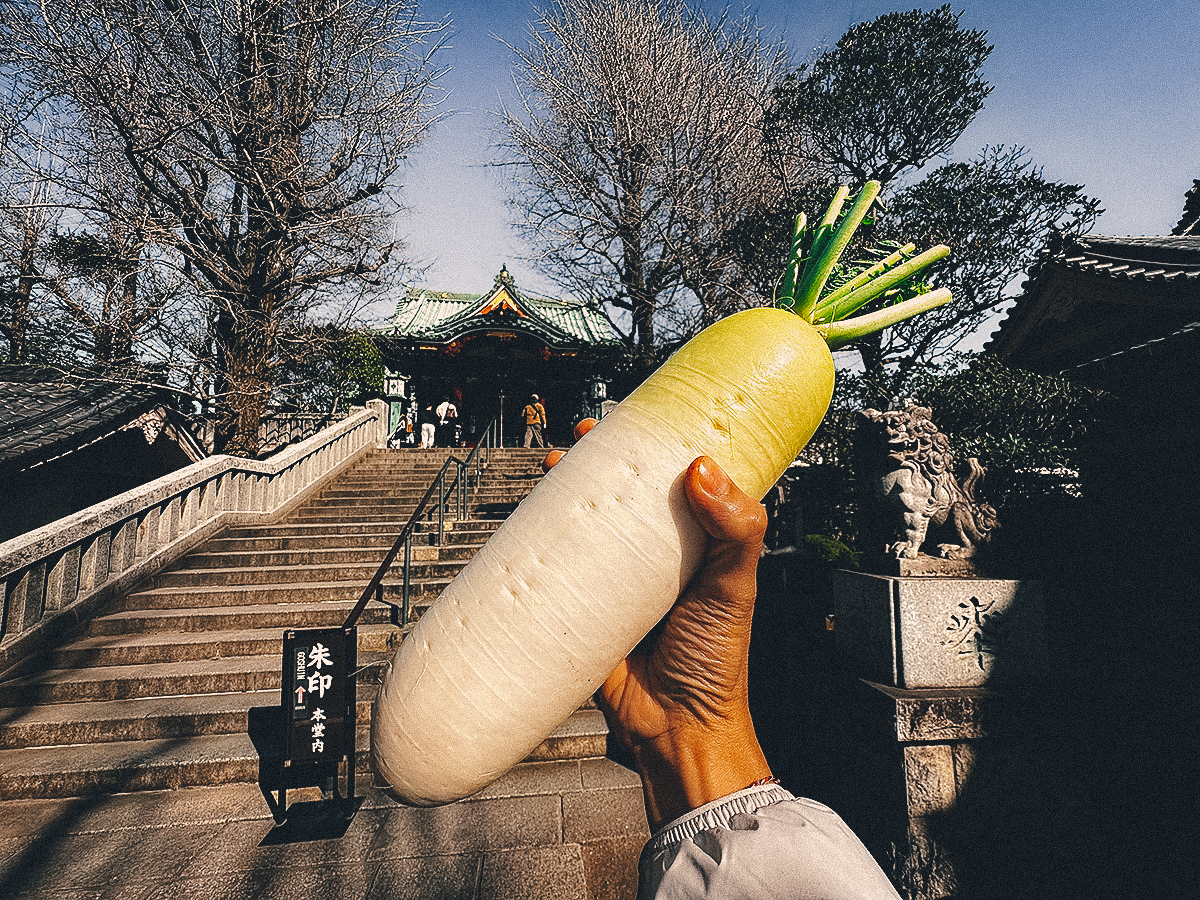
When the altar inside the main building becomes piled high with daikon radishes, temple workers move them outside and arrange them on a table. Visitors are welcome to take some home if they wish.
Hodo Inari Jinja
Monkeys Lead the Way to Ginza’s Hidden Shrine
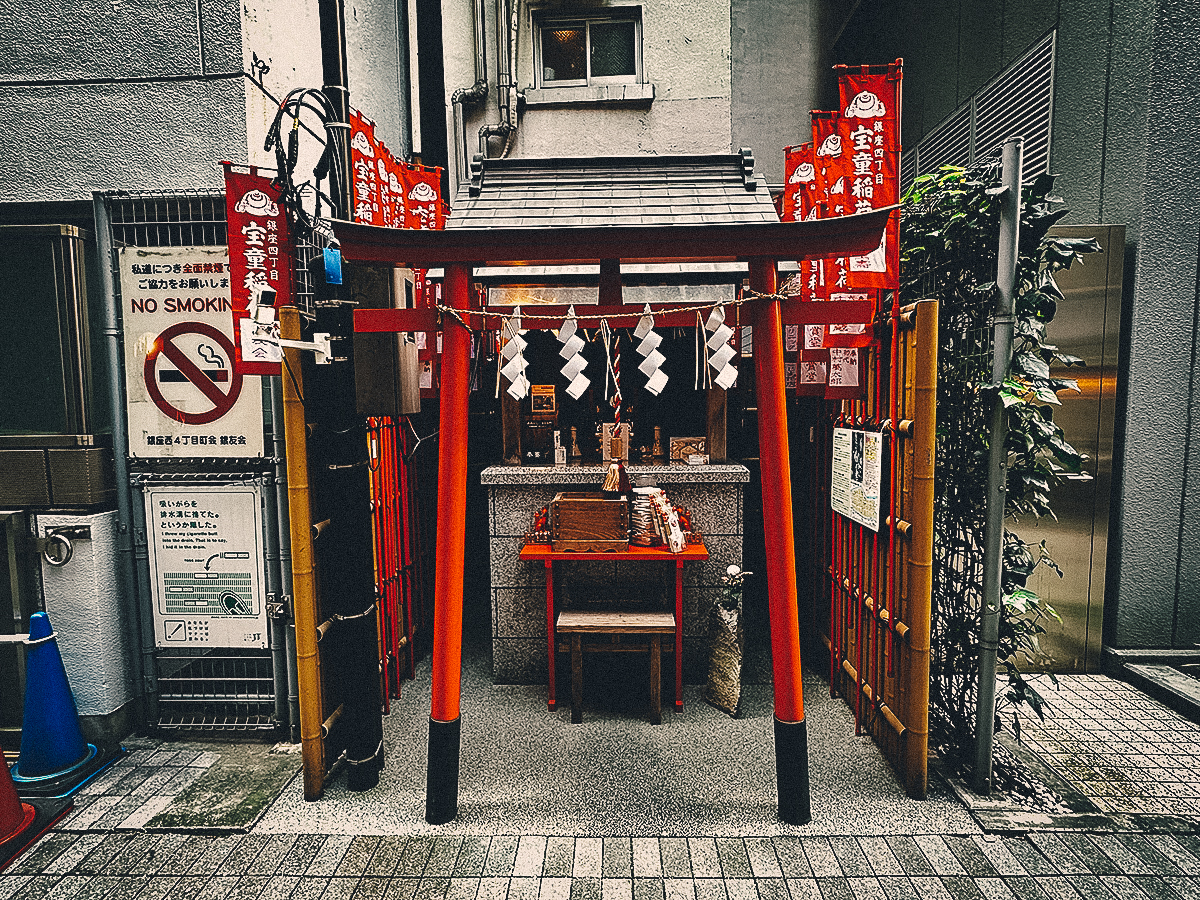
Tokyo is full of tiny shrines hidden in unexpected places, but few are as fun as Hodo Inari Jinja in Ginza. Tucked away in a narrow alley in Ginza, this tiny shrine can easily go unnoticed if it weren’t for curious-looking monkey sculptures pointing to its location from the street.
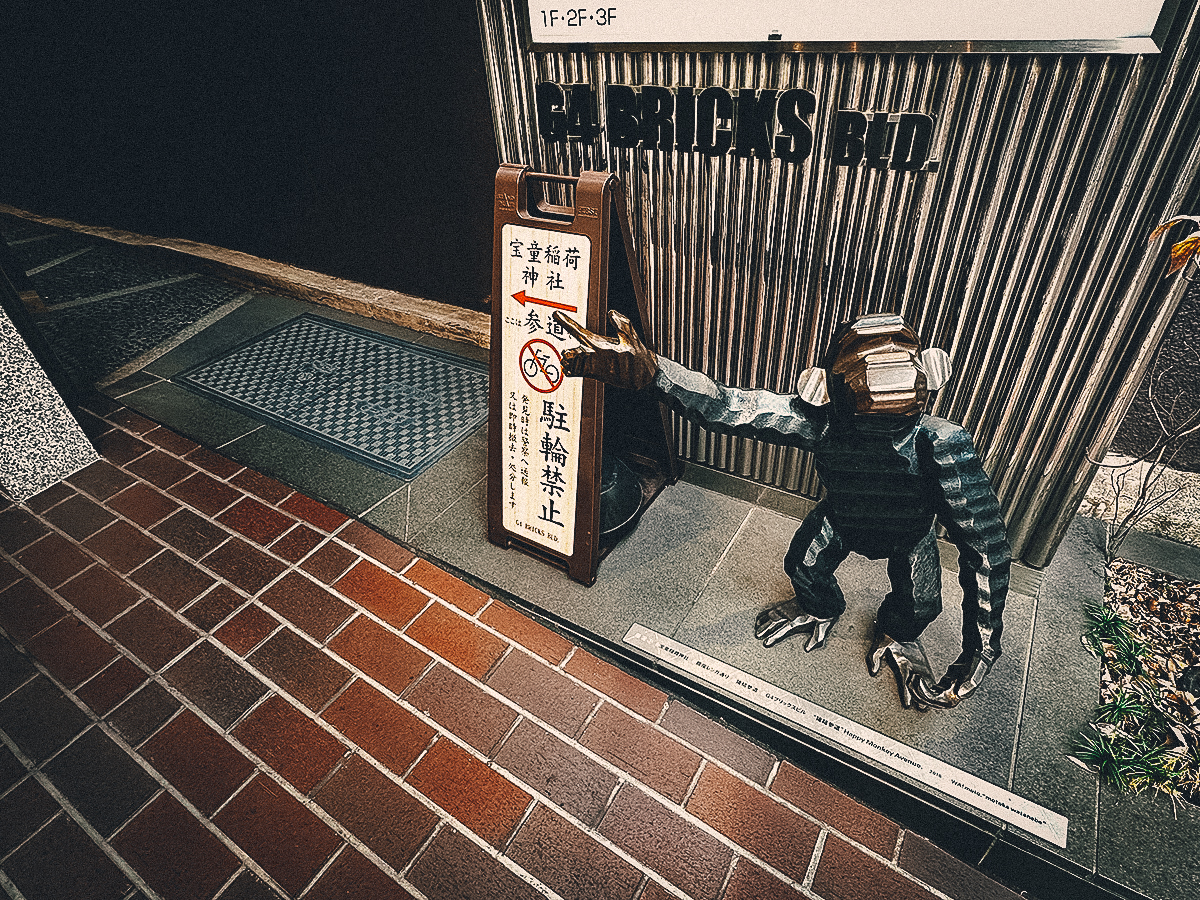
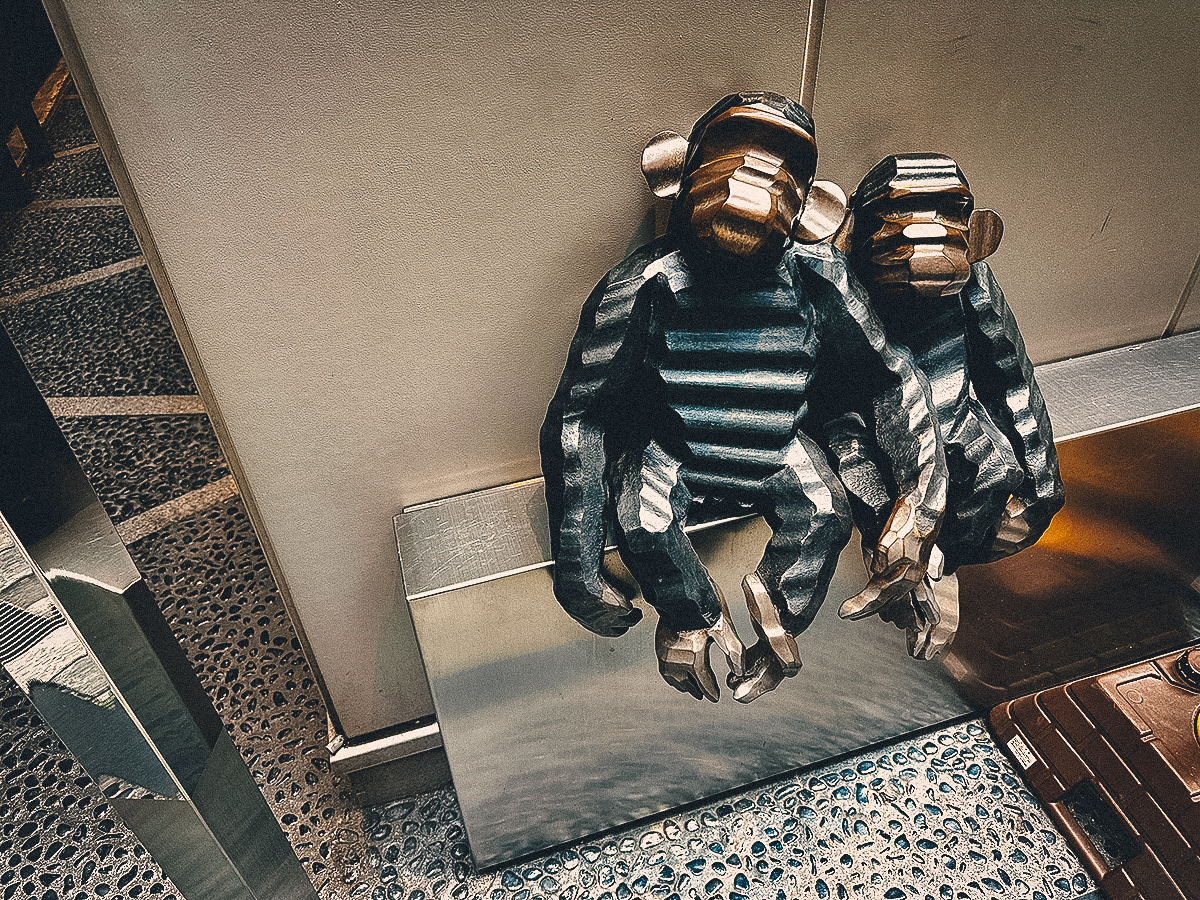
Created by sculptor Motoka Watanabe in 2016, the monkeys are part of an art installation called Happy Monkey Avenue. The approach to the shrine was redeveloped that year, which happened to be the Year of the Monkey in the Chinese zodiac.
Three bronze monkey sculptures were installed along the narrow passages leading to the shrine. More than mere decorations, monkeys in Japanese tradition are viewed as sacred messengers associated with protection and matchmaking. Follow the monkeys down the alley, and you’ll eventually find Hodo Inari.
Barely wider than an elevator door, Hodo Inari is tiny. It’s said to have originated as a branch of an Inari shrine from Edo Castle, and it’s long been associated with the healthy growth of children. Today, people come to the shrine to pray for child-rearing, matchmaking, and business prosperity5.
Kan’ei-ji
Memorial to Insects That Died in the Name of Science
Kan’ei-ji is one of the most historically significant temples in Ueno. Founded in 1625 by the influential Tendai Buddhist monk Tenkai, it became one of the most powerful temples in Edo and was closely associated with the Tokugawa shogunate. But that’s not why it’s on this list.
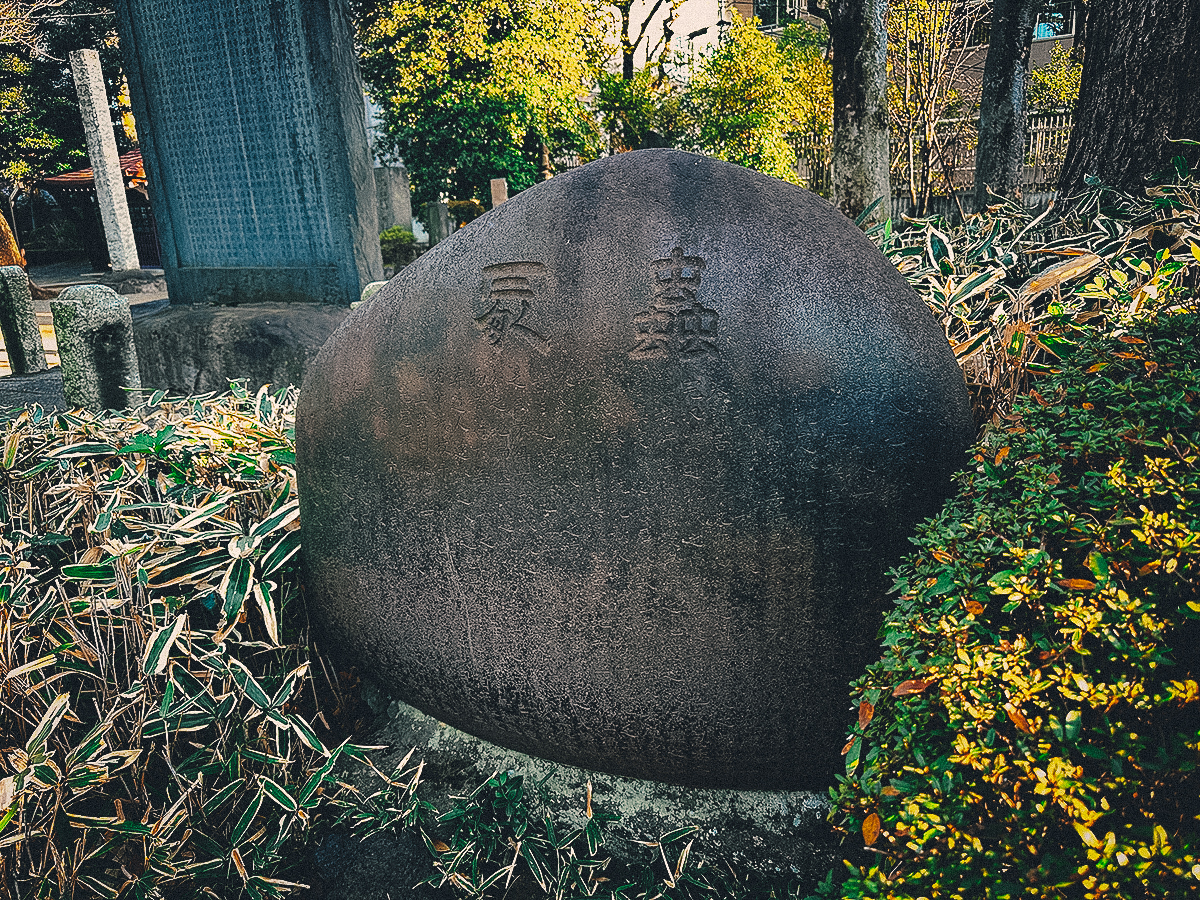
Within the temple grounds is something far more unusual – a small stone monument dedicated to insects that died in the name of science and art.
Known as Mushizuka, or “Insect Mound”, the monument was erected in 1821 at the wishes of Masuyama Sessai, the lord of Ise-Nagashima and a passionate painter and scholar. Sessai was known for his remarkably detailed paintings of flowers, birds and insects, and he produced an acclaimed illustrated book of insects called Chuchi-jo. To create these precise illustrations, actual insects were collected and killed so they could be studied and used as models6.
Sessai reportedly kept the dead insects in a small box and referred to them as his “friends”, saying that he hoped to eventually bury and honor them properly7. After his death, his (human) friends fulfilled his wish by creating the Mushizuka at his gravesite in what was then the temple of Kanjin-in. The monument was later moved to the grounds of Kan’ei-ji, where it remains today.
Eko-in
Scrape the Stone and Keep the Dust for Good Luck
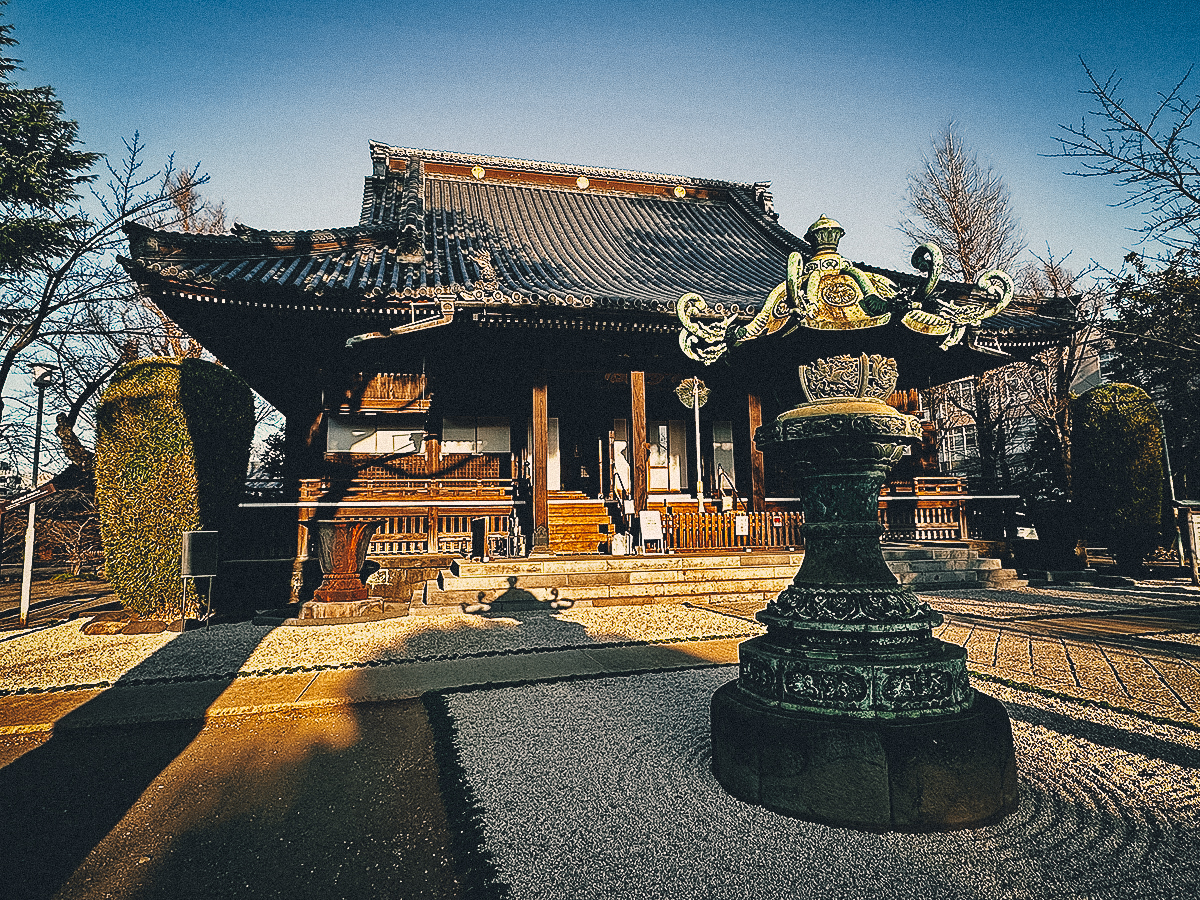
Eko-in in Ryogoku has one of the most fascinating histories of any temple on this list because its story begins with a catastrophe. The temple was established in 1657 following the Great Meireki Fire, one of the most devastating fires in Edo’s history, which killed more than 100,000 people. Eko-in was founded as a place of memorial for the victims and subsequently became associated with memorial services for people who died in disasters and other tragic circumstances.
Eko-in eventually became important for another reason – Sumo. For 76 years, until the end of the Meiji period, Sumo matches were held on the temple grounds. These events helped establish Ryogoku as the spiritual and cultural home of Japanese Sumo, a legacy that continues today with the nearby Ryogoku Kokugikan.
But in spite of its connections to Sumo and the fire, the most fascinating part of Eko-in, for me, is the grave of Nezumi Kozo, one of the most notorious thieves of the Edo period.
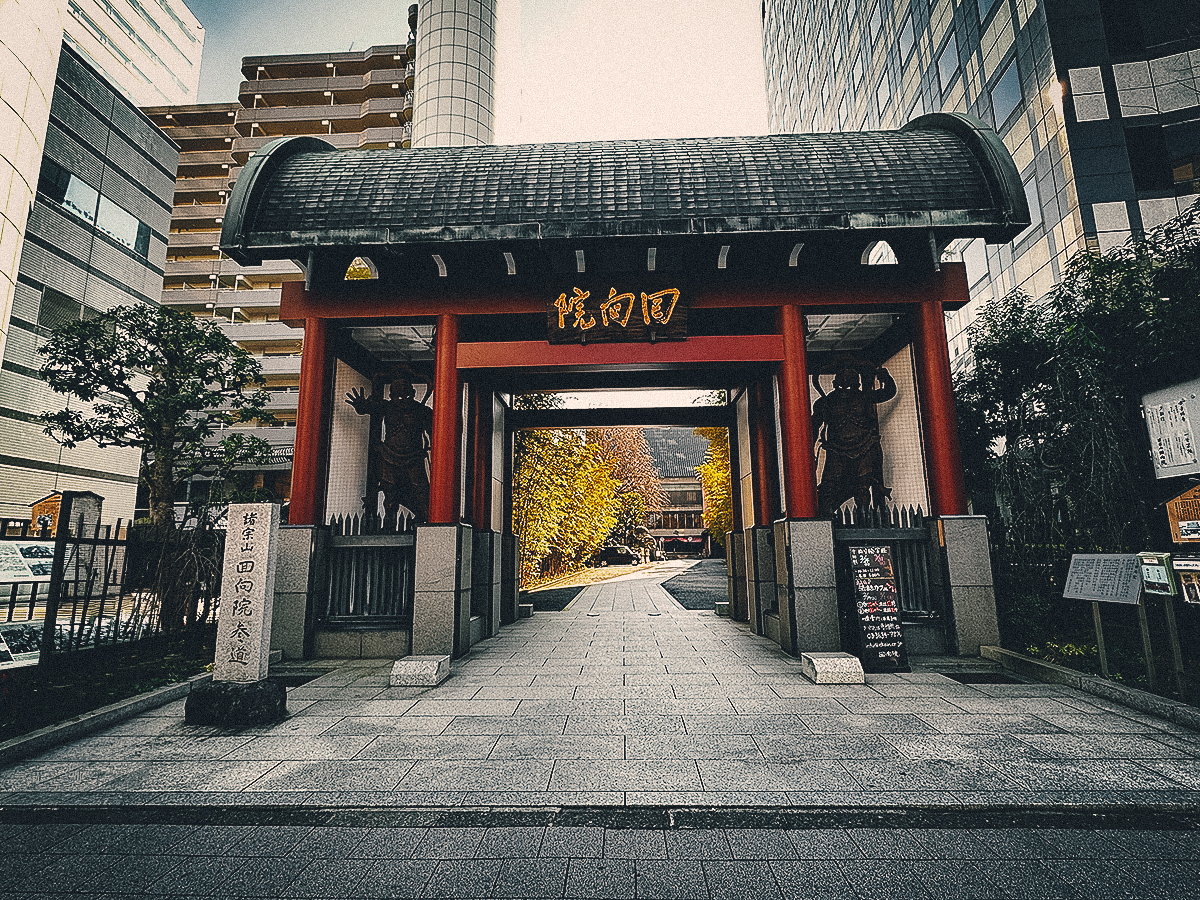
Born Nakamura Jirokichi around 1797, Nezumi Kozo became famous for breaking into the residences of wealthy samurai and stealing their money. He was eventually captured and executed in 1832.
Although he was a criminal in the eyes of the law, popular stories later transformed him into something of a folk hero, portraying him as a gentleman thief who stole from the rich and gave to the poor, though his heroic reputation may be attributed more to legend than historical fact.
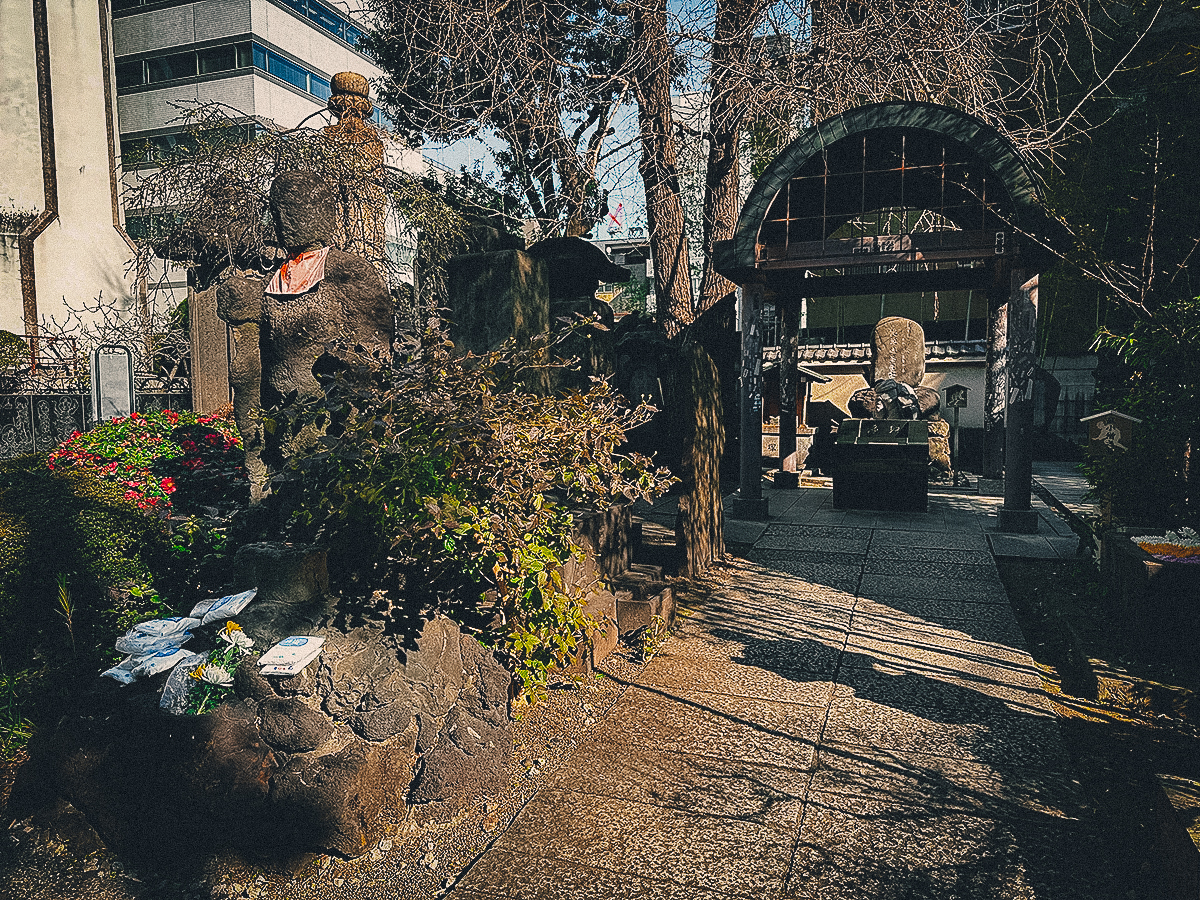
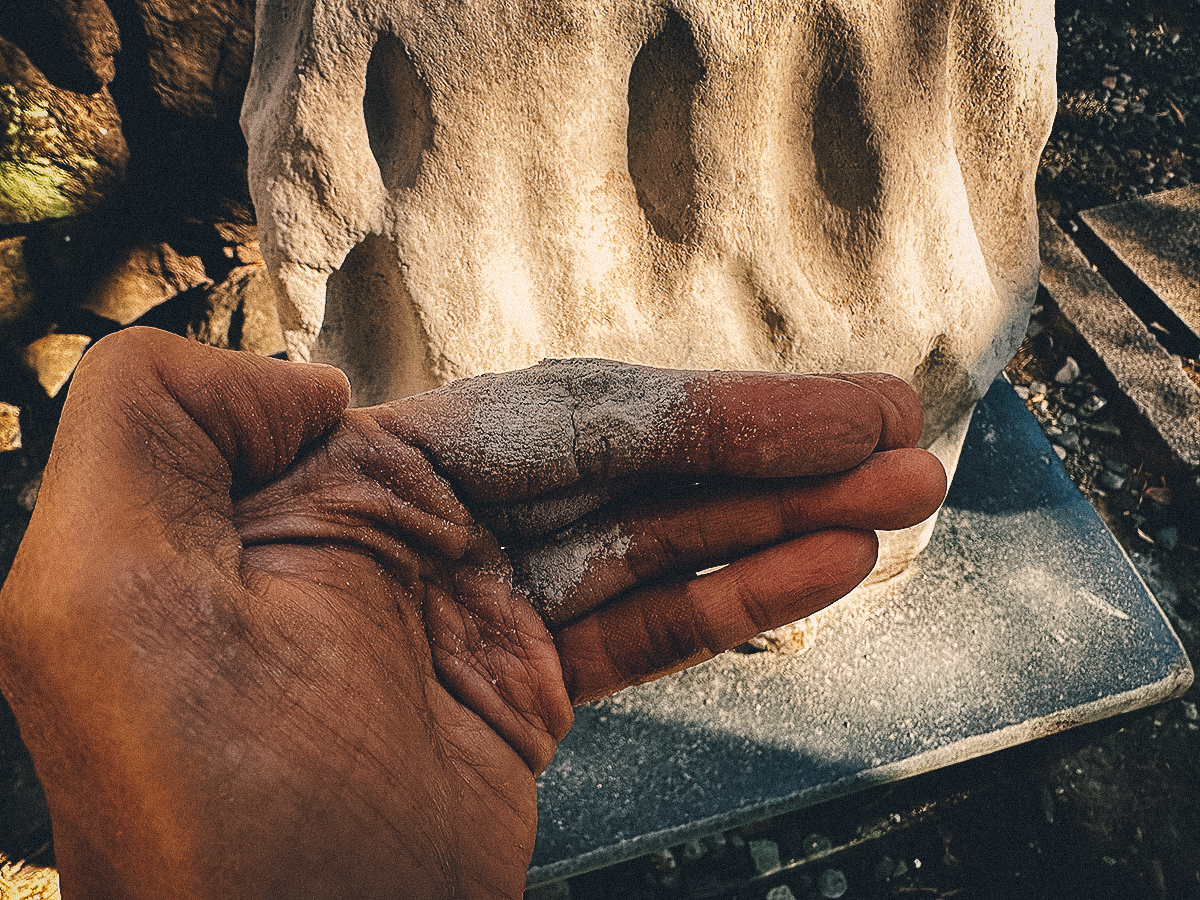
Because he managed to evade capture for so long, people began associating Nezumi Kozo with the ability to “slip through” difficulties and obstacles. Visitors came to believe that taking a piece of his gravestone as a good-luck charm could help them overcome their own troubles. The practice became so widespread that the original gravestone was repeatedly chipped away. Today, a smaller stone placed in front of the grave – known as a kakishi – is provided for this exact purpose.
Using the smaller stone provided below, visitors are free to scrape the kakishi and bring the dust home.
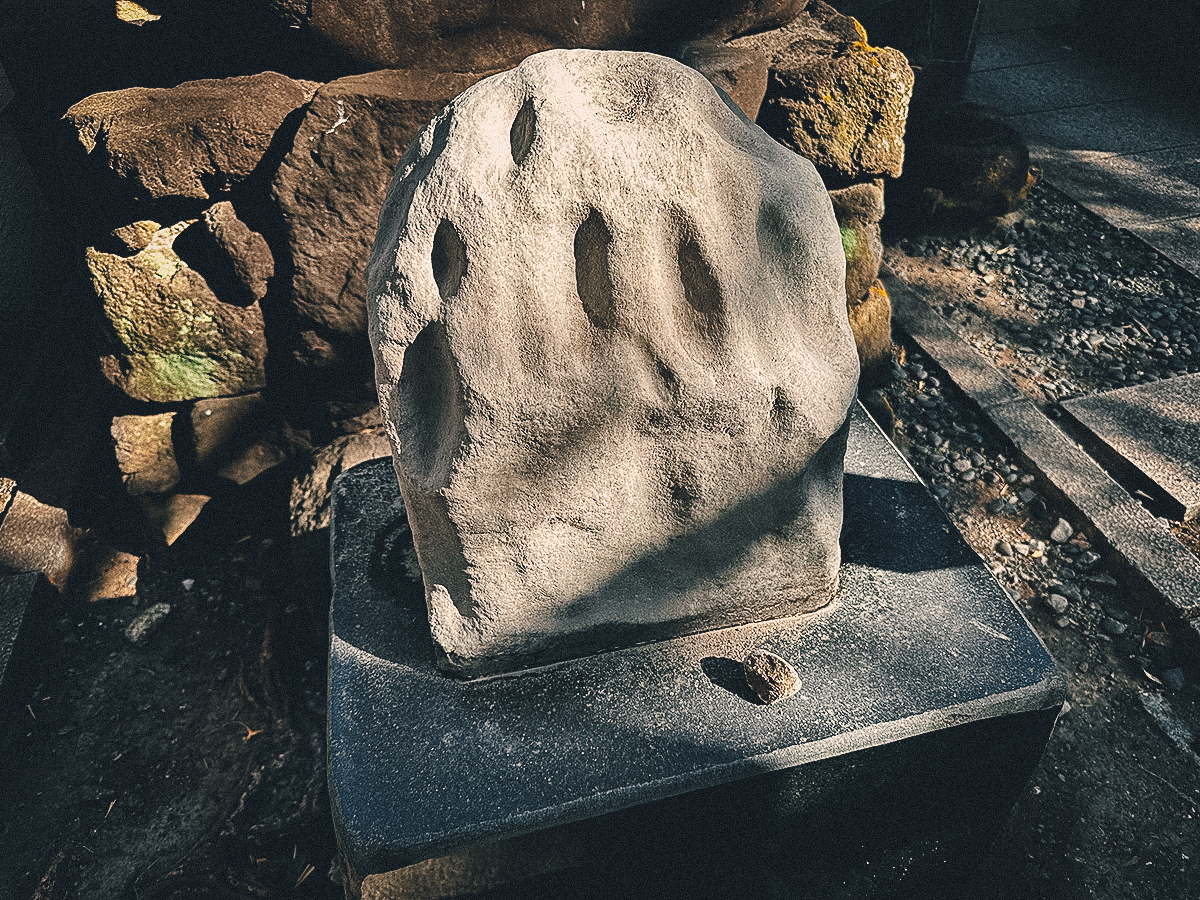
I was told that many visitors keep the scraped dust in their wallets – to symbolically help money “slip into” your wallet and improve your financial fortunes – so that’s what I did. Nezumi Kozo, work your magic.
Kanda Myoujin Shrine
Shrine Where People Pray for Their Laptops
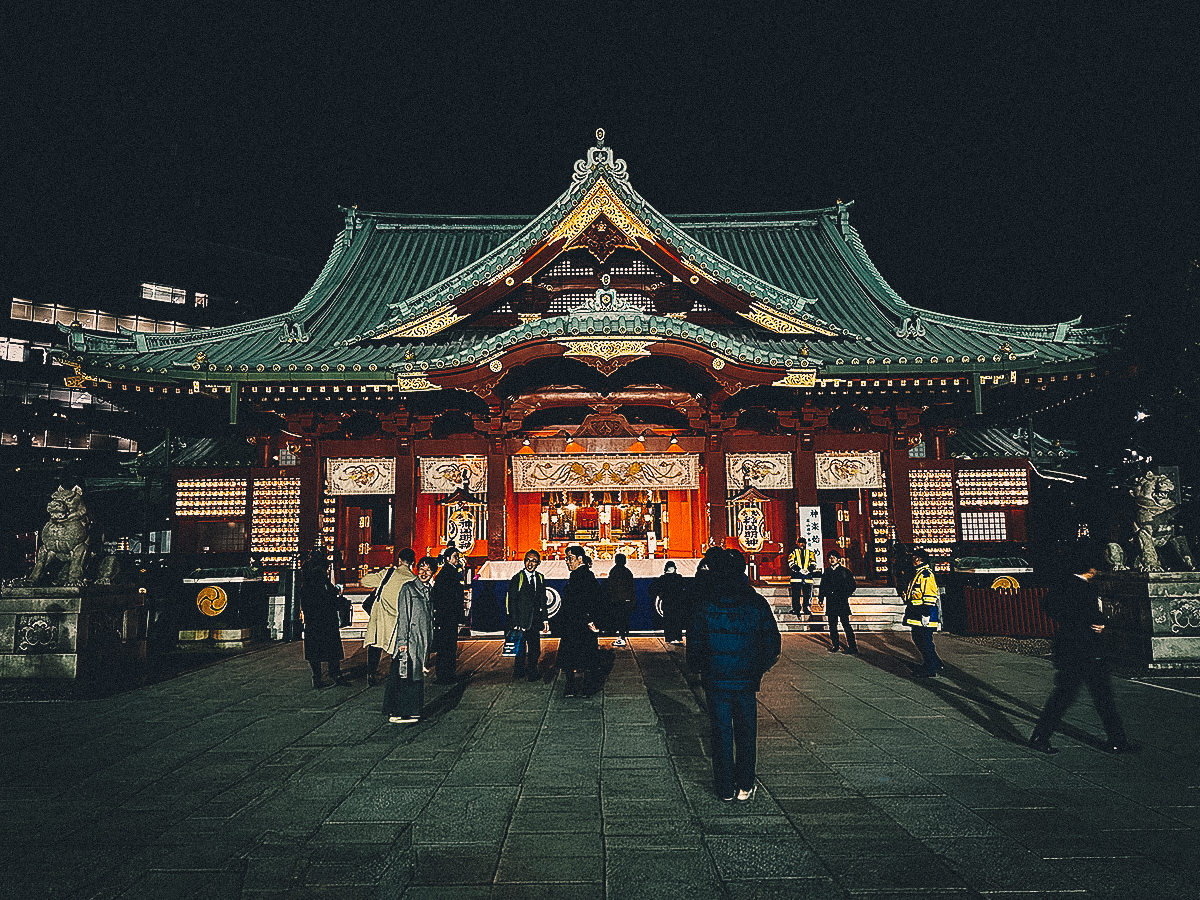
Being a digital creator reliant on electronic devices such as laptops, mobile phones, and photography equipment, visiting Kanda Myoujin was important to me. Located next to Akihabara, Tokyo’s famous electronics district, this shrine has become known as a guardian of technology, offering prayers and protection for the electronic devices that have become an essential part of modern life.
Aside from selling special IT protection amulets designed for computers and other electronic equipment, people can actually bring their electronic devices to the temple to be purified by Shinto priests. Laptops and mobile phones have been among the objects brought to the shrine for oharai, a ritual purification intended to remove impurities and pray for protection.
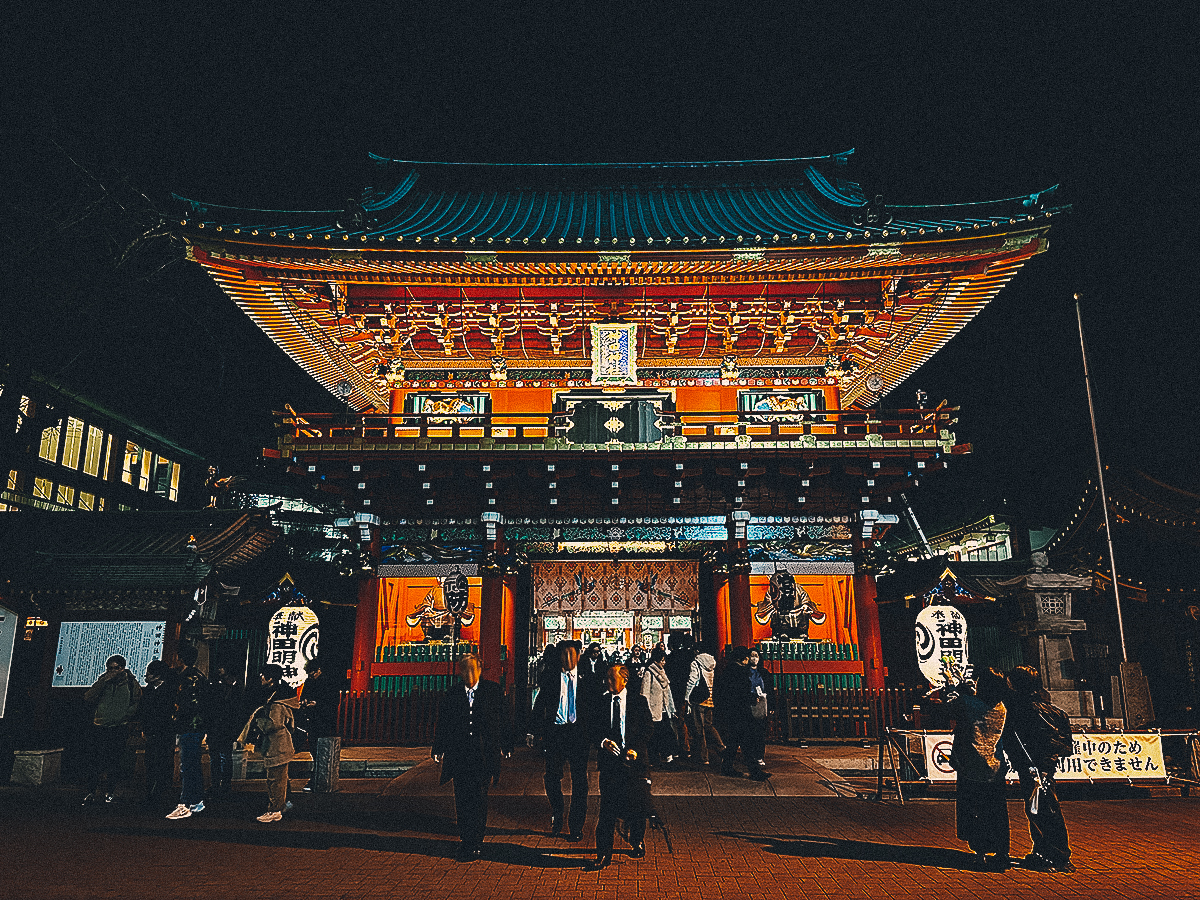
Running around Tokyo all day, I couldn’t carry all my electronics with me, but I read that you can simply pray at the shrine for blessings and protection for your devices. Here’s to hoping that my laptop never crashes again.
It was interesting to learn that Shinto purification isn’t limited to just people – objects can be purified as well.
Yushima Tenjin Shrine
Where Tokyo’s Students Pray for Success
Yushima Tenjin is one of Tokyo’s best-known destinations for students – particularly students preparing for important examinations. The shrine is dedicated to Sugawara no Michizane, a celebrated scholar and politician who was deified after his death and became associated with scholarship and learning.
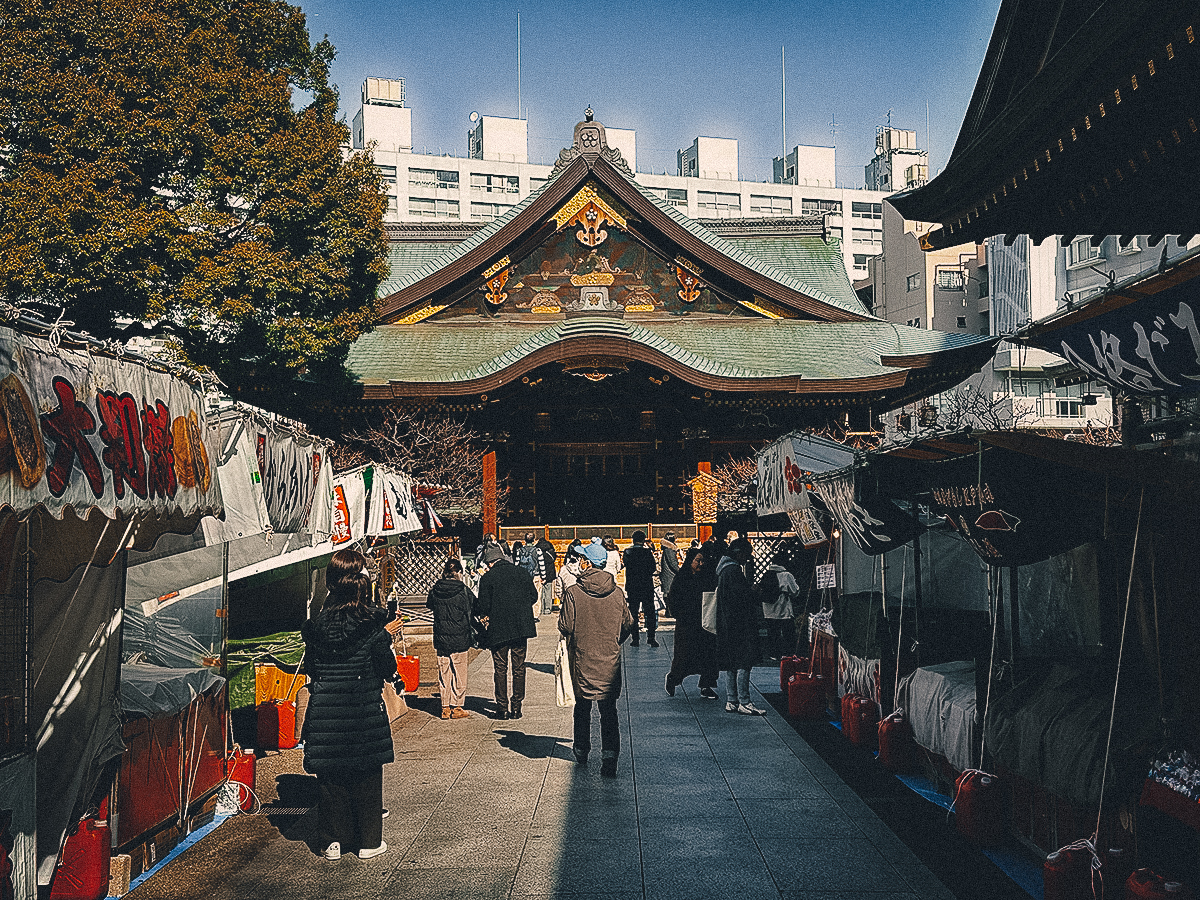
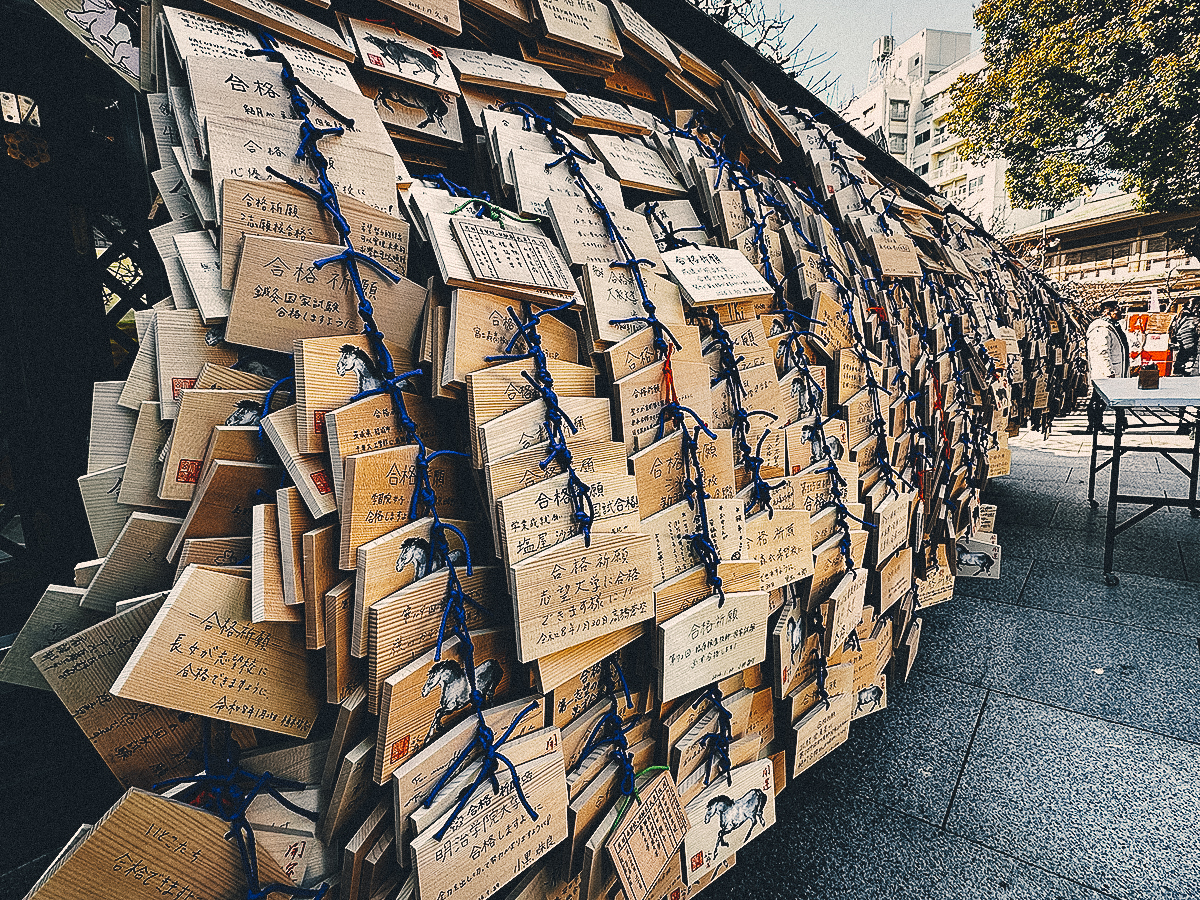
During exam season, students come to pray for success and leave ema, or wooden prayer plaques, with their wishes. At busy times, hundreds or even thousands of these plaques can fill the racks around the shrine, creating a remarkable sight – a cascading wall of handwritten hopes for the future.
You’ll find these ema plaques at every temple and shrine in Japan, but never this many!
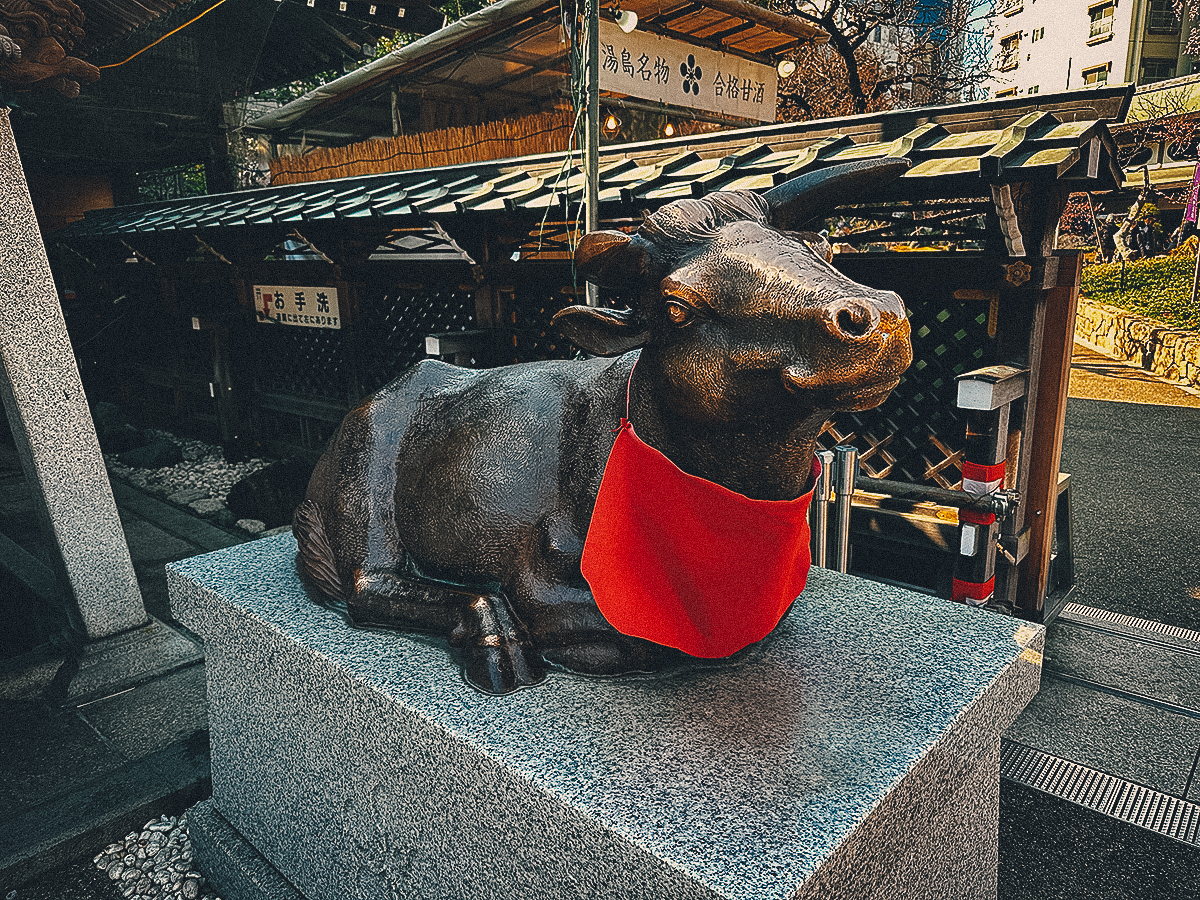
Being a Tenjin shrine, Yushima Tenjin is also home to a Nade-ushi, or “stroking ox”. Oxen are considered sacred messengers of Tenjin, the deified Sugawara no Michizane, and visitors traditionally rub the statue for good luck and good health. There’s even a belief that rubbing the part of the ox corresponding to an ailing part of your own body can bring healing.
If you look closely at the picture below, you’ll see how the ox’s head has received more rubbing than the rest of its body. Given Yushima Tenjin’s reputation as a shrine for academic success, it’s no surprise that students give the ox’s head a particularly enthusiastic rub, hoping some of its wisdom will rub off on them.
Kishimojin Temple
From Child-Eating Demon to Beloved Protector
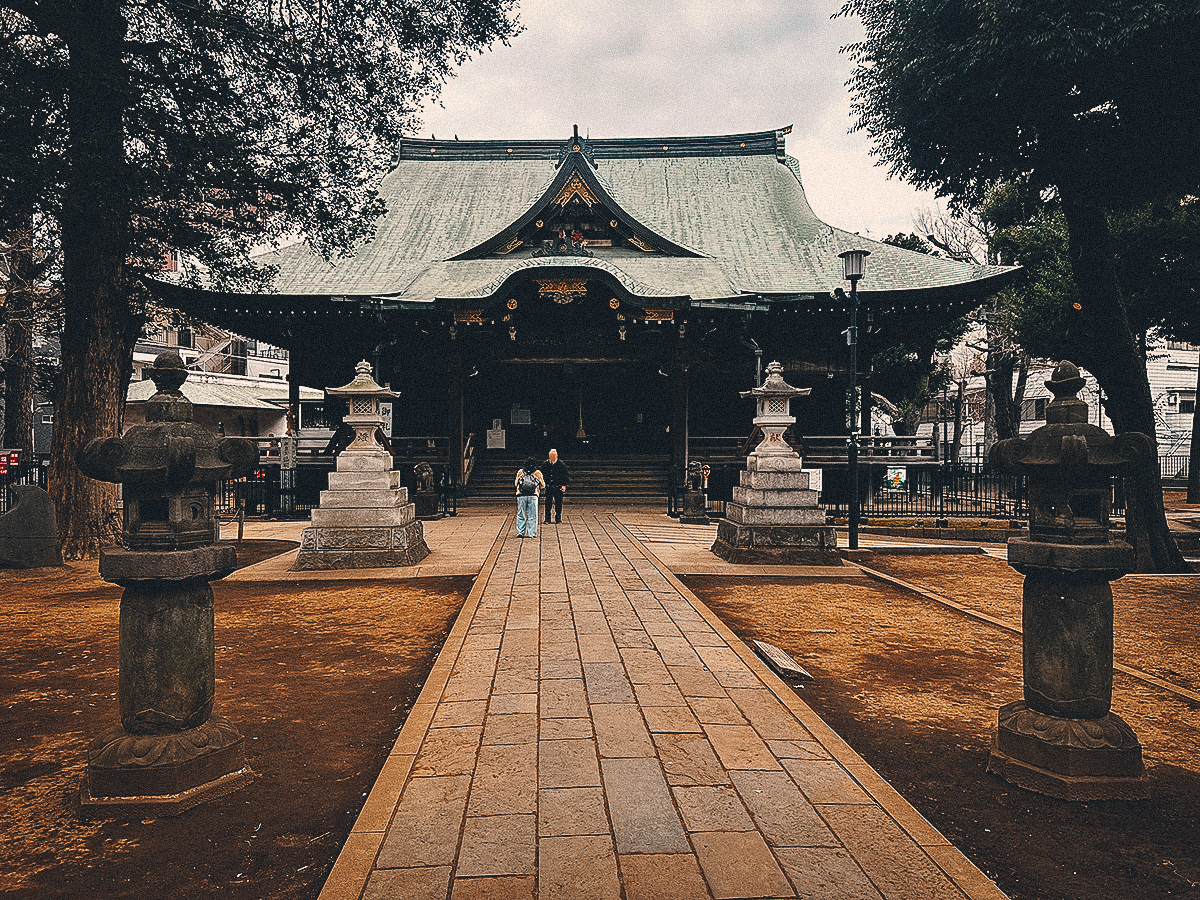
The story behind Kishimojin Temple is one of the more interesting transformations in Japanese Buddhism. Kishimojin (or Kishibojin) is worshipped as a protector of children and a goddess associated with safe childbirth and child-rearing. But her origin story is much darker – she was originally depicted as a demon who abducted and ate children.
According to Buddhist tradition, the Buddha hid one of her own children to make her understand the suffering she was causing other parents. After realizing the pain of losing a child, Kishimojin repented and became a protector of children instead8.
At Kishimojin Temple, families continue to pray to her for safe childbirth, healthy children, and household safety. The temple is also associated with academic success and protection from bad luck.
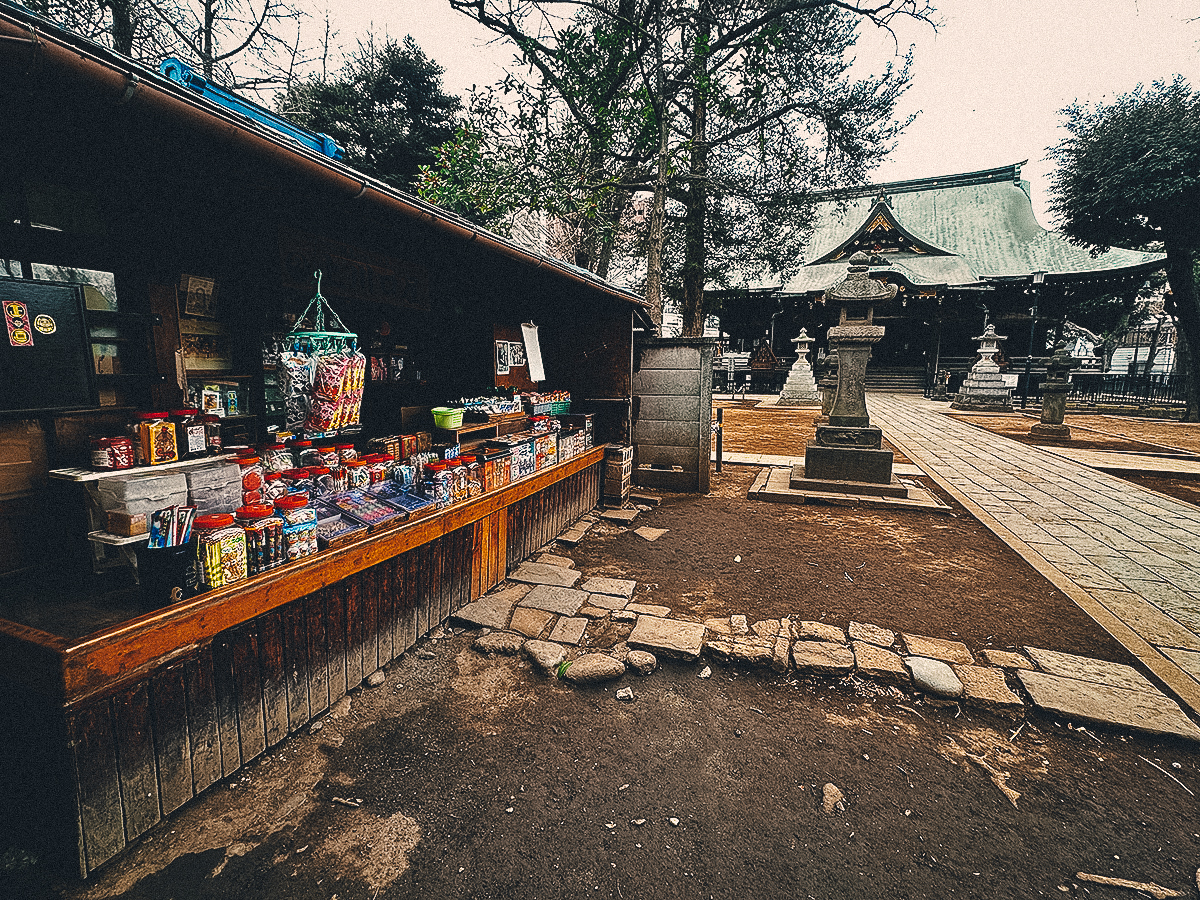
If you have a sweet tooth, be sure to check out Kamikawaguchiya. Located on the temple grounds, it was founded in 1781 and is known for being one of Japan’s oldest dagashiya, or traditional candy stores.
Sengaku-ji
Burial Place of Japan’s Legendary 47 Ronin
This is one of the most captivating religious sites I’ve visited thus far in Tokyo. Sengaku-ji is the burial place of Japan’s legendary 47 ronin.
In 1701, Lord Asano Naganori was ordered to commit seppuku after attacking the court official Kira Yoshinaka. Asano’s retainers became masterless samurai, or ronin. Forty-seven of them eventually plotted their revenge, attacking Kira’s residence in January 1703 and killing him. They then carried Kira’s head to Sengaku-ji and presented it at their master’s grave.
The government subsequently ordered the ronin to commit seppuku. They were buried at Sengaku-ji alongside their lord, turning the temple into one of the most important sites associated with the story of loyalty and revenge in Japanese history9. Tokyo’s annual Ako Gishisai, held every December 14, commemorates the event with a procession of participants dressed as the famous samurai.
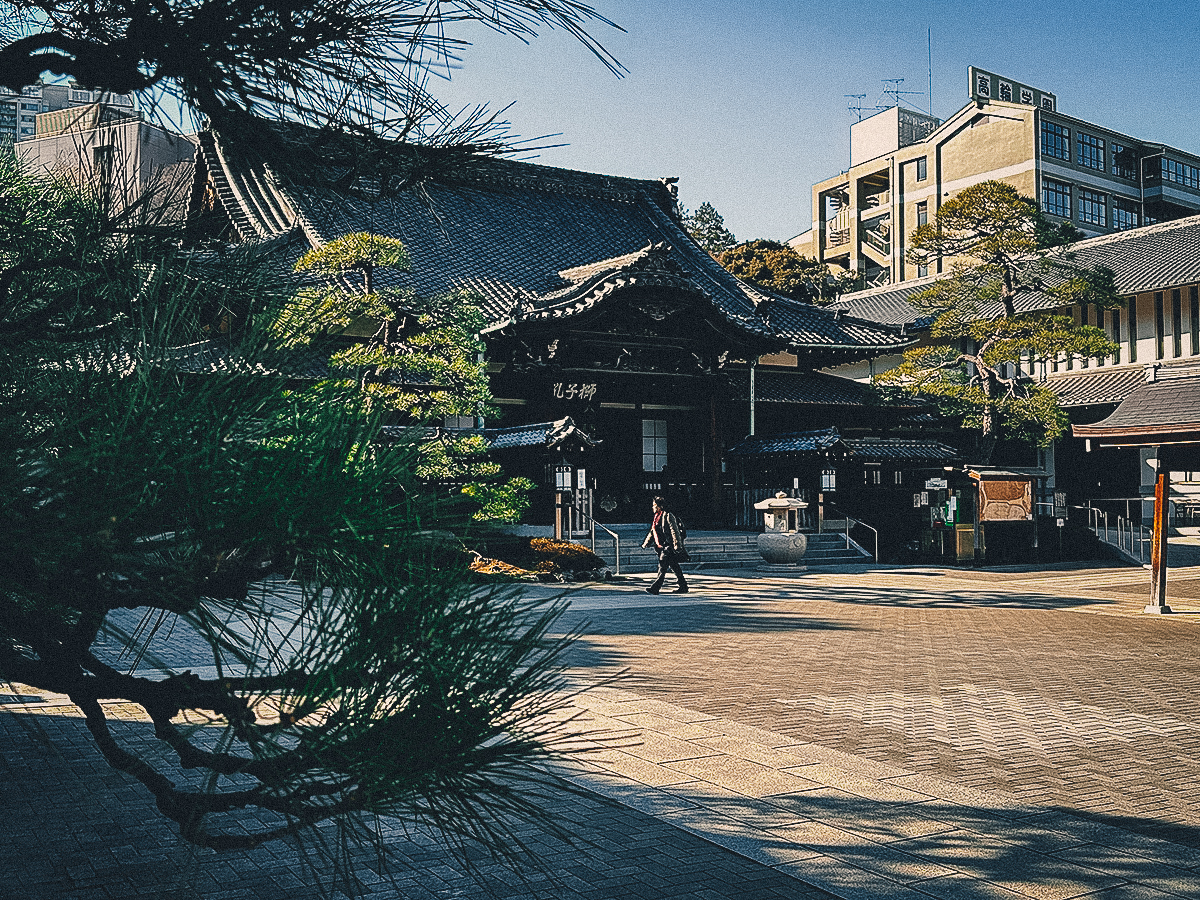
Sengaku-ji offers visitors the chance to pay respects to the 47 ronin.
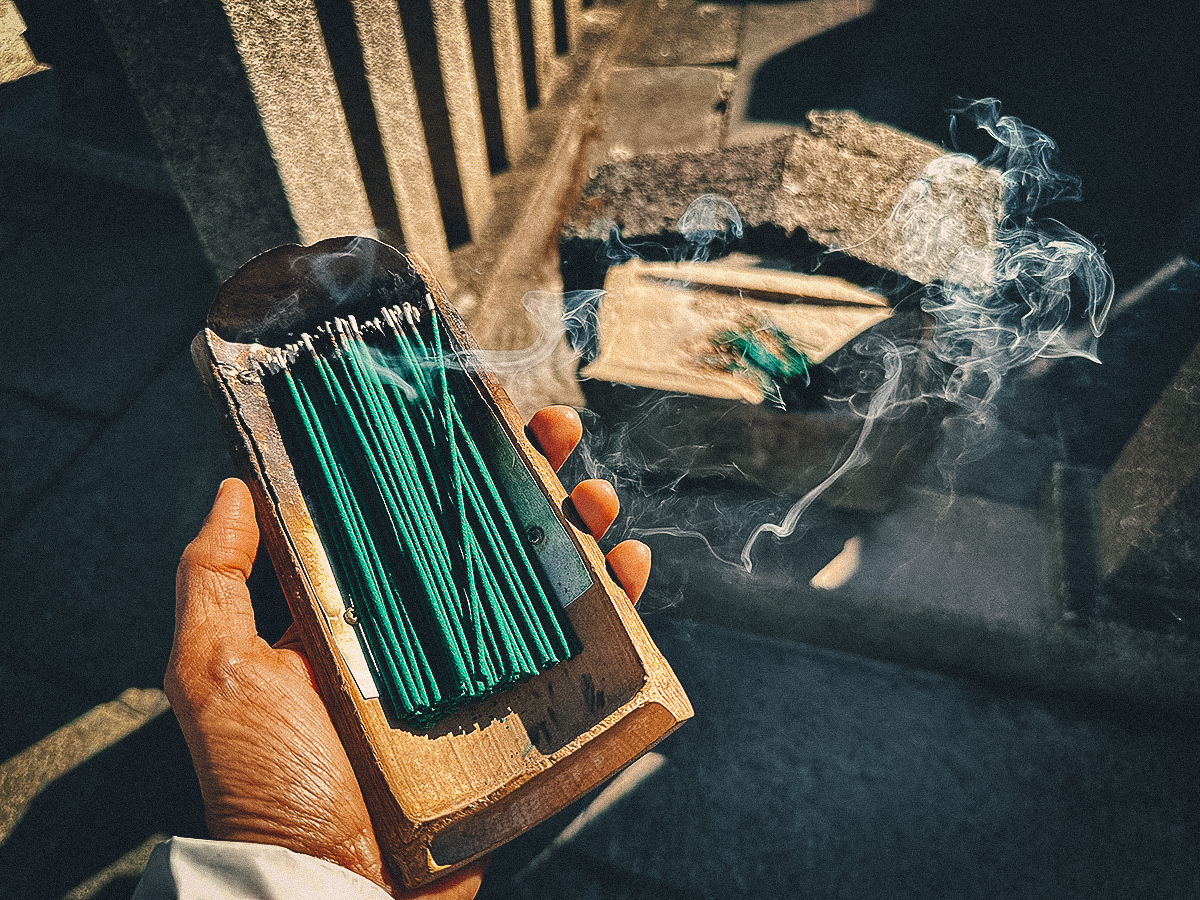
At the entrance to the cemetery, you can purchase a bundle of incense, which is lit for you before you enter. You then carry the smoldering incense into the cemetery and place it before the graves of the fallen samurai as you make your way around.
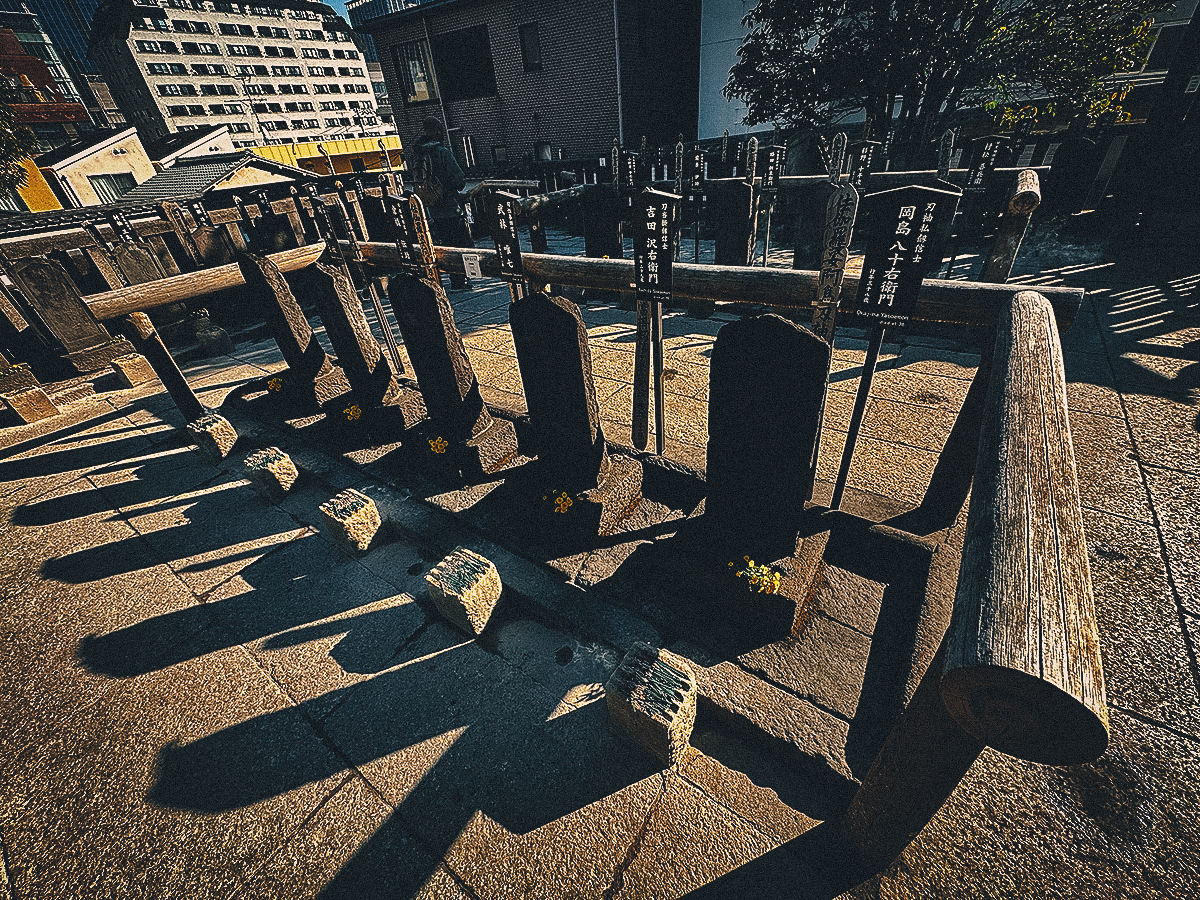
The graves are the main attraction, but the experience is more interesting if you know the story before arriving. There are 48 gravestones in total, including that of their lord, Asano Naganori.
Three Major Dragon Torii Gates of Tokyo
Dragon Taking Your Wishes to Heaven
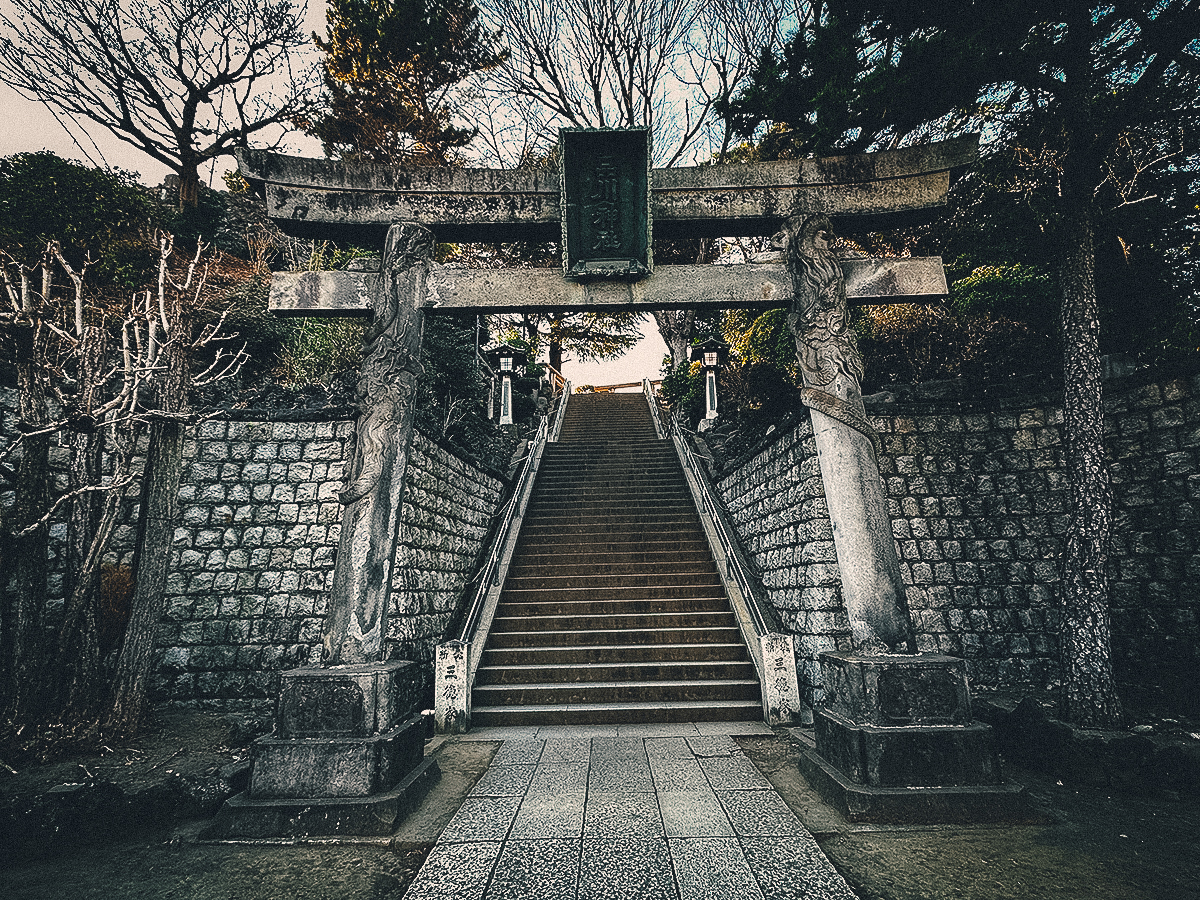
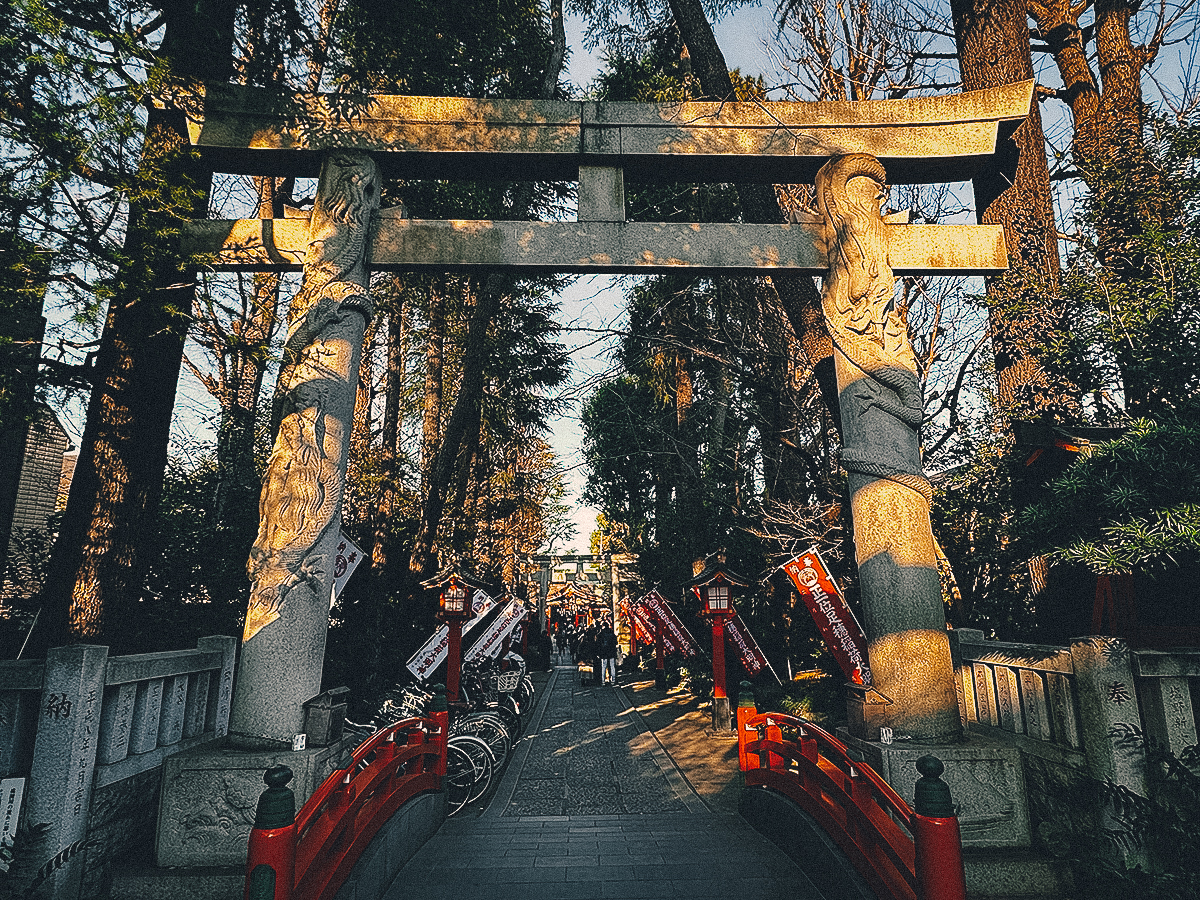
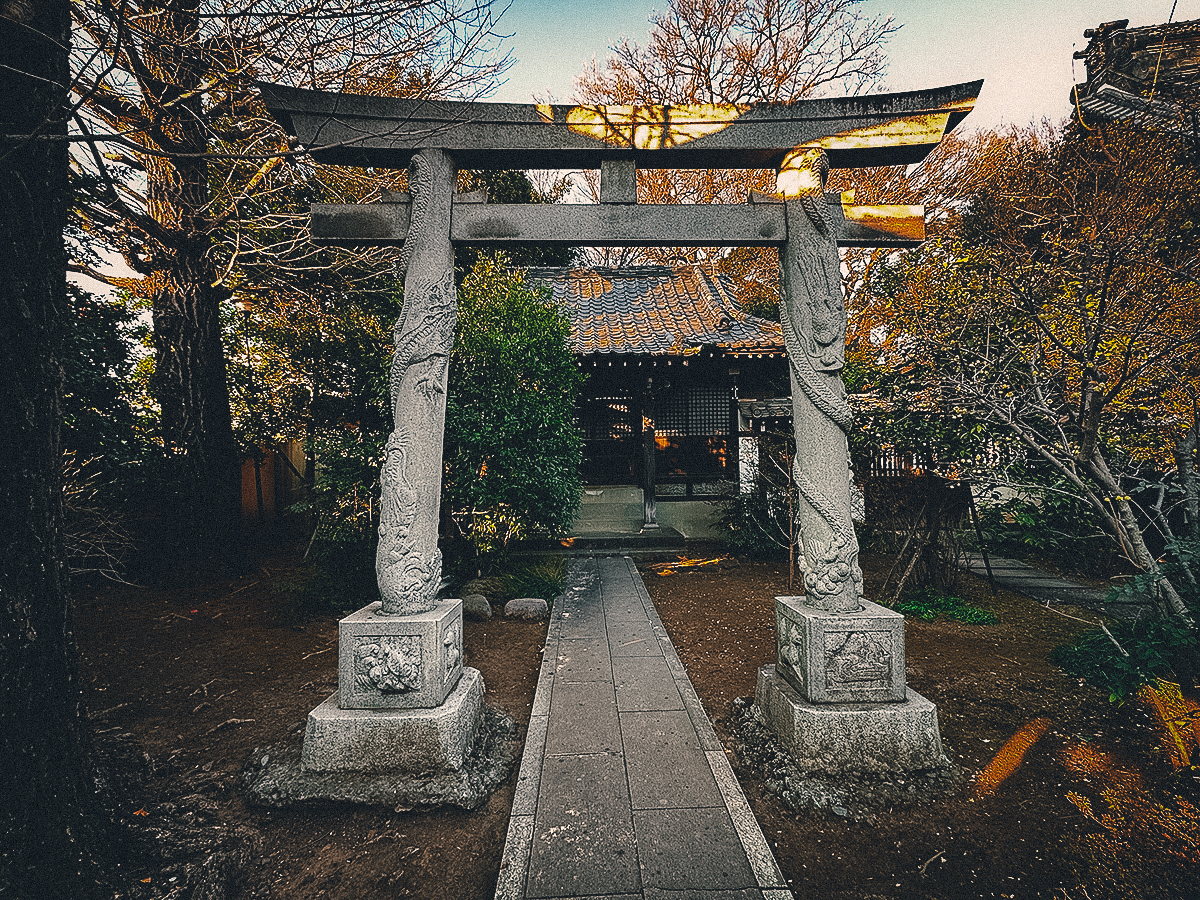
These next three religious sites share something rare and unique. Known as Tokyo’s Three Major Dragon Torii, the gate pillars at Shinagawa Shrine, Mabashi Inari Shrine, and Koenji Temple are decorated with two carved dragons, one ascending and the other descending.
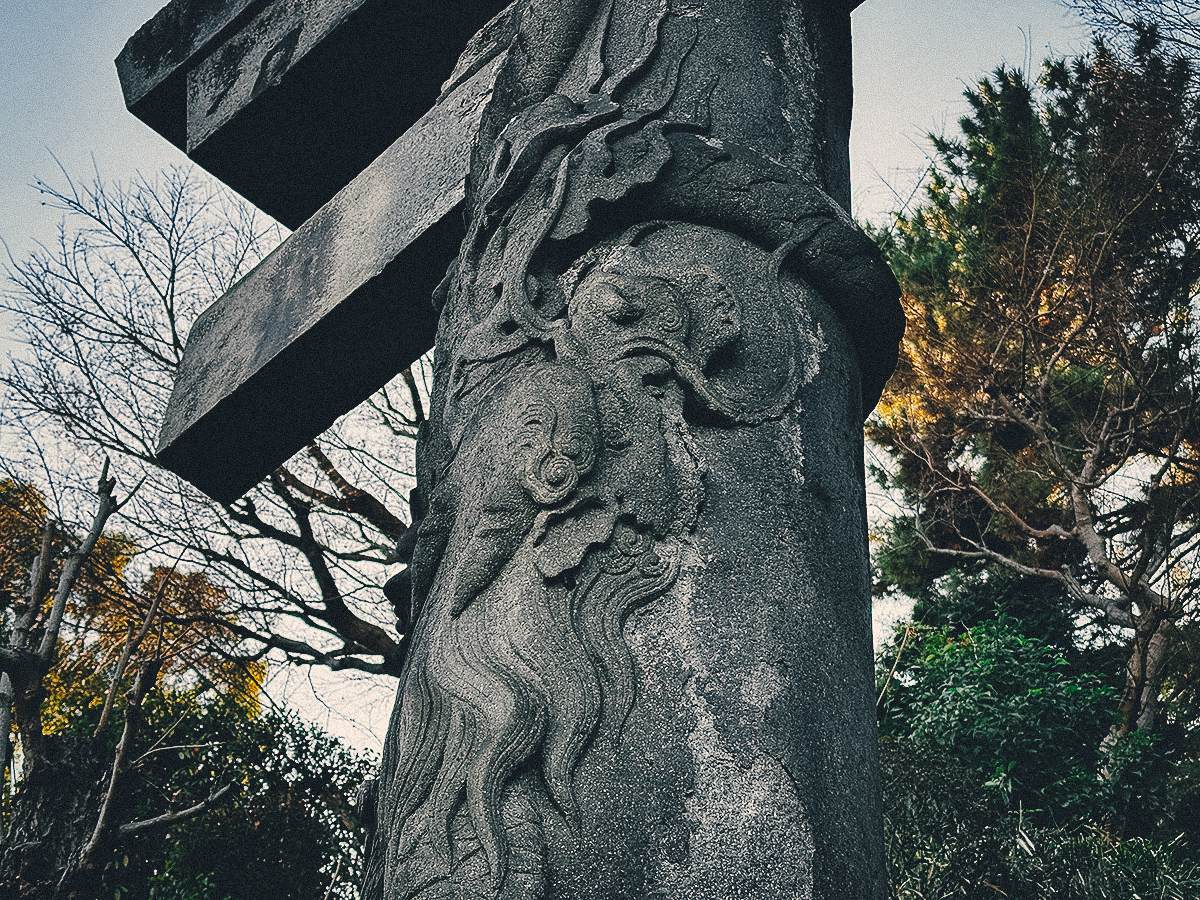
Dragons have long been associated with water, rain, and protection. The ascending and descending dragons are interpreted as representing the movement of wishes and blessings between heaven and earth. The ascending dragon (nobori-ryu) is said to carry your wishes upward, while the descending dragon (kudari-ryu) brings blessings back down.
Shinagawa Jinja
If you had time for just one of these three dragon torii sites, you should probably visit Shinagawa Shrine. The most historically significant of the three, it’s one of the Tokyo Jissha – the ten shrines designated during the Meiji era as important shrines forming a protective ring around the Imperial Palace.
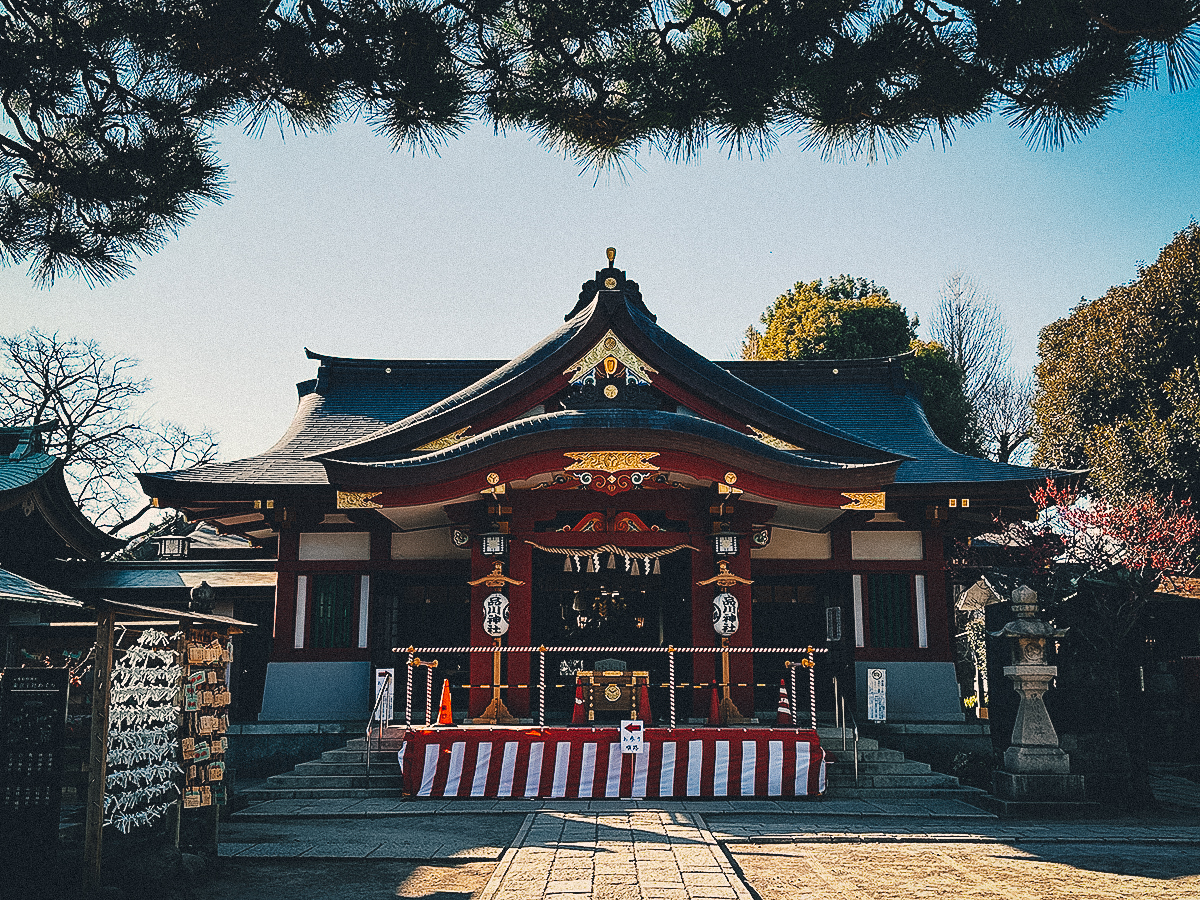
The oldest of the three gates, the dragon torii at Shinagawa Shrine was built in 1925. I assumed the dragon torii were built as a set of three, but that doesn’t seem to be the case. They were constructed in different years and independently of each other.
According to Shinto beliefs, these torii gates mark the boundary between the ordinary world and the sacred precinct10, so putting powerful protective creatures like dragons directly onto its pillars seems fitting.
Here’s a closer look at the ascending dragon. On all three torii, the ascending dragon is on the left pillar while the descending dragon is on the right.
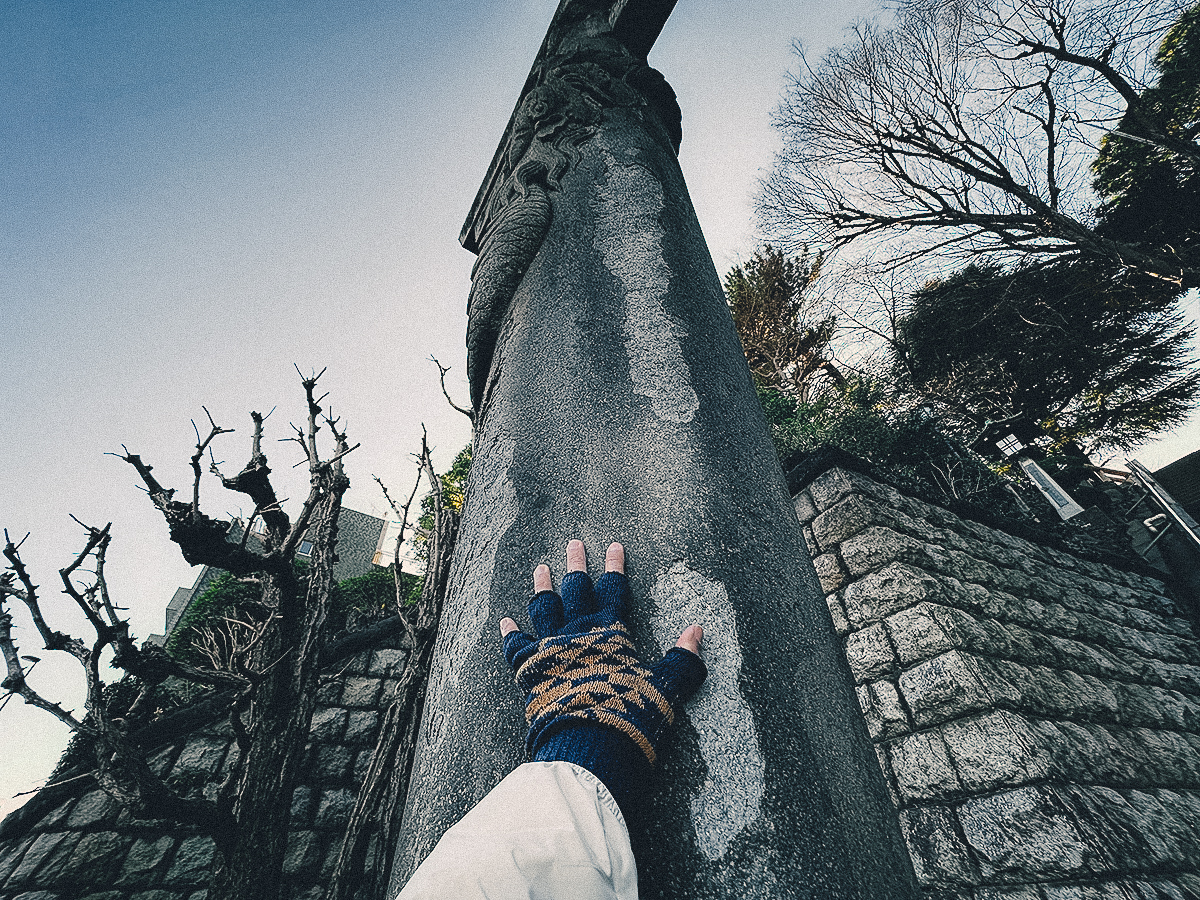
A popular belief holds that the ascending dragon carries your wishes toward heaven, so you can place a hand on the left pillar – the one with the ascending dragon – and make a wish. The three torii are regarded as power spots where touching the ascending dragon pillar is said to bring good fortune and help wishes come true.
Mabashi Inari Shrine
Tucked away in a residential neighborhood between Asagaya and Koenji, Mabashi Inari Shrine was my favorite of the three. Located in one of my favorite neighborhoods in Tokyo, I found it to be the most peaceful and atmospheric.
Without realizing it, I happened to visit the shrine in early February 2026, during its annual Hatsu-uma Festival, which is held on the first horse day of February. 2026 was the Year of the Horse, making the coincidence feel especially auspicious.
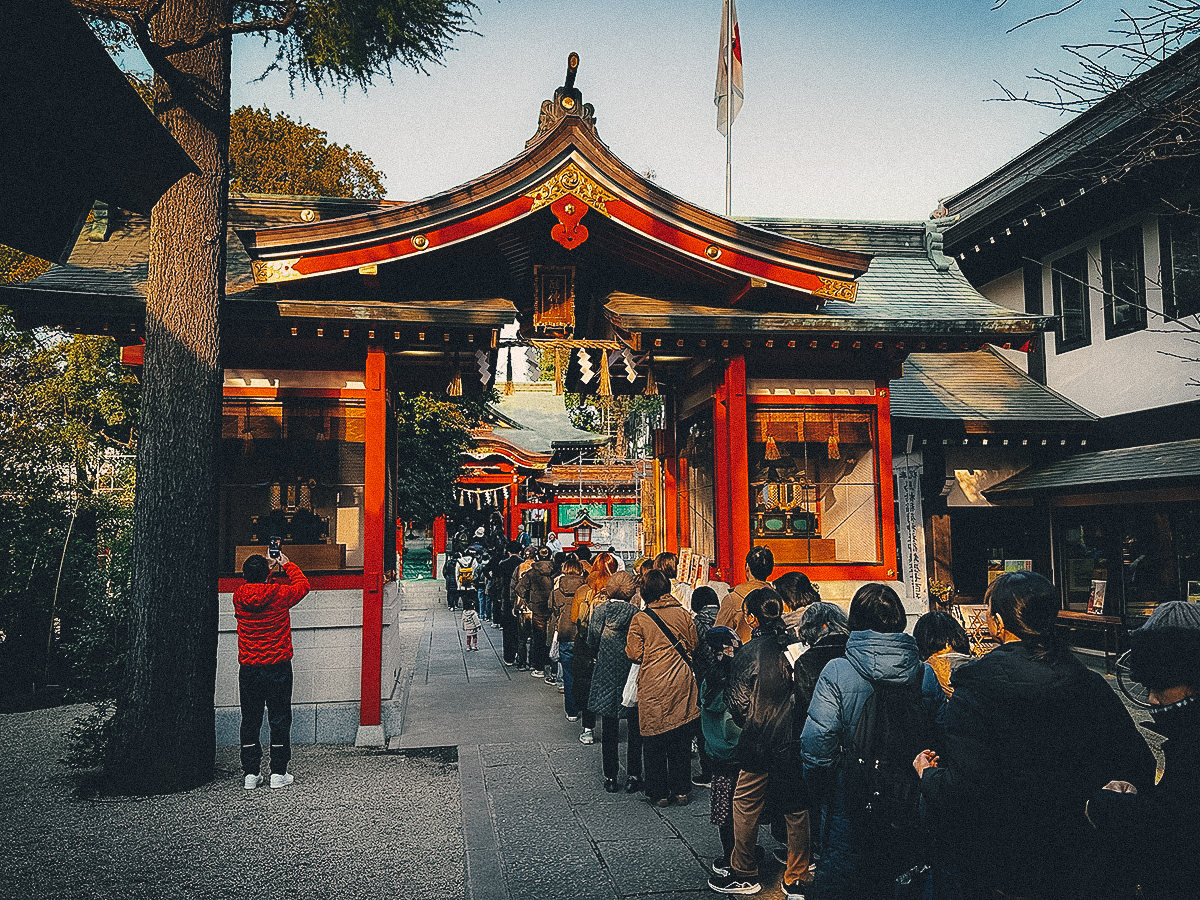
Needless to say, wishes were made while touching the ascending dragon pillar. The dragon torii at Mabasha Inari Shrine dates back to 1932, when it was donated to the shrine to commemorate the incorporation of Suginami Village into Greater Tokyo City11.
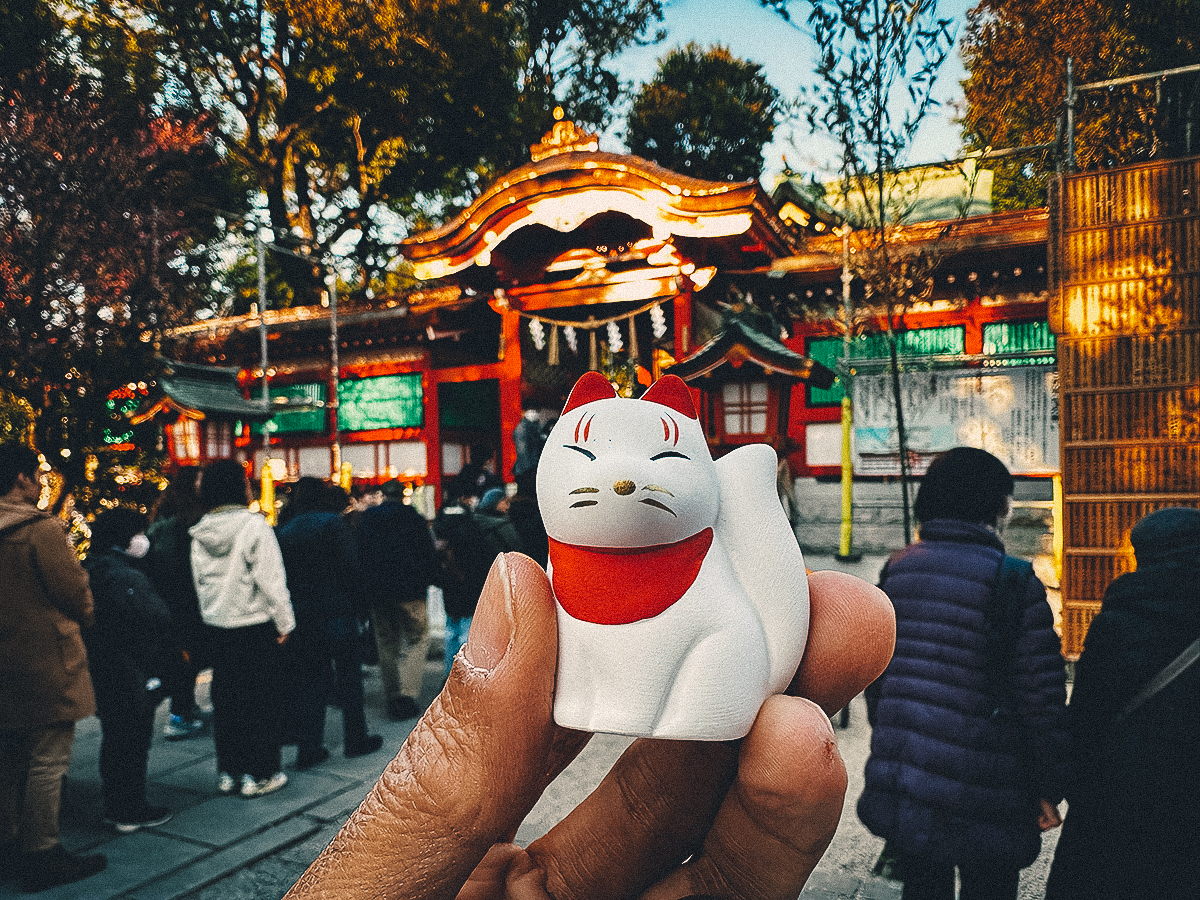
Being an Inari shrine, I couldn’t resist buying one of the shrine’s fox figurines as a souvenir. Regarded as messengers of Inari, foxes are said to carry people’s wishes to the deity.
Koenji Temple
Unlike the previous two religious sites, Koenji Temple isn’t a Shinto shrine, but a Buddhist temple. It’s within walking distance of Mabashi Inari Shrine and, in my experience, the quietest of the three. There was no one there at the time of my visit, so I thought I was at the wrong place!
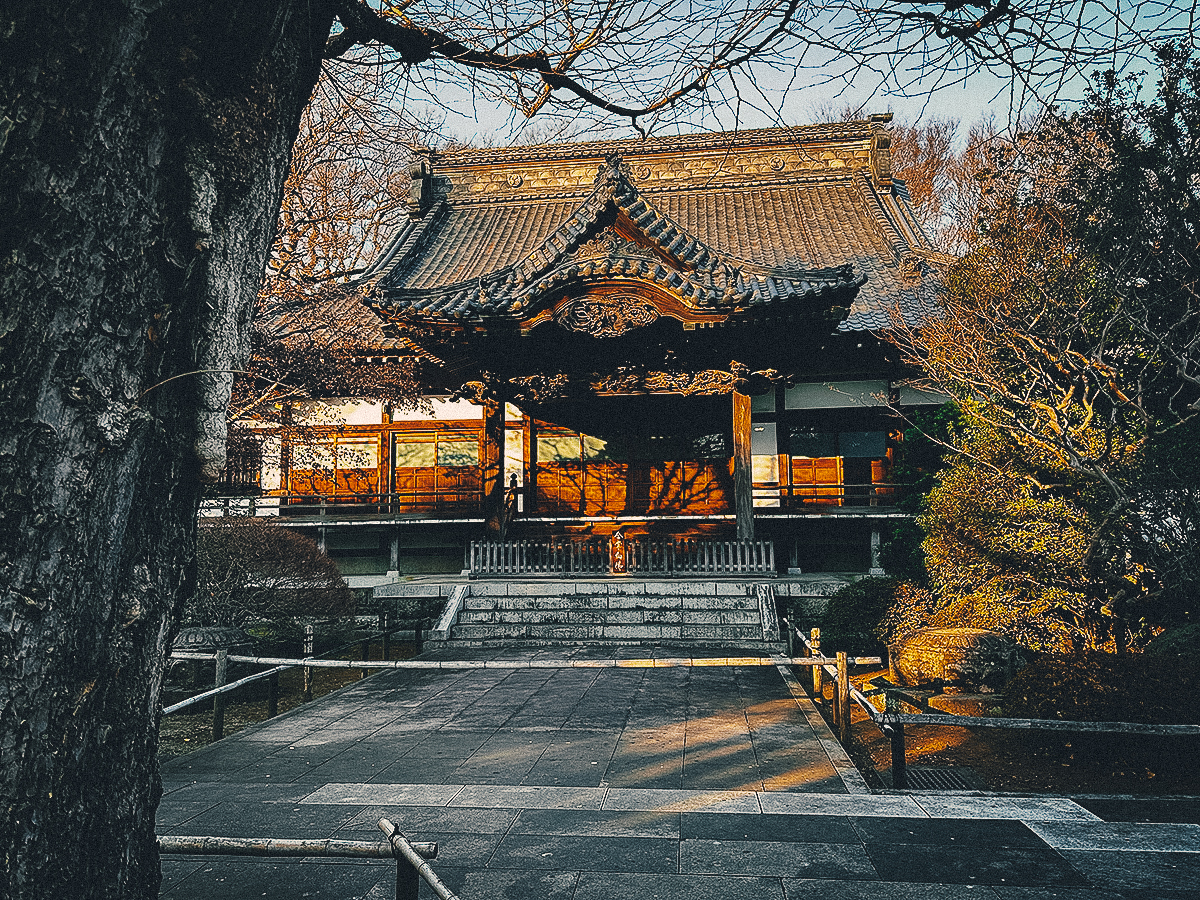
Built in 1933, the dragon torii at Koenji Temple is the newest of the three. According to its history, it wasn’t originally commissioned by the temple. A man named Sekiguchi had the dragon torii made in 1933, apparently modeled after the one at Shinagawa Shrine, for an Inari shrine on his own property.
After the war, when his property was sold, the torii was acquired by parishioners and installed at the Inari shrine within Koenji Temple12.
LOCATION MAP
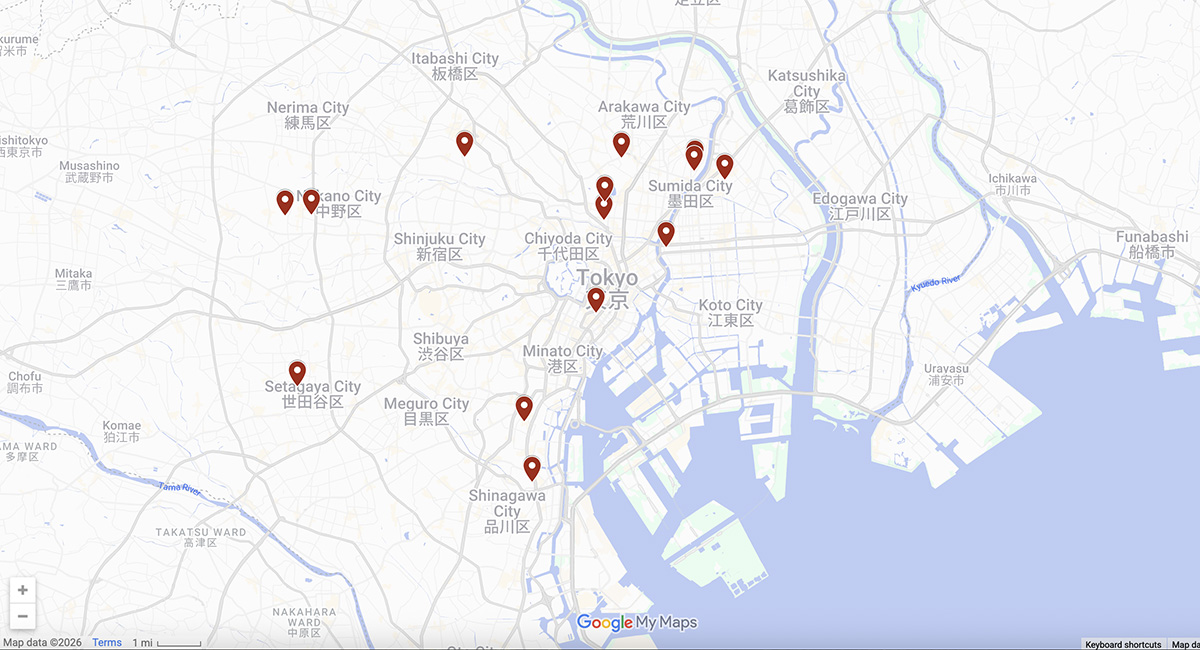
To help you navigate, I’ve pinned the temples and shrines listed here on Google My Maps. Click on the link for a live version of the map.
THE FINAL SAY
Temple fatigue is real. With thousands of religious sites scattered across Tokyo, one temple can easily blur into the next. But taking the time to learn a little about them beforehand can make all the difference.
Sometimes, all it takes is one unusual detail, a centuries-old story, or a quirky local tradition to turn “just another temple” into a fascinating experience.
Disclosure
Some of the links in this article on Tokyo’s most interesting temples and shrines are affiliate links, meaning we’ll make a small commission if you make a booking at no extra cost to you. As always, we only recommend products and services that we use ourselves and can personally vouch for. We really appreciate your support, as this helps us make more of these free travel guides. Arigato gozaimasu!
References
1. Orcutt, April. World’s Most-Visited Sacred Sites. NBC News. (2011, December 24).
2. The Beckoning Cat Chronicles: Origins and Legends of the Maneki-Neko. K’s House. (2024, March 3).
3. Imado Jinja – The Matchmaking Shrine of Lucky Cats. Asakusa Station.
4. 待乳山聖天(浅草名所七福神 毘沙門天). Taito.
5. 宝童稲荷神社(中央区/銀座)の御朱印と見どころ. jinyagoshuin.com. (2018, October 14).
6. ilbonito. Mushizuka at Kan’ei-ji Temple. Atlas Obscura. (2016, June 21).
7. 虫豸帖 秋. Cultural Heritage Online.
8. Kishibojin: Japanese Demon Mother Who Became Child Protector Goddess (Ep. 5). Uncanny Japan. (2017, April 13).
9. Forty-seven rōnin. Wikipedia. (2003, January 27).
10. Q&A. Jinja Honcho.
11. 馬橋稲荷神社. Suginami City. (2024, December 9).
12. 杉並区 19 (24/02/25) 旧杉並町 (杉並村) 旧高円寺村 (1). Kazu Bike Journey. (2025, February 25).
